Next-Generation Ceramics: Unlocking Superior Properties for Industry

Aluminum oxide ceramic, or alumina, is your best choice when you need a hard, electrically insulating, and cost-effective material for demanding applications. Its widespread use stems from a powerful combination of properties you can reliably engineer around. Let me walk you through its core characteristics and show you exactly how to deploy it successfully in your projects.
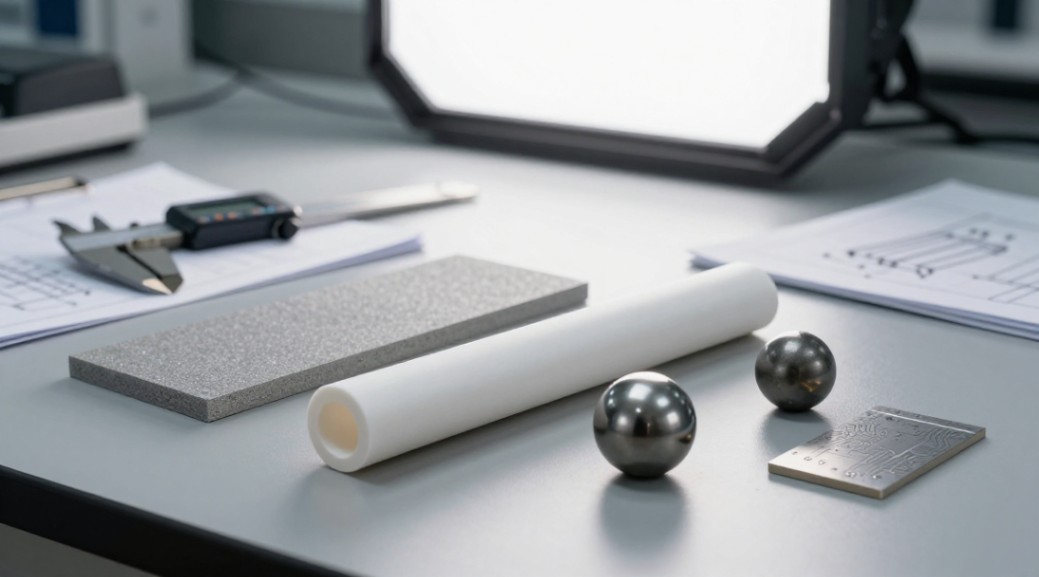
What is Aluminium Oxide Ceramic? The Core Properties Defined
At its simplest, aluminum oxide ceramic (Al2O3) is a crystalline material produced by firing alumina powder. Its performance depends directly on its purity and how it’s made. Purity levels range from 85% for economical, general-use parts to 99.5%+ for critical semiconductor or medical components. Higher purity means better performance, but also higher cost.
Think of it as the workhorse of the technical ceramics world. It delivers outstanding value for its capabilities. Here are the properties that define its role:
- Exceptional Electrical Insulation: This is a primary function. Alumina offers high dielectric strength and volume resistivity, making it perfect for circuit substrates, spark plug insulators, and high-voltage switchgear.
- Superior Hardness & Wear Resistance: With a hardness second only to diamond and boron carbide ceramic in many grades, it excels in liners, nozzles, cutting tools, and wear plates that must handle abrasives.
- High Temperature Stability: Alumina retains its shape and strength up to 1600°C. This makes it ideal for furnace tubes, thermocouple sheaths, and kiln furniture. Note its thermal conductivity is moderate, not high.
- Excellent Chemical Inertness: It resists attack from most acids and alkalis, and it won’t rust. This is crucial for chemical processing equipment and laboratory ware.
- Proven Biocompatibility: High-purity, polished alumina is bio-inert. The medical industry trusts it for hip joint bearings, dental implants, and bone screws.
How to Select the Right Alumina Grade: A 3-Step Process
Picking the wrong grade is a common and costly mistake. Follow this logic-based process to get it right the first time.
Step 1: Define Your Non-Negotiable Primary Requirement
Every application has one driving need. Identify yours first.
- For Electrical Insulation: Prioritize high-purity grades (99%+). Impurities can create conductive paths and lower dielectric strength. This is non-negotiable for electronic substrates.
- For Extreme Wear Resistance: Focus on hardness and fracture toughness. A 96% or 99% alumina will often suffice. For severe abrasion, also consider silicon carbide ceramic.
- For High-Temperature Structural Use: Ensure the grade’s maximum use temperature exceeds your operating peak. Remember, alumina’s strength actually increases with temperature up to a point.
- For Biocompatibility: You must specify medical-grade 99.5%+ alumina with a specific, controlled surface finish. No compromises here.
Step 2: Assess Secondary Property Trade-offs
Now, balance your other needs. This is where material selection gets real.
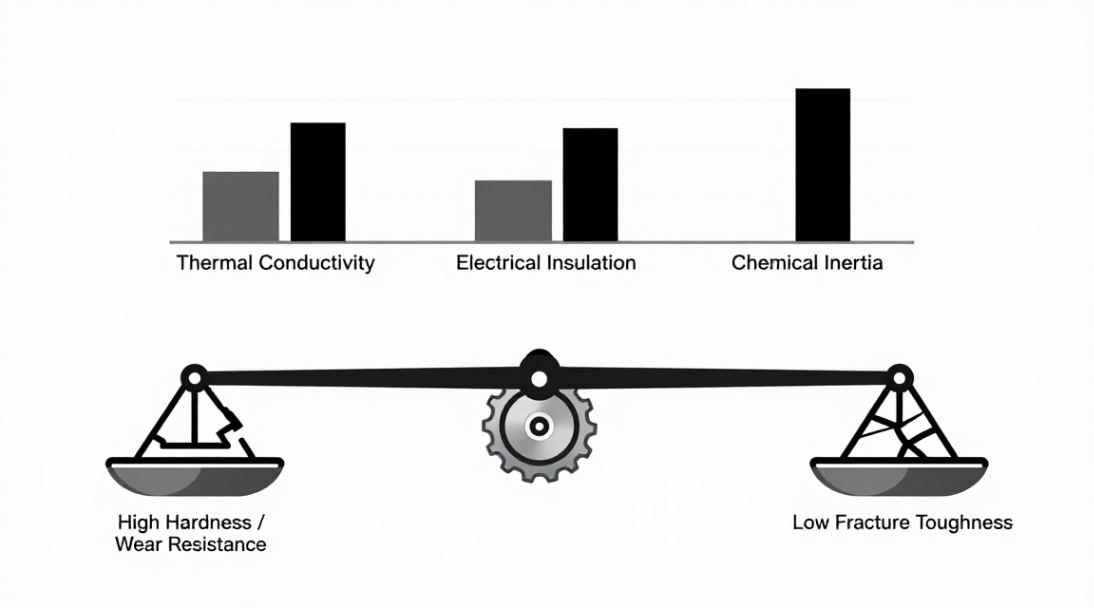
- Thermal Conductivity vs. Electrical Insulation: Alumina is a good insulator of both electricity and heat. If you need to conduct heat away while insulating electrically (like in a power module), aluminum nitride ceramic is a superior but more expensive choice.
- Fracture Toughness vs. Hardness: Pure alumina is very hard but can be brittle. For parts subject to impact, zirconia-toughened alumina (ZTA) offers a better balance. For pure toughness, zirconia itself is better.
- Cost vs. Purity: A 92% alumina part costs significantly less than a 99.5% one. If your application doesn’t demand the highest electrical or chemical performance, the lower grade saves money without sacrificing mechanical strength.
Step 3: Specify the Form and Finish
How the part is made and finished is as critical as the material itself.
- Common Forms: You’ll typically source alumina as substrates, insulators, tubes, rods, plates, or custom-molded components.
- Surface Finish Matters: An as-fired surface is rough. A ground and lapped surface is smooth and precise. For sealing surfaces or low-friction wear applications, specify the required Ra (roughness average) value. In our own product line, we offer precision-lapped wear plates that meet exacting flatness and smoothness specs, ready for installation.
- Dimensional Tolerances: Sintered ceramics shrink. Work with your supplier early to design for predictable shrinkage. Tight tolerances require diamond grinding, which adds cost.
Alumina vs. Other Technical Ceramics: A Quick Comparison Guide
Alumina is excellent, but not always the best. Use this cheat sheet to know when to look elsewhere.
- vs. Zirconia (ZrO2): Choose zirconia for higher fracture toughness and flexural strength. It’s better for blades, scissors, or high-impact parts. Alumina wins on hardness, wear resistance, and cost.
- vs. Silicon Carbide (SiC): Silicon carbide ceramic has much higher thermal conductivity and is even harder. Use it for advanced heat sinks, abrasion zones, or in forms like reaction-sintered silicon carbide ceramics for extreme environments. Alumina is the better electrical insulator.
- vs. Aluminum Nitride (AlN): This is your move for high thermal conductivity paired with electrical insulation. It’s the premium choice for high-power electronics. Alumina is the standard, cost-effective insulator.
- vs. Boron Nitride (BN): Boron nitride ceramic is soft, machinable, and an excellent high-temperature lubricant. It’s often used with a special coating for boron nitride ceramic crucibles to prevent wetting. They solve completely different problems than hard, structural alumina.
Future Trends: Where Advanced Alumina is Headed
The story of aluminum oxide ceramic isn’t finished. Engineers are pushing its boundaries in exciting ways.
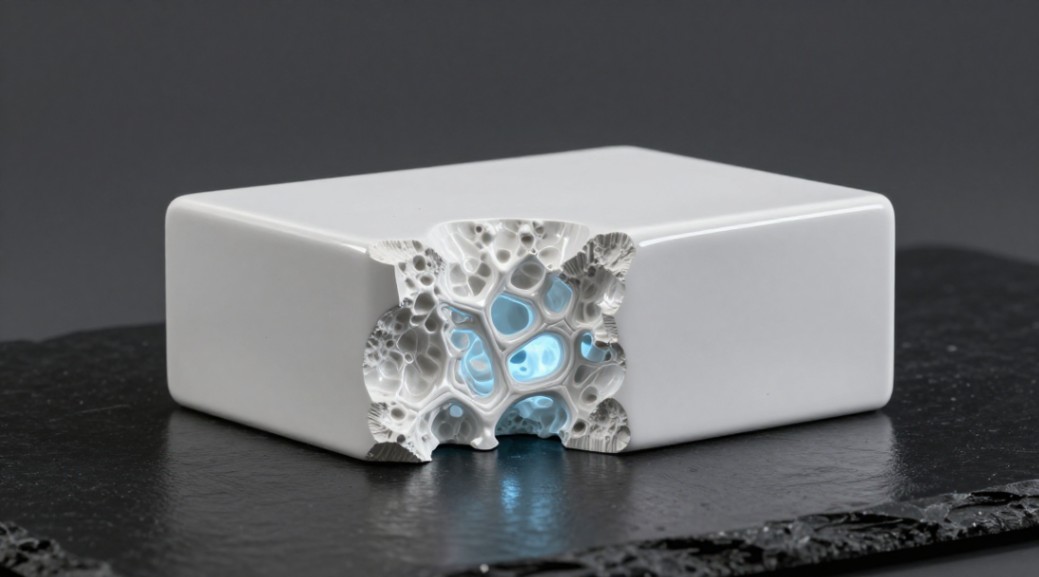
- Nanostructured Alumina: By controlling material structure at the nanoscale, we can achieve even higher strength, transparency, and novel functional properties.
- Multi-Material Integration: Look for more hybrid parts where alumina is co-fired or bonded with metals or other ceramics like mullite ceramic to create components with graded functionality.
- Additive Manufacturing (3D Printing): Techniques for printing high-density, complex alumina parts are maturing rapidly. This allows for geometries impossible with traditional pressing or casting, opening doors in aerospace and medical design.
- Enhanced Surface Engineering: Advanced polishing, coating, and texturing techniques are making alumina perform better in seals, bearings, and tribological systems.
Your success with aluminium oxide ceramic depends on a clear-eyed assessment of your needs. Start with its unbeatable combination of hardness, insulation, and cost. Then, carefully weigh purity, toughness, and thermal requirements against alternatives like zirconia or silicon nitride ceramic. When you need a reliable, high-performance insulating or wear-resistant component, alumina is often the most logical and economical foundation to build upon. For your next prototype, begin by consulting with a specialist who can help you navigate these grades and processes-it’s the fastest path to a part that performs exactly as you designed it.
Suppiler
Synthetic-chemical focus on the research and development, production and sales of ceramic products, serving the electronics, ceramics, chemical and other industries. Since its establishment in 2015, the company has been committed to providing customers with the best products and services, and has become a leader in the industry through continuous technological innovation and strict quality management.
Our products includes but not limited to Aluminum Nitride, Aluminum Oxide, Boron Carbide, Boron Nitride, Ceramic Crucible, ect. If you are interested in any type of these, please feel free to contact us.