Next-Generation Ceramics: Unlocking Superior Properties for Industry

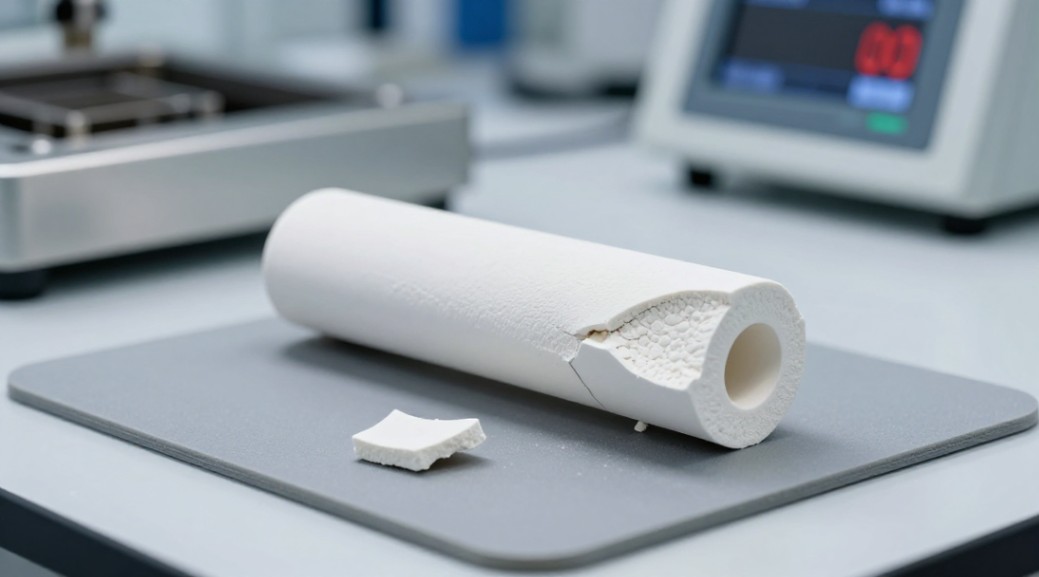
We were on a tight deadline for a new semiconductor processing component, a wafer handling arm. The design team, brilliant and driven, had selected a 99.8% aluminium oxide ceramic. The reasoning seemed flawless: exceptional hardness, superb electrical insulation, and the ability to withstand the furnace temperatures. On paper, it was perfect. They presented finite element models showing minimal stress. The prototypes arrived, gleaming and white. They passed the initial electrical tests with flying colors. Then, during the first thermal cycle test, one of the critical mounting lugs simply snapped off. It wasn’t a dramatic failure; it was a clean, brittle fracture. That fracture cost us six weeks, a significant budget overrun, and a painful lesson about the chasm between a material’s properties and its behavior in a real application. That was twenty years ago. I have seen versions of this story repeat itself ever since.
The Allure and the Abyss of the Workhorse
Aluminum oxide ceramic, universally called alumina, is the workhorse of advanced ceramics. It dominates for good reason. Its high hardness and mechanical strength make it ideal for wear-resistant liners and cutting tool inserts. Its electrical insulation capabilities and high dielectric strength are non-negotiable for spark plug insulators and microelectronic substrates. For a ceramic, it boasts very high thermal conductivity, a property that often surprises those comparing it to glass or traditional pottery. It resists temperatures that would melt most metals. This suite of properties has cemented its place across industries: from the silicon carbide-bonded furnace fixtures in steel mills to the biocompatible femoral heads in hip replacements. But this very versatility is a trap. Engineers see a checklist of superlative properties and assume a universal solution. This is the first, and most dangerous, mistake.
The Three Unforgiving Realities You Cannot Ignore
You must never forget three fundamental truths about alumina. First, it is intrinsically brittle. Unlike metals, it lacks plasticity. It does not yield; it fractures. This demands a design philosophy that eliminates stress concentrators-sharp corners, sudden section changes, and poorly designed press fits. A colleague once quipped, “If your alumina part looks like a machined metal part, you have already failed.” Second, its thermal conductivity, while high for a ceramic, is still an order of magnitude below that of metals like aluminum. This creates severe thermal shock risks if heating or cooling is not uniform. A component can shatter from a thermal gradient, not just from exceeding its maximum temperature. Third, not all alumina is created equal. The performance gap between a standard 96% alumina and a high-purity 99.5% or 99.8% grade is profound. The former contains a glassy silicate grain boundary phase that degrades high-temperature strength and corrosion resistance. Using a 96% grade in a high-temperature, corrosive environment is a guaranteed path to premature failure. As Dr. Elena Vasquez, a leading researcher at the International Ceramic Institute, states in her 2022 review, “The selection of alumina grade based solely on cost, without regard for the operational chemistry, remains the single largest contributor to field failures in chemical processing.”
The Costly Mistake of Misplaced Comparisons
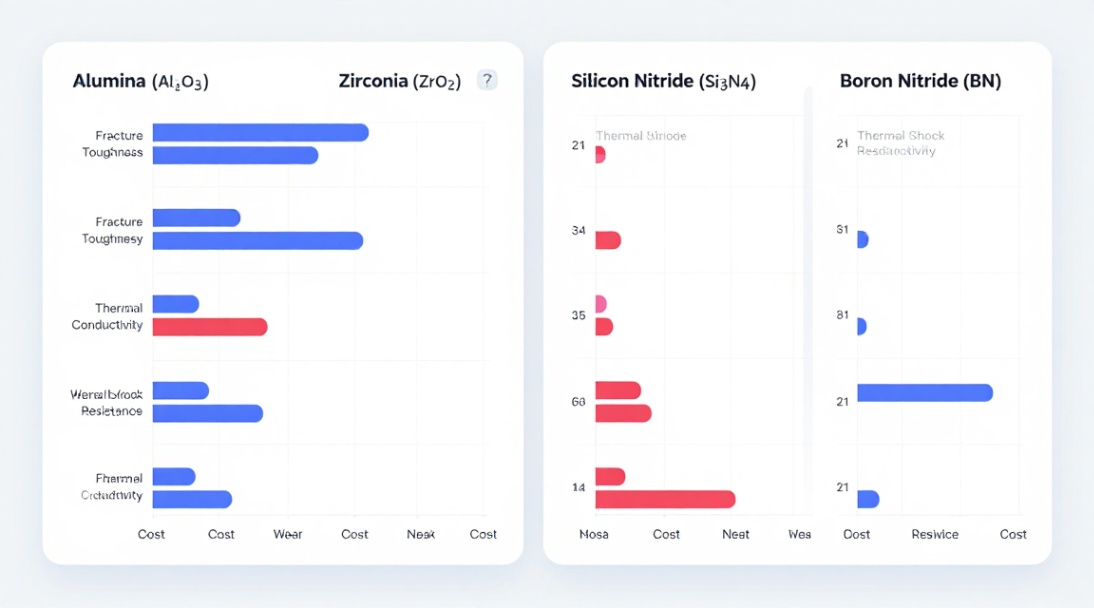
The selection process often goes awry during material comparison. A designer needs a high-strength, electrically insulating part. They see alumina’s data sheet. They might also glance at data for zirconia or silicon nitride. The decision seems straightforward. But it rarely is. Zirconia offers far higher fracture toughness-it resists crack propagation better-but at a higher cost and with lower thermal conductivity. Silicon nitride ceramic possesses exceptional thermal shock resistance and mechanical reliability, but its electrical properties differ. Boron nitride ceramic is an excellent high-temperature insulator but lacks the wear resistance. The error is selecting a material first, then designing around it. The correct sequence is to define the functional requirements and the failure modes first: Is the dominant threat abrasion, thermal shock, corrosion, or electrical breakdown? Only then does the comparison between alumina, silicon carbide ceramic, and others become meaningful. I have witnessed entire projects derailed because a team designed a beautiful part for aluminum nitride ceramic‘s thermal management properties, only to discover its vulnerability to the aqueous cleaning process in the next assembly step.
From Powder to Part: Where Control is Everything
The manufacturing journey of an alumina component is a gauntlet where small deviations lead to catastrophic property losses. The common processes-dry pressing, isostatic pressing, extrusion, followed by sintering-are deceptively simple in description. The reality is a relentless pursuit of consistency. Powder characteristics-particle size distribution, purity, morphology-dictate the final density and grain structure. Sintering temperature and atmosphere control the elimination of porosity and the development of the final microstructure. A deviation of 20 degrees Celsius in the sintering profile can transform a high-strength, transparent alumina component into a weak, opaque one. This brittleness necessitates diamond grinding for final machining, a costly and skill-intensive step. Attempting to machine alumina with standard carbide tooling is a futile exercise that will destroy your tools and likely your part. Even with diamond tools, you must manage heat and stress. The advice is absolute: engage with your ceramic manufacturer at the concept stage. Do not finalize a design in a vacuum and then “send it out for quote.” A seasoned fabricator will identify design flaws, suggest manufacturable tolerances, and guide you on the optimal blank-forming process, whether it’s suitable for pressureless sintered silicon carbide ceramics or requires a different approach.
A Guide, Not a Checklist
So, what should you do? Start by ruthlessly defining your application’s environment. List every stress: mechanical load type (static, dynamic, impact), thermal cycle range and rate, chemical exposure (acids, alkalis, molten metals), and electrical field. Quantify them. Then, and only then, begin material selection. For pure wear resistance in a non-shock environment, a high-hardness alumina may win. For a substrate requiring extreme electrical insulation and good heat spreading, high-purity alumina is a prime candidate. For a biomedical implant where biocompatibility and low wear debris are critical, medical-grade alumina has a proven history. For a crucible handling molten reactive metals, you might need a special coating for boron nitride ceramic crucibles instead. Understand that choosing alumina often means making trade-offs. You are selecting a material with unparalleled stability and a wide property envelope, but you are accepting its brittleness. You must design to mitigate that. You must specify the precise grade. You must control the manufacturing chain. Ignore any of these, and the gleaming white ceramic part you receive will be a liability, not a solution. Its dominance is not an accident; it is earned through decades of reliable service in the most demanding conditions. But that reliability is conditional. It demands respect for its nature.
Suppiler
Synthetic-chemical focus on the research and development, production and sales of ceramic products, serving the electronics, ceramics, chemical and other industries. Since its establishment in 2015, the company has been committed to providing customers with the best products and services, and has become a leader in the industry through continuous technological innovation and strict quality management.
Our products includes but not limited to Aluminum Nitride, Aluminum Oxide, Boron Carbide, Boron Nitride, Ceramic Crucible, ect. If you are interested in any type of these, please feel free to contact us.