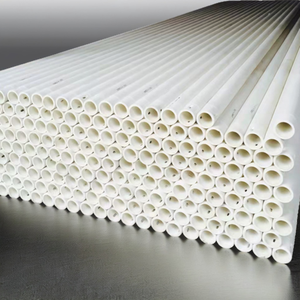
Next-Generation Ceramics: Unlocking Superior Properties for Industry

PRODUCT PARAMETERS
Description
Overview of Bare 96% Al2O3 Alumina Ceramic PCB Sheet / Substrate
Alumina Ceramic, or Aluminum Oxide (Al₂O₃), is the most widely used and versatile advanced ceramic material. Known for its excellent balance of mechanical, thermal, and electrical properties, it is a cost-effective solution for a vast array of demanding industrial applications. Alumina components are produced in purity levels ranging from 85% to 99.9%, with properties enhancing as purity increases.
Features of Bare 96% Al2O3 Alumina Ceramic PCB Sheet / Substrate
- High Hardness & Wear Resistance: Offers exceptional resistance to abrasion and mechanical wear.
- Excellent Electrical Insulation: Maintains high electrical resistivity even at elevated temperatures.
- Good Thermal Conductivity: (For a ceramic) effectively dissipates heat, especially in higher purity grades.
- High Compressive Strength: Capable of withstanding significant mechanical loads.
- Chemical Inertness: Highly resistant to corrosion from acids, alkalis, and molten metals.
- Cost-Effectiveness: Provides superior performance at a lower cost compared to many other technical ceramics.

Specifications of Bare 96% Al2O3 Alumina Ceramic PCB Sheet / Substrate
Specifications of Bare 96% Al Two O Five Alumina Ceramic PCB Sheet/ Substrate
Material Make-up
This substrate is made from 96% pure aluminum oxide (Al ₂ O FOUR). The remaining 4% includes additives that assist with sintering and mechanical toughness. This make-up provides the material superb electric insulation and great thermal conductivity.
Physical Characteristics
The typical density arrays from 0.25 mm to 1.0 mm, but customized dimensions are readily available. The common sheet dimension is 100 mm × 100 mm or 150 mm × 150 mm. Surface area finish is smooth, with a roughness (Ra) typically below 0.8 µm. The color is white or beige. Density is about 3.7 g/cm SIX. Flexural toughness is generally 300– 350 MPa. Firmness actions around 1500– 1600 HV on the Vickers scale.
Thermal Efficiency
Thermal conductivity is approximately 24– 28 W/m · K. This makes it appropriate for applications that generate warm and need efficient dissipation. The coefficient of thermal expansion (CTE) is about 6.5– 7.5 × 10 ⁻⁶/ ° C (from 25 ° C to 300 ° C). It can take care of continuous operating temperatures as much as 1500 ° C in air without breaking down.
Electric Features
Volume resistivity exceeds 10 ¹⁴ Ω · cm at room temperature level. Dielectric stamina is over 15 kV/mm. The dielectric constant (εᵣ) is around 9.6 at 1 MHz, with a low dissipation variable (tan δ) of much less than 0.0005. These residential or commercial properties make certain steady signal transmission and marginal loss in high-frequency circuits.
Mechanical and Chemical Stability
The product stands up to wear, deterioration, and a lot of acids and antacids. It maintains structural honesty under mechanical stress and anxiety and rough settings. Edges can be laser-cut or diced easily without cracking when taken care of properly.
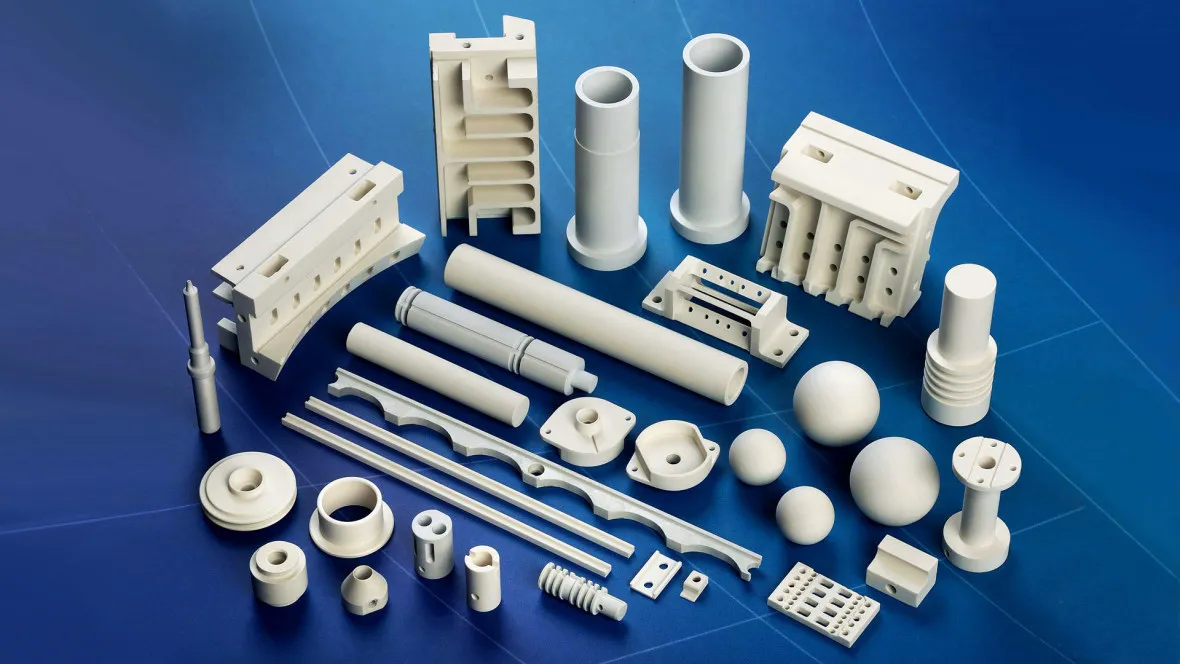
Applications of Bare 96% Al2O3 Alumina Ceramic PCB Sheet / Substrate
Applications of Bare 96% Al Two O Two Alumina Ceramic PCB Sheets
High-Power Electronics
Bare 96% alumina ceramic substrates take care of high power tons easily. Their solid thermal conductivity pulls warm away from parts fast. This keeps tools like power modules, inverters, and motor drives running awesome and stable. Designers choose these substrates when metal-core boards fall short.
LED Illumination Systems
These ceramic sheets work well in high-brightness LED applications. Warmth accumulates swiftly in dense LED varieties. The alumina substrate spreads out that heat uniformly. This quits hot spots and extends the life of the LEDs. It additionally assists maintain regular light output with time.
Sensing Units and Automotive Electronic Devices
Automotive sensing units deal with tough conditions– high heat, resonance, and electrical noise. 96% Al ₂ O ₃ ceramic PCBs offer mechanical stamina and electrical insulation in one bundle. They are used in engine control units, pressure sensors, and ignition systems where dependability matters most.
RF and Microwave Gadgets
The product’s steady dielectric residential or commercial properties make it optimal for superhigh frequency circuits. Signal loss stays low even at high frequencies. Antennas, filters, and amplifiers in telecom and radar systems benefit from this performance. The substrate does not warp or degrade under duplicated thermal cycles.
Industrial and Medical Tools
In commercial controls and clinical imaging devices, precision and security are important. Alumina ceramic substratums withstand deterioration and take on extreme cleaning chemicals. They give a flat, rigid base for fine-pitch circuits. This guarantees long-term operation without failing.
These bare ceramic sheets come without any metallization, giving designers complete flexibility to add customized circuit patterns. Their purity, uniformity, and thermal performance make them a relied on choice throughout requiring fields.

Company Profile
Synthetic-chemical focus on the research and development, production and sales of ceramic products, serving the electronics, ceramics, chemical and other industries. Since its establishment in 2015, the company has been committed to providing customers with the best products and services, and has become a leader in the industry through continuous technological innovation and strict quality management.
Our products includes but not limited to Aluminum Nitride, Aluminum Oxide, Boron Carbide, Boron Nitride, Ceramic Crucible, ect. If you are interested in any type of these, please feel free to contact us.

Payment Methods
T/T, Western Union, Paypal, Credit Card etc.
Shipment Methods
By air, by sea, by express, as customers request.
5 FAQs of Bare 96% Al2O3 Alumina Ceramic PCB Sheet / Substrate
Frequently Asked Questions About Bare 96% Al₂O₃ Alumina Ceramic PCB Sheets
What is a 96% Al₂O₃ alumina ceramic PCB sheet?
This is a flat, rigid board made mostly of aluminum oxide (96% purity). It works as a base for mounting electronic parts. The material handles heat well and insulates electricity effectively.
Why choose 96% alumina over other materials?
96% alumina offers a good balance of cost and performance. It resists high temperatures, stays strong under stress, and does not conduct electricity. These traits make it ideal for power electronics, sensors, and LED systems where reliability matters.
Can this substrate handle high-power applications?
Yes. Its thermal conductivity is much better than standard FR-4 boards. Heat moves through it quickly, which helps keep components cool during heavy use. This reduces the risk of overheating and failure in demanding circuits.
Is it easy to process or customize?
It can be cut, drilled, and metallized using standard ceramic processing methods. However, it is harder than regular PCB materials, so special tools are needed. Most manufacturers offer custom sizes, thicknesses, and metal patterns like silver or copper traces.
What industries commonly use this type of substrate?
You’ll find it in automotive electronics, industrial controls, medical devices, aerospace systems, and high-brightness LED lighting. Any application needing stable performance under heat, vibration, or harsh conditions often uses 96% alumina ceramic substrates.
REQUEST A QUOTE
RELATED PRODUCTS
Calcined Alumina Polishing Powder for Dental & Industrial Use
95%/96%/99% Alumina (Al2O3) Ceramic Components
Zirconia Ceramic Basket Gemstone with Alumina Coating
95% Alumina (Al2O3) Ceramic Substrate Plate for LED Applications
Premium 95% High Purity Alumina (Aluminum Oxide) Ingot