Next-Generation Ceramics: Unlocking Superior Properties for Industry

PRODUCT PARAMETERS
Description
Overview of Chemical Grade Activated Alumina (Aluminum Oxide) Ceramic
Alumina Ceramic, or Aluminum Oxide (Al₂O₃), is the most widely used and versatile advanced ceramic material. Known for its excellent balance of mechanical, thermal, and electrical properties, it is a cost-effective solution for a vast array of demanding industrial applications. Alumina components are produced in purity levels ranging from 85% to 99.9%, with properties enhancing as purity increases.
Features of Chemical Grade Activated Alumina (Aluminum Oxide) Ceramic
- High Hardness & Wear Resistance: Offers exceptional resistance to abrasion and mechanical wear.
- Excellent Electrical Insulation: Maintains high electrical resistivity even at elevated temperatures.
- Good Thermal Conductivity: (For a ceramic) effectively dissipates heat, especially in higher purity grades.
- High Compressive Strength: Capable of withstanding significant mechanical loads.
- Chemical Inertness: Highly resistant to corrosion from acids, alkalis, and molten metals.
- Cost-Effectiveness: Provides superior performance at a lower cost compared to many other technical ceramics.
Specifications of Chemical Grade Activated Alumina (Aluminum Oxide) Ceramic
Chemical Grade Activated Alumina (Aluminum Oxide) Ceramic – Product Specifications
Physical Properties
Appearance: White, spherical or cylindrical granules.
Particle Size: Available in standard mesh sizes such as 1/16″, 1/8″, 3–5 mm, or custom ranges upon request.
Bulk Density: Typically 0.65–0.75 g/cm³.
Crush Strength: Minimum 80 N/pellet for 3 mm beads; higher strengths available for specialized applications.
Chemical Composition
Al₂O₃ Content: ≥92% (minimum).
Sodium Oxide (Na₂O): ≤0.4%.
Silica (SiO₂): ≤0.05%.
Ferric Oxide (Fe₂O₃): ≤0.03%.
Loss on Ignition: ≤6.0% at 1000°C.
Performance Characteristics
Surface Area: 280–350 m²/g (BET method).
Pore Volume: 0.35–0.45 cm³/g.
Average Pore Diameter: 30–70 Å.
Water Adsorption Capacity: ≥17% at 25°C and 60% relative humidity.
Key Features
This activated alumina is made from high-purity aluminum hydroxide. It has a highly porous structure that gives it strong adsorption power. The material stays stable under normal operating temperatures and resists physical breakdown during use. It works well in drying gases and liquids, removing fluoride from water, and acting as a catalyst support. Its low dust content and uniform shape help reduce pressure drop in packed beds.
Handling and Storage
Store in a dry, covered area away from moisture. Keep containers sealed when not in use. Avoid contact with strong acids or bases unless part of the intended application. Use standard industrial safety practices during handling.
Applications of Chemical Grade Activated Alumina (Aluminum Oxide) Ceramic
Applications of Chemical Grade Activated Alumina (Aluminum Oxide) Ceramic
Water and Air Drying
Chemical grade activated alumina is widely used to dry air and gases. It pulls moisture from compressed air systems, refrigeration units, and industrial gas streams. This keeps equipment running smoothly and prevents corrosion or freezing in pipelines. In water treatment, it removes fluoride, arsenic, and other harmful substances. Its high surface area and strong adsorption power make it reliable for clean, safe water.
Petrochemical and Refining Processes
In oil and gas operations, this ceramic material acts as a drying agent for hydrocarbons. It protects catalysts from water damage during refining. Plants use it to purify natural gas and remove trace water before liquefaction. The result is better process efficiency and longer equipment life.
Industrial Catalyst Support
Activated alumina serves as a base for many chemical catalysts. Its stable structure holds active ingredients in place while allowing reactions to happen quickly. This is common in sulfur recovery units and hydrogen production systems. The material stays strong even under high heat and pressure.
Pharmaceutical and Food Processing
Cleanliness matters in medicine and food production. Activated alumina helps dry solvents and process air without adding contaminants. It meets strict purity standards. Factories rely on it to keep products safe and consistent.
Laboratory and Specialty Uses
Labs use small amounts for precise drying tasks. It also appears in specialty glass manufacturing and electronics cleaning. Wherever ultra-dry conditions or pure surfaces are needed, this ceramic delivers dependable performance.

Company Profile
Synthetic-chemical focus on the research and development, production and sales of ceramic products, serving the electronics, ceramics, chemical and other industries. Since its establishment in 2015, the company has been committed to providing customers with the best products and services, and has become a leader in the industry through continuous technological innovation and strict quality management.
Our products includes but not limited to Aluminum Nitride, Aluminum Oxide, Boron Carbide, Boron Nitride, Ceramic Crucible, ect. If you are interested in any type of these, please feel free to contact us.

Payment Methods
T/T, Western Union, Paypal, Credit Card etc.
Shipment Methods
By air, by sea, by express, as customers request.
5 FAQs of Chemical Grade Activated Alumina (Aluminum Oxide) Ceramic
Frequently Asked Questions About Chemical Grade Activated Alumina
What is chemical grade activated alumina?
Chemical grade activated alumina is a form of aluminum oxide processed to create a highly porous structure. This gives it a large surface area, which helps it absorb moisture and other substances effectively. It is made specifically for industrial and chemical applications where high purity and performance are needed.
How does it work as a desiccant?
Activated alumina pulls water vapor from air or gas streams through adsorption. Its tiny pores trap water molecules while letting the rest of the gas pass through. This makes it ideal for drying compressed air, natural gas, and refrigerants in many industries.
Can it be reused?
Yes. Once saturated with moisture, activated alumina can be regenerated. You heat it to around 180–300°C (356–572°F) to drive off the absorbed water. After cooling, it is ready to use again. This regeneration process can be repeated many times without losing much effectiveness.
Is it safe to handle?
Activated alumina is non-toxic and chemically stable under normal conditions. Still, you should avoid breathing in fine dust during handling. Use gloves and safety glasses as basic protection. Store it in a dry place to keep it from picking up moisture before use.
What industries use chemical grade activated alumina?
It is widely used in petrochemical plants, pharmaceutical manufacturing, and air separation units. Water treatment facilities also use it to remove fluoride and arsenic from drinking water. Its reliability and efficiency make it a top choice wherever precise drying or purification is required.
REQUEST A QUOTE
RELATED PRODUCTS
Bulk 95%/96%/99% Alumina Ceramic Round Plate / Disc
Large Pore Pseudo-Boehmite Activated Alumina – China Factory
Industrial Machinery Alumina Ceramic Parts
Zirconia Ceramic Basket Gemstone with Alumina Coating
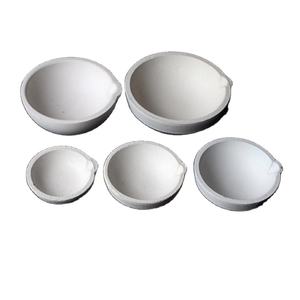
Zirconia-Gravel Coated Alumina Ceramic Basket Gemstone