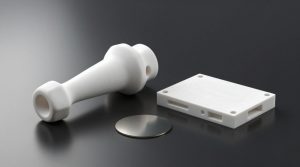
Next-Generation Ceramics: Unlocking Superior Properties for Industry

PRODUCT PARAMETERS
Description
Overview of Boron Nitride Insulator Hot Press Ceramic Machinable
Boron Nitride (BN) exists in multiple polymorphs, with Hexagonal Boron Nitride (h-BN) being the most common ceramic form. Often called “white graphite” due to its similar layered, lubricious structure, it is distinguished by its exceptional thermal stability, electrical insulation, and chemical inertness, even at extreme temperatures.
Features of Boron Nitride Insulator Hot Press Ceramic Machinable
- High Thermal Conductivity & Excellent Electrical Insulation: Unique combination that allows it to conduct heat like a metal but insulate like a ceramic.
- Outstanding Thermal Shock Resistance: Can be heated and cooled rapidly without cracking.
- Natural Lubricity: Exhibits low friction and anti-stick properties, even at high temperatures.
- Chemically Inert: Resists wetting by and reaction with most molten metals, slags, and glasses.
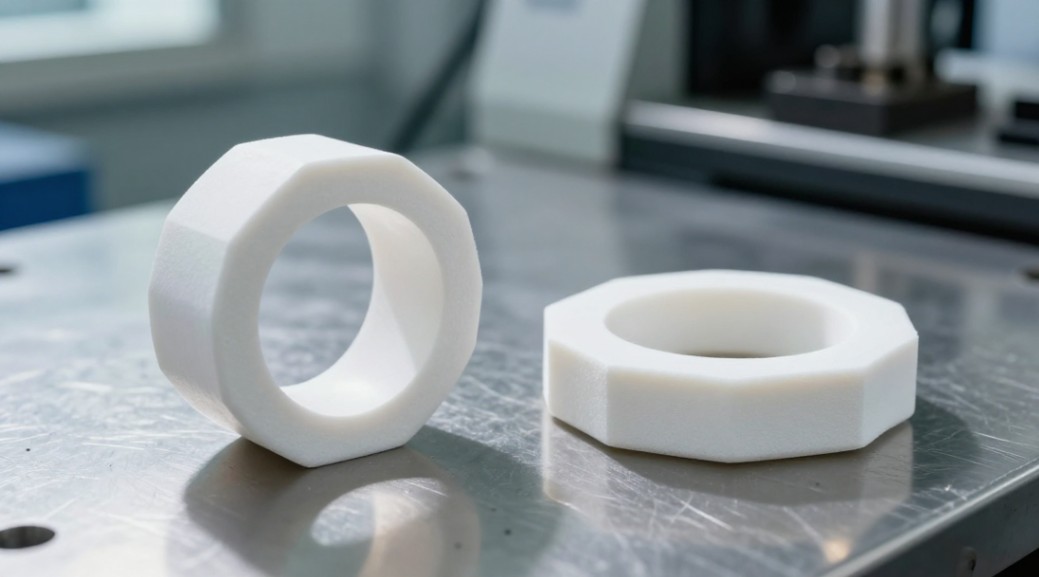
- Machinable: Unlike most advanced ceramics, h-BN in its solid form can be machined to precision tolerances using conventional carbide tooling.
Specifications of Boron Nitride Insulator Hot Press Ceramic Machinable
Specifications of Boron Nitride Insulator – Hot Press Ceramic, Machinable
Material Composition
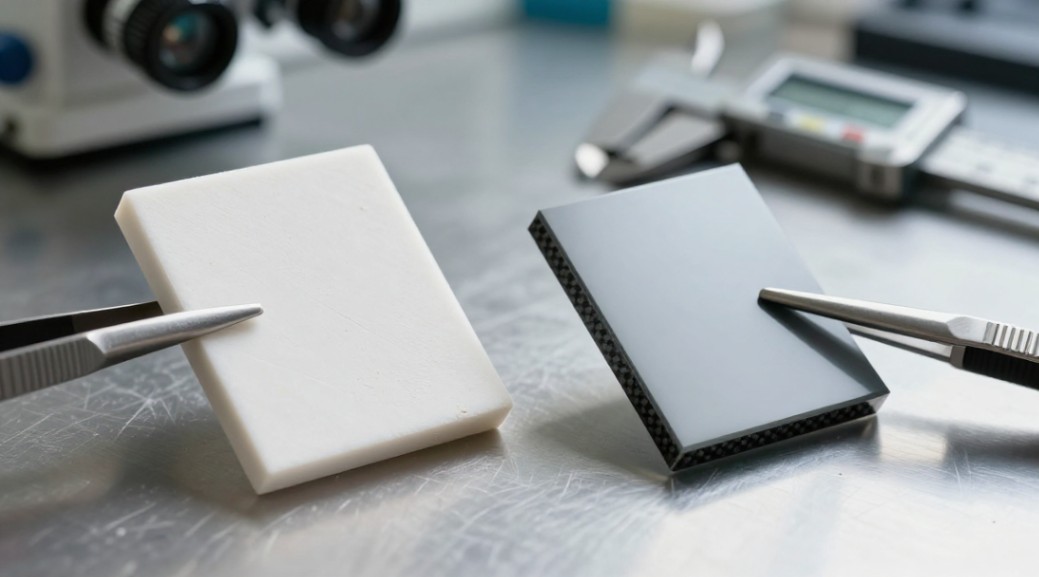
This insulator is made from high-purity hexagonal boron nitride (h-BN). It contains over 99% BN. No binders or additives are used in the hot press process. The result is a dense, uniform ceramic with excellent electrical insulation.
Physical Properties
The material has a density of 2.0–2.1 g/cm³. Its hardness is low enough to allow easy machining with standard tools like carbide or diamond cutters. You can drill, turn, or mill it without special equipment. Thermal conductivity reaches 30–60 W/m·K along the pressing direction. Perpendicular to that, it drops to 2–10 W/m·K. This anisotropy comes from the layered crystal structure formed during hot pressing.
Thermal Performance
It works continuously at temperatures up to 1000°C in air and even higher—up to 2000°C—in inert atmospheres. The coefficient of thermal expansion is low, around 2–4 × 10⁻⁶ /°C (parallel to pressing) and 20–30 × 10⁻⁶ /°C (perpendicular). This makes the part stable under rapid heating or cooling cycles.
Electrical Characteristics
Volume resistivity exceeds 10¹⁴ Ω·cm at room temperature. Even at 800°C, it stays above 10¹⁰ Ω·cm. Dielectric strength is typically 15–25 kV/mm. These values ensure reliable performance as an electrical insulator in high-heat environments.
Machinability & Surface Finish
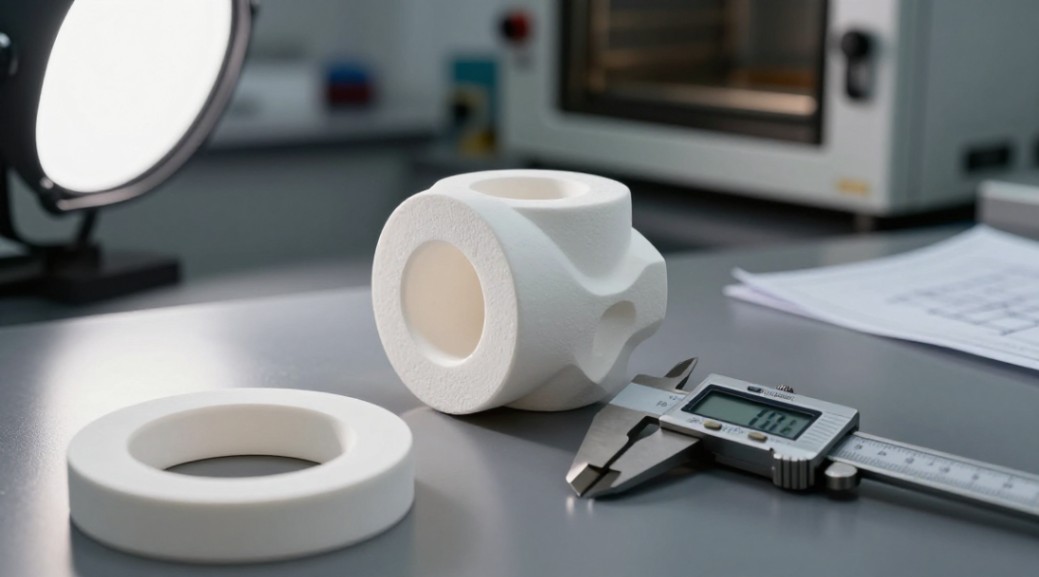
You can shape this ceramic into complex geometries. Tolerances down to ±0.05 mm are achievable. Surface roughness as fine as Ra 0.8 µm is possible with proper tooling. No post-firing is needed after machining. The final part retains all its original properties.
Chemical Resistance
It resists attack from most molten metals, slags, and acids. It does not react with aluminum, iron, or copper melts. However, strong oxidizing agents at high temperatures may cause gradual degradation.
Applications of Boron Nitride Insulator Hot Press Ceramic Machinable
Applications of Boron Nitride Insulator Hot Press Ceramic Machinable
High-Temperature Electrical Insulation
Boron nitride hot press ceramic works well in extreme heat. It stays stable up to 1000°C in air and even higher in inert atmospheres. This makes it ideal for electrical insulation where regular materials would fail. You’ll find it used in heating elements, thermocouple sheaths, and high-temperature sensors.
Precision Components in Semiconductor Manufacturing
The semiconductor industry needs parts that won’t contaminate sensitive processes. Machinable boron nitride is pure and non-reactive. It does not release particles or gases during use. Engineers shape it into wafer handling tools, diffusion barriers, and chamber liners. Its smooth surface and tight tolerances help maintain cleanroom standards.
Crucibles and Molds for Molten Metal Handling
This ceramic resists wetting by many molten metals, including aluminum and zinc. That means it won’t stick or degrade when in contact with liquid metal. Foundries use it to make crucibles, stirrers, and pouring nozzles. The material also handles thermal shock without cracking, which boosts safety and reliability.
Radar and Microwave Systems
Boron nitride has low dielectric loss. It lets radio waves pass through with little interference. Because of this, it’s used in radomes, antenna windows, and insulating supports inside microwave equipment. Its machinability allows complex shapes that fit tightly into compact systems.
Vacuum and Plasma Environments
In vacuum furnaces or plasma chambers, few materials hold up over time. Hot-pressed boron nitride performs reliably here. It outgasses very little and keeps its strength under pressure changes. Common uses include feedthrough insulators, support fixtures, and shielding components.
This ceramic combines easy machining with strong performance under stress. Users get custom parts fast without sacrificing quality or function.

Company Profile
Synthetic-chemical focus on the research and development, production and sales of ceramic products, serving the electronics, ceramics, chemical and other industries. Since its establishment in 2015, the company has been committed to providing customers with the best products and services, and has become a leader in the industry through continuous technological innovation and strict quality management.
Our products includes but not limited to Aluminum Nitride, Aluminum Oxide, Boron Carbide, Boron Nitride, Ceramic Crucible, ect. If you are interested in any type of these, please feel free to contact us.

Payment Methods
T/T, Western Union, Paypal, Credit Card etc.
Shipment Methods
By air, by sea, by express, as customers request.
5 FAQs of Boron Nitride Insulator Hot Press Ceramic Machinable
Frequently Asked Questions About Boron Nitride Insulator Hot Press Ceramic
What is hot-pressed boron nitride ceramic?
Hot-pressed boron nitride is a high-performance ceramic made by pressing and heating boron nitride powder under controlled conditions. This process creates a dense, strong material that keeps its shape and properties even at very high temperatures.
Why is it called “machinable”?
Unlike most ceramics that are hard and brittle, hot-pressed boron nitride can be cut, drilled, or shaped using standard metalworking tools. This makes it easy to turn into custom parts without special equipment.
What makes it a good electrical insulator?
Boron nitride does not conduct electricity. It stays stable across a wide temperature range and resists arcing. That’s why it’s often used in high-voltage or high-heat electrical applications where safety and reliability matter.
Can it handle high temperatures?
Yes. This ceramic works well in environments up to 1000°C in air and even higher in inert atmospheres. It won’t melt, warp, or lose strength under heat, which is rare for most insulating materials.
Where is it commonly used?
You’ll find hot-pressed boron nitride in semiconductor manufacturing, aerospace components, lab equipment, and high-temperature furnaces. It’s also used as spacers, supports, or insulators in systems that need both thermal stability and electrical isolation.
REQUEST A QUOTE
RELATED PRODUCTS
Hot Pressing Boron Nitride Ceramic Insulating Parts Electrode Protection
Boron Nitride Ceramic Cylinder Electrical Isolator Machinable
High Temperature Resistance Boron Nitride Ceramic Products
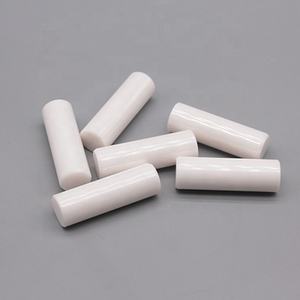
Boron Nitride Ceramics Insulating High Temperature Applications
High Purity Boron Nitride Ceramic for PVD Coating Technology