Next-Generation Ceramics: Unlocking Superior Properties for Industry

The Furnace That Crashed a Kiln
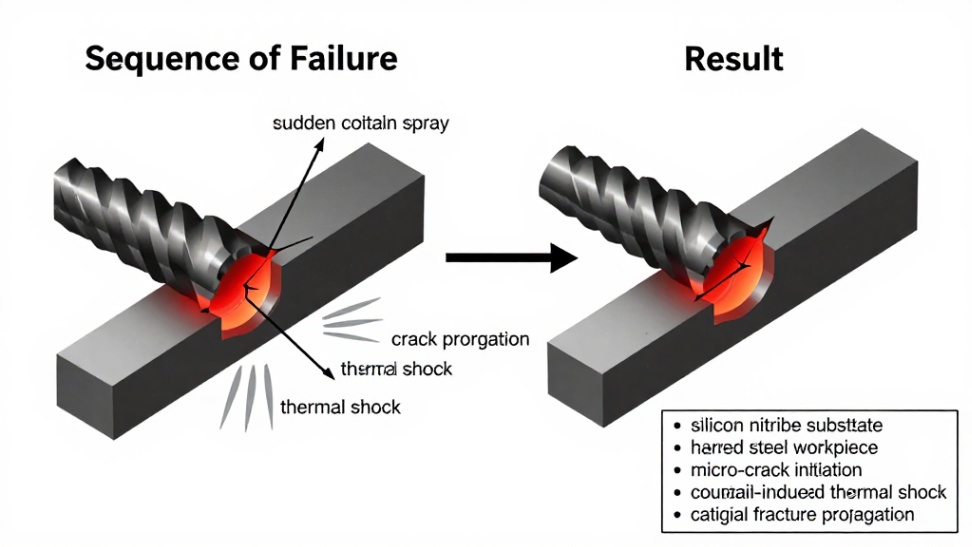
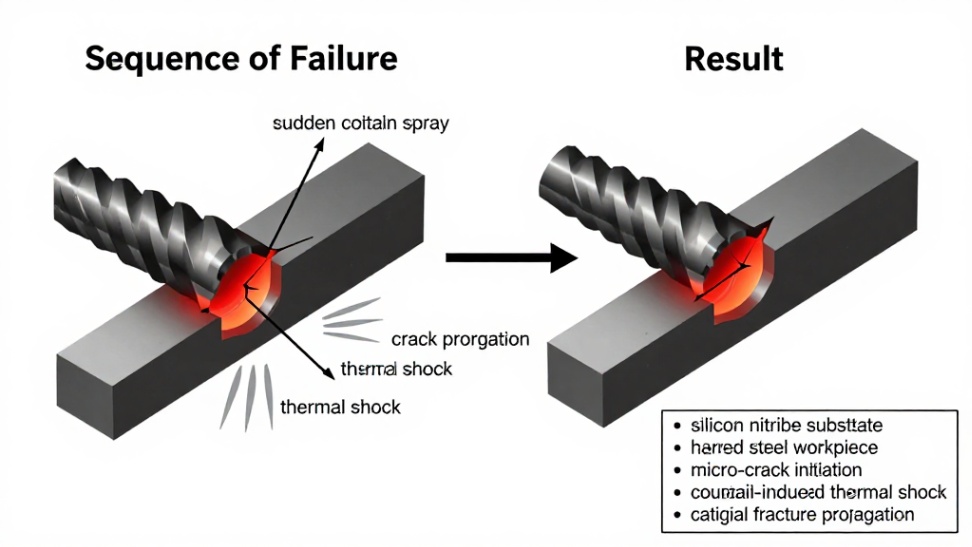
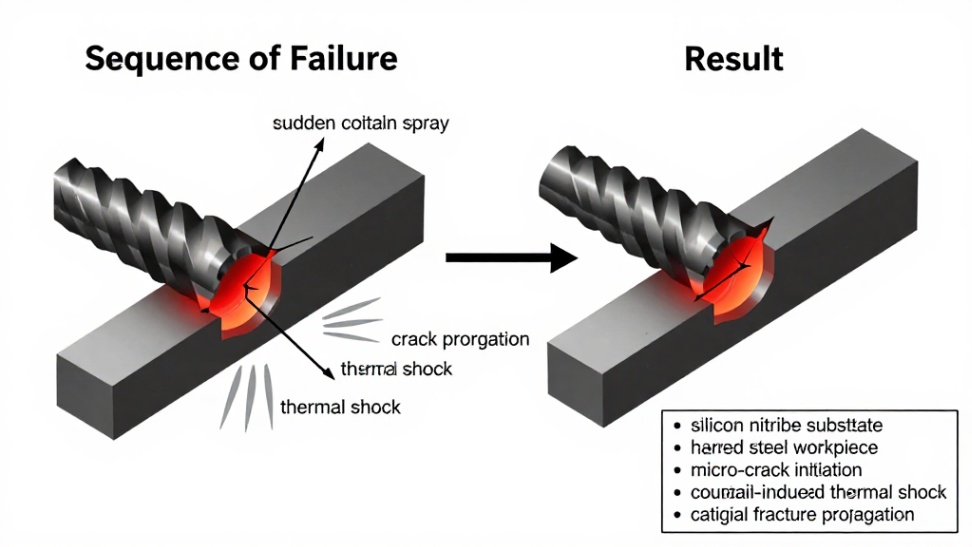
I once saw a $400,000 kiln project delayed for six months because of a spec sheet. The lead engineer, brilliant but new to refractories, had demanded “recrystallized silicon carbide with 15% porosity.” He got it. The first thermal cycle cracked every single support beam like dry twigs. The supplier had met the spec perfectly. Yet, the project failed completely. This single-minded focus on a number-the recrystallized silicon carbide porosity percentage-cost them a fortune. It’s a mistake I see daily. Let’s dissect why.
Porosity is Not a Standalone Property. It’s a Bargain.
You cannot specify porosity in a vacuum. Recrystallized SiC (R-SiC) is a sintered skeletal structure. The recrystallization firing process bonds SiC grains directly, leaving interconnected voids. Porosity percentage is the void volume. It is not an independent knob you turn. It is the direct result of the raw material choices and firing conditions, and it dictates every critical property. Thinking about porosity alone is like ordering a car based only on tire pressure. Here is the real, uncompromising relationship.
The Inevitable Trade-Off: A Logical Breakdown
| Chasing This Property… | Forces This Porosity Shift… | And Inevitably Sacrifices This… |
|---|---|---|
| Maximum Thermal Shock Resistance | Higher Porosity Percentage (e.g., 18-25%) | Mechanical Strength & Load-Bearing Capacity |
| Highest Mechanical Strength / Density | Lower Porosity Percentage (e.g., 10-15%) | Thermal Shock Resistance & Insulation Value |
| Superior Filtration / Gas Permeability | Very High, Tailored Porosity (>30%) | Structural Integrity & Corrosion Resistance |
| Improved Oxidation Resistance | Lower, Closed Porosity | Thermal Insulation & Lightweighting |
The logic is brutal and inescapable. Pores interrupt crack propagation, enhancing thermal shock survival. But they also act as stress concentrators, reducing strength. You must choose your battlefield.
Critical Industry Myths You Must Ignore
Myth 1: “Tighter Grain Size Means Lower Porosity”
This is dangerously incomplete logic. A fine, uniform grain size can pack densely, potentially lowering initial green body porosity. However, the recrystallization process needs surface energy to drive grain boundary migration. Too fine a distribution can lead to exaggerated grain growth and unpredictable, large pore formation. Control comes from a calculated, multi-modal grain size distribution. This creates a self-reinforcing skeleton where larger grains form the framework and smaller grains fill interstitial spaces, leading to a more predictable and stable porosity percentage.
Myth 2: “All 18% Porosity R-SiC is Created Equal”
A fatal assumption. The pore morphology-shape, size, and interconnectivity-is everything. 18% porosity from a coarse, angular grain structure with large, interconnected channels behaves radically differently from 18% porosity comprised of small, isolated spheres. The first is excellent for molten metal filters. The second might be a decent radiant tube. The firing temperature curve and atmosphere dictate this microstructure far more than the final number on a report.
Myth 3: “Higher Density (Lower Porosity) is Always Better”
This mindset destroys kiln furniture. For setters and beams, thermal shock is the primary killer. A denser, lower-porosity R-SiC part has higher thermal conductivity and lower strain tolerance. During rapid heating, thermal gradients create immense stress. The part shatters. The slightly more porous grade survives, flexing with the stress. Choosing the wrong side of this trade-off guarantees catastrophic failure.
The Right Way to Specify Recrystallized Silicon Carbide
Forget leading with a porosity number. Start here.
- Define the Primary Failure Mode. What will kill the part first? Thermal shock? Creep deformation? Chemical corrosion? Erosion? Your answer points to the required property balance.
- Define the Secondary Requirements. Must it be lightweight? Is gas flow essential? These needs further constrain the porosity solution.
- Work Backwards to Microstructure. Based on steps 1 and 2, logically deduce the needed pore structure. Do you need tortuous, fine pores for filtering? Or large, open channels for burner plates?
- Let the Manufacturer Solve the Equation. A competent producer uses your functional requirements to engineer the raw material blend and firing profile. They deliver a porosity percentage that meets your real needs, not an arbitrary target.
Stop Specifying, Start Solving
The industry is littered with parts that passed QC but failed in service. They met a spec. They didn’t solve a problem. This gap between a data sheet and real-world performance is where projects die and budgets burn. You need a partner who understands that recrystallized silicon carbide porosity percentage is a consequence of design, not a goal.
If your application involves extreme temperatures, rapid cycling, or corrosive environments, generic R-SiC grades are a liability. You require material engineered for your specific stress state. This is not a procurement exercise. It is an engineering collaboration.
Action Required: Stop searching for data sheets. Start defining your operational hell. Then, contact our technical engineering team with your specific application parameters and primary failure mode. We will not just sell you a material with a porosity number. We will co-engineer the pore structure your component actually requires. Email us your worst-case operational scenario. We will show you the logical path to a solution that works. The alternative is a stack of broken parts and a very expensive lesson.
Suppiler
Synthetic-chemical focus on the research and development, production and sales of ceramic products, serving the electronics, ceramics, chemical and other industries. Since its establishment in 2015, the company has been committed to providing customers with the best products and services, and has become a leader in the industry through continuous technological innovation and strict quality management.
Our products includes but not limited to Aluminum Nitride, Aluminum Oxide, Boron Carbide, Boron Nitride, Ceramic Crucible, ect. If you are interested in any type of these, please feel free to contact us.