Next-Generation Ceramics: Unlocking Superior Properties for Industry

The $20,000 Mistake I Almost Made
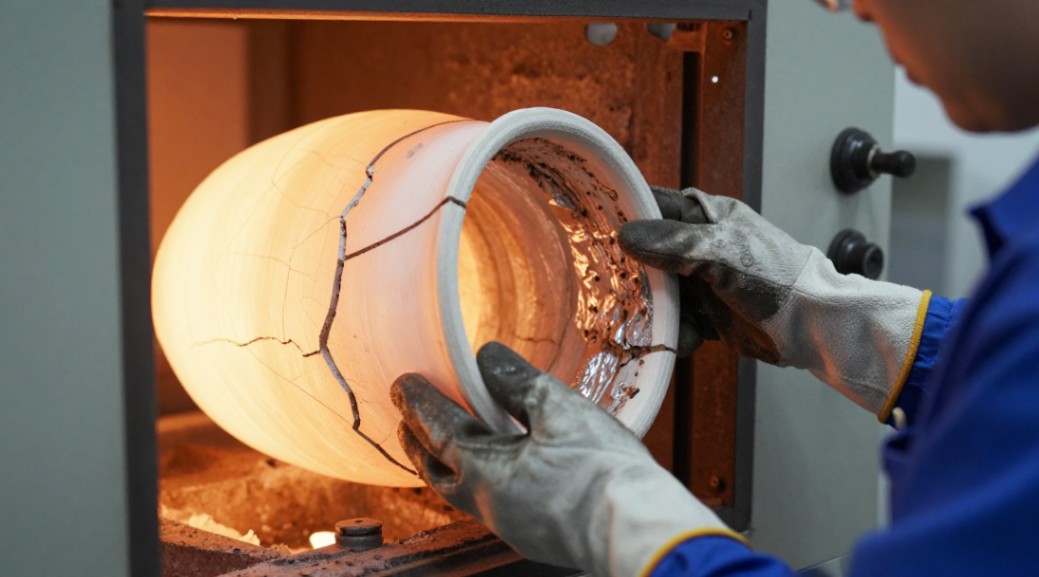
Years ago, we struggled with crucible failure in our aluminum evaporation line. Dross buildup was choking throughput. Contamination ruined high-value runs. We switched to premium alumina-coated crucibles, convinced it was the solution. Three weeks later, the crucible cracked during a critical thermal cycle. The shutdown cost us nearly $20,000 in lost production and materials. That failure sent me on a mission. I spoke with engineers from competing labs, scoured technical forums, and tested every material I could find. The consistent winner in the most demanding applications? Boron nitride ceramic crucible coating for aluminum evaporation. It wasn’t just a material swap; it was a complete operational rethink.
Your Crucible Coating Decision Matrix: Boron Nitride vs. The Rest
Choosing a coating isn’t about finding a ‘perfect‘ material. It’s about matching properties to your specific pain points. Let’s break down the options you’re likely considering.
Option 1: The Uncoated Crucible (Usually Graphite)
This is the baseline, and for many, the source of their biggest headaches.
- Pros: Low initial cost. Excellent thermal conductivity.
- Cons: Reacts with molten aluminum, forming aluminum carbide (Al4C3). This contaminates your melt and weakens the crucible wall. Aluminum wets the surface, leading to severe buildup and difficult cleanout. Short lifespan. High maintenance.
User reports are brutal. On forums like Practical Machinist and specific vacuum coating groups, the consensus is clear: “Running aluminum in bare graphite is a stop-gap measure. You’re buying crucibles like they’re disposable consumables.”
Option 2: Alumina (Al2O3) Ceramic Coating
This is a common upgrade, offering a step up in chemical resistance.
- Pros: Good chemical inertness against aluminum. Higher temperature capability than some organics. Readily available.
- Cons: Brittle. Prone to thermal shock cracking, exactly as I experienced. Aluminum can still wet the surface moderately, leading to some sticking. The mismatch in thermal expansion between the coating and a graphite body is a classic failure point.
One user on a materials science subreddit noted: “Our alumina coating works… until it doesn’t. The cracks are hard to spot until you get a leak. Then it’s a full crucible replacement.”
Option 3: Boron Nitride (BN) Ceramic Coating
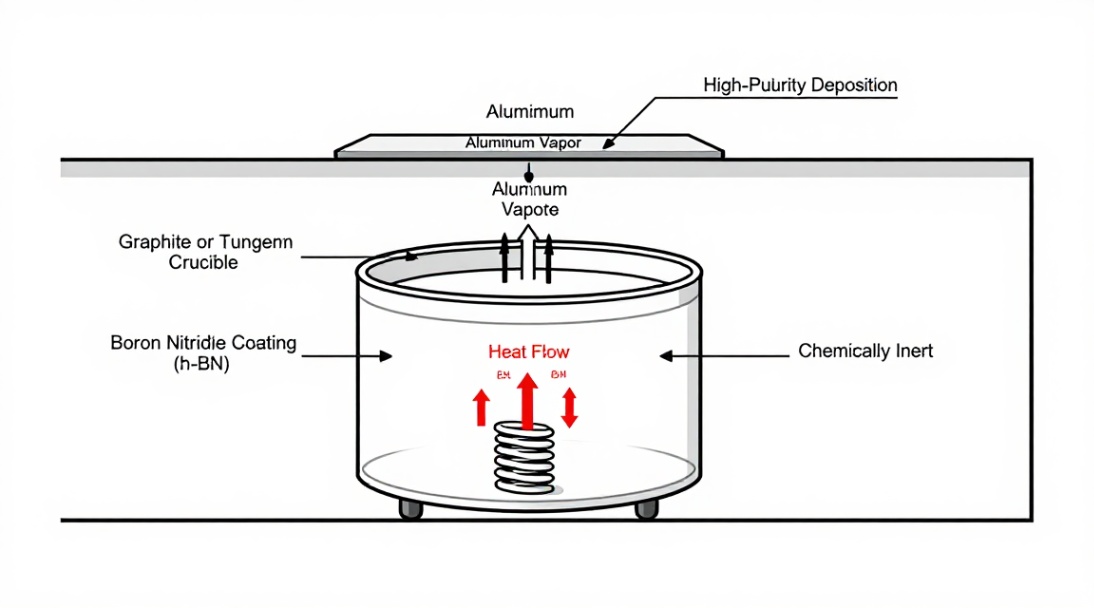
This is where performance shifts. Boron nitride ceramic crucible coating for aluminium evaporation isn’t just a barrier; it changes the interaction physics.
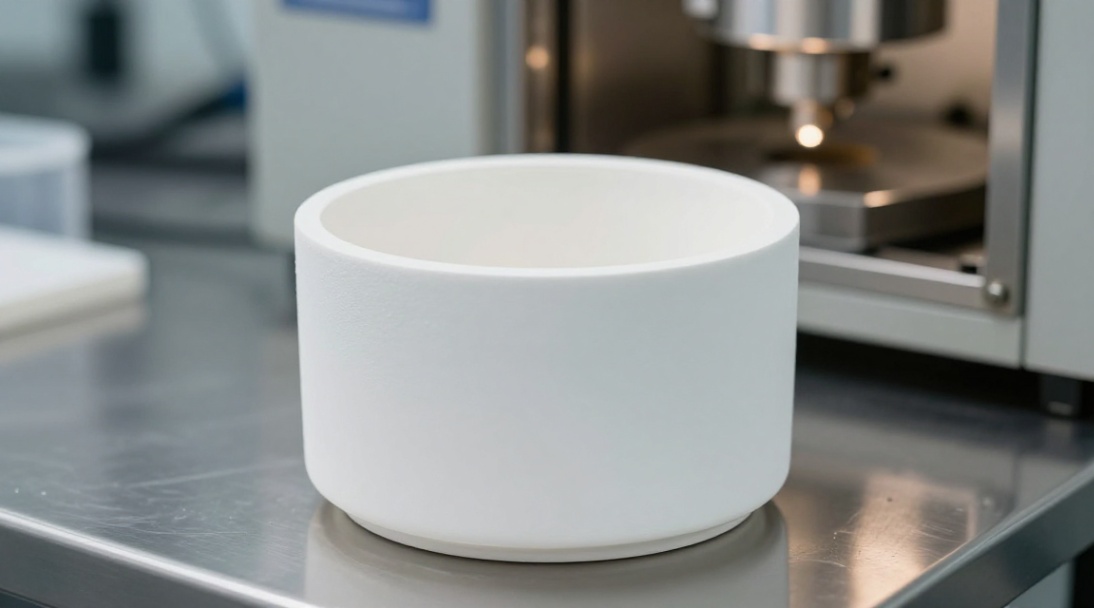
- Pros: Exceptional chemical inertness. It simply does not react with molten aluminum. Its non-wetting property is legendary-molten aluminum beads up on it like water on a waxed car. This nearly eliminates dross adhesion. Excellent thermal shock resistance due to its unique layered structure and good thermal conductivity. It acts as a reliable electrical insulator in induction setups.
- Cons: Higher upfront material cost. Requires proper, often specialized, application (spray, dip, etc.) to form a dense, adherent layer. Can be mechanically softer than alumina, so care is needed during handling.
The feedback from production floors is telling. A colleague running a 24/7 optical coating line told me: “Switching to BN-coated crucibles doubled our campaign life between cleanings. Contamination specs on our monitors dropped by an order of magnitude. The cost per run actually went down.”
Your Top Questions on BN Crucible Coatings, Answered
Let’s tackle the specific, practical questions we hear every day.
Q: Does BN coating really prevent all buildup?
Nothing is 100%, but it’s the closest you’ll get. The non-wetting characteristic means aluminium has minimal adhesion. Any minor residue typically flakes off easily during cooldown. Your scraper and chisel will gather dust.
Q: How do I apply a BN coating?
It’s a process. You typically start with a clean, grit-blasted crucible surface. Then, you apply a BN-based slurry or suspension, often by spraying, to build up a layer. The crucible is then fired (sintered) at high temperature in a controlled atmosphere to densify the coating and bond it to the substrate. DIY is possible for shops with furnaces, but many opt for pre-coated crucibles from specialists to guarantee quality.
Q: Can a BN coating be repaired or reapplied?
Yes, in many cases. For a graphite crucible, once the BN coating wears thin or gets mechanically damaged, you can often strip the old layer, re-prep the surface, and recoat. This refurbishment cycle extends the base crucible’s life significantly, amortizing its cost. This is a key financial advantage.
Q: Is it worth it for small-scale R&D?
It depends on your pain points. If you’re struggling with run-to-run consistency, fighting purity issues in your deposited films, or spending hours cleaning crucibles, then yes, absolutely. The investment preserves your most valuable assets: your time and your material purity. For occasional, non-critical use, a standard alumina coat might suffice.
The Bottom Line and Your Next Step
The data from the field is unambiguous. For serious aluminum evaporation work-whether in semiconductor metallization, optical coating, or advanced alloy research-a boron nitride ceramic crucible coating is the professional’s choice. It solves the core problems of contamination, buildup, and unpredictable failure. The higher initial cost is consistently offset by longer crucible life, less downtime, and higher purity output.
Stop wrestling with crucible maintenance and contaminated runs. The upgrade path is proven. Contact a reputable supplier of boron nitride coatings or pre-coated crucibles today. Send them your crucible specs and operating parameters. Get a quote. Run a trial. Compare your current operational cost per evaporation cycle against the performance a BN coating delivers. The numbers will make the decision for you. Make the switch and start your next production campaign with confidence.
Suppiler
Synthetic-chemical focus on the research and development, production and sales of ceramic products, serving the electronics, ceramics, chemical and other industries. Since its establishment in 2015, the company has been committed to providing customers with the best products and services, and has become a leader in the industry through continuous technological innovation and strict quality management.
Our products includes but not limited to Aluminum Nitride, Aluminum Oxide, Boron Carbide, Boron Nitride, Ceramic Crucible, ect. If you are interested in any type of these, please feel free to contact us.