Next-Generation Ceramics: Unlocking Superior Properties for Industry

A Story from the Lab Floor
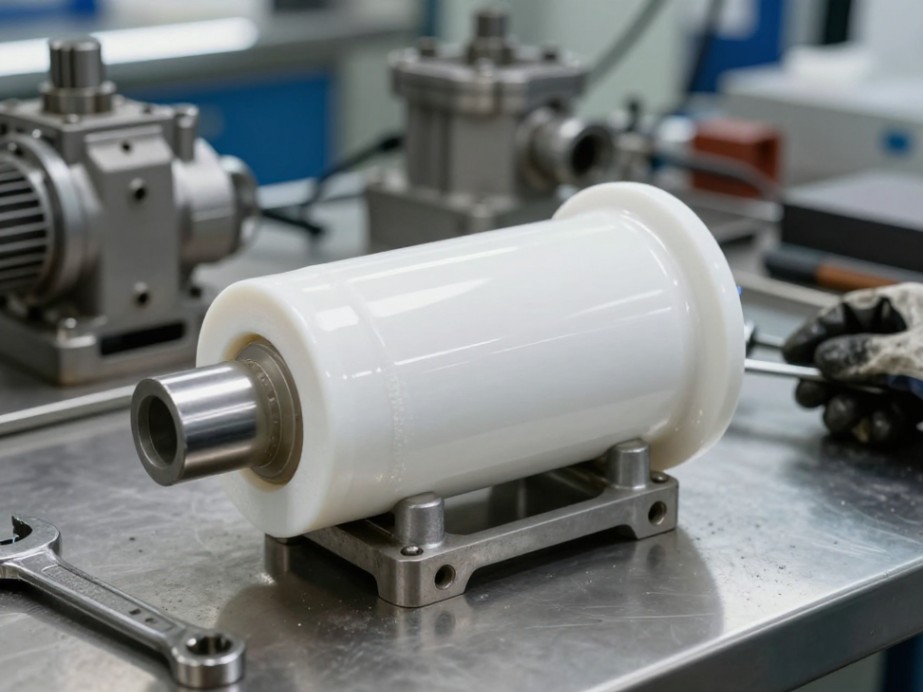
Early in my career, I watched a team struggle. Their metal pump seals for a chemical process kept failing in weeks, corroded by harsh acids. Production halted. Frustration was high. We suggested switching to a ceramic component. Skepticism met us-“Won’t it shatter?” We specified a high-purity aluminum oxide ceramic sleeve. That part ran for over five years without a sign of wear. That moment crystallized the power of this material. It’s not magic. It’s dependable, engineered performance. Let me explain it to you.
Aluminum Oxide Ceramic Q&A: Your Top Questions Answered
What exactly is aluminum oxide ceramic?
Aluminum oxide ceramic, most often called alumina, is an industrial ceramic made primarily from aluminium oxide (Al₂O₃) powder. Manufacturers form and sinter (high-temperature fire) this powder into incredibly hard, dense, and inert components. It’s the workhorse of technical ceramics. You’ll find it everywhere, from the spark plug insulator in your car to the hip joint in a patient’s body.
What are its standout properties?
Its profile is impressive. Think of it as a material superhero with specific, reliable powers.
- Extreme Hardness & Wear Resistance: It’s second only to materials like diamond, boron carbide, and silicon carbide. It outlasts steel in abrasive environments dramatically.
- Excellent Electrical Insulation: Its dielectric strength is superb. This makes it perfect for circuit substrates and insulating housings.
- High-Temperature Stability: It doesn’t melt until over 2000°C (3600°F). It won’t oxidize or degrade in most high-heat atmospheres.
- Chemical Inertness: It resists attack from most acids, alkalis, and molten metals. This is where it beat those metal pump seals.
- Good Mechanical Strength: While not as tough as zirconia, it has high compressive strength, making it great for load-bearing fixtures.
I see terms like 96% and 99.5% alumina. What’s the difference?
This is crucial. The purity level defines the material’s capability and cost.
- 96% Alumina (96% Al₂O₃): The most common industrial grade. It contains silicate-based glass phases that aid sintering. It offers the best balance of properties for cost. Use it for wear plates, nozzles, liners, and general industrial components.
- 99.5% Alumina (and above): Higher purity equals better properties. You get higher hardness, superior wear resistance, better dielectric strength, and higher temperature capability. This grade is for demanding applications: semiconductor wafer processing, advanced medical implants, high-frequency insulators, and precision labware.
How is it made? What are the main processes?
It starts as a fine powder. The forming method depends on the part’s shape and precision.
- Dry Pressing: Powder is pressed in a steel mold. It’s fast, economical, and great for simple, flat shapes like tiles or simple cylinders.
- Injection Molding: Powder is mixed with a plastic binder and injected into a mold. This allows for complex, near-net-shape geometries, similar to plastic parts. Ideal for high-volume small components.
- Isostatic Pressing: Powder is compacted by fluid pressure in a flexible mold. This gives uniform density and strength in all directions, critical for high-performance technical parts.
After forming, the “green” part is sintered in a furnace at temperatures often exceeding 1600°C. This process densifies the material, turning it into a solid, polycrystalline ceramic.
Where is aluminum oxide ceramic actually used?
Its applications span industries. On engineering forums, users frequently highlight its versatility. A common Reddit sentiment in machining groups is: “When you need something that won’t wear out and can take a beating, alumina is the first place I look.”
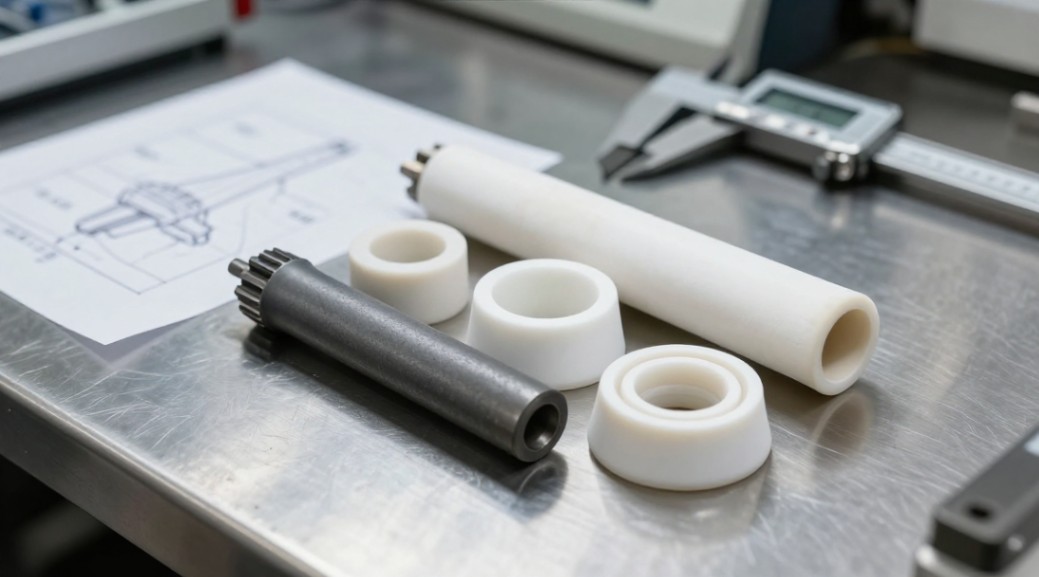
- Electronics: The foundation. Substrates for circuits, insulators, sensor housings.
- Industrial: Wear-resistant liners, pump seals and plungers, grinding media, thread guides, cutting tool inserts.
- Medical: Biocompatible. Used for hip joint balls, dental implants, and surgical instrument tips.
- Automotive: Spark plug insulators, sensors, wear parts in fuel systems.
- Defence & Aerospace: Transparent armor windows (sapphire is single-crystal alumina), radomes, insulating components.
How does it compare to other ceramics like zirconia or silicon nitride?
You choose a ceramic like you choose a tool. Each has a best use case.
- vs. Zirconia (ZrO₂): Zirconia is much tougher (more fracture-resistant) and has higher flexural strength. It’s the choice for applications needing impact resistance. However, alumina is harder, more wear-resistant, a better electrical insulator, and significantly less expensive. For pure wear or electrical insulation, alumina often wins.
- vs. Silicon Nitride (Si₃N₄): Silicon nitride has exceptional thermal shock resistance and high strength at temperature. It’s a top choice for engine components or severe thermal cycling. Alumina is more chemically inert in acidic environments and is a stronger electrical insulator.
- vs. Silicon Carbide (SiC): Silicon carbide has higher thermal conductivity and is even harder. It excels in extreme wear and high-heat-transfer situations (like kiln furniture). Alumina is a better electrical insulator and is generally easier and cheaper to machine to tight tolerances.
What should I know about designing and machining it?
Design for its strengths. Avoid sharp internal corners which create stress points. Remember, it’s hard but brittle. It handles compression beautifully but is sensitive to tensile stress and impact. Machining must be done in the sintered state using diamond-grit tools. Grinding, lapping, and laser cutting are standard. It’s not a material you can modify in your workshop with standard metalworking tools. Plan your tolerances and specify the finish you need with your ceramic manufacturer early.
What does the future hold for alumina?
The future is about refinement and combination. We’re seeing more complex, net-shape parts via advanced molding. Special coatings are being developed to further enhance surfaces-imagine an alumina part with a super-slick boron nitride ceramic coating for release applications. Nanostructured alumina grades promise even better mechanical properties. Its role in next-generation batteries, electronics, and biomedical devices is only growing.
Your Next Step with This Incredible Material
Understanding aluminium oxide ceramic is the first step. Applying it correctly is where you solve real problems. If you’re battling component wear, electrical failure, or chemical corrosion, alumina is likely a candidate. Don’t guess. The choice between 96% and 99.5%, or between alumina and silicon carbide ceramic, matters deeply.
Here is my direct, experienced advice: Consult with a specialist ceramic manufacturer. Bring them your application’s specific requirements-loads, temperatures, chemicals, and desired lifespan. Their engineers can guide you to the optimal material, whether it’s alumina, aluminum nitride ceramic for thermal management, or another advanced ceramic. They can also advise on design-for-manufacturability to control costs. Stop replacing failing metal parts. Invest in the long-term solution that aluminum oxide ceramic has reliably provided for decades. Start that conversation today.
Suppiler
Synthetic-chemical focus on the research and development, production and sales of ceramic products, serving the electronics, ceramics, chemical and other industries. Since its establishment in 2015, the company has been committed to providing customers with the best products and services, and has become a leader in the industry through continuous technological innovation and strict quality management.
Our products includes but not limited to Aluminum Nitride, Aluminum Oxide, Boron Carbide, Boron Nitride, Ceramic Crucible, ect. If you are interested in any type of these, please feel free to contact us.