Next-Generation Ceramics: Unlocking Superior Properties for Industry

Don’t Let These Aluminum Oxide Ceramic Mistakes Sink Your Project
Aluminum oxide ceramic is a fantastic material, but its reputation for toughness can lure you into a false sense of security. I’ve seen too many projects fail because of avoidable, fundamental errors. Let’s clear up the confusion and talk about what you should never do with alumina.
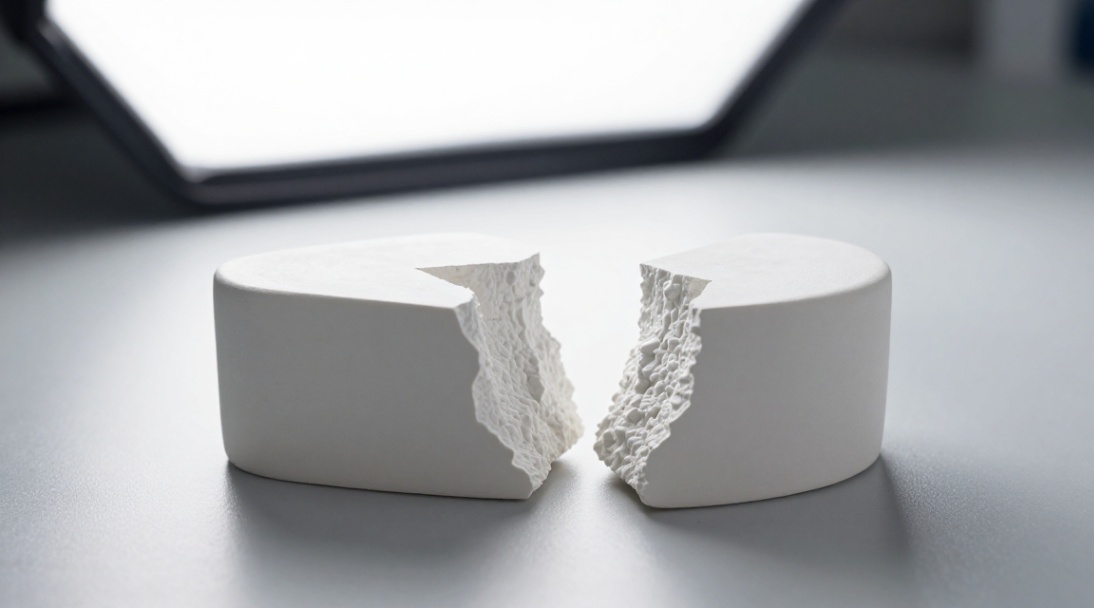
1. The Hardness Trap: "Harder is Always Better, Right?"
Wrong. Assuming maximum hardness solves all wear problems is mistake #1. Yes, aluminum oxide ceramic has excellent hardness, but wear is a complex beast. You must consider the wear mechanism. Is it abrasive, adhesive, or erosive? A super-hard 99.9% alumina might perform worse than a slightly softer, tougher grade if impact is involved. Pure hardness without considering fracture toughness leads to chipping and catastrophic failure.
What should you do instead?
Match the microstructure to the stress. For pure abrasion, high purity and fine grain size win. For impact or thermal shock, you might need a coarser grain or even consider a different material like zirconia-toughened alumina or silicon nitride ceramic. Never select on hardness data alone.
2. Ignoring Thermal Shock: The Silent Killer
This is the most common catastrophic failure I investigate. Engineers see the high melting point and assume infinite thermal stability. They then bolt an alumina component between two metal plates or subject it to rapid, localized heating. The result? A loud crack. Aluminum oxide has moderate thermal shock resistance, but it’s not invincible. Its thermal conductivity, while good for a ceramic, is far lower than metals like aluminium or copper.
How do you avoid thermal shock failure?
- Design for expansion: Always allow for differential thermal expansion. Use compliant layers or flexible mounts.
- Control heat rates: Avoid direct flame impingement. Gradual, uniform heating is key.
- Consider the alternative: For extreme thermal cycling, materials like silicon carbide ceramic or aluminum nitride ceramic often perform better due to their higher thermal conductivity.
3. Treating It Like a Metal: The Assembly Nightmare
You cannot machine, fasten, or install alumina like you would steel. Its brittleness demands respect. Drilling a hole too close to an edge, applying excessive clamping force, or using a mismatched metal fastener will cause stress concentrations that the ceramic cannot relieve through plastic deformation. It just fractures.
Follow these assembly commandments:
- Design for ceramics from the start. Don’t adapt a metal part design.
- Use generous radii. Eliminate sharp corners and edges.
- Specify the right fasteners. Use shoulder washers, spring washers, and avoid point loads. A properly designed silicon carbide-bonded or reaction-sintered component can offer more design flexibility here.
- 96-99.5% Al2O3: The industrial workhorse. Excellent wear resistance, good strength. Ideal for seals, liners, and many mechanical components.
- 99.8%+ Al2O3: High-purity. Superior electrical insulation, better corrosion resistance, and higher operating temperature. Used for substrates, medical implants, and advanced labware.
- 85-90% Al2O3: Cost-effective for less demanding wear applications or as a refractory material where extreme purity isn’t needed.
4. The "Chemically Inert" Overconfidence
Alumina is highly corrosion resistant, but it’s not universal. This belief leads to failures in specific, harsh environments. Hot concentrated phosphoric acid or hydrofluoric acid will attack it. In molten metal environments, certain alloys can wet and degrade the surface over time. You must know the exact chemical environment, including temperature and concentration.
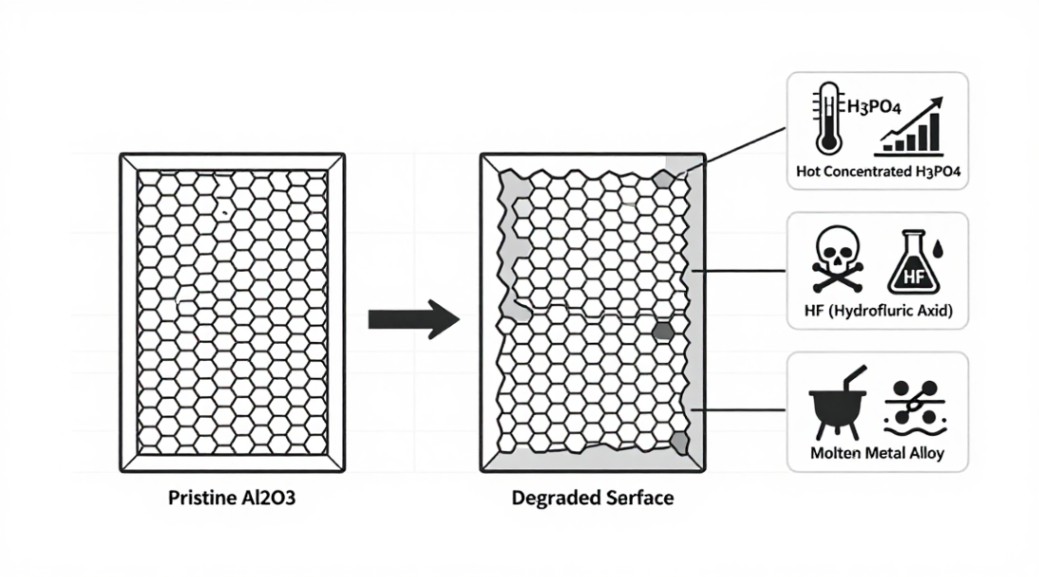
What’s the safe choice?
For the most aggressive chemical applications, high-purity grades (99.8%+) are mandatory. However, if you’re dealing with highly corrosive molten salts or metals, you may need to evaluate even more resistant options like boron nitride ceramic or specialized coatings. The "special coating for boron nitride ceramic crucibles" concept exists for a reason-sometimes you need a tailored solution.
5. Picking the Wrong Grade: 85% vs. 99.9% is Not Just a Number
Choosing an alumina grade based solely on price is a classic, expensive error. The difference between 85% and 99.9% Al2O3 is profound. The 85% grade contains glassy silicate phases that lower its melting point, reduce high-temperature strength, and increase chemical susceptibility. It’s fine for many wear plates. It is terrible for a high-temperature furnace liner or a critical electronic substrate where insulation resistance and purity are paramount.
A quick grade guide:
Your Path to Success with Aluminum Oxide Ceramic
Success with aluminum oxide ceramic comes from respecting its unique nature. It’s not a metal. It’s not a plastic. It’s a brittle, hard, and superb engineering material when used correctly. Avoid these five pitfalls, and you’ll leverage its strengths-exceptional wear, electrical insulation, and biocompatibility-without the painful failures.
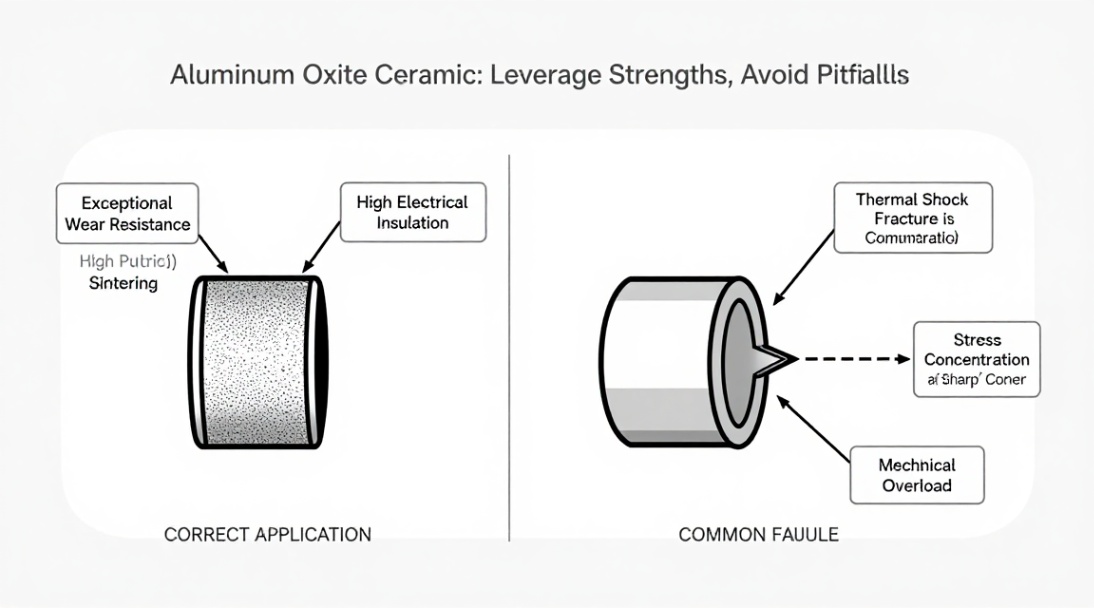
The key is to partner with a manufacturer who understands these nuances. A good partner won’t just sell you a blank; they’ll ask about your application’s thermal profile, chemical exposure, and loading conditions. They might suggest a specific manufacturing process like dry pressing for simple shapes or injection molding for complex geometries. In some cases, they may even recommend a different material like mullite ceramic for better thermal shock or silicon nitride ceramic for higher fracture toughness. The goal is to get the right part for the job, not just a part made of alumina.
Suppiler
Synthetic-chemical focus on the research and development, production and sales of ceramic products, serving the electronics, ceramics, chemical and other industries. Since its establishment in 2015, the company has been committed to providing customers with the best products and services, and has become a leader in the industry through continuous technological innovation and strict quality management.
Our products includes but not limited to Aluminum Nitride, Aluminum Oxide, Boron Carbide, Boron Nitride, Ceramic Crucible, ect. If you are interested in any type of these, please feel free to contact us.