Next-Generation Ceramics: Unlocking Superior Properties for Industry

Introduction: The Unquestioned Workhorse of Industrial Ceramics
For demanding mechanical, thermal, and electrical applications, aluminum oxide ceramic (Al₂O₃), universally known as alumina, is the default engineering choice. Its dominance stems from an unmatched balance of performance, manufacturability, and cost. Engineers specify alumina not because it is the best at any single property, but because it reliably solves the broadest range of problems. This analysis cuts through marketing claims to compare alumina against advanced competitors. We provide the objective data and field-proven context you need to make an informed material decision.
Defining the Core: What is Aluminium Oxide Ceramic?
Aluminum oxide ceramic is a synthetic material primarily composed of Al₂O₃ crystals. Its properties are not fixed; they vary dramatically with purity. Standard technical grades (92-99.5% Al₂O₃) offer robust general performance. High-purity grades (99.6%+) provide superior wear resistance and dielectric strength. At the pinnacle sits single-crystal sapphire, essentially pure, transparent alumina, used for extreme scratch resistance and optical clarity. This grading system allows designers to select a cost-appropriate material tier for their specific needs.
The Alumina Advantage: Key Properties and Performance Data
Alumina’s value proposition is built on three pillars. Its hardness (Mohs 9, second only to diamond and a few super-abrasives like boron carbide) grants exceptional wear resistance. It maintains high mechanical strength up to 1000°C. As an electrical insulator, its volume resistivity exceeds 10¹⁴ Ω·cm, making it ideal for substrates and insulating housings. Finally, its chemical inertness ensures stability against most strong acids and bases, though it is susceptible to attack by hydrofluoric acid and concentrated alkaline solutions at high temperatures.
Mechanical and Thermal Specifications
Typical sintered alumina possesses a flexural strength of 300-550 MPa and a compressive strength exceeding 2000 MPa. Its thermal conductivity (20-30 W/mK) is moderate, which is a double-edged sword-it helps in thermal management for some electronic substrates but limits performance in applications requiring rapid heat dissipation, where materials like aluminium nitride ceramic excel. Its maximum service temperature in air ranges from 1500°C to 1750°C, depending on purity and doping.
Primary Industrial Applications and Use Cases
Alumina’s applications are a direct reflection of its properties. In electronics, it forms the backbone of substrate and package technology. As a wear material, it lines pipes, pumps, and cyclone separators in mining and processing. The cutting tool industry employs alumina-based inserts for high-speed finishing of hardened steels and cast irons. Its high-temperature stability makes it a standard material for furnace tubes, thermocouple sheaths, and laboratory crucibles. In biomedical engineering, its proven biocompatibility sees use in dental implants, orthopedic joint components, and surgical instrument tips.
The Critical Comparison: Alumina vs. Advanced Ceramics
Choosing alumina often involves understanding its limitations relative to more specialized, and often more expensive, ceramics. This decision matrix is crucial for optimal design.
When Alumina Is the Right Choice
- Cost-Sensitive Wear Parts: For general abrasion and sliding wear, standard alumina grades are unbeatable on a cost-per-operating-hour basis. Silicon carbide ceramic offers better abrasion resistance but at a significantly higher cost and with greater brittleness.
- Electrical Insulation: For most high-voltage, high-temperature insulating components, alumina provides the perfect blend of dielectric strength, fabrication ease, and cost. Users on engineering forums frequently note its reliability in demanding power electronics.
- Biocompatible Components: For non-load-bearing or moderately loaded implants, alumina’s long clinical history and regulatory familiarity make it a safe, predictable choice.
When to Consider an Alternative
- Extreme Thermal Conductivity Needed: If your application involves moving heat (e.g., high-power semiconductor bases), aluminum nitride ceramic (140-180 W/mK) or even beryllia are superior, though more costly and, in beryllia’s case, toxic.
- Demanding Fracture Toughness: Alumina is brittle. For applications with high impact or thermal shock risk, materials like zirconia-toughened alumina (ZTA) or silicon nitride ceramic offer significantly better fracture toughness and thermal shock resistance.
- Superior High-Temperature Strength: For structural components above 1400°C, silicon carbide ceramic and silicon nitride ceramic retain their strength better than alumina. Reaction-sintered silicon carbide ceramics, for instance, are preferred for high-temperature furnace fixtures.
Fabrication and Finishing: From Powder to Precision Part
Alumina’s manufacturability is a key advantage. Common forming processes include dry pressing for simple shapes, isostatic pressing for more uniform density, and injection molding for complex, high-volume components. After sintering, precision is achieved through diamond grinding, lapping, and polishing. The ability to cost-effectively produce intricate, high-tolerance parts is a major reason for alumina’s widespread adoption over ceramics that are more difficult to machine, like boron nitride ceramic.
Limitations and Design Considerations
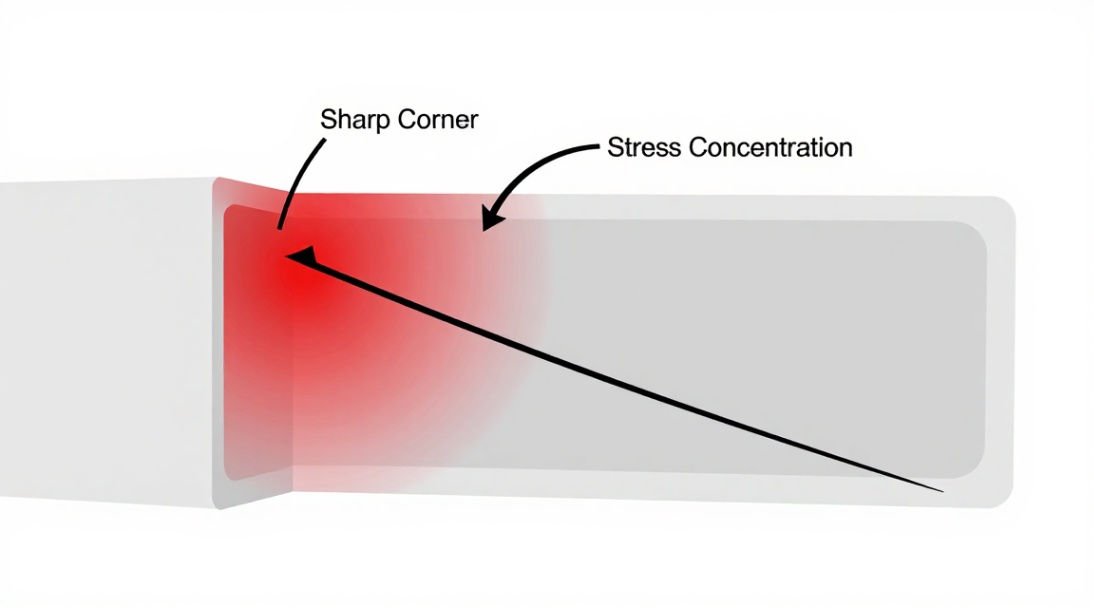
Acknowledging alumina’s weaknesses prevents field failures. Its primary limitation is low fracture toughness (3-4 MPa·m¹/²). Designers must avoid sharp corners and tensile stress concentrations. Its thermal shock resistance is moderate; sudden temperature differentials exceeding 200°C can cause cracking. While chemically resistant, it is not universal. As noted, HF and hot, concentrated caustics will attack it. For crucibles melting highly reactive metals, a special coating for boron nitride ceramic crucibles might be a necessary upgrade.
Conclusion and Final Recommendation
Aluminum oxide ceramic remains the dominant general-purpose technical ceramic because it delivers proven performance at a reasonable price. For wear plates, insulating components, chemical fixture parts, and many biomedical devices, it is the default, rational selection. Before committing to a more exotic and expensive material like boron carbide or silicon nitride, critically evaluate whether your application truly requires its specific premium properties. Often, a higher-purity grade of alumina or a composite like ZTA will solve the problem more economically. The collective experience of two decades in ceramics confirms: start your material selection with alumina. Only move away from it when the data unequivocally demands a property it cannot provide.
Suppiler
Synthetic-chemical focus on the research and development, production and sales of ceramic products, serving the electronics, ceramics, chemical and other industries. Since its establishment in 2015, the company has been committed to providing customers with the best products and services, and has become a leader in the industry through continuous technological innovation and strict quality management.
Our products includes but not limited to Aluminum Nitride, Aluminum Oxide, Boron Carbide, Boron Nitride, Ceramic Crucible, ect. If you are interested in any type of these, please feel free to contact us.