Next-Generation Ceramics: Unlocking Superior Properties for Industry

The Accidental Workhorse
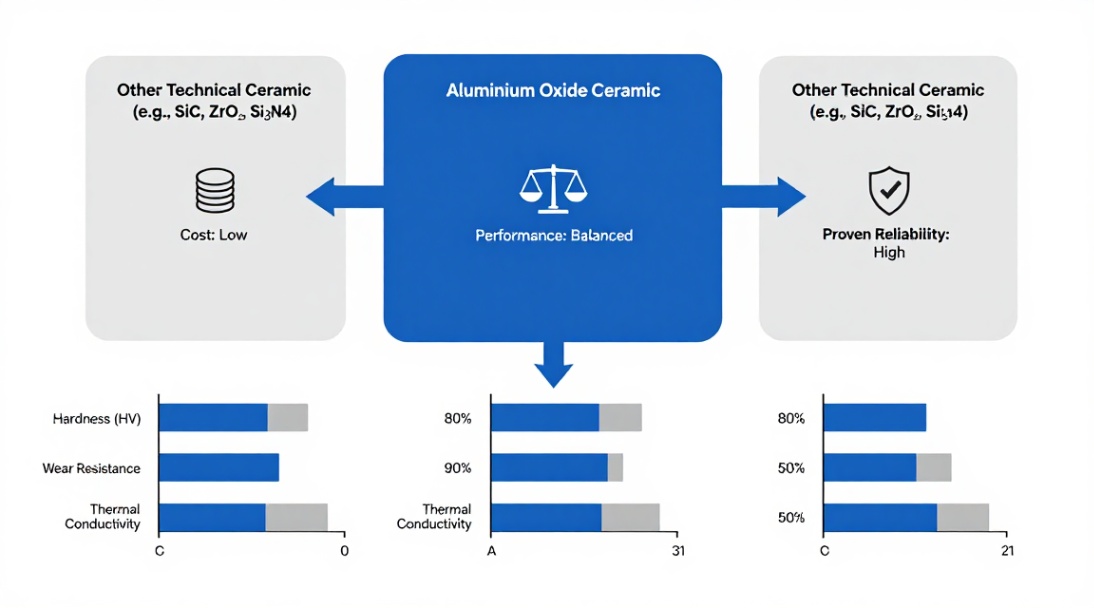
You might be surprised that over 80% of all industrial ceramics used in high-performance applications are based on aluminium oxide ceramic. A report by Ceramic Industry Magazine noted this dominance isn’t due to being the absolute best in every category. Its prevalence stems from a unique balance of cost, performance, and proven reliability. This makes understanding its specific strengths and weaknesses against other ceramics critical.
What is Aluminum Oxide Ceramic?
At its core, aluminium oxide ceramic (Al2O3) is a manufactured material created by fusing refined aluminum oxide powder into a dense, crystalline structure. The purity level-often 96% or 99.5% alumina-defines its final properties. Higher purity means higher hardness, better wear resistance, and superior electrical insulation. We shape it through processes like dry pressing, isostatic pressing, and sintering to form components from tiny substrates to large, complex wear parts.
The Core Advantages of Aluminium Oxide Ceramic
Here’s why alumina remains the default choice for countless engineers. It delivers a powerful combination you can trust.
- Unmatched Wear Resistance: Its high hardness (9 on the Mohs scale) makes it excellent for liners, seals, and nozzles handling abrasive slurries.
- Superior Electrical Insulation: High electrical resistivity and dielectric strength make it the premier choice for spark plugs, electronic substrates, and insulators.
- High-Temperature Stability: It maintains strength and form in air up to 1700°C, ideal for furnace components and thermocouple tubes.
- Chemical Inertness: Resists attack from most acids, alkalis, and molten metals, perfect for labware and chemical processing parts.
- Cost-Effectiveness: Compared to many other advanced ceramics, its raw material cost and manufacturing maturity keep it accessible.
When Aluminum Oxide Isn’t Enough: The Competition
No material is perfect. Your project may demand a more specialized solution. Let’s compare.
Aluminium Oxide vs. Silicon Nitride (Si3N4)
Silicon nitride ceramic trades some hardness for far greater fracture toughness. It handles severe thermal shock better. Use silicon nitride for high-speed bearings, cutting tools for cast iron, and engine components. Choose alumina for its electrical properties and lower cost in wear applications.
Aluminium Oxide vs. Silicon Carbide (SiC)
Silicon carbide ceramic has higher thermal conductivity (3-4x that of alumina) and retains strength at even higher temperatures. It’s the king of thermal management and extreme abrasion. However, it’s more expensive and harder to machine. Opt for reaction-sintered silicon carbide ceramics for kiln furniture, or pressureless sintered silicon carbide ceramics for armor and seals. Alumina wins on electrical insulation and chemical resistance in wet environments.
Aluminum Oxide vs. Zirconia (ZrO2)
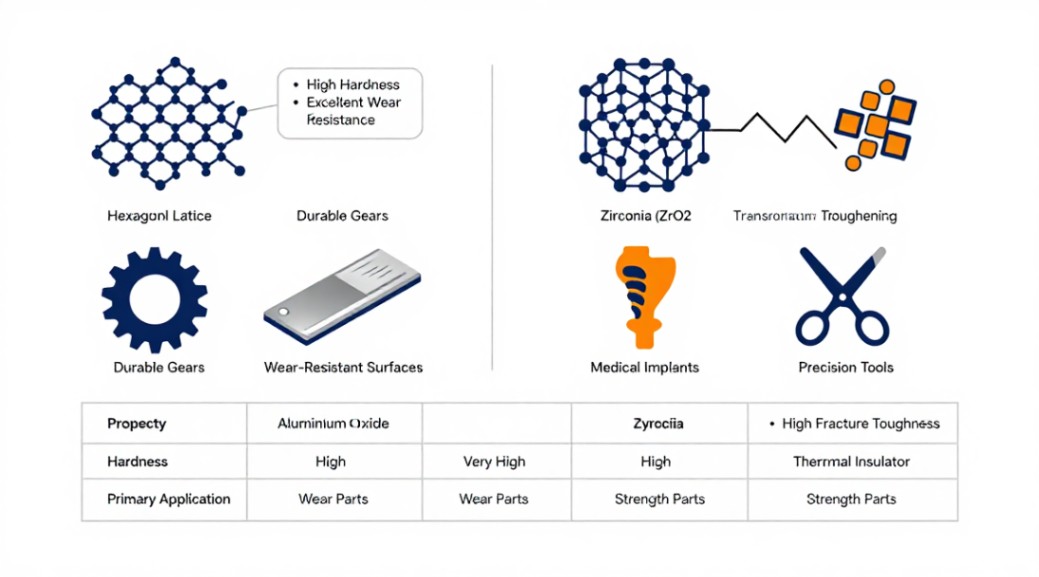
Zirconia possesses transformation toughening, giving it metal-like fracture resistance. It’s also a better thermal insulator. This makes zirconia ideal for medical implants, scissors, and bushings requiring high strength. Alumina is harder and more wear-resistant for long-term sliding applications.
Niche Specialists: Boron Nitride and Boron Carbide
Boron nitride ceramic, especially with a special coating for boron nitride ceramic crucibles, offers non-wetting properties for molten metal. Boron carbide ceramic is one of the hardest known materials, used for armor plates. Alumina does not compete in these ultra-specialized roles.
Addressing the Limitations: Brittleness and Machining
Let’s be honest. The primary drawback of aluminum oxide ceramic is its brittleness. It lacks the ductility of metals. It also poses challenges in machining; it requires diamond grinding tools post-sintering. Successful design mitigates this through generous radii, avoiding sharp corners, and using compressive loads. Don’t try to use it like a metal. Design for the ceramic.
Making the Right Material Choice
Your selection process should be methodical. Start by ranking these four factors for your application:
- Primary Function: Is it electrical insulation, wear resistance, thermal management, or structural?
- Operating Environment: Temperature, chemicals, and type of wear (sliding vs. impact).
- Mechanical Stresses: Load type (tensile, compressive, bending) and the risk of thermal shock.
- Budget & Volume: Prototype costs versus high-volume production.
For instance, a high-temperature furnace insulator might use mullite ceramic, but a precision laser tube requiring excellent surface finish and electrical properties would use high-purity alumina. A thermal shock-prone component might lead you to silicon nitride ceramic or recrystallized silicon carbide ceramics.
The Future and Your Next Step
Innovation continues. Research into new oxide ceramic systems aims to push temperature limits beyond 3000°C. Composite materials blending alumina with other phases are enhancing toughness. The field is advancing, but alumina’s fundamental role is secure.
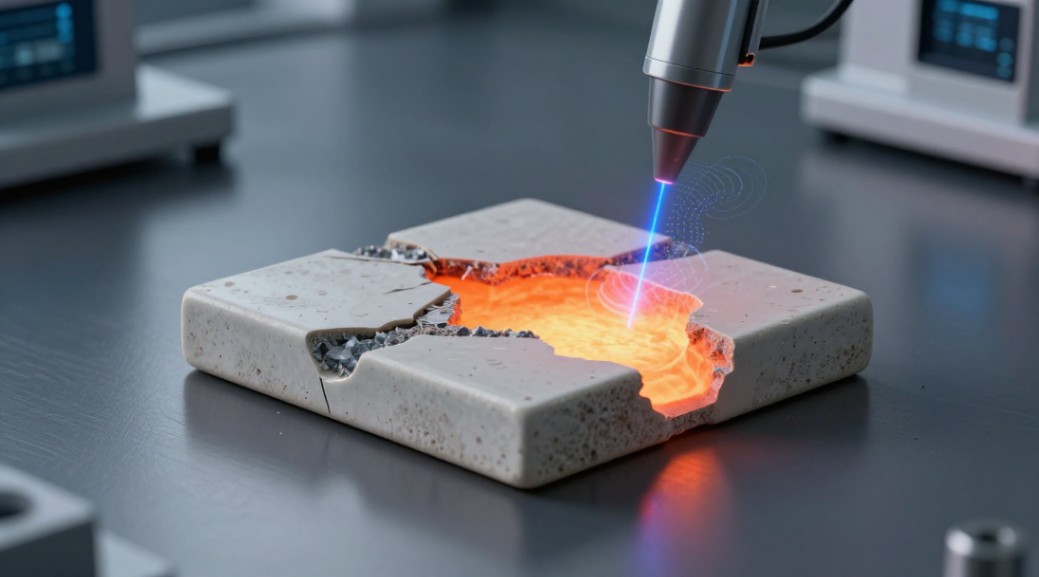
My advice? Don’t choose in a vacuum. Test. Get samples of potential materials-whether it’s aluminum oxide ceramic, silicon carbide ceramic, or another contender-and subject them to real-world conditions in your lab. Work with a trusted manufacturer who can guide you on grades and processes. A simple prototype test can save thousands in production failures. You have the knowledge. Now, apply it.
Suppiler
Synthetic-chemical focus on the research and development, production and sales of ceramic products, serving the electronics, ceramics, chemical and other industries. Since its establishment in 2015, the company has been committed to providing customers with the best products and services, and has become a leader in the industry through continuous technological innovation and strict quality management.
Our products includes but not limited to Aluminum Nitride, Aluminum Oxide, Boron Carbide, Boron Nitride, Ceramic Crucible, ect. If you are interested in any type of these, please feel free to contact us.