Next-Generation Ceramics: Unlocking Superior Properties for Industry

You Are Designing With Blinders On
You’ve selected aluminum oxide ceramic for its “excellent wear resistance” and “good electrical insulation.” Your project specs look great on paper. Then the part cracks. It wears faster than expected. The surface finish ruins your assembly. You scramble, blaming the manufacturer or the process. The real culprit? A superficial understanding of the material itself.
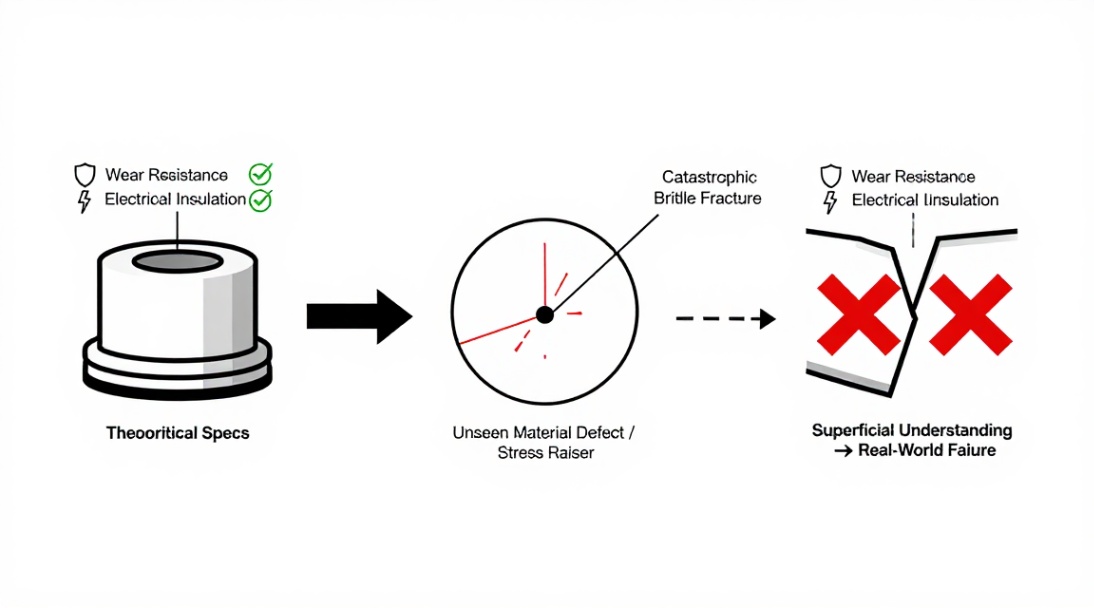
Aluminium oxide ceramic is not a single, magical solution. It’s a universe of compromises. This article cuts through the marketing fluff. Here is the raw, practical definition you need to design with confidence.
Aluminum Oxide Ceramic Defined: The Engineered Compromise
Fundamentally, aluminum oxide ceramic (Al2O3) is a synthetic, crystalline material where aluminum and oxygen atoms bond in a dense, rigid lattice. Its power comes from this ionic bond. Forget “ceramic” as a fragile cup. This is engineered armor.
The industry sells you on its average properties. A true expert sees its specific extremes:
- Hardness (8-9 Mohs): It resists abrasion, but brittle fracture is its failure mode, not deformation.
- Electrical Insulation (10^14 Ω·cm): Exceptional at room temp, but track that dielectric strength drop-off above 500°C.
- Thermal Conductivity (20-30 W/mK): It’s a thermal conductor among oxides, but don’t confuse it with aluminium nitride ceramic (150+ W/mK) for serious heat sinking.
- Chemical Inertness: It laughs at molten metals and harsh chemicals. Perfect for crucibles, liners, and biomedical implants where purity is non-negotiable.
The Brutal Comparison: Why Alumina Isn’t Always King
Choosing alumina because it’s “common” is lazy engineering. Match the failure mode to the material.
- Vs. Zirconia (ZrO2): Need supreme fracture toughness and strength? Alumina loses. Zirconia’s transformation toughening is superior for bearings and cutting tools subject to impact.
- Vs. Silicon Nitride Ceramic (Si3N4): For high-temperature strength and thermal shock resistance (e.g., turbine blades), silicon nitride is the clear, albeit more expensive, winner.
- Vs. Silicon Carbide Ceramic (SiC): For extreme wear, thermal conductivity, or ultra-high temperature applications, SiC dominates. Whether it’s reaction-sintered silicon carbide ceramics or pressureless sintered silicon carbide ceramics, they operate where alumina softens.
- Vs. Boron Nitride Ceramic: Need a machinable insulator or a non-wetting surface for molten metal? That’s BN’s domain, often with a special coating for boron nitride ceramic crucibles to enhance longevity.
The Manufacturing Reality: Your Part Is Only as Good as Its Process
“Alumina” is meaningless without a grade. The process dictates everything.
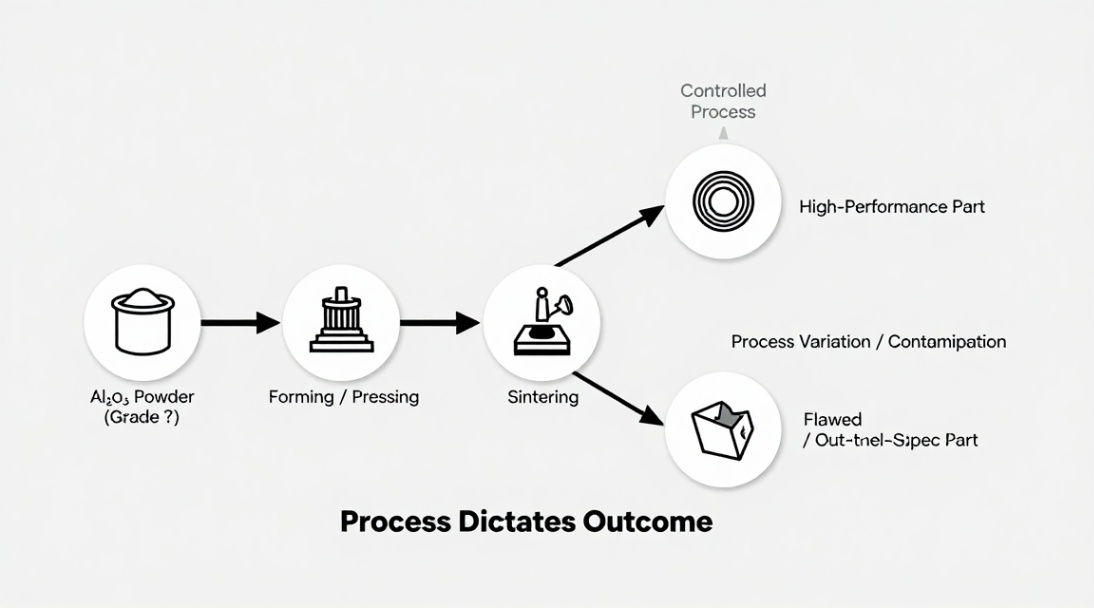
- Purity (96%, 99.5%, 99.8%): Higher purity means higher cost, better properties, and worse machinability. 96% alumina is a workhorse. 99.8% is for semiconductor wafer handlers.
- Sintering: This is where the magic happens. Density directly controls strength, wear, and corrosion resistance.
- Post-Processing: You cannot “machine to fit” like metal. Diamond grinding is mandatory for precision. Lapping and polishing are expensive but critical for sealing surfaces or reducing friction.
The Selection Guide: Stop Guessing
- Cutting Tools, Abrasive Blast Nozzles: Use high-purity, fine-grained alumina. Hardness is your god.
- Electronic Substrates, Insulators: 96-99.5% alumina. Focus on dielectric properties and surface finish.
- Biomedical Implants (e.g., hip joints): Only medical-grade, highly polished 99.5%+ alumina. Biocompatibility is binary.
- Wear Liners, Sealing Rings: 92-96% alumina offers the best balance of performance and cost. Prioritize density.
The Future and Your Next Move
Research pushes boundaries. The double continuous structure infiltration for composites points to a future of tougher, more tailorable materials. New ultra-high-temperature oxide systems aim beyond 3000°C. But today, your success depends on mastering the fundamentals of conventional aluminum oxide ceramic.
The industry norm is to pick alumina first and ask questions later. That’s a recipe for cost overruns and field failures. You need more than data sheets.
You need a partner who speaks this technical language fluently. You need prototypes tested to *your* failure modes. You need a supplier who challenges your specification to save you money and headache.
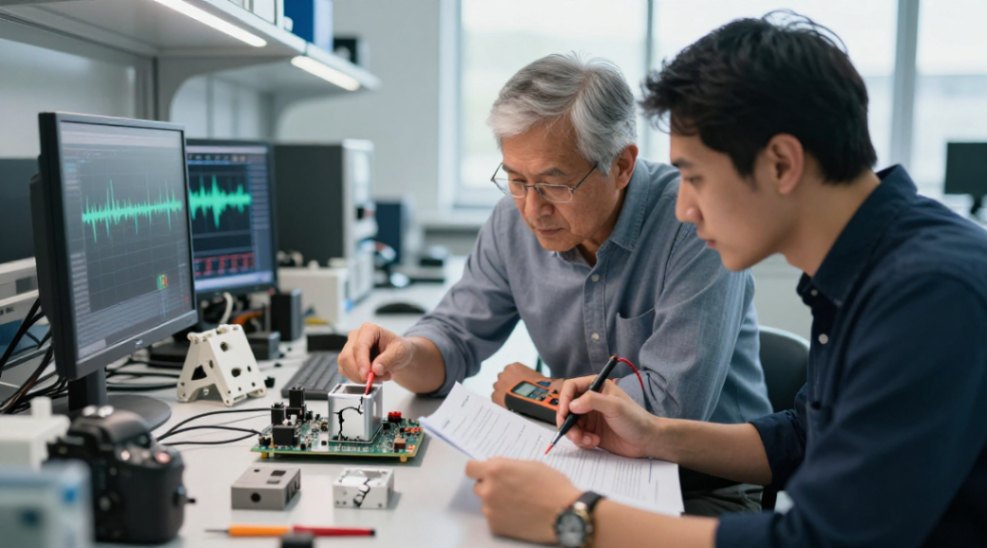
Stop compromising your designs. Tell us your application, operating environment, and failure points. We will pressure-test your material choice, provide samples of the correct aluminum oxide ceramic grade, and deliver finished components that perform. Not just meet a spec. Submit your project parameters now for a direct technical consultation.
Suppiler
Synthetic-chemical focus on the research and development, production and sales of ceramic products, serving the electronics, ceramics, chemical and other industries. Since its establishment in 2015, the company has been committed to providing customers with the best products and services, and has become a leader in the industry through continuous technological innovation and strict quality management.
Our products includes but not limited to Aluminum Nitride, Aluminum Oxide, Boron Carbide, Boron Nitride, Ceramic Crucible, ect. If you are interested in any type of these, please feel free to contact us.