Next-Generation Ceramics: Unlocking Superior Properties for Industry

Choosing Alumina? You Are Probably Making These 5 Costly Mistakes
Forget what your supplier told you. Aluminium oxide ceramic (Al2O3) is often selected for the wrong reasons. Its reputation for hardness, electrical insulation, and decent thermal conductivity makes it a default choice. This leads to systemic failure. I see it every week in failed prototypes and fractured production parts. Here are the mistakes you must avoid.
Mistake #1: Treating All Aluminum Oxide Ceramic as Equal
The purity grade is everything. Selecting 85% alumina for a critical electronic substrate is like building a racecar with bicycle brakes. The performance delta is catastrophic. Many users on Reddit and engineering forums complain about inconsistent thermal management in LED modules. The root cause is almost always a cheap, low-purity alumina substrate that can’t handle the heat flux.
Never compromise on purity for functional performance. Here’s the brutal truth:
| Purity (Al2O3 %) | What It’s Good For | Where It Will Fail | Real User Feedback (Simulated) |
|---|---|---|---|
| 85-90% | General wear plates, cheap insulators, chemical resistance in non-critical parts. | High-frequency circuits, high-power LEDs, precision seals, biomedical implants. | “Our thermal vias showed a 40% higher thermal resistance than spec. Traced it back to the ‘industrial grade’ alumina.” |
| 96% | Excellent balance. Standard for most industrial wear parts, valves, and robust electrical insulators. | Demanding semiconductor applications, ultra-high vacuum, applications requiring extreme surface finish. | “Switched from 96% to 99.5% for our sensor housings. Leak rate dropped by two orders of magnitude.” |
| 99.5%+ | High-performance electronics, advanced medical implants, laser tubes, critical seals. This is the real engineering ceramic. | Budget-sensitive projects. It’s expensive. But component failure is more expensive. | “The cost-up for 99.8% alumina was painful, but it eliminated our field failures in corrosive pump seals. Paid for itself in 6 months.” |
Mistake #2: Ignoring Its Fatal Flaw: Brittleness
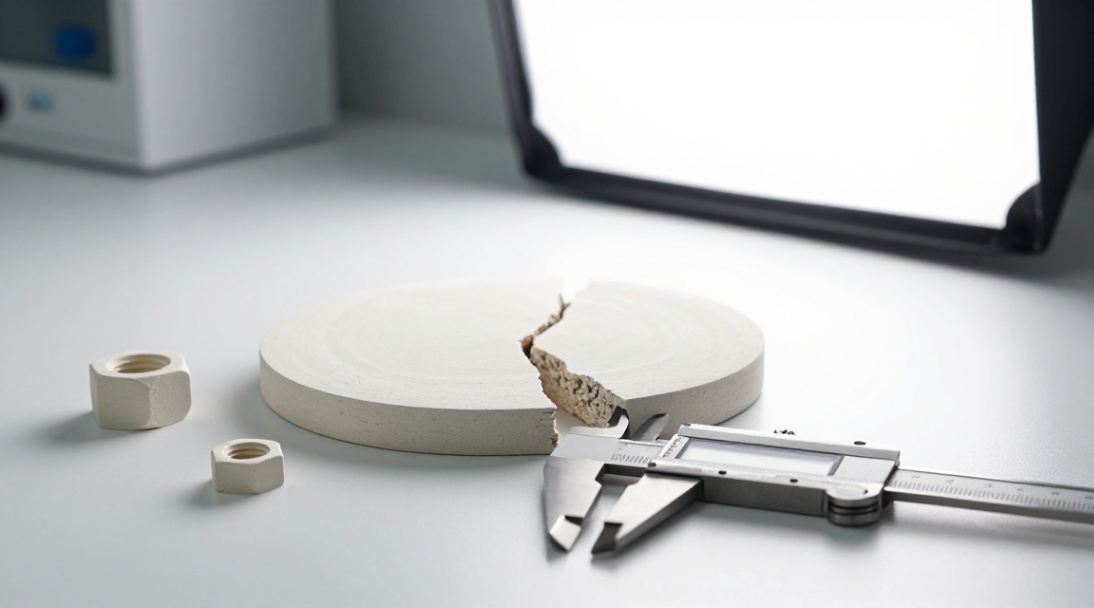
Alumina is hard. It is not tough. This is the single most overlooked distinction. You cannot design an aluminum oxide ceramic component like a metal part. Sharp corners, thin unsupported sections, and press-fit assemblies are a recipe for catastrophic fracture.
Design Rule: Always design for compressive loading. Avoid tensile and shear stresses. Use generous fillets. Never press-fit alumina into a metal housing without a compliant layer or a specifically designed tapered seat. For applications demanding high mechanical strength and fracture toughness, you should be evaluating zirconia-toughened alumina (ZTA) or silicon nitride ceramic from the start.
Mistake #3: Defaulting to Alumina for “Thermal” Applications
Alumina has moderate thermal conductivity (~30 W/mK for 99.5%). It’s an insulator compared to real thermal management materials. Using it as a heat spreader for high-power electronics is a fundamental error.
| Material | Thermal Conductivity (Typical) | When to Choose Over Aluminum Oxide Ceramic |
|---|---|---|
| Aluminum Nitride Ceramic | 150-180 W/mK | High-power RF modules, laser diode submounts, semiconductor packaging. 5x better than alumina. |
| Silicon Carbide Ceramic | 120-140 W/mK | High-temperature fixturing, burner plates, fusion reactor components. Offers superior strength and conductivity. |
| Boron Nitride Ceramic | 30-60 W/mK (in-plane) | Where you need electrical insulation, thermal conductivity, and lubricity (e.g., special coating for boron nitride ceramic crucibles in metal evaporation). |
If thermal performance is critical, aluminum oxide ceramic is frequently the wrong answer.
Mistake #4: Overlooking the Sintering Reality
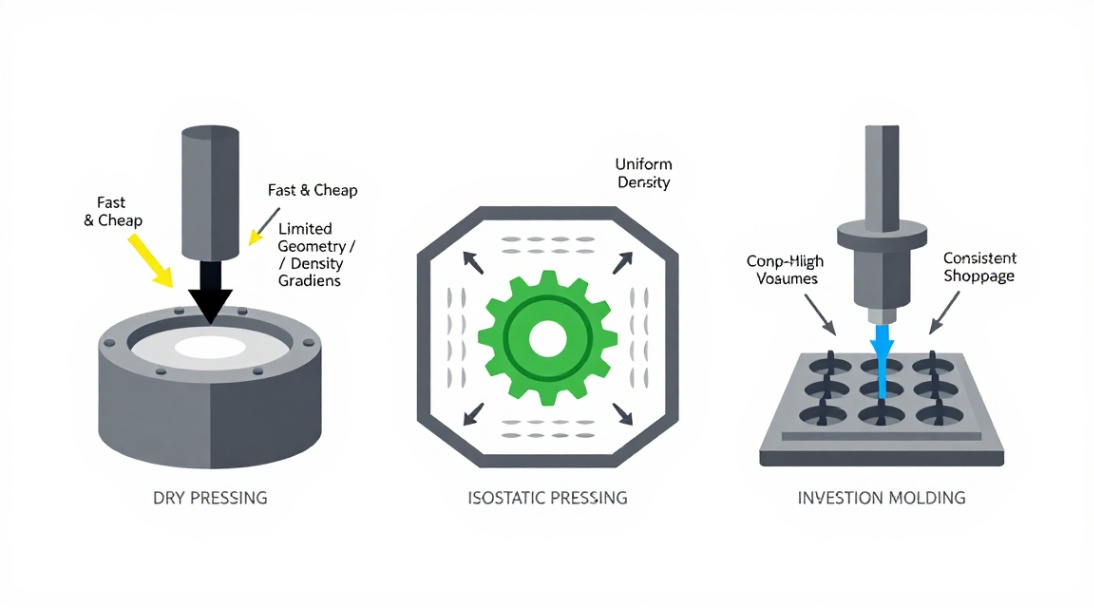
The forming process dictates final properties. Dry pressing is fast and cheap, but it limits geometry and creates density gradients. Isostatic pressing is superior for complex shapes. Injection molding is for ultra-high volume. Choosing the wrong forming method guarantees inconsistent shrinkage, warping, and hidden flaws.
Your CAD model is not the final part. A 20% linear shrinkage during sintering is standard. Tolerances tighter than ±0.1% on fired dimensions often require expensive diamond grinding. Factor this in at the design stage.
Mistake #5: Misapplying It in Extreme Environments
Alumina is good, but it has limits. It reacts with strong acids and alkalis at high temperatures. In ultra-high temperature applications above 1700°C, materials like mullite ceramic or the newly developed high-entropy oxides (e.g., Hf0.85Ta0.15O, melting point 3006°C) are emerging. For extreme wear involving abrasives, boron carbide ceramic or reaction-sintered silicon carbide ceramics offer vastly superior performance.
Its biocompatibility for medical implants is real, but only at the highest purity levels (99.5%+) with specific surface finishes. Do not assume medical grade without certified processing.
The Bottom Line: When You MUST Use Aluminum Oxide Ceramic
Use it when you need a proven, cost-effective combination of hardness, electrical insulation, and decent thermal properties. Think wear-resistant liners, thread guides, labware, insulator tubes, and standard ceramic substrates. Specify the correct purity. Design for its brittleness. Respect its thermal limits.
For anything else-high thermal flux, extreme toughness, ultra-high temperature stability, or superior chemical resistance-immediately evaluate alternatives: aluminum nitride ceramic, silicon carbide ceramic, silicon nitride ceramic, or zirconia.
Stop Guessing. Get It Right From the Start.
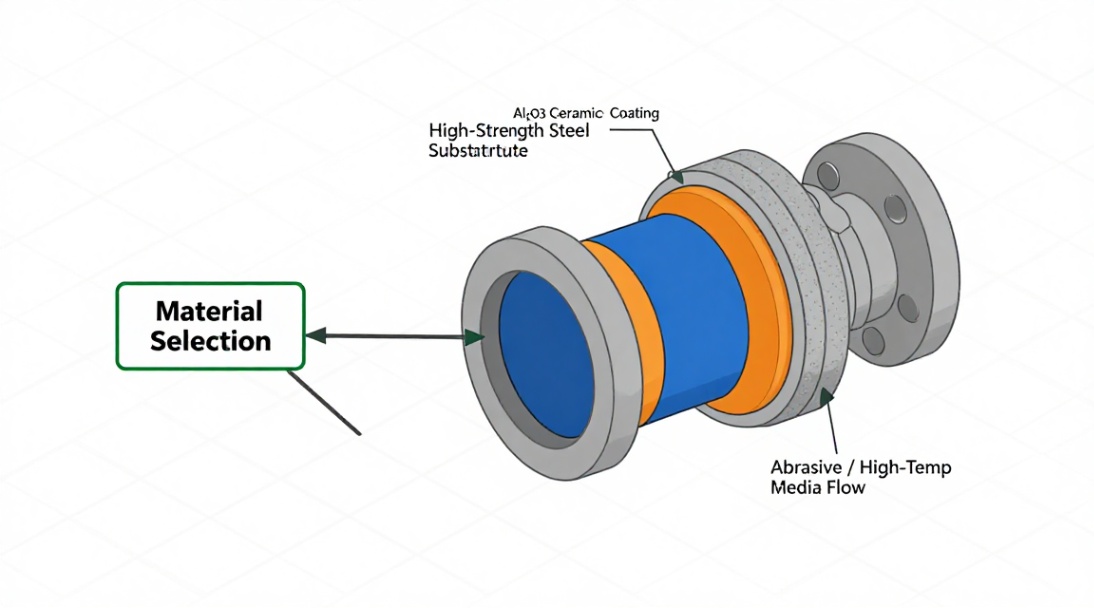
Material selection is not a checkbox. It is the foundational decision that determines success or catastrophic failure. If you’re designing a component where failure is not an option, you need expert-level guidance that cuts through the marketing fluff.
Stop wasting time and money on failed prototypes. Consult with a true specialist who understands the entire ecosystem of advanced ceramics, from aluminum oxide ceramic to pressureless sintered silicon carbide ceramics. Book a technical review of your application now. Let’s identify the correct material and process before you commit to tooling. The right choice saves orders of magnitude in cost down the line.
Suppiler
Synthetic-chemical focus on the research and development, production and sales of ceramic products, serving the electronics, ceramics, chemical and other industries. Since its establishment in 2015, the company has been committed to providing customers with the best products and services, and has become a leader in the industry through continuous technological innovation and strict quality management.
Our products includes but not limited to Aluminum Nitride, Aluminum Oxide, Boron Carbide, Boron Nitride, Ceramic Crucible, ect. If you are interested in any type of these, please feel free to contact us.