Next-Generation Ceramics: Unlocking Superior Properties for Industry

A Shocking Waste: 70% of Failures Start Here
Forget what the glossy brochures say. Seventy percent of premature aluminium oxide ceramic component failures trace back to one root cause: selecting the material for the wrong job. The industry’s obsession with alumina as a universal solution is a multi-billion dollar mistake. It’s not magic. It has glaring weaknesses. Ignoring them guarantees failure, downtime, and wasted capital. Let’s dismantle the myths.
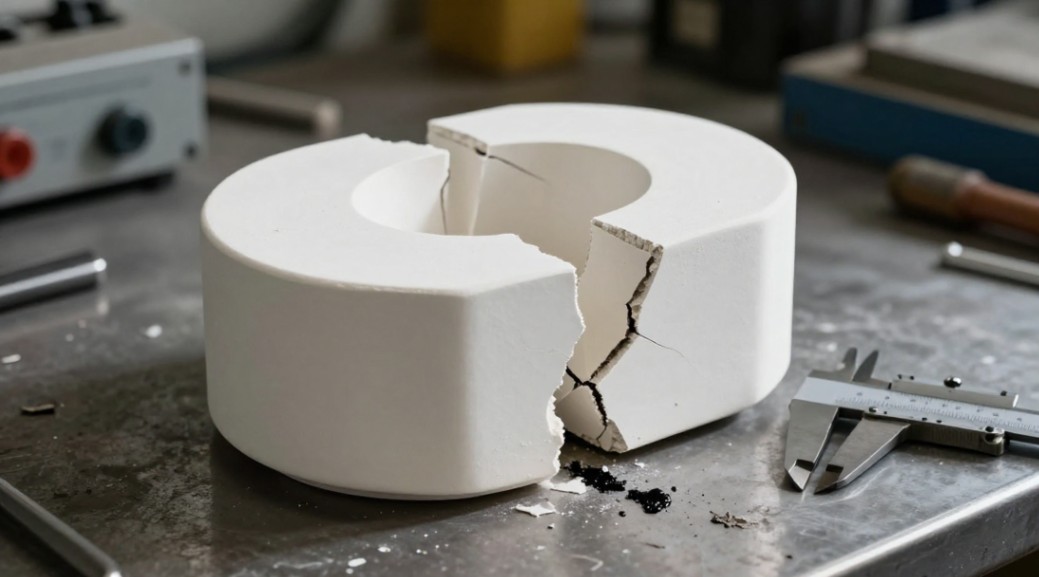
1. The Single Biggest Mistake: Ignoring The Brittleness Trap
Everyone talks about the hardness of aluminum oxide ceramic. It’s legendary. They sell you on the wear resistance. But they whisper about the brittleness. This is deliberate negligence. Alumina is not a ductile metal. Under tensile or point impact loads, it will fracture. Catastrophically. Using it in a high-impact environment where a bearing steel or a tough silicon nitride ceramic should be? You are installing a liability.
1.1. The Thermal Shock Myth
Its high-temperature performance is excellent-in a steady state. Rapid temperature cycling is its kryptonite. The relatively low thermal conductivity and moderate thermal expansion create massive internal stresses. Quench a hot alumina part? You’ll hear it crack. For thermal cycling, silicon carbide ceramic or even mullite ceramic often present a more robust, if less hard, solution.
2. The Purity Paradox: More Is Not Always Better
You see 99.5% or 99.8% purity and assume supreme performance. This is a trap for the uninformed. Higher purity alumina is harder and more corrosion-resistant. It is also more expensive and significantly more brittle. For most industrial wear components like seal faces or liners, a well-processed 96% alumina offers the perfect balance of cost-effectiveness, wear life, and fracture toughness. Paying for 99.8% for a grinding media application is burning money for zero functional gain.
3. The Electrical Insulation Illusion
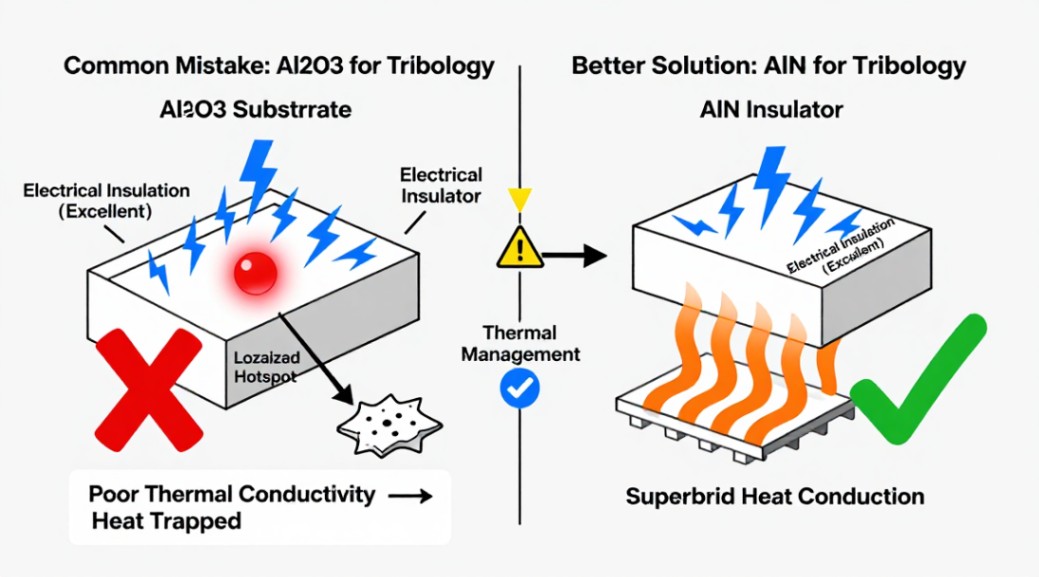
Yes, aluminium oxide ceramic is an outstanding electrical insulator. This makes it perfect for substrates and insulators. But this property is a double-edged sword. In tribological applications, the inability to conduct heat away from the contact surface-a direct result of its excellent electrical insulation-can lead to localized overheating and accelerated wear. Sometimes, you need a material like aluminum nitride ceramic, which combines electrical insulation with superb thermal conductivity.
4. Overlooking The Fabrication Reality
The primary manufacturing processes-dry pressing, isostatic pressing, injection molding-dictate geometry and cost limits. Need a complex, thin-walled, high-tolerance shape? Injection molding might work, but tooling is expensive. Machining sintered alumina is difficult and costly; diamond grinding is the only option. If your design calls for intricate metal-like geometries, stop. Consider if a reaction-sintered silicon carbide ceramic or even a high-performance polymer composite is a more fabricable solution.
5. The Biocompatibility Blind Spot
In medical implants, alumina’s biocompatibility is proven. But its use is declining for a reason. Compared to materials like zirconia, modern alumina composites lack the fracture toughness required for the most demanding orthopaedic applications. Relying on legacy data for a new implant design is a profound risk. The mechanical advantage has shifted.
The Logical Choice Framework
Stop choosing materials by habit. Use this logic chain:
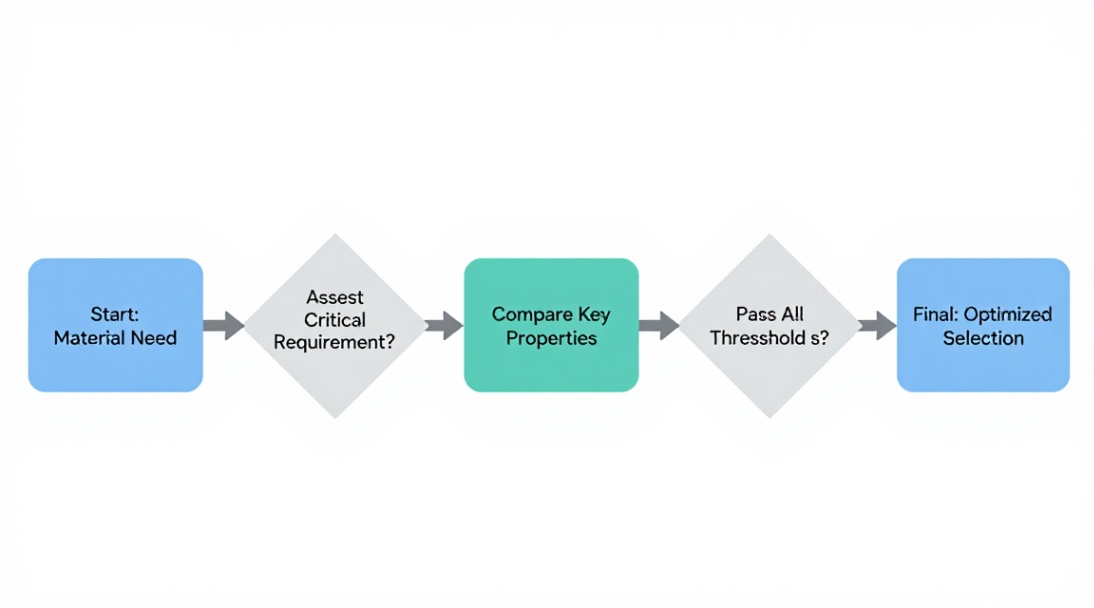
- Is the primary failure mode wear and abrasion with minimal impact? Aluminium oxide ceramic is a top contender.
- Are high temperatures involved? Is the environment steady-state or cycling? If cycling, reconsider immediately.
- Is electrical insulation critical, or is heat dissipation the priority? Choose accordingly.
- Does the design require complex shapes? Factor in machining costs from the start.
- Finally, run the numbers. A cheaper 96% alumina part that lasts 5 years is superior to a costly 99.8% part that lasts 7 but fractures in year 1 from an unanticipated load.
Aluminum oxide ceramic is a workhorse, not a wonder material. Its material availability and proven track record in abrasive and cutting tool materials, seals, and insulators are undeniable. But its reign ends where impact, complex stress states, and severe thermal shock begin. Your next step is not to buy alumina. It is to critically audit your application against its fundamental limitations. The data doesn’t lie. Most failures are preventable. Start preventing yours.
Suppiler
Synthetic-chemical focus on the research and development, production and sales of ceramic products, serving the electronics, ceramics, chemical and other industries. Since its establishment in 2015, the company has been committed to providing customers with the best products and services, and has become a leader in the industry through continuous technological innovation and strict quality management.
Our products includes but not limited to Aluminum Nitride, Aluminum Oxide, Boron Carbide, Boron Nitride, Ceramic Crucible, ect. If you are interested in any type of these, please feel free to contact us.