Next-Generation Ceramics: Unlocking Superior Properties for Industry

Have you ever specified a material, trusted its data sheet, and still faced catastrophic component failure due to unforeseen thermal shock or corrosive attack? Does the quest for a material that offers reliable electrical insulation, wear resistance, and chemical inertness seem to force you into a complex and costly compromise? You are not alone. For decades, engineers have navigated this maze of material trade-offs. The solution often lies not in exotic novelties, but in mastering the fundamental workhorse: aluminum oxide ceramic.
1. Foundation: What Defines Aluminium Oxide Ceramic?
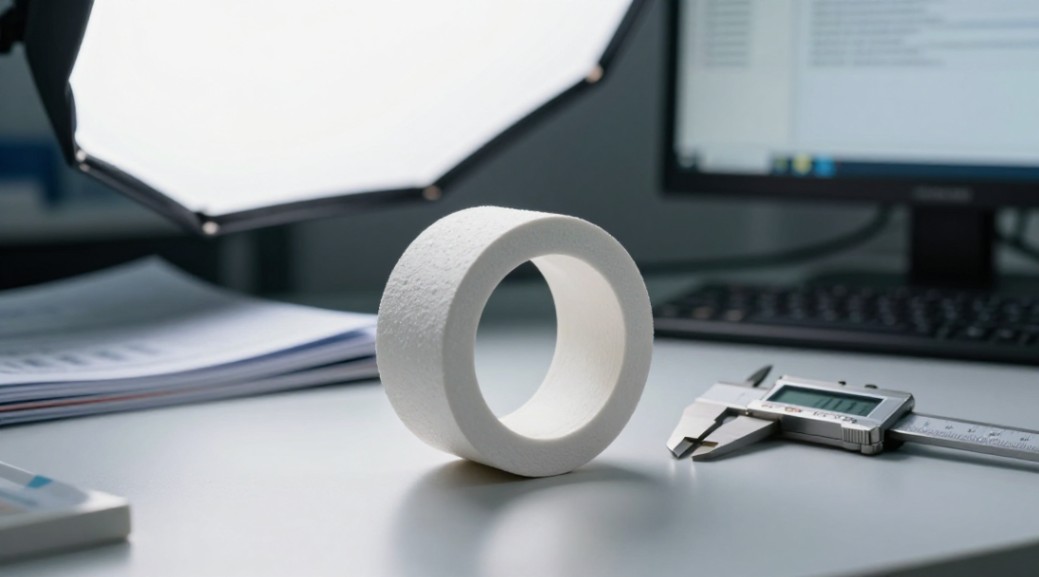
At its core, aluminium oxide ceramic is a polycrystalline material derived from the compound Al2O3. Its properties are not a singular constant, but a spectrum defined by purity and microstructure. High-purity powders undergo shaping and a controlled high-temperature sintering process, fusing particles into a dense, cohesive body. This process dictates the final performance.
1.1. The Purity Paradigm: From 96% to 99.5% and Beyond
- 96% Alumina: The industrial benchmark. It offers an optimal balance of properties and cost. It contains silicate-based glass phases that enhance densification during sintering, providing excellent mechanical strength and wear resistance for most mechanical applications.
- 99.5% & 99.8% Alumina: High-purity grades. The near-elimination of glassy phases elevates performance in aggressive environments. Electrical insulation, thermal conductivity (at higher temperatures), and chemical resistance see marked improvement, making these grades essential for semiconductor and advanced medical applications.
- 99.9%+ (Substrates & Sapphire): The pinnacle for electronic and optical performance, where even trace impurities disrupt function.
2. The Inherent Advantage Suite: Why Alumina Often Wins
Choosing a material is an exercise in triage. Aluminum oxide ceramic provides a pre-optimized portfolio of attributes that consistently meets a broad set of requirements.
- Mechanical Hardness & Wear: Its high hardness (second only to boron carbide and silicon carbide among oxides) provides exceptional resistance to abrasion, making it ideal for seals, liners, and cutting tool inserts.
- Compressive Strength: It withstands extreme compressive loads, a function of its strong ionic bonds and fine, sintered grain structure.
- Thermal Stability: Alumina maintains its strength and shape at sustained temperatures exceeding 1500°C in air. It does not oxidize. Compare this to silicon carbide ceramics, which can oxidize in air above 1200°C, forming a protective silica layer but changing dimensions.
- Electrical Insulation & Dielectric Strength: This is a primary function. Its high resistivity and ability to prevent electrical breakdown under high voltages make it the default for insulators, substrates, and spark plug bodies. Its dielectric properties are stable across a wide frequency and temperature range.
- Chemical Inertness: It is nearly impervious to attack by most acids, alkalis, and molten metals (except fluorine-based acids and strong alkalis at high temperature). This corrosion resistance is superior to most metals and many other ceramics in common chemical environments.
3. The Reality Check: Design Limitations You Must Respect
No material is a panacea. Successful application of aluminium oxide ceramic requires designing *around* its weaknesses, not ignoring them.
3.1. Brittle Fracture & Tensile Stress
Like all monolithic ceramics, alumina is brittle. It has virtually no plastic deformation. It fails catastrophically under tensile stress or impact. The design imperative shifts from yield strength to fracture mechanics. You must avoid stress concentrators like sharp corners and design to put the ceramic in compression.
3.2. Thermal Shock Resistance
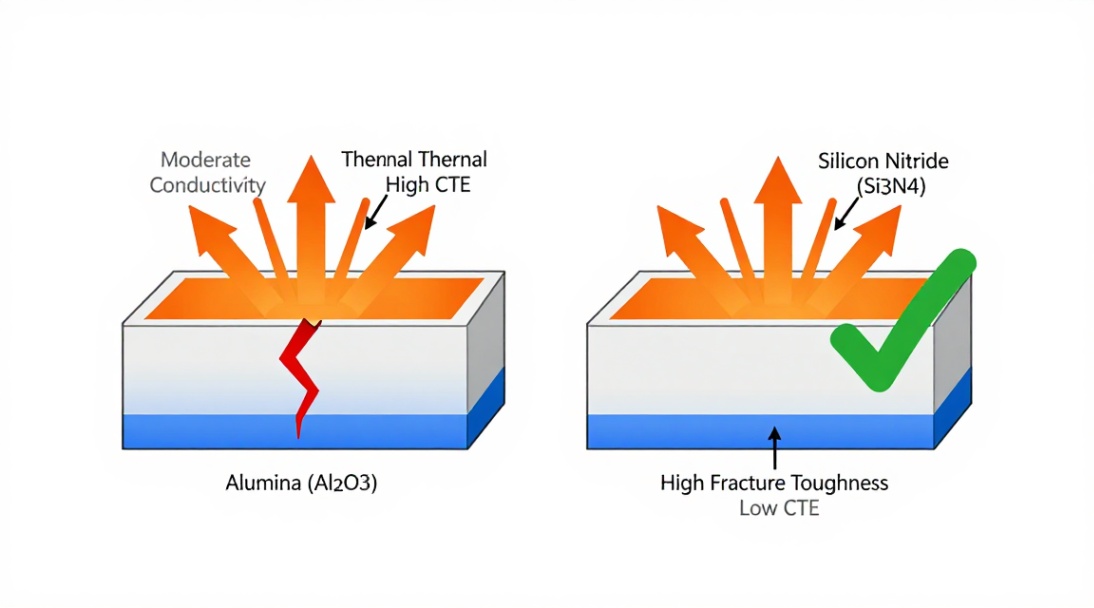
This is alumina’s Achilles’ heel. Its moderate thermal conductivity and relatively high thermal expansion coefficient make it susceptible to cracking from rapid temperature changes. For severe thermal cycling, silicon nitride ceramic or specialized grades like mullite ceramic are often better choices.
3.3. Machining Cost & Complexity
Once sintered, alumina is extremely hard. Machining requires diamond grinding, ultrasonic drilling, or laser cutting. Complex geometries drive cost exponentially. The prudent strategy is to design components to near-net-shape during forming, minimizing expensive post-processing.
4. The Competitive Landscape: Alumina vs. Other Engineered Ceramics
Selection is relative. Here is a logical comparison framework.
- vs. Zirconia (ZrO2): Zirconia offers far higher fracture toughness (less brittle) and better thermal shock resistance. Use zirconia for mechanical components subject to impact or cyclic stress. However, zirconia has lower hardness (less wear-resistant) and its long-term phase stability at high temperature can be a concern.
- vs. Silicon Nitride (Si3N4): Silicon nitride excels in thermal shock and has high strength and toughness. It’s the choice for high-performance bearings and severe thermal cycling environments. Alumina wins on cost, electrical insulation, and chemical resistance in many aqueous media.
- vs. Aluminum Nitride (AlN): This is a functional, not mechanical, competitor. Aluminium nitride ceramic provides thermal conductivity nearly 10x that of alumina, making it perfect for heat sinks and electronic packages. Its mechanical properties are generally inferior to alumina.
5. The Unseen Evolution: Future Trends and Material Innovations
The future of aluminium oxide ceramic is not obsolescence, but augmentation and precision.
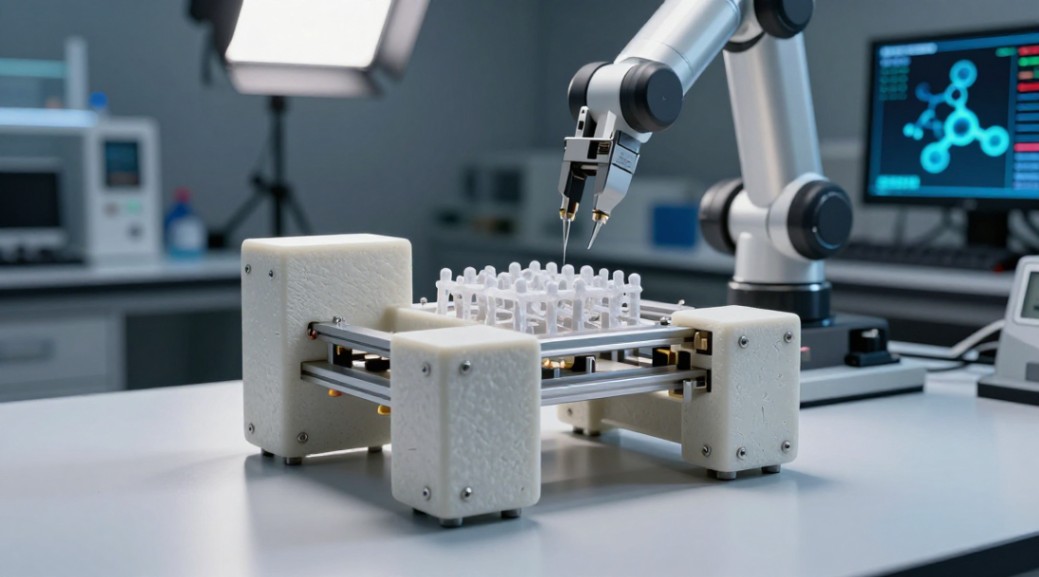
- Advanced Composites & Hybrids: Researchers are embedding alumina matrices with graphene, nanotubes, or other phases like boron nitride ceramic to improve fracture toughness and thermal conductivity while retaining chemical inertness.
- Nanostructured and Transparent Alumina: Controlling grain size down to the nanoscale can dramatically increase strength and hardness. Sintering advancements are also enabling transparent polycrystalline alumina for armored windows and lenses.
- Additive Manufacturing (3D Printing): Binder jetting and stereolithography of alumina slurries are revolutionizing prototyping and producing complex geometries previously deemed impossible or too costly to machine. This reduces design constraints.
- Surface Engineering: The application of special coatings, such as those used on boron nitride ceramic crucibles, is being adapted to alumina to enhance specific surface properties-like non-wettability by molten metals or further improved wear resistance-without compromising the bulk material’s benefits.
6. The Practical Path Forward for Engineers
Mastering aluminium oxide ceramic is about recognizing its role as the reliable, high-performance default. Start with alumina as your baseline candidate for any application demanding electrical insulation, wear resistance, high-temperature stability, or chemical inertness. Then, methodically test its performance against your specific failure modes-particularly thermal shock and tensile stress. Only if it fails these tests should you move to more specialized (and often more expensive) materials like silicon carbide ceramic, silicon nitride, or zirconia. By understanding its fundamental truths and limitations, you leverage decades of proven performance while strategically innovating at the edges of its capability.
Suppiler
Synthetic-chemical focus on the research and development, production and sales of ceramic products, serving the electronics, ceramics, chemical and other industries. Since its establishment in 2015, the company has been committed to providing customers with the best products and services, and has become a leader in the industry through continuous technological innovation and strict quality management.
Our products includes but not limited to Aluminum Nitride, Aluminum Oxide, Boron Carbide, Boron Nitride, Ceramic Crucible, ect. If you are interested in any type of these, please feel free to contact us.