Next-Generation Ceramics: Unlocking Superior Properties for Industry

Few materials are as quietly indispensable as aluminum oxide ceramic. Its global market is worth billions, yet most people never see it. This hidden champion operates under immense stress, extreme temperatures, and corrosive environments where metals fail. Let’s uncover what makes it a cornerstone of modern engineering.
1. The Core Composition: What It Is Made Of
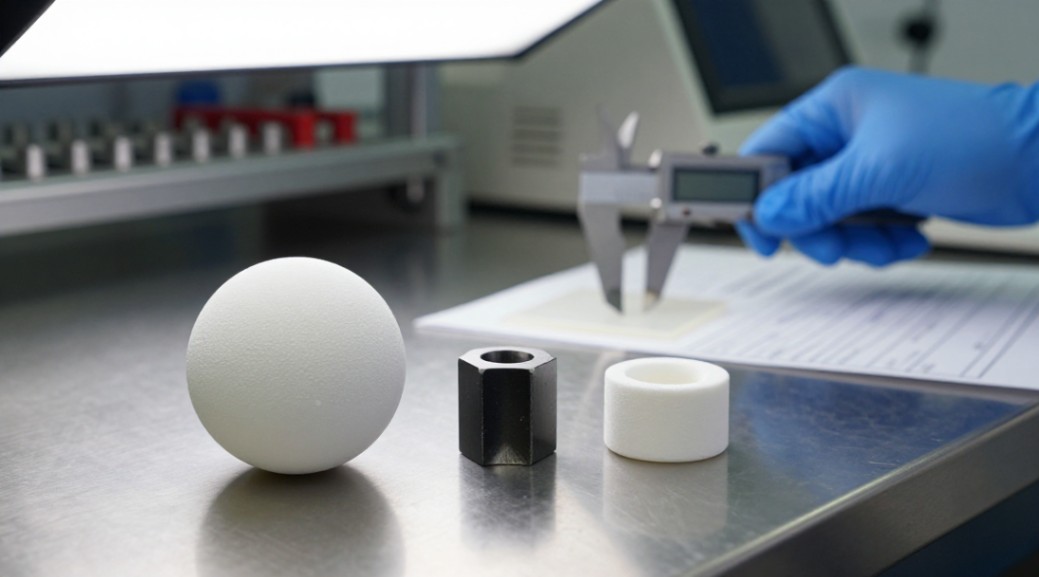
At its heart, aluminum oxide ceramic is a crystalline compound of aluminium and oxygen. Its chemical formula is Al2O3. We often call it alumina. The raw material is bauxite ore, refined into a fine, pure white powder. This powder is the starting point for everything that follows.
The magic happens during sintering. Here, intense heat fuses the powder particles together into a dense, polycrystalline solid. This process creates the exceptional properties engineers rely on.
1.1. The Property Hall of Fame
- Extreme Hardness: It ranks 9 on the Mohs scale, just below diamond (10). This makes it highly wear-resistant.
- Superior Electrical Insulation: It has very high resistivity, even at elevated temperatures.
- Excellent Thermal Stability: It maintains its strength and shape up to ~1700°C (3092°F).
- Superb Chemical Inertness: It resists attack from most acids, alkalis, and molten metals.
- High Compressive Strength: It can withstand massive crushing loads without deforming.
- Good Biocompatibility: The human body tolerates it well, a critical feature for medical implants.
2. Where Aluminum Oxide Ceramic Shines: Top Applications
Its unique property profile makes it the material of choice for countless critical roles.
2.1. Wear and Corrosion Resistance
- Industrial Liners and Wear Parts: Used in piping, cyclones, and chutes to handle abrasive slurries.
- Cutting Tools and Inserts: Often coated onto tungsten carbide to machine hard metals.
- Seals and Bearings: Operate in dry or corrosive environments where lubrication is impossible.
2.2. Electrical and Electronic Insulation
- Substrates for Microelectronics: The foundation for nearly all thick and thin film circuits.
- High-Voltage Insulators: Found in spark plugs, power transmission systems, and circuit breakers.
- Sensor Housings: Protects sensitive electronics in harsh industrial settings.
2.3. High-Temperature Performance
- Refractory Tubes and Crucibles: Contains molten metal and high-temperature processes.
- Thermocouple Protection Sheaths: Shields temperature sensors in furnaces.
- Kiln Furniture: Setters and plates support other ceramics during firing.
2.4. Medical and Biotechnology
- Orthopedic Implants: Used in hip joint replacements and dental implants.
- Surgical Instrument Tips: Provides sharp, non-magnetic, and sterilizable cutting edges.
3. How It Stacks Up: Aluminum Oxide vs. Other Advanced Ceramics
Alumina is the workhorse. Other ceramics are specialists. Choose alumina for the best balance of performance and cost.
- vs. Silicon Carbide Ceramic: Silicon carbide offers higher thermal conductivity and better thermal shock resistance, but it is more expensive and less electrically insulating.
- vs. Silicon Nitride Ceramic: Silicon nitride is tougher and has excellent thermal shock performance, ideal for high-stress applications like bearing balls. Alumina wins on cost and electrical properties.
- vs. Boron Nitride Ceramic: Boron nitride is a soft, machinable ceramic with excellent thermal conductivity and lubricity. Alumina is harder and more wear-resistant.
- vs. Zirconia (ZrO2): Zirconia is much tougher and stronger, but has lower hardness and can be more expensive. It’s the choice for demanding structural applications.
4. The Alumina Family: Grades and Purity Matter
Not all alumina is the same. The purity level directly defines its capabilities.
- 96% Alumina: The most common industrial grade. It offers an outstanding blend of properties at an economical price. It contains silica and other oxides that aid sintering.
- 99.5% – 99.9% Alumina: High-purity grades. These deliver superior electrical insulation, higher chemical purity, and better wear resistance. They are essential for semiconductor tools and advanced labs.
- 99.9%+ Alumina: Ultra-high purity or single-crystal sapphire. This material has the ultimate performance for optics, lasers, and critical semiconductor applications.
5. Making and Shaping It: From Powder to Part
The journey from powder to precision part is a testament to materials science.
- Powder Processing: The raw alumina powder is milled to a precise particle size and mixed with binders.
- Forming: The powder is shaped. Common methods include dry pressing, isostatic pressing, injection molding, and slip casting.
- Sintering: The ‘green’ part is fired in a kiln at temperatures often exceeding 1600°C. The particles fuse, and the part shrinks and densifies.
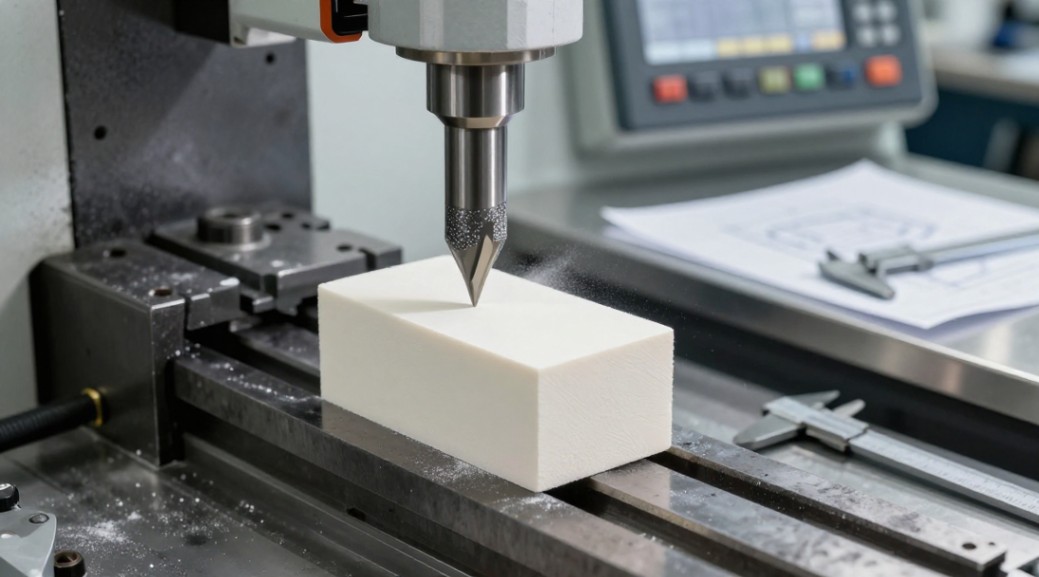
- Finishing: Sintered alumina is extremely hard. Diamond grinding, lapping, and polishing are required to achieve tight tolerances and smooth surfaces.
Machining is possible but difficult. Use diamond-impregnated tools. Design parts with simple geometries to minimize finishing costs.
6. Choosing Wisely: A Simple Decision Framework
Forget guesswork. Use this logic to decide if alumina is right for you.
- Do you need electrical insulation at high temperatures? Yes → Strong candidate for alumina.
- Is wear or abrasion the primary failure mode? Yes → Strong candidate for alumina.
- Do you need excellent chemical resistance? Yes → Strong candidate for alumina.
- Is the operating temperature above 1000°C? Yes → Consider alumina, but also evaluate mullite ceramic or silicon carbide-bonded silicon nitride ceramics for higher thermal shock.
- Is extreme fracture toughness the top priority? No → Alumina is good. Yes → Look at zirconia or silicon nitride first.
- Is thermal conductivity a key requirement? No → Alumina is fine. Yes → Investigate aluminium nitride ceramic or silicon carbide ceramic.
When in doubt, start with a standard 96% alumina grade. It’s cost-effective and solves most common engineering problems.
7. The Horizon: What’s Next for This Versatile Material?
Innovation continues. Researchers are pushing boundaries in two key areas.
Nanostructured Alumina: By engineering the material at the nanoscale, we can create alumina with unprecedented strength, transparency, and surface properties. Think scratch-proof windows or stronger biomedical implants.
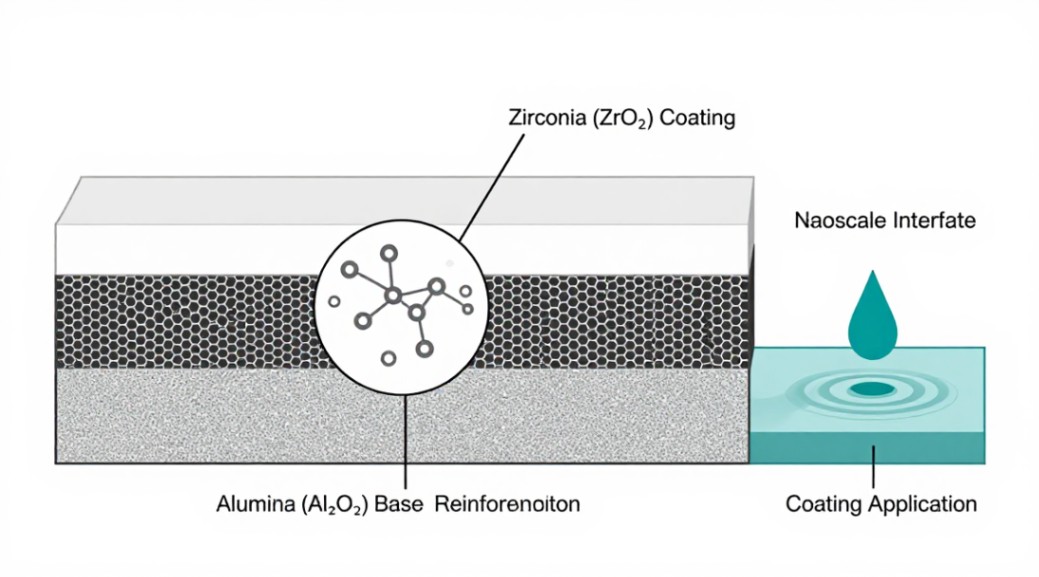
Advanced Composites and Coatings: Combining alumina with other materials like graphene or zirconia creates composites that overcome traditional weaknesses. We also see advanced functional coatings, similar to a special coating for boron nitride ceramic crucibles, being developed to enhance alumina’s surface for specific tasks like non-stick performance or extreme thermal protection.
So, what’s the next step? Apply this knowledge. Review your current designs. Look for components failing from wear, heat, or corrosion. Could a switch to this unsung hero of materials solve the problem? The answer is often a resounding yes.
Suppiler
Synthetic-chemical focus on the research and development, production and sales of ceramic products, serving the electronics, ceramics, chemical and other industries. Since its establishment in 2015, the company has been committed to providing customers with the best products and services, and has become a leader in the industry through continuous technological innovation and strict quality management.
Our products includes but not limited to Aluminum Nitride, Aluminum Oxide, Boron Carbide, Boron Nitride, Ceramic Crucible, ect. If you are interested in any type of these, please feel free to contact us.