Next-Generation Ceramics: Unlocking Superior Properties for Industry

What is Aluminium Oxide Ceramic? (Al2O3)
You are evaluating materials for a critical component. It must withstand aggressive abrasion, operate reliably at high temperatures, and provide flawless electrical insulation. Traditional metals are failing prematurely. Polymer options lack the necessary thermal stability. You need a material that delivers extreme performance across multiple demanding fronts. This is the precise engineering challenge that aluminium oxide ceramic is designed to solve.
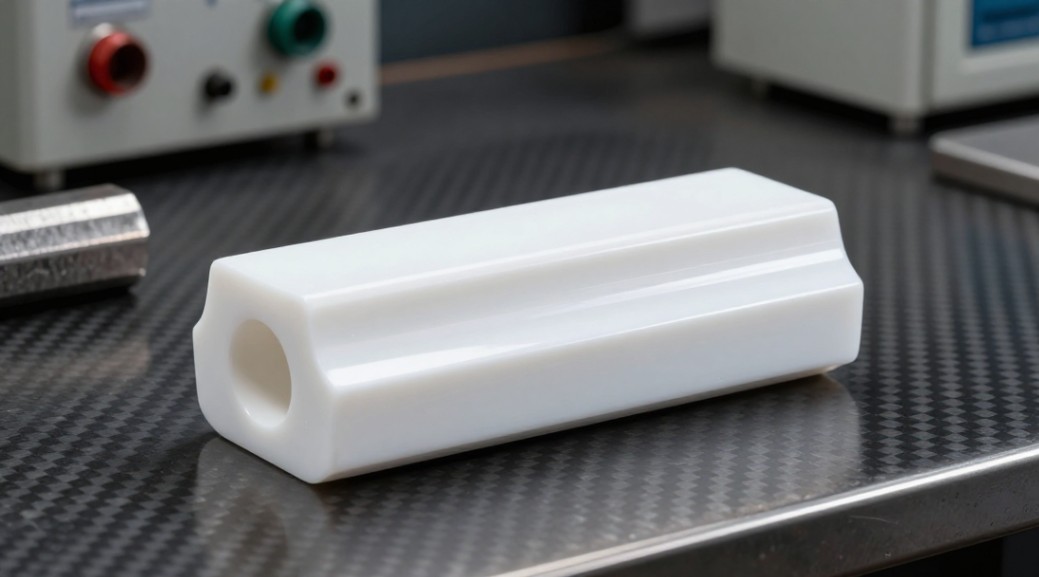
Aluminum oxide ceramic, or alumina, is a high-performance technical ceramic primarily composed of aluminum and oxygen (Al2O3). It is the workhorse of the advanced ceramics industry, valued for its exceptional balance of mechanical, thermal, and electrical properties. Unlike metallic or polymeric materials, alumina derives its capabilities from strong ionic and covalent atomic bonds, resulting in a structure that is inherently hard, stable, and inert.
The Core Properties Driving Performance
Alumina’s dominance stems from a specific and reliable property profile. These are not theoretical advantages but quantifiable metrics that dictate design success.
Mechanical & Thermal Properties
The material offers a compelling combination of strength and resilience.
- Exceptional Hardness & Wear Resistance: With a Mohs hardness of 9 (second only to diamond), alumina ceramics excel as liners, nozzles, seals, and cutting tool inserts where abrasive wear destroys metals.
- High Compressive Strength: It can sustain significant loads without deformation, making it suitable for heavy-duty bearing components and structural parts.
- Thermal Stability & High-Temperature Performance: Aluminum oxide ceramic maintains its strength and shape at temperatures up to 1700°C. This makes it ideal for furnace tubes, thermocouple sheaths, and welding nozzles.
Electrical & Chemical Properties
Performance extends beyond physical strength.
- Superior Electrical Insulation & Dielectric Strength: Alumina is an outstanding electrical insulator, even at elevated temperatures. Its high dielectric strength makes it the default choice for substrates in electronic circuits, spark plug insulators, and high-voltage feedthroughs.
- Excellent Chemical Inertness & Biocompatibility: It resists attack from most acids, alkalis, and molten metals. This chemical stability, coupled with proven biocompatibility, is why high-purity grades are used for orthopedic and dental implants.
Key Grades: 96% vs. 99.5% Alumina
Not all alumina is identical. The alumina content and minor additives define its capability envelope.
- 96% Alumina (Al2O3): The most widely used industrial grade. It offers an optimal balance of properties, performance, and cost. Typical applications include wear plates, pump seals, textile guides, and insulator bodies where extreme purity is not the primary driver.
- 99.5% (and higher) Alumina: This high-purity grade delivers superior properties: higher hardness, better wear resistance, enhanced thermal conductivity, and maximum chemical/electrical performance. It is specified for semiconductor processing components, advanced medical implants, high-performance laboratory ware, and critical electronic substrates where even trace impurities cannot be tolerated.
Manufacturing Processes: From Powder to Precision Part
Transforming fine alumina powder into a dense, reliable component requires precise manufacturing techniques. The choice depends on part geometry, tolerance requirements, and volume.
- Dry Pressing: A cost-effective method for simple, axisymmetric shapes like tiles, plates, and cylinders. Powder is compressed in a rigid die.
- Isostatic Pressing: Applies uniform pressure from all directions via a fluid medium. This produces components with more complex shapes, higher density, and more uniform properties than dry pressing. Essential for critical wear parts and technical components.
- Injection Molding: Allows for the mass production of small, complex, and high-precision parts. Alumina powder is mixed with a binder, molded, and then the binder is removed before sintering. Ideal for intricate electronic or medical components.
Critical Applications Across Industries
Alumina’s property matrix solves specific, high-stakes problems. Here is where it performs.
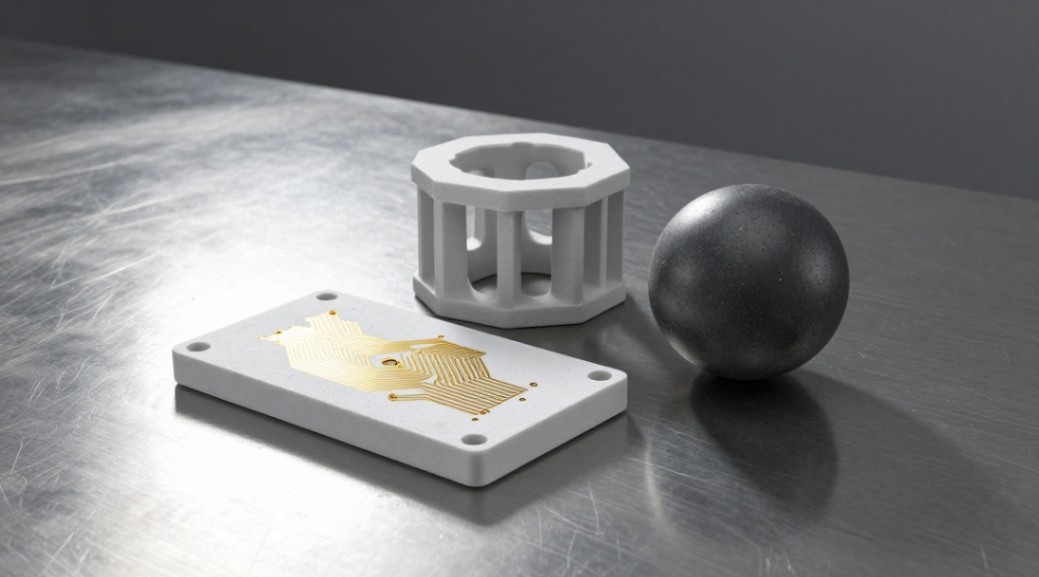
Industrial Wear & Abrasion
Replacing metal components in abrasive environments drastically extends service life.
- Liner tiles for chutes, hoppers, and cyclones.
- Nozzles for sandblasting and shot peening.
- Wear pads and guides in material handling systems.
- Cutting tool inserts for machining cast iron and non-ferrous metals.
Electronics & Electrical Engineering
Its insulating properties are non-negotiable.
- Substrates and packages for microelectronic circuits and power modules.
- Insulators for high-voltage switches, transformers, and vacuum interrupters.
- Heaters and sensors requiring electrical isolation at high temperatures.
High-Temperature & Medical
Performance under extreme conditions defines these applications.
- Furnace tubes, setters, and crucibles for metal processing and powder sintering.
- Thermocouple protection sheaths in hostile atmospheres.
- Biocompatible components for hip joint prostheses, dental implants, and bone screws.
Material Selection: Alumina vs. Other Technical Ceramics
Engineers must select the right tool for the job. Alumina is often compared to materials like zirconia (higher fracture toughness, lower hardness), silicon nitride (superior thermal shock resistance and mechanical strength), and silicon carbide (higher thermal conductivity and extreme hardness). The choice hinges on the primary failure mode: for pure abrasion and electrical insulation, alumina is often the most cost-effective champion. For applications involving severe thermal cycling or requiring maximum fracture resistance, zirconia or silicon nitride may be superior. For extreme thermal management, aluminum nitride ceramic offers far higher thermal conductivity than alumina.
Designing with Aluminum Oxide Ceramic
Success requires designing for the material’s characteristics.
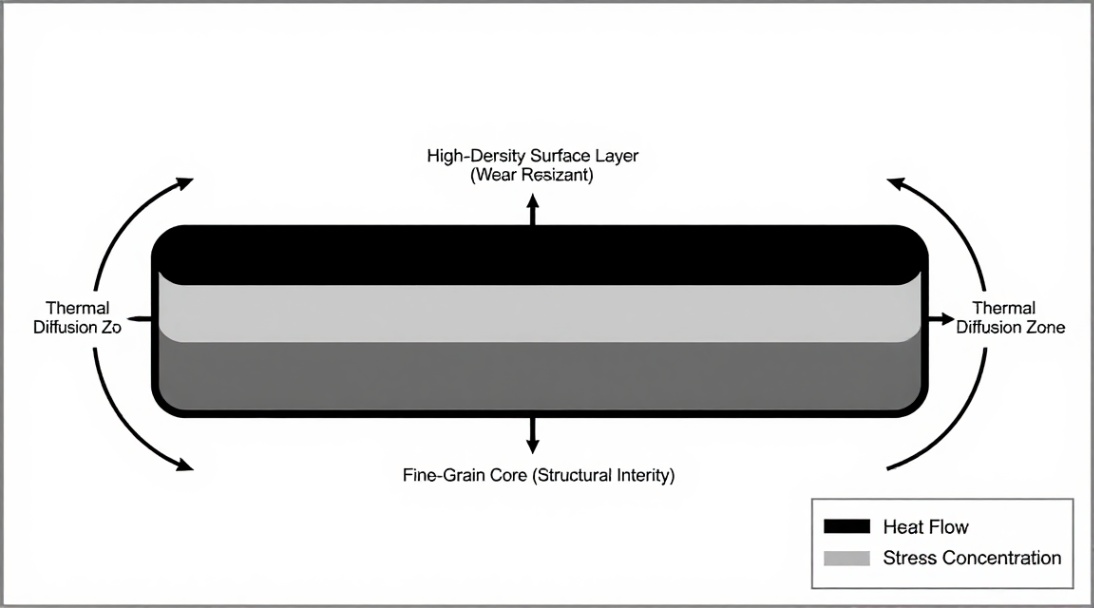
- Avoid Stress Concentrations: Use generous radii on all corners and edges. Sharp transitions create fracture points.
- Account for Brittleness: While strong in compression, ceramics are brittle. Designs should load components in compression, not tension or bending.
- Mind the Tolerance: Sintering causes predictable shrinkage. Work closely with your ceramic manufacturer early in the design phase to account for this.
- Consider Joining: Alumina is difficult to join. Mechanical attachment (clamping) or specialized brazing with active metal alloys are common methods.
For a wear component failing every three months, specifying a correctly designed and manufactured alumina ceramic liner can extend service life by years. For an electronic module failing due to thermal or insulation breakdown, an alumina substrate provides the fundamental solution. The path forward is clear: define the operational environment, identify the primary failure mechanisms, and match them to alumina’s proven property profile.
Suppiler
Synthetic-chemical focus on the research and development, production and sales of ceramic products, serving the electronics, ceramics, chemical and other industries. Since its establishment in 2015, the company has been committed to providing customers with the best products and services, and has become a leader in the industry through continuous technological innovation and strict quality management.
Our products includes but not limited to Aluminum Nitride, Aluminum Oxide, Boron Carbide, Boron Nitride, Ceramic Crucible, ect. If you are interested in any type of these, please feel free to contact us.