Next-Generation Ceramics: Unlocking Superior Properties for Industry

Struggling with Component Wear, Corrosion, or Electrical Failure?
Is your machinery failing too soon? Are electrical insulators breaking down under heat? Does chemical exposure ruin your parts? You are not alone. Many engineers face these costly and frustrating problems daily. The culprit is often a material mismatch. You need a solution that combines extreme hardness, unwavering chemical resistance, and excellent electrical insulation. This is where aluminium oxide ceramic (Al2O3) enters the picture. Let’s solve your material problems together.
What Exactly is Aluminium Oxide Ceramic?
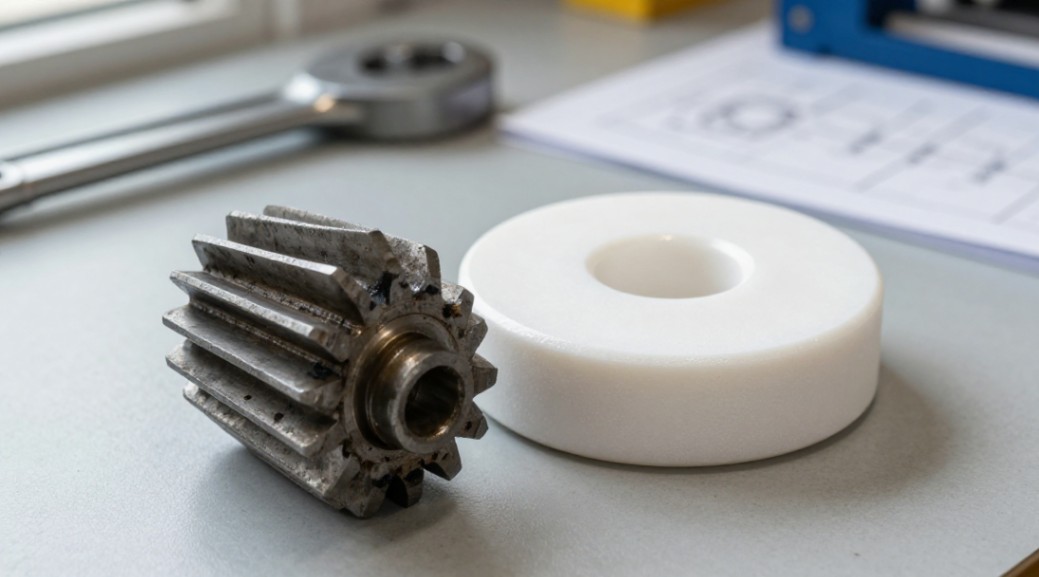
Aluminum oxide ceramic, often called alumina, is a workhorse material. It is a compound of aluminium and oxygen (Al2O3) fired at high temperatures to form a dense, polycrystalline structure. Think of it as a synthetic sapphire. This process gives it a unique set of properties that metals and polymers simply cannot match.
Core Properties That Make It Exceptional
- Extreme Hardness & Wear Resistance: It resists abrasion and surface degradation far better than most steels.
- Superior Electrical Insulation: It maintains high resistivity even at elevated temperatures.
- Excellent Chemical Inertness: It shrugs off attack from acids, alkalis, and molten metals.
- High Temperature Stability: It retains its shape and strength well over 1500°C.
- Good Mechanical Strength: It offers high compressive strength, though it can be brittle.
How to Choose: Aluminium Oxide vs. Other Engineering Ceramics
Not all ceramics are equal. Your project‘s success depends on selecting the right one. Here is a logical breakdown.
Alumina vs. Zirconia (ZrO2): Zirconia is tougher and has higher fracture toughness, making it better for applications like scissors or knives where impact is a concern. Alumina wins on hardness, wear resistance, and cost for applications like seal faces or liners.
Alumina vs. Silicon Carbide Ceramic (SiC): Silicon carbide ceramic has higher thermal conductivity and is even harder. Use it for extreme wear or heat sinking. Choose alumina when you need better electrical insulation or a more cost-effective solution for electrical substrates or insulators.
Alumina vs. Silicon Nitride Ceramic (Si3N4): Silicon nitride excels in thermal shock resistance and mechanical strength at high temperatures, ideal for turbine components. Alumina is preferred for its electrical properties and chemical stability in wet processes.
Step-by-Step Guide to Specifying and Using Aluminium Oxide Ceramic
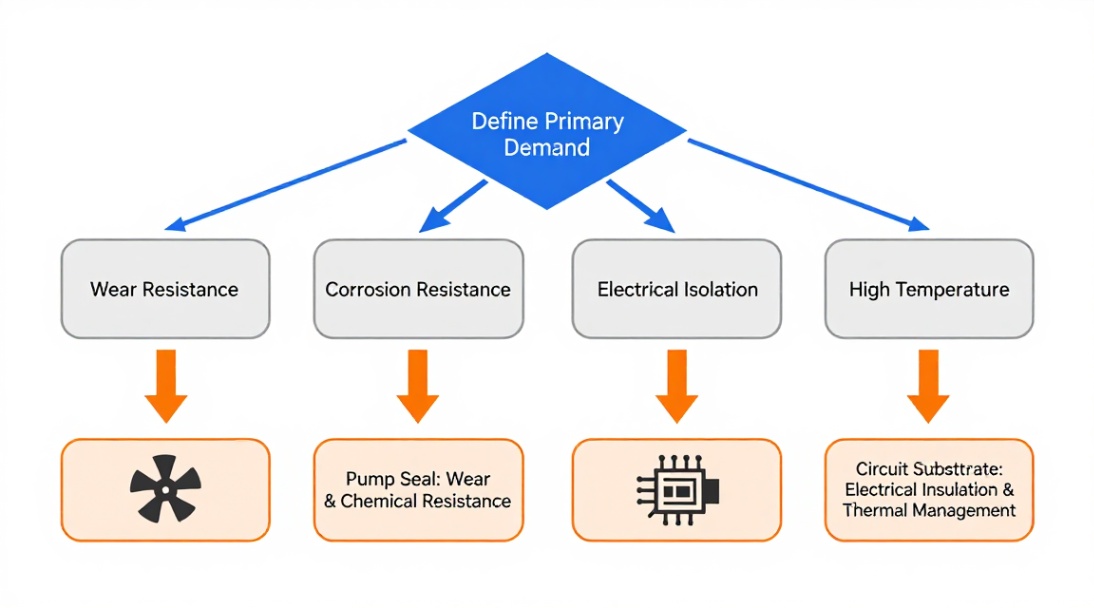
Step 1: Define Your Application’s Primary Demand
Is it wear? Corrosion? Electrical isolation? High temperature? Pinpoint the one non-negotiable requirement. For a pump seal, wear and chemical resistance are key. For a circuit substrate, electrical insulation and thermal management are paramount.
Step 2: Select the Correct Grade and Form
Alumina comes in purity grades from 85% to 99.9%+. Higher purity means better properties but higher cost. Common forms include:
- Substrates & Insulators: For electronic circuits and sensors.
- Wear Plates & Liners: For mining, bulk handling, and textile machinery.
- Tubes & Crucibles: For laboratory and metal processing. (For even higher temperature containment, boron nitride ceramic crucibles with special coatings are an advanced option).
- Cutting Tool Inserts: For machining cast iron and certain metals.
Step 3: Understand the Machining and Finishing Process
You must design with machining in mind. Alumina is hard and brittle. It requires diamond grinding tools. Final dimensional accuracy and surface finish are achieved through precise diamond grinding and lapping. Communicate closely with your ceramic component manufacturer early in the design phase.
Step 4: Design for Ceramics, Not Metals
Avoid sharp corners. Use generous radii. Design to put the ceramic in compression, not tension. Account for its lower fracture toughness compared to metals. Proper mechanical design prevents cracks from initiating.
The Future: Stronger, Tougher, Smarter Alumina
The frontier for all advanced ceramics, including alumina composites, lies in overcoming brittleness. Researchers are developing methods like continuous fiber reinforcement, similar to strategies used for ultra-high temperature ceramic matrix composites (UHTCMCs), to dramatically improve fracture toughness. Imagine an alumina component with the wear resistance of a diamond but the damage tolerance of an engineering plastic. That is the goal. New high-entropy oxide systems are also pushing the limits of temperature capability, hinting at future alumina-based materials for even more severe service.
Ready to Solve Your Toughest Engineering Challenge?
Stop compromising with materials that fail. Aluminum oxide ceramic provides a proven, reliable solution for the world’s most demanding industrial environments. Its unique balance of properties makes it the default choice for critical applications where others fall short.
Take the next step. Contact a specialist ceramic component manufacturer today. Discuss your specific application, whether it involves silicon carbide ceramic for extreme wear, aluminium nitride ceramic for thermal management, or high-purity alumina for precision insulation. Bring them your blueprints and your pain points. Let them guide you in material selection, design for manufacturability, and finishing to create a component that lasts. Your solution starts with the right material.
Suppiler
Synthetic-chemical focus on the research and development, production and sales of ceramic products, serving the electronics, ceramics, chemical and other industries. Since its establishment in 2015, the company has been committed to providing customers with the best products and services, and has become a leader in the industry through continuous technological innovation and strict quality management.
Our products includes but not limited to Aluminum Nitride, Aluminum Oxide, Boron Carbide, Boron Nitride, Ceramic Crucible, ect. If you are interested in any type of these, please feel free to contact us.