Next-Generation Ceramics: Unlocking Superior Properties for Industry

What is Aluminum Oxide Ceramic?
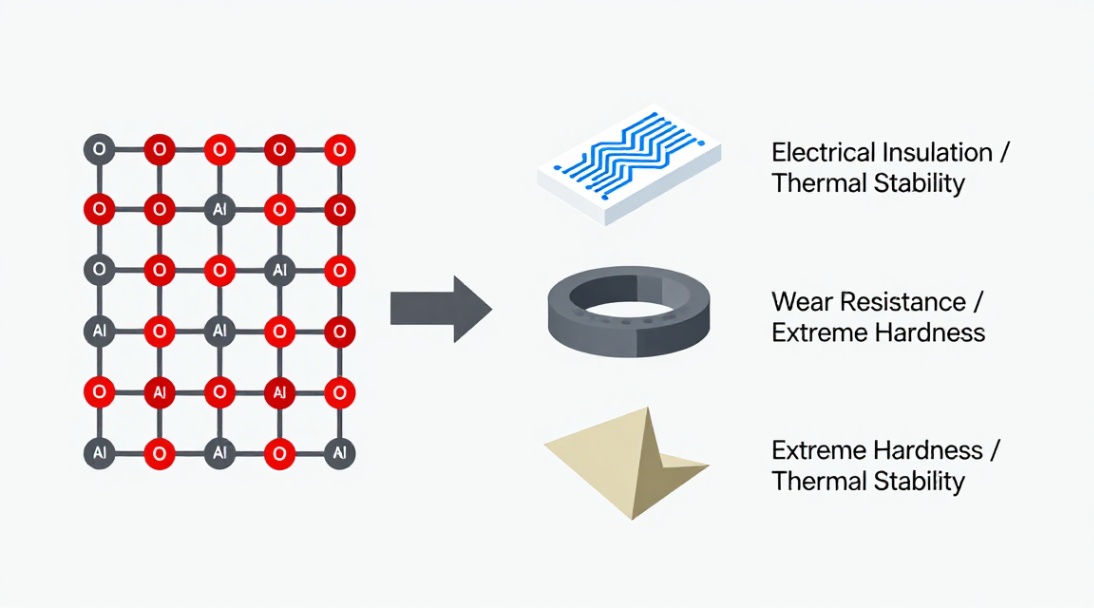
Aluminum oxide ceramic (Al2O3), commonly called alumina, is a high-performance technical ceramic synthesized from refined alumina powders. It offers a unique combination of extreme hardness, excellent wear resistance, high electrical insulation, and thermal stability. Engineers select it for applications where metals and plastics fail.
Expert Q&A: Aluminium Oxide Ceramic Fundamentals
1. What are the core properties of aluminum oxide ceramic?
Its performance is defined by three pillars. It has high hardness, ranking 9 on the Mohs scale, just below diamond. This provides exceptional abrasion resistance. It maintains structural integrity and electrical insulation at temperatures exceeding 1500°C (2732°F). Finally, it exhibits excellent chemical inertness and high electrical resistivity, exceeding 10^14 Ω·cm.
2. How do purity grades like 96% or 99.5% Al2O3 affect performance?
Purity dictates capabilities. Standard 85-96% grades offer a robust balance of cost, strength, and wear resistance for wear plates and insulator bodies. High-purity 99.5% and above grades deliver superior corrosion resistance, higher operating temperatures (up to 1750°C), and better dielectric properties, making them essential for semiconductor processing and advanced laboratory equipment.
3. What are the main manufacturing processes for alumina components?
- Dry Pressing: Cost-effective for high-volume, simple shapes like tiles and substrates.
- Isostatic Pressing: Applies uniform pressure for complex, high-density, high-performance parts.
- Injection Molding: Enables mass production of intricate, small-scale components with tight tolerances.
Industrial Applications & Material Selection
4. Where is aluminum oxide ceramic most commonly used?
Its applications span critical industries. It serves as hermetic seals and insulating substrates in electronics. It is the material of choice for high-wear pump seals, cutting tool inserts, and textile guides. In medical fields, it is used for orthopedic implants and surgical tools due to its bio-inertness. It also forms the backbone of thermal management substrates and protective thermocouple tubes.
5. How does alumina compare to other technical ceramics like zirconia or silicon carbide?
Each ceramic excels in specific areas. Alumina provides the best general-purpose combination of hardness, wear, and cost. Zirconia (ZrO2) offers vastly higher fracture toughness, making it ideal for applications requiring impact resistance. Silicon Carbide (SiC) and Silicon Nitride (Si3N4) provide superior thermal conductivity and high-temperature strength. Aluminum Nitride (AlN) specializes in thermal management with its high thermal conductivity and electrical insulation.
6. What are the key limitations of alumina ceramic?
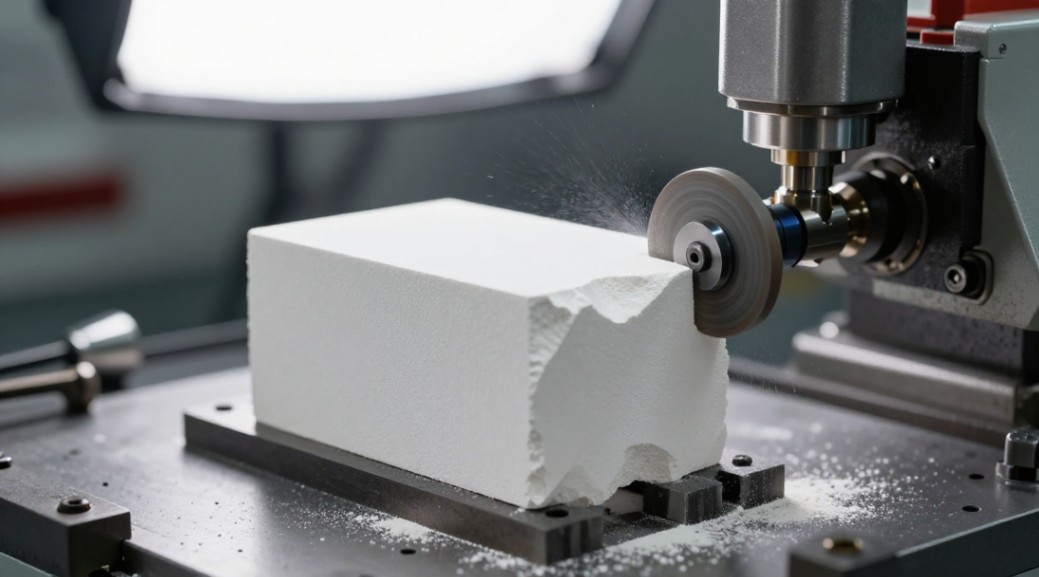
Its primary limitation is brittleness. Like most monolithic ceramics, it has low fracture toughness (3-5 MPa·m¹/²), making it susceptible to catastrophic failure under tensile stress or impact. Machining sintered alumina is difficult and expensive, requiring diamond grinding tools. Design must avoid sharp corners and tensile stress concentrations.
Designing with Alumina: Critical Considerations
7. How can you mitigate alumina’s brittleness in design?
Modern strategies directly address this. Composite approaches, such as continuous fiber reinforcement, can increase fracture toughness from 5 MPa·m¹/² to over 15 MPa·m¹/². Advanced sintering techniques, like those used in Ultra-High Temperature Ceramic Matrix Composites (UHTCMCs), can lower sintering temperatures and improve toughness by creating dense, continuous matrices. For demanding thermal applications, applying a dense, low-oxygen-permeability surface layer is critical for ablation resistance.
8. What surface finishes and post-processing are available?
Post-sintering, alumina can be precision ground and lapped to achieve sub-micron surface finishes. Diamond wheel grinding is standard. For sealing surfaces, lapping and polishing are used. Advanced techniques include laser machining and metallization (e.g., moly-manganese) for brazing to metal assemblies.
9. What are the key selection criteria for specifying alumina?
- Mechanical Load: Specify compressive loads; avoid tensile or bending stress.
- Thermal Profile: Match purity grade to maximum use temperature and thermal shock needs.
- Wear Mechanism: High-purity alumina resasts abrasive wear best.
- Electrical Requirements: Higher purity provides better insulation and dielectric strength.
- Chemical Environment: Alumina is inert to most chemicals but can be attacked by strong acids/bases at high temperatures.
- Cost vs. Performance: Use the lowest grade that meets all functional requirements.
10. When should you choose alumina over advanced ceramics like boron carbide or silicon nitride?
Choose alumina for cost-effective wear protection and electrical insulation under 1600°C. Switch to Silicon Nitride for severe thermal shock or high fracture toughness needs. Select Silicon Carbide for extreme thermal conductivity or corrosion resistance. Boron Carbide is reserved for specialized ultra-high hardness applications, such as lightweight armor. Mullite and Quartz ceramics serve distinct high-temperature and optical roles.
Final Recommendation: Specify with Confidence
Aluminum oxide ceramic is the workhorse of the technical ceramics world. For wear plates, electrical insulators, and chemically inert components, it provides unmatched value. Its performance is predictable and proven across decades of industrial use.
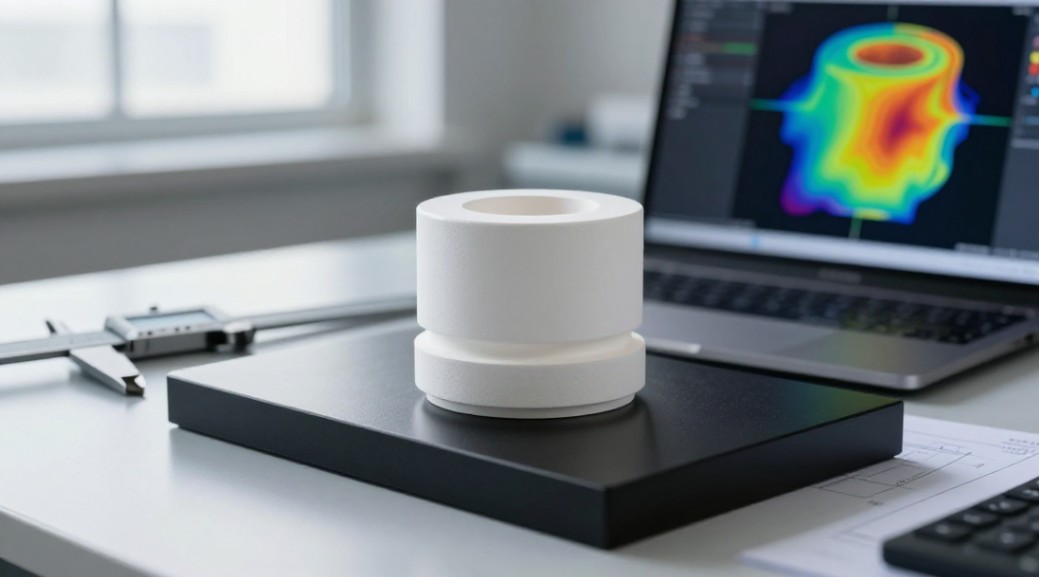
Do not compromise your project with generic material specs. For mission-critical components, you need a partner with deep ceramic expertise. Our team provides material selection analysis, finite element stress modelling for brittle materials, and precision manufacturing to your exacting standards.
Contact our ceramic engineering specialists today for a formal consultation and prototype specification. Submit your application parameters and drawings for a comprehensive material recommendation and feasibility review.
Suppiler
Synthetic-chemical focus on the research and development, production and sales of ceramic products, serving the electronics, ceramics, chemical and other industries. Since its establishment in 2015, the company has been committed to providing customers with the best products and services, and has become a leader in the industry through continuous technological innovation and strict quality management.
Our products includes but not limited to Aluminum Nitride, Aluminum Oxide, Boron Carbide, Boron Nitride, Ceramic Crucible, ect. If you are interested in any type of these, please feel free to contact us.