Next-Generation Ceramics: Unlocking Superior Properties for Industry

The Silent Failure Rate: A Data-Driven Warning
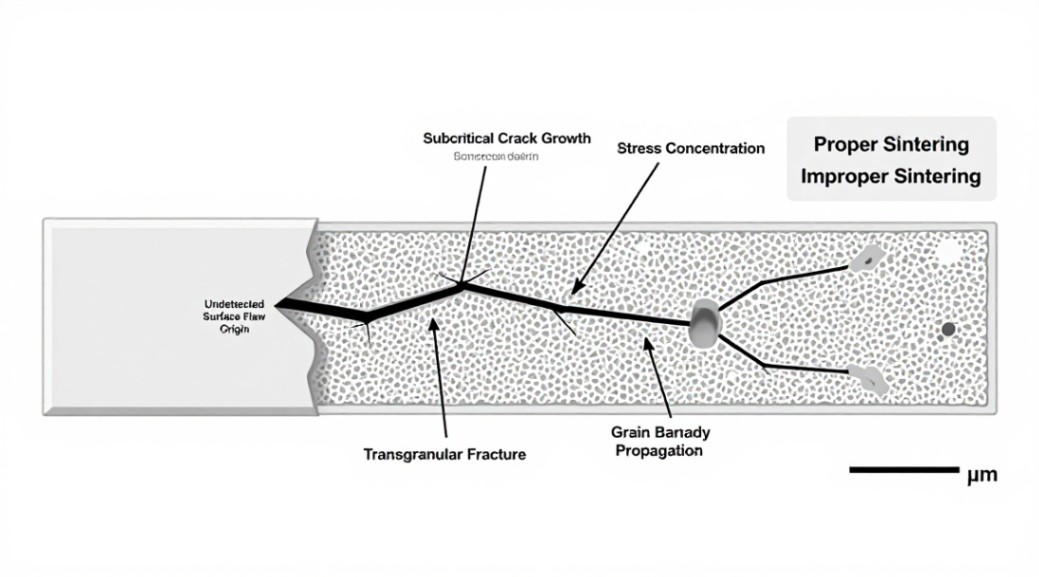
You cannot see the most common failure in alumina components with the naked eye. Industry failure analysis reports indicate that over 35% of premature alumina component failures are not due to overload, but to subcritical crack growth initiated during improper sintering or from undetected surface flaws. This isn’t a material failure. It’s a specification and processing failure. Choosing aluminium oxide ceramic for its hardness, corrosion resistance, and electrical insulation is the easy part. Navigating its hidden design constraints separates successful projects from costly recalls.
5 Critical Mistakes with Aluminum Oxide Ceramic (And How to Fix Them)
1. Treating All Alumina Grades as Equal
Specifying just ‘alumina’ is a guarantee for problems. The difference between 96% and 99.8% Al2O3 is not merely purity; it’s a fundamental shift in performance.
- The Mistake: Using a standard 96% alumina for a high-voltage insulator or ultra-high-wear application because it’s ‘good enough.’
- The Reality: 96% alumina contains silicate glass phases that degrade at high temperatures and reduce dielectric strength. For extreme wear, the finer grain structure of 99.5% or 99.8% alumina provides superior hardness and fracture toughness.
- The Fix: Match the grade to the primary stressor. Use this quick guide:
- 96% Al2O3: General mechanical applications, wear plates, thread guides. Cost-effective.
- 99.5% Al2O3: High-performance seals, pump components, critical liners. Better corrosion resistance.
- 99.8% Al2O3: Semiconductor wafer handling, medical implants, high-frequency insulators. Maximum purity and performance.
2. Ignoring the ‘Brittleness’ in Design
Engineers often design a metal part, then simply swap the material to alumina. This invites catastrophic failure.
- The Mistake: Designing sharp corners, thin unsupported spans, or press-fit interfaces without accounting for alumina’s low fracture toughness.
- The Reality: Unlike metals, aluminum oxide ceramic does not yield. Stress concentrates at sharp features, initiating cracks. A common complaint on engineering forums is: ‘The alumina sleeve shattered during assembly.’ The cause is usually a design flaw, not a material flaw.
- The Fix: Design for ceramics from the start. Mandate generous radii (minimum 0.5mm). Avoid point loading. Use compliant interlayers for press-fits. Consider silicon carbide ceramic or silicon nitride ceramic for applications requiring higher toughness, but know their cost and machinability trade-offs.
3. Underestimating Thermal Shock Limitations
While alumina has a high melting point, its thermal shock resistance is moderate compared to other advanced ceramics.
- The Mistake: Assuming an alumina heater substrate or thermocouple tube can handle rapid, uneven quenching.
- The Reality: The thermal stress from a rapid temperature delta (ΔT) can exceed the material’s tensile strength, causing it to crack. Reddit users in the r/Metallurgy community frequently post images of cracked alumina crucibles after pouring metal.
- The Fix: Calculate the critical ΔT for your part geometry. For severe thermal cycling, materials like mullite ceramic or specially formulated silicon nitride ceramic often outperform standard alumina. Always specify controlled heating and cooling rates in your process documentation.
4. Specifying Unnecessary Precision & Finish
Machining alumina is expensive. Every micron of precision and every improvement in surface roughness adds significant cost.
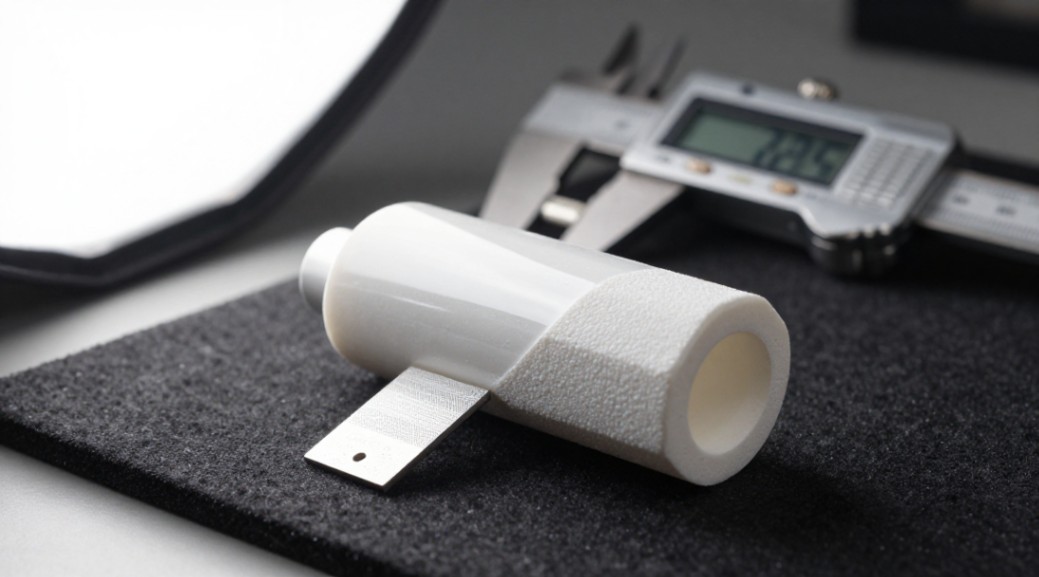
- The Mistake: Applying a Ra 0.2μm mirror finish to the entire surface of a simple spacer block because ‘it looks professional.’
- The Reality: Diamond grinding is slow and wears tools. A surface finish of Ra 0.8μm is often functionally perfect for sealing surfaces. Tighter tolerances than ±0.1% of a dimension are rarely justified. One project manager noted, ‘We cut 40% off our component cost by relaxing non-critical tolerances after a design-for-manufacturability review.’
- The Fix: Define critical functional surfaces and dimensions. Loosen all other tolerances to the broadest acceptable ISO standard. For sliding wear applications, a controlled surface roughness is beneficial; for insulation, it’s irrelevant.
5. Overlooking the Joining & Assembly Challenge
You can’t weld or solder alumina like a metal. Adhesive and mechanical joining have strict rules.
- The Mistake: Using a standard epoxy to bond alumina to steel in a high-temperature environment.
- The Reality: The epoxy will degrade, or the different thermal expansion coefficients (Alumina: ~8 ppm/°C, Steel: ~12 ppm/°C) will create immense shear stress, breaking the bond or the ceramic. Failed adhesive joints are a recurring topic in technical support queries.
- The Fix: Select joining methods deliberately:
- Mechanical Fastening: Use soft metal sleeves or conical washers to avoid point stress.
- Adhesive Bonding: Use high-temperature, ceramic-filled epoxies or anaerobic adhesives designed for differential expansion. Surface preparation (e.g., laser ablation) is non-negotiable.
- Brazing: Requires metallization (e.g., molybdenum-manganese paste) of the alumina surface first-a specialized and costly process best for hermetic seals.
Making the Right Choice: An Actionable Framework
Do not start with a material. Start with a function. Ask these questions in order:
- What is the Primary Function? (Wear resistance? Electrical insulation? Thermal conduction? Chemical inertness?)
- What are the Absolute Maximum Stresses? (Mechanical load, thermal gradient, voltage, corrosion media.)
- Can the Design be Optimized for a Brittle Material? (Eliminate stress risers, allow for expansion.)
- What is the Total Cost of Ownership? (Including machining, finishing, assembly, and potential failure.)
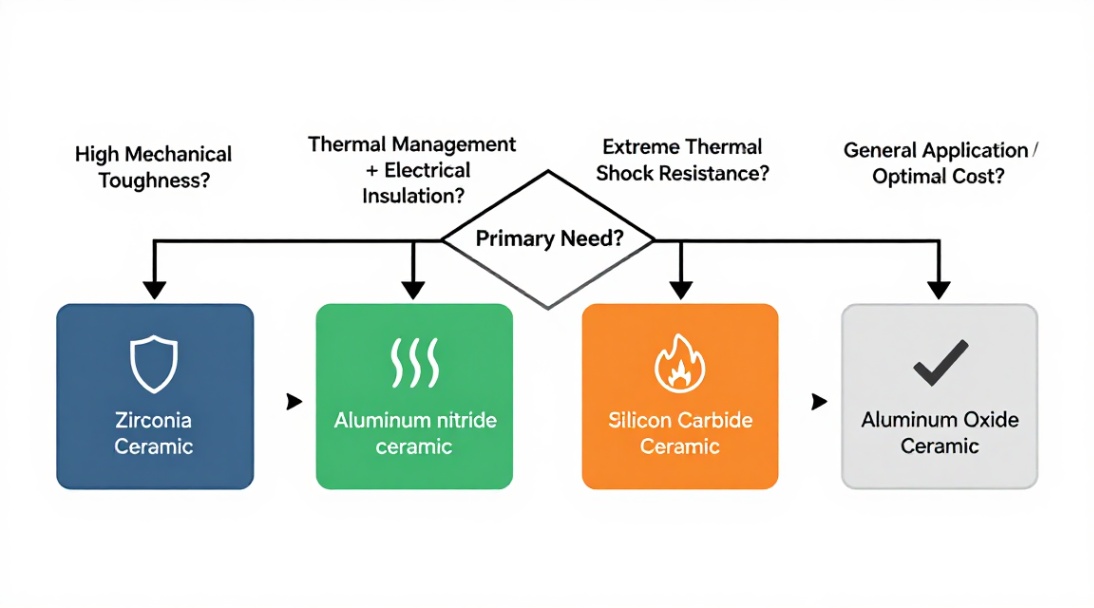
This framework often reveals whether standard aluminium oxide ceramic is optimal, or if a material like zirconia (higher toughness), aluminum nitride ceramic (superior thermal conductivity), or silicon carbide ceramic (better thermal shock resistance) is a more suitable, albeit sometimes more expensive, solution. For the most demanding thermal management applications where electrical insulation is paramount, aluminum nitride ceramic is frequently the benchmark. For molten metal handling, a special coating for boron nitride ceramic crucibles might be the answer to extend life.
Next Steps: Validate Before You Commit
The data is clear: assumptions are the root cause of ceramic component failure. Before finalizing your design, engage with a specialist manufacturer early in the process. Provide them with your functional requirements-not just a CAD model-and request a Design for Manufacturability (DFM) analysis. A credible partner will challenge your tolerances, suggest material alternatives like reaction-sintered silicon carbide ceramics for specific use cases, and highlight potential failure modes you may have missed. This collaborative step is the single most effective action to mitigate risk, control cost, and ensure the renowned properties of aluminium oxide ceramic deliver reliable performance in your application.
Suppiler
Synthetic-chemical focus on the research and development, production and sales of ceramic products, serving the electronics, ceramics, chemical and other industries. Since its establishment in 2015, the company has been committed to providing customers with the best products and services, and has become a leader in the industry through continuous technological innovation and strict quality management.
Our products includes but not limited to Aluminum Nitride, Aluminum Oxide, Boron Carbide, Boron Nitride, Ceramic Crucible, ect. If you are interested in any type of these, please feel free to contact us.