Next-Generation Ceramics: Unlocking Superior Properties for Industry

You’re Facing a Tough Material Problem
Has a component in your system worn out far too quickly, costing you time and money in replacements? Are you struggling to find an insulator that can handle both high voltage and high temperature? Or maybe you’re designing a cutting tool that needs to stay sharp longer. If you’ve faced these frustrations, you’re not alone. Many engineers and designers hit a wall with conventional metals and plastics. They lack the hardness, the thermal stability, or the electrical performance needed. That’s where we often turn to ceramics, and one of the most reliable, versatile options is aluminium oxide ceramic.
What is Aluminum Oxide Ceramic?
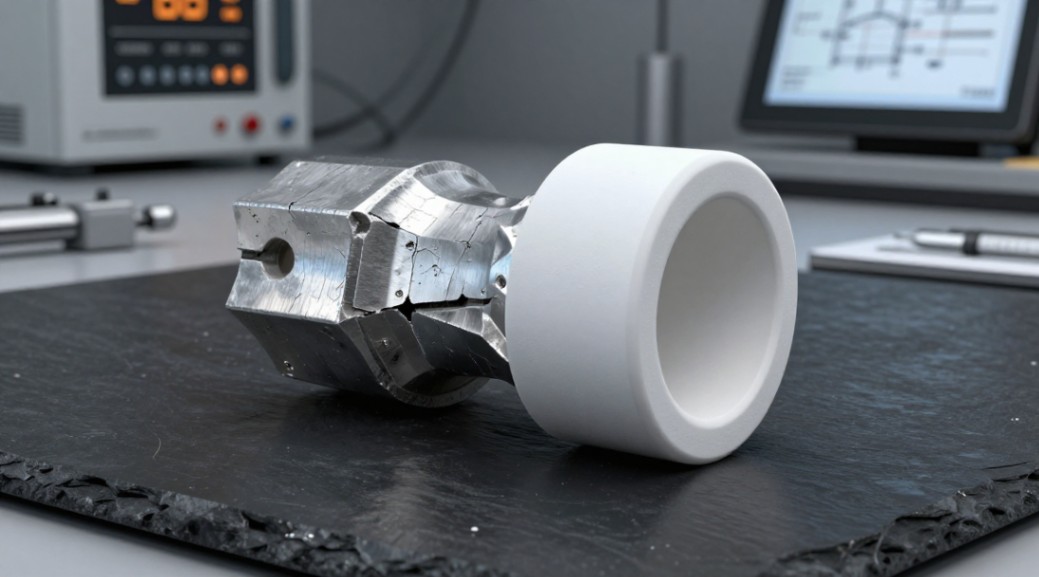
Aluminium oxide ceramic, often called alumina, is one of the most widely used technical ceramics. At its core, it’s a material made primarily from aluminum and oxygen atoms (Al2O3) arranged in a dense, crystalline structure. The most common and stable form is alpha-alumina (α-Al2O3). Think of it as the ceramic equivalent of a seasoned, dependable tool in your workshop-not always the flashiest, but often the most practical and reliable choice for a huge range of demanding jobs.
The Core Properties That Make It a Go-To Choice
Alumina’s popularity stems from a powerful combination of properties. It offers exceptional hardness, ranking just below diamond and boron carbide ceramic. This translates directly into superior wear resistance. It also maintains its strength and shape at very high temperatures, up to about 1700°C. While its thermal conductivity is moderate, it’s an excellent electrical insulator with very high dielectric strength.
How Is It Made? The Sintering Process
We typically manufacture aluminum oxide ceramic parts through pressing and sintering. We start with a fine, pure powder of aluminum oxide. We then press it into a desired shape using dies. Next comes the critical step: sintering. We heat the “green” part in a high-temperature kiln, often above 1500°C. This process doesn’t melt the material. Instead, it causes the powder particles to fuse together at their boundaries. The result is a dense, strong, and hard solid part. Advanced methods like hot isostatic pressing (HIP) can produce even denser, near-net-shape components with fewer flaws.
Where Do We Use Aluminum Oxide Ceramic?
You’ll find alumina solving problems across almost every industry. Its versatility is its superpower.
Industrial and Mechanical Applications
This is where alumina truly shines as a workhorse. We use it for wear parts like seal rings, pump plungers, and liners in equipment handling abrasive slurries. It’s a key material for cutting tools and inserts, especially for machining cast iron and other non-ferrous metals. Guides for wires and threads in textile machinery rely on its smooth, hard surface to prevent snagging.
Electronics and Electrical Systems
Alumina’s high electrical resistivity and good thermal conductivity make it the industry standard for substrates and packages in microelectronics. Your smartphone and computer likely have dozens of tiny alumina substrates carrying circuit traces. We also use it for high-voltage insulators, spark plug bodies, and sensor housings.

Biomedical and Chemical Uses
In its high-purity, biocompatible forms, aluminium oxide ceramic serves as a material for dental implants, bone screws, and joint replacements. Its inertness also makes it perfect for crucibles and labware in chemical processing. It resists attack from many acids and molten salts.
Alumina vs. Other Advanced Ceramics: When to Choose What
Choosing the right ceramic is about matching the material’s strengths to your specific challenge. Here’s a quick, practical comparison based on decades of field use.
- vs. Silicon Carbide (SiC) or Silicon Nitride (Si3N4): Silicon carbide ceramic has higher thermal conductivity and better thermal shock resistance, making it better for heat exchangers. Silicon nitride ceramic is tougher and stronger at high temperatures, ideal for bearings and turbine components. Alumina often wins on cost and availability for less extreme conditions.
- vs. Zirconia (ZrO2): Zirconia is significantly tougher (more fracture resistant) and has a lower thermal conductivity. We choose zirconia for applications requiring high mechanical strength and wear in lower thermal conductivity scenarios, like knife blades or biomedical implants where bone-like flexibility is needed. We choose alumina for better wear in high-temperature, electrically insulating roles.
- vs. Aluminum Nitride (AlN): Aluminum nitride ceramic is the clear winner for thermal management. It offers thermal conductivity nearly 10 times that of alumina, making it the premium choice for demanding semiconductor substrates where heat must be wicked away fast.
A Note on Future Innovations
Research continues to push boundaries. Work on composite structures, like adding fibers to improve fracture toughness, mirrors developments in other systems like continuous fiber-reinforced ultra-high temperature ceramics. For alumina, this often means exploring alumina-matrix composites for even better wear and thermal shock performance. The goal is always the same: take a great material and make it solve even tougher problems.
Selecting the Right Aluminum Oxide Grade: A Practical Guide
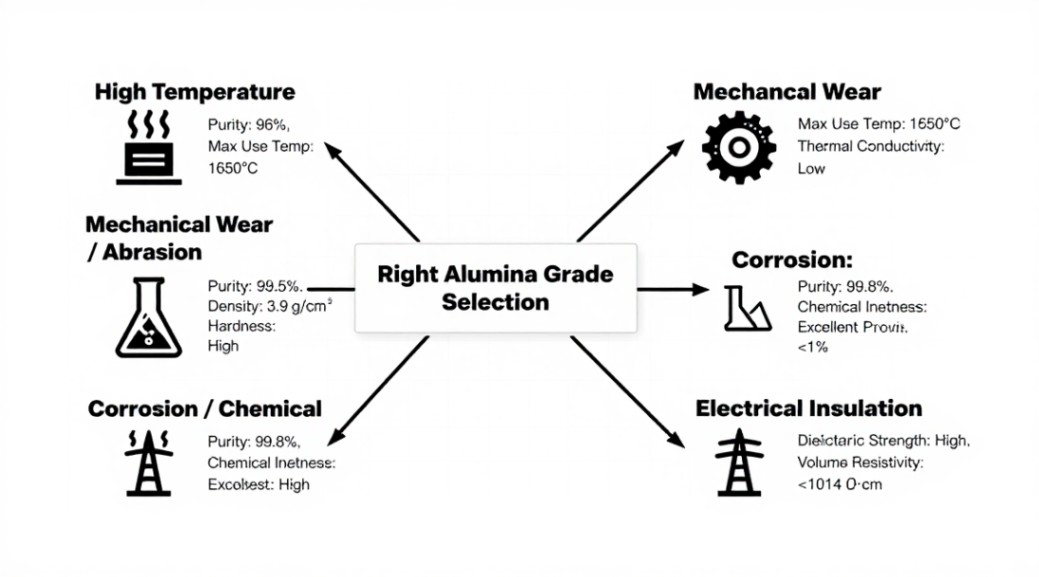
Not all alumina is the same. The purity and additives drastically change its performance. Think of it like choosing a steel alloy.
- High-Purity (99.5%+ Al2O3): Use this for maximum chemical resistance, high-temperature capability (>1700°C), and superior electrical insulation. Ideal for semiconductor components, critical furnace parts, and advanced biomedical implants.
- Standard Grades (92-99% Al2O3): The most common workhorses. They often contain silica or magnesia additives that aid sintering and improve mechanical properties at a lower cost. Perfect for wear plates, pump seals, thread guides, and most industrial insulator bodies.
- Specialty Formulations: Additives like chromium oxide (for wear) or zirconia (for toughness) create tailored properties. If you need a specific combination of hardness, toughness, or colour, talk to your ceramic supplier about these engineered grades.
Many users in technical forums like Reddit and engineering communities stress one point: don’t over-specify. A 99.8% pure alumina tube is overkill and expensive for a simple thermal barrier in a 1000°C furnace where a 96% grade performs flawlessly. The right grade depends entirely on the dominant stressor in your application: is it abrasion, corrosion, temperature, or electrical load?
Your Next Step with Aluminium Oxide Ceramic
If aluminum oxide ceramic sounds like it could solve your material challenge, start by defining your key requirements. What’s the primary enemy: wear, heat, corrosion, or electrical current? Then, consult with a knowledgeable ceramic component manufacturer or supplier. They can help you navigate grades, tolerances, and manufacturing methods. Often, sending them a worn-out part or a detailed drawing is the fastest way to get a solution. For prototyping, many suppliers offer standard stock shapes-rods, tubes, plates-that you can machine to test fit and function. Alumina isn’t a magic bullet for everything, but for a vast swath of engineering problems demanding hardness, stability, and insulation, it remains an indispensable and reliable choice.
Suppiler
Synthetic-chemical focus on the research and development, production and sales of ceramic products, serving the electronics, ceramics, chemical and other industries. Since its establishment in 2015, the company has been committed to providing customers with the best products and services, and has become a leader in the industry through continuous technological innovation and strict quality management.
Our products includes but not limited to Aluminum Nitride, Aluminum Oxide, Boron Carbide, Boron Nitride, Ceramic Crucible, ect. If you are interested in any type of these, please feel free to contact us.