Next-Generation Ceramics: Unlocking Superior Properties for Industry

Step 1: Understand What Aluminum Oxide Ceramic Actually Is
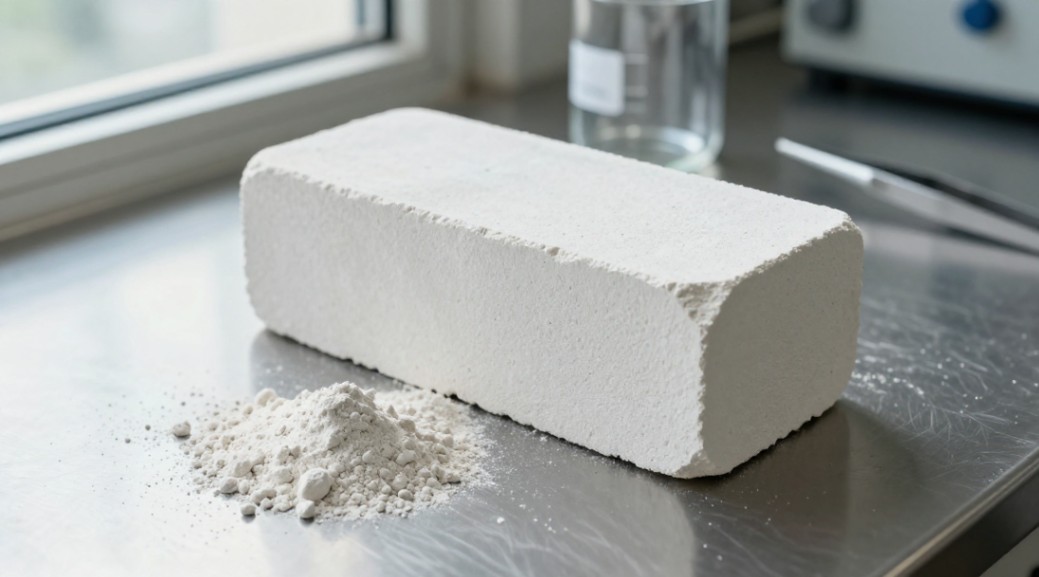
Let’s cut to the chase. Aluminum oxide ceramic (Al₂O₃) is the workhorse of advanced ceramics. We call it alumina for short. Chemically, it’s just aluminum and oxygen tightly bonded. That simple formula hides a brutal reality: this stuff is incredibly hard, melts at over 2000°C, and ignores most acids and alkalis. We use it because it’s cheap, available, and gets the job done where metals fail.
Many users on Reddit ask: “Why not just use steel?” The answer is always wear and heat. Steel deforms. Alumina laughs at abrasion. Think of it as the tough, reliable teammate you can count on for the dirty work.
What Makes It Different from Other Ceramics?
Here’s the short list of what sets alumina apart:
- Hardness: It’s up there with sapphire (which is actually single-crystal alumina). Won’t scratch easily.
- Electrical Insulation: It blocks high voltage cold. Dielectric strength is excellent for spark plugs and circuit boards.
- Chemical Inertness: Drop it in acid? Nothing happens. Perfect for chemical processing.
- Cost: Way cheaper than silicon carbide ceramic or zirconia. That’s the real kicker.
But it has limits. Thermal shock resistance is mediocre. Heat it fast and it may crack. For that, you might need silicon nitride ceramic or mullite ceramic. We’ll get to that.
Step 2: Choose Your Purity Grade (85%, 96%, 99.5% – What’s the Difference?)
This is where most people mess up. Alumina comes in different purity levels. Each is a different material for different jobs. Here‘s our rule of thumb:
- 85% Alumina: We call this the “good enough” grade. It’s cheaper, tougher (more resistant to thermal shock because of added glass phase), but less hard. Use it for basic wear liners, low-voltage insulators, or plumbing fixtures. You sacrifice some hardness for cost.
- 96% Alumina: The sweet spot. For 90% of industrial applications, this is your go-to. Good strength, good insulation, reasonable price. We see this in mechanical seals, pump parts, and standard electronic substrates.
- 99.5% Alumina (High-Purity): This is the premium stuff. Near-theoretical density, maximum hardness, best corrosion resistance. Use this for medical implants (hip balls, dental abutments), high-temperature furnace tubes, and semiconductor processing tools. The price jumps significantly. Only pay for it if you absolutely need the chemical purity or wear life.
One more thing: don’t confuse 99.5% alumina with aluminum nitride ceramic. Aluminum nitride is different – it conducts heat like a metal but insulates electrically. If you need thermal conductivity for LEDs or power electronics, aluminum nitride is better. If you need hardness and low cost, stick with alumina.
Step 3: Evaluate the Manufacturing Process (How It’s Made Matters)
You can’t just order “alumina” and expect it to work. The shaping method changes the final properties. Here are the three big ones:
3.1. Dry Pressing or Isostatic Pressing
Most common. Powder is compressed in a mold, then sintered (fired in a kiln). This gives consistent shapes for things like spark plug insulators or cutting tool inserts. It’s fast and cheap. But you can’t make complex internal channels this way.
3.2. Hot Pressing
Heat and pressure applied simultaneously. This gives near-zero porosity. The result is a denser, stronger ceramic. We see this for high-end armor plates or cutting tools that face extreme stress. It’s slower and costlier. You pay for the extra density.
3.3. Additive Manufacturing (3D Printing)
Newer, but growing fast. You can print alumina into complex shapes (custom nozzles, porous structures) that are impossible to press. The catch: printed alumina is often less dense than pressed material unless you post-process it (sinter it again). For rapid prototyping or custom parts, it’s a lifesaver. For high-volume standard parts, traditional pressing still wins on cost.
If you see a competitor claiming “sintered silicon carbide” or “reaction-sintered silicon carbide ceramics“, remember that those materials have higher thermal conductivity and hardness than alumina. But they also cost more. Alumina remains the budget-friendly choice for parts that don’t need extreme heat dissipation.
Step 4: Assess the Surface Finish and Post-Processing
Raw sintered alumina is rough. If you need a smooth sealing surface (for a mechanical seal or a bearing), you must grind and polish it.
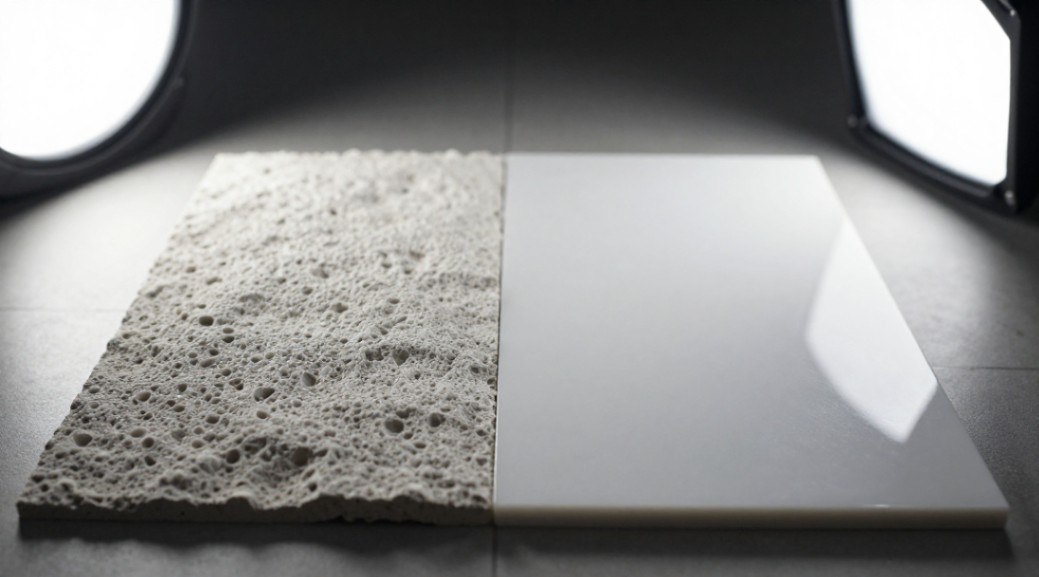
- As-sintered: Good enough for most electrical insulators and wear tiles. Surface is grainy.
- Ground finish: Achieved with diamond grinding wheels. Reduces friction. Common for pump impellers and valve seats.
- Polished finish (mirror finish): Required for dynamic seals, medical implants (to reduce wear debris), and optical components. Polishing increases cost by 30-50%. Don’t specify it unless the part slides against another surface.
A quick note on special coatings for boron nitride ceramic crucibles: that’s a different animal. Boron nitride is soft and lubricious; we use it for molten metal handling. We’re talking about alumina here. If your application involves molten aluminum or glass, pure alumina is often good enough. But for really high temperatures (above 1600°C), you may need mullite ceramic or quartz ceramic instead.
Step 5: Check Thermal Shock Resistance – The Hidden Limitation
Here’s the truth: aluminum oxide ceramic does not like rapid temperature changes. Heat it to 800°C and dunk it in water? It will likely crack. That’s because it has low thermal conductivity (around 20-30 W/m·K) and a high coefficient of thermal expansion.
If your process involves thermal cycling (heating up and cooling down repeatedly), consider these alternatives:
- Silicon carbide ceramic: Much higher thermal conductivity (100-200 W/m·K). Handles thermal shock far better. Use for kiln furniture, heat exchangers, and brake discs.
- Silicon nitride ceramic: Tougher and more resistant to crack propagation. Ideal for engine components and bearing balls that see sudden temperature spikes.
- Boron carbide ceramic: Extremely hard and light. Primarily used for armor. Not great for thermal shock either. Stick with silicon carbide if heating is your problem.
Bottom line: If your part will see steady temperatures (like a furnace tube), alumina is fine. If it sees rapid heating and cooling, upgrade to pressureless sintered silicon carbide ceramics or recrystallized silicon carbide ceramics. They cost more but won’t fail on you.
Step 6: Compare Cost vs. Performance – When Alumina Wins
Let’s talk money. Alumina is often the cheapest advanced ceramic per part. Here’s the rough hierarchy:
- Alumina (Al₂O₃): Low cost. Great for general wear, electrical insulation, and moderate temperatures.
- Mullite: Slightly higher cost. Better thermal shock resistance. Used in kiln furniture.
- Silicon carbide (SiC): Moderate to high cost. Superior hardness and thermal conductivity. Used for abrasives, seals, and high-temperature parts.
- Silicon nitride (Si₃N₄): High cost. Highest toughness of all ceramics. Used for bearings and cutting tools.
- Boron carbide (B₄C): Very high cost. Used almost exclusively for ballistic armor.
- Aluminum nitride (AlN): High cost. Only when you need high thermal conductivity with electrical insulation (LED substrates).
Our advice: start with 96% alumina. Test it. If it fails due to wear, switch to a higher purity or a different ceramic. If it fails due to thermal shock, switch to silicon carbide-bonded silicon nitride ceramics (a hybrid material that balances cost and performance).
I saw a user on Reddit last week trying to use alumina for a high-temperature furnace door that sees thermal cycling. It cracked within a week. They switched to recrystallized silicon carbide. Problem solved. Don’t be that user.
Step 7: Safety and Handling – What You Need to Know
Alumina is technically inert and safe to handle. But here’s what we’ve learned the hard way:
- Inhalation: Never grind or machine alumina dry without a dust collector. The fine dust can irritate lungs over long exposure. Wet grinding is safer.
- Sharp edges: Alumina is hard. If you break a piece, the fracture edges can be razor-sharp. Always wear cut-resistant gloves when handling broken ceramic.
- Recycling: Alumina is not biodegradable. It’s essentially crushed rock. You can dispose of it as industrial waste, but check local regulations. Some facilities crush it and use it as aggregate.
Do not confuse this with boron nitride ceramic (which is soft and used as a lubricant) or special coating for boron nitride ceramic crucibles (which is a nonstick layer for metal casting). Each ceramic family has its own hazards. Boron nitride dust can be more irritating. Read the material safety data sheet (MSDS) for your specific grade.
Ready to Choose Your Aluminum Oxide Ceramic?
You now have the step-by-step framework. Start with the purity grade (85%, 96%, 99.5%), match the manufacturing process to your part complexity, and evaluate the thermal environment. If you’re still unsure, test a small batch of 96% alumina first. It’s cheap and will tell you quickly if you need a harder, more conductive, or more shock-resistant material.
We’ve helped dozens of engineers make this exact decision. If you want a specific recommendation for your application, drop your parameters (temperature, load, environment) in the comments below, and we’ll point you to the right ceramic. Whether it’s alumina, silicon carbide ceramic, or silicon nitride ceramic, we’ll help you get it right the first time.
Suppiler
Synthetic-chemical focus on the research and development, production and sales of ceramic products, serving the electronics, ceramics, chemical and other industries. Since its establishment in 2015, the company has been committed to providing customers with the best products and services, and has become a leader in the industry through continuous technological innovation and strict quality management.
Our products includes but not limited to Aluminum Nitride, Aluminum Oxide, Boron Carbide, Boron Nitride, Ceramic Crucible, ect. If you are interested in any type of these, please feel free to contact us.