Next-Generation Ceramics: Unlocking Superior Properties for Industry

The Shop Floor Revelation
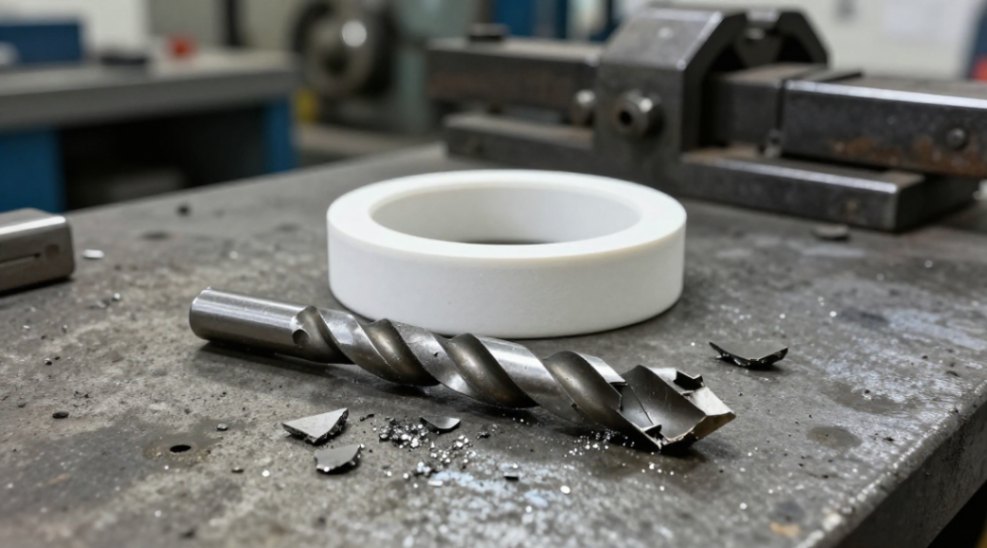
Twenty years ago, I stood on a machine shop floor watching a brand-new carbide drill shatter on the third hole. The part was a pump seal ring. The material? A mystery to the operator. He swapped in a different ring, made from a dense, white, non-metallic material. It cut cleanly. It ran for hours. That ring was aluminum oxide ceramic. I never forgot the lesson. Not all hard materials behave the same. Understanding the material is the first step to solving the problem.
What Is Aluminum Oxide Ceramic?
Aluminum oxide ceramic, also known as alumina, is a technical ceramic material with the chemical formula Al₂O₃. It is one of the most widely used advanced ceramics because of its balanced combination of hardness, thermal stability, and electrical insulation. The base material comes in several purity grades, typically ranging from 96% to 99.9% alumina content. The higher the purity, the better the electrical and chemical resistance, but the more challenging the processing.
Manufacturers achieve these grades through multiple processing routes. Common methods include sintering, hot pressing, and isostatic pressing. Sintering is the standard. It involves compacting fine alumina powder under heat, but below the melting point. Hot pressing adds simultaneous pressure to increase density. Isostatic pressing uses uniform pressure in a sealed container to produce complex shapes with minimal internal defects.
Key Properties That Define Its Use
Aluminum oxide ceramic possesses a high melting point, exceeding 2000°C. This thermal stability makes it suitable for high-temperature furnace parts and kiln furniture. Its Vickers hardness ranges between 15 and 20 GPa, making it an excellent abrasive for grinding wheels and cutting tool inserts. For electrical engineers, its high dielectric strength and low loss factor provide reliable insulation for electronic substrates and vacuum tube components.
Wear resistance is another hallmark. A 99.5% alumina seal ring can outlast a metal counterpart by hundreds of hours in a slurry pump. This durability directly reduces downtime and replacement costs. However, the material is not indestructible. It is inherently brittle. A sharp impact will cause catastrophic failure, unlike a metal that would simply dent.
Comparison with Other Advanced Ceramics
Engineers often compare aluminum oxide ceramic against zirconia, silicon carbide ceramic, and silicon nitride ceramic. Each fills a specific niche.
Zirconia offers superior toughness. It can withstand thermal and mechanical shocks better than alumina. For applications like medical implants or precision valves, choose zirconia. Aluminum oxide ceramic cannot compete there on fracture resistance.
Silicon carbide ceramic is harder and has higher thermal conductivity. It is the first choice for mechanical seals in high-speed pumps or for armor plates. But silicon carbide is more expensive to sinter. If cost is a constraint and the operating temperature is below 800°C, alumina often wins.
Silicon nitride ceramic excels in high-stress, high-temperature environments like engine components. Aluminum nitride ceramic offers much higher thermal conductivity for electronics heat sinks, but it is more difficult to metalize. Boron carbide ceramic is lighter and harder, making it ideal for ballistic armor, but it is prohibitively expensive for general use. Boron nitride ceramic is soft and machinable like graphite. It serves as crucible material, with special coatings applied to prevent reaction with molten metals.
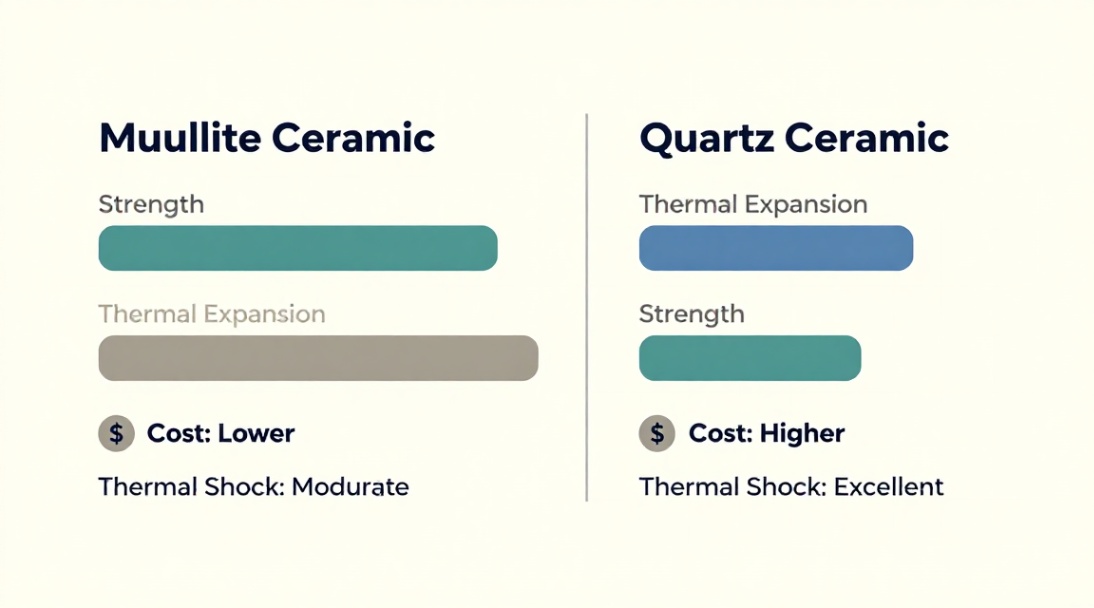
Mullite ceramic is cheaper and has lower thermal expansion, but lower strength. Quartz ceramic offers the lowest thermal expansion and excellent thermal shock resistance, but it is weaker mechanically.
For applications requiring a combination of properties, hybrid materials exist. Silicon carbide-bonded silicon nitride ceramics combine the hardness of SiC with the toughness of Si₃N₄. Reaction-sintered silicon carbide ceramics and pressureless sintered silicon carbide ceramics offer near-net shape capabilities for complex components. Recrystallized silicon carbide ceramics provide extreme porosity for filtration or radiant tubes.
Critical Limitations: Brittleness and Machining
Aluminum oxide ceramic is brittle. This is its biggest weakness. A sharp tap can crack a finished part. Machining is difficult. Unlike metals, you cannot simply cut or drill it with standard tools. Diamond grinding wheels are mandatory for shaping. This adds cost. Additives help. Magnesia (MgO) is a common sintering aid that reduces grain growth and improves density. Zirconia addition creates a tougher composite, known as zirconia-toughened alumina (ZTA). These additives do not eliminate brittleness. They only mitigate it.
The cost is higher than traditional materials like steel or cast iron. But the total cost of ownership is often lower. A ceramic valve seat that lasts five times longer than a bronze one saves money on replacements and labor. The initial price tag is deceptive.
Surface Finishing and Metallization
To join aluminum oxide ceramic to metals, you need surface preparation. Grinding and lapping achieve flatness and roughness in the sub-micrometer range for seal faces. For electrical or structural joining, metallization is necessary. The process involves applying a metal paste containing molybdenum or tungsten to the ceramic surface. A high-temperature firing bonds the metal layer. Then you can braze or solder the metalized ceramic to a metal component. This technique allows ceramic-to-metal sealing in vacuum tubes, feedthroughs, and sensors.
Primary Applications
The applications of aluminum oxide ceramic span diverse industries. In grinding and polishing, it serves as the primary abrasive media for lapping, blasting, and grinding wheels. In ballistic armor, it forms the hard face of composite plates, stopping rifle rounds. Medical implants use high-purity alumina for hip joint heads and dental abutments. Seal rings for pumps and compressors rely on its chemical inertness and wear resistance. Electrical insulators for high-voltage equipment exploit its dielectric properties.
- Grinding media: high wear resistance, low contamination.
- Ballistics armor: hardness stops projectiles.
- Medical implants: biocompatible, inert in the body.
- Seal rings: long life in abrasive fluids.
- Electronic substrates: good thermal conductivity, electrical insulation.
Each application stresses a different property. The material rarely fails in multiple categories at once. That is why engineers love it. It is predictable.
Final Advice for Engineers and Buyers
Do not use aluminum oxide ceramic where toughness or impact resistance is the primary requirement. Choose zirconia or silicon nitride instead. Do use it where hardness, wear resistance, thermal stability, or electrical insulation matter most. Always specify the alumina grade based on the operating environment. 96% is fine for low-cost abrasives. 99.5% is required for chemical or electrical applications. 99.9% is necessary for semiconductor processing.
Test a prototype before committing to full production. Machining costs are real. Design for manufacturability. Add chamfers. Avoid sharp corners. Keep tolerances realistic. The material will reward you with reliable, long-lasting performance if you respect its limits.
Suppiler
Synthetic-chemical focus on the research and development, production and sales of ceramic products, serving the electronics, ceramics, chemical and other industries. Since its establishment in 2015, the company has been committed to providing customers with the best products and services, and has become a leader in the industry through continuous technological innovation and strict quality management.
Our products includes but not limited to Aluminum Nitride, Aluminum Oxide, Boron Carbide, Boron Nitride, Ceramic Crucible, ect. If you are interested in any type of these, please feel free to contact us.