Next-Generation Ceramics: Unlocking Superior Properties for Industry

The Quarry That Changed My Mind
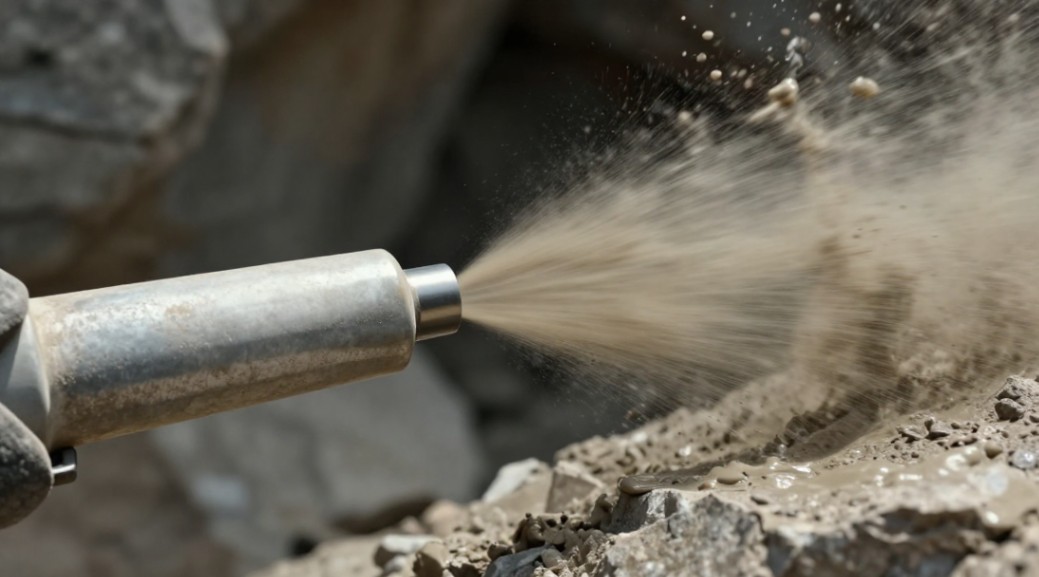
I stood on the edge of a limestone quarry in southern Germany, watching a stream of slurry blast through a nozzle barely larger than my thumb. The plant manager told me that nozzle had been running for nine months straight. Nine months of abrasive limestone mud, day and night. The previous nozzle, made from hardened tool steel, lasted three weeks. That nozzle was aluminum oxide ceramic. That moment, fifteen years ago, cemented my respect for this material. It is not flashy. It is not new. But when you need something to simply endure, alpha-alumina is the baseline against which everything gets measured.
1. The Crystal Structure That Defines the Game
The secret is the crystal lattice. Aluminum oxide ceramic in its engineering form is almost exclusively alpha-alumina (Al2O3). This hexagonal close-packed structure gives the material its signature traits: extreme hardness, high compressive strength, and wear resistance that borders on the absurd. When you see a pump seal that has outlasted three rebuilds of the pump itself, you are looking at alpha-alumina at work. Many users on Reddit and industrial forums have noted that switching from a tungsten carbide seal to a high-purity aluminum oxide ceramic seal doubled their mean time between failures in abrasive slurry pumps. The raw numbers back up the anecdotes. Alumina sits at 9 on the Mohs hardness scale. Only diamond and a few synthetic superhard materials beat it. That hardness translates directly into wear life.
Here is where the data gets interesting. Engineers often compare alumina against silicon carbide ceramic or boron carbide ceramic for wear parts. Silicon carbide is harder. Boron carbide is lighter. So why does aluminum oxide ceramic still dominate the market for wear linings, nozzles, and grinding media? The answer is cost-performance balance. A ton of standard-grade alumina powder costs a fraction of what silicon carbide powder costs. For 90% of abrasive wear applications, the performance delta between alumina and silicon carbide is too small to justify the premium. Smart engineers run the total cost of ownership numbers. Alumina wins every time.
2. Thermal and Electrical Performance: The Quiet Strengths
Hardness gets the headlines. But the thermal characteristics of aluminum oxide ceramic are what enable its use in kiln furniture, furnace tubes, and exhaust components. The melting point sits at 2072°C. That is not just high; it is high enough to handle molten steel contact in tundish nozzles. The thermal shock resistance is good, though not class-leading. That honor belongs to quartz ceramic or certain cordierite formulations. But here is the trade-off: quartz cannot touch alumina’s chemical resistance at elevated temperatures. Alumina is inert to most acids and alkalis. It resists oxidation even at 1800°C. For applications that combine heat, corrosion, and mechanical stress, alumina is often the only sensible choice.
On the electrical side, the numbers are equally compelling. Aluminum oxide ceramic exhibits high dielectric strength and very low electrical conductivity. This makes it a standard substrate material for thick-film and thin-film microelectronics. The thermal conductivity is moderate—around 30 W/mK—which is adequate for many power devices. But if you need higher thermal dissipation, the industry has shifted toward aluminum nitride ceramic for substrates. Aluminum nitride pushes thermal conductivity to 170 W/mK or higher. However, aluminum nitride is more difficult to sinter and significantly more expensive. The choice comes down to thermal management requirements. For general-purpose insulating substrates, 96% alumina remains the workhorse. For high-power LED packages or IGBT modules, aluminum nitride is the upgrade path.
2.1. Strength and Weakness in the Same Breath
Let us be honest about the limitations. Aluminum oxide ceramic is brittle. Its fracture toughness hovers around 3 to 4 MPa·m1/2. Zirconia-toughened alumina or pure zirconia can double that toughness. In applications subject to high impact loads—like mining chutes or ball mill liners—a tougher ceramic may last longer. But toughness comes with a cost. Zirconia is denser and more expensive. And zirconia suffers from low-temperature degradation in humid environments. Alumina does not. So when a Reddit user in the mining sector reported that their alumina liners chipped during installation but then ran for two years without failure, that story captures the material’s essence: handle it carefully during assembly, and it will reward you with consistent, predictable wear life.
3. Manufacturing Routes and Grade Choices
How you make the part determines how it performs. Aluminum oxide ceramic components are fabricated through several established routes: dry pressing for simple geometries, isostatic pressing for complex shapes, slip casting for large thin-wall parts, and injection molding for high-volume precision components. All routes lead to sintering at temperatures between 1500°C and 1700°C. The sintering atmosphere matters. Sintering in hydrogen or vacuum can achieve near-theoretical density for high-purity grades.
Grade purity is the critical variable. Standard alumina (85% to 96% Al2O3) includes glassy phases like mullite or feldspar that facilitate liquid-phase sintering. These grades are cheaper and easier to densify, but the glassy phases soften at temperatures above 1000°C and are chemically less resistant. High-purity alumina (99.5% or above) uses only alumina powder with minimal sintering aids. The result is a finer grain structure, higher hardness, and better corrosion resistance. The downside is cost and a higher sintering temperature. For medical implants like hip ball heads or dental brackets, only high-purity alumina passes biocompatibility standards. For pump seals in chemical processing, 99.5% alumina is the baseline. For blast nozzles in sandblasting, 90% alumina works just fine and costs 60% less.
I have seen engineers specify 99.9% alumina for a chute liner that sees nothing more aggressive than dry corn kernels. That is over-engineering. Match the grade to the wear mechanism. If the wear is purely abrasive and the temperature stays below 800°C, standard alumina will save you money. If the environment includes hot acid or caustic solutions, go with high-purity. The data on corrosion rates is clear: the glassy phases in lower-purity alumina dissolve in strong acids, leaving a porous skeleton that fails rapidly.
4. Comparing the Alternatives: Silicon Carbide, Boron Nitride, and Beyond
The advanced ceramics market has expanded dramatically in the last two decades. Silicon carbide ceramic, in its reaction-sintered (RBSiC), pressureless sintered (SSiC), and recrystallized (RSiC) forms, offers higher hardness and better thermal conductivity than alumina. Reaction-sintered silicon carbide is the cost-effective choice for large kiln furniture and beams. Pressureless sintered silicon carbide delivers excellent wear resistance and is often used for mechanical face seals. Recrystallized silicon carbide has high porosity, making it ideal for radiant tubes and porous filters. But each of these forms requires a different manufacturing process and carries a price premium.
Boron carbide ceramic is even harder than silicon carbide and is used in armor plating and neutron absorption. Its cost and difficulty in sintering limit it to niche applications. Boron nitride ceramic, particularly the hexagonal form, has exceptional thermal shock resistance and is used as a release agent and in crucibles for molten metals. The special coating for boron nitride ceramic crucibles is a separate technology domain, involving spray-on nitride suspensions that prevent wetting by molten aluminum or magnesium. But boron nitride is soft and expensive. It fills a narrow niche.
Silicon nitride ceramic (Si3N4) is a different beast. It combines high toughness with excellent thermal shock resistance and is the material of choice for automotive turbocharger rotors and rolling-element bearings. Silicon nitride bonded with silicon carbide—known as silicon carbide-bonded silicon nitride ceramics—creates a composite that is extremely hard and oxidation-resistant. These composites are used in molten metal handling and wear-resistant parts. But the processing complexity and cost are significant.
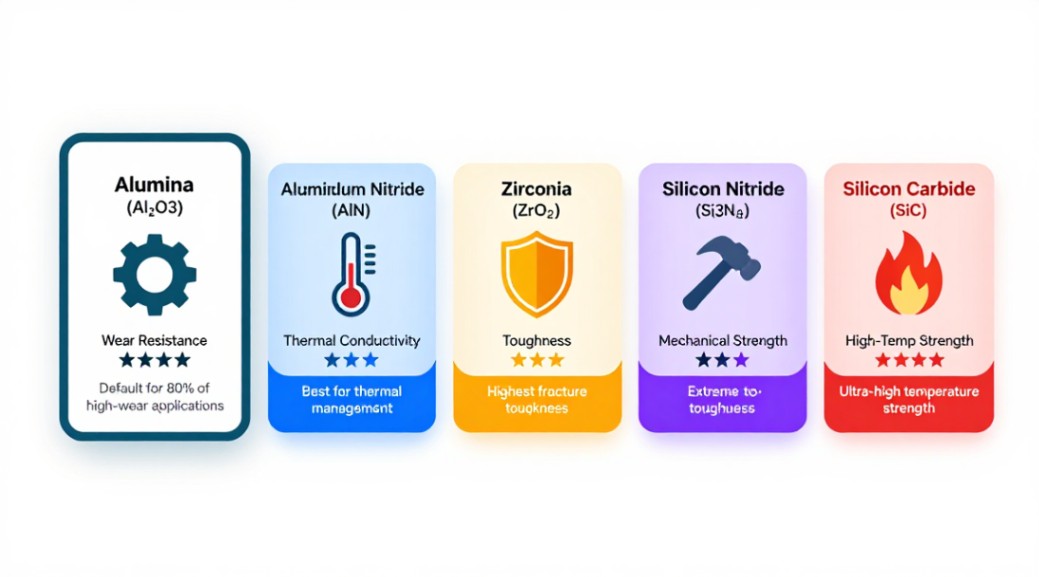
So where does aluminum oxide ceramic fit in this landscape? It is the default. It is the material you use when you do not have a specific reason to use something more exotic. For 80% of industrial wear applications, alumina is the correct answer. For thermal management, it yields to aluminum nitride. For extreme toughness, it yields to zirconia or silicon nitride. For ultra-high temperature strength, it yields to silicon carbide. But yield is not failure. It is specialization. Alumina’s breadth of applicability is unmatched.
5. Real-World Lessons from the Field
I recall a consultation with a cement plant in the Middle East. They were using mullite ceramic liners in their cyclones and experiencing failures every six months. Mullite has good thermal shock resistance but lower hardness than alumina. The abrasion from the raw feed was wearing through the mullite liners at a rate of 8 mm per year. We ran a simple wear test: alumina liners versus mullite liners under identical conditions. The alumina liners showed 3 mm of wear in 12 months. The mullite liners showed 15 mm. The switch to alumina extended the liner life from six months to nearly three years. That is not a marginal improvement. That is a step change in maintenance cost and downtime.
Another case involved a chemical reactor vessel where the internal nozzle had to handle a mixture of hydrochloric acid and abrasive catalyst particles. The original nozzle was made from a nickel-based superalloy. It lasted two weeks before the bore diameter increased by 5 mm. The replacement was a 99.5% aluminum oxide ceramic nozzle. After 18 months, the bore wear was undetectable with a caliper. The chemical resistance of pure alumina in hot acid environments is exceptional. The nozzle paid for itself in less than two months of eliminated downtime.
I will also mention a cautionary tale. A manufacturer of grinding media switched from standard 92% alumina balls to 99.9% alumina balls, expecting a proportional improvement in wear life. They did not get it. The wear rate improvement was only about 20% because the grinding environment involved high-energy impacts that chipped the edges of the balls regardless of purity. The extra cost was not justified. The lesson: know your failure mode. For impact wear, toughness matters more than hardness. For abrasive sliding wear, hardness wins. For erosive wear, a combination of hardness and fine grain size is ideal. The data dictates the grade choice.
6. The Future: How Alumina Ceramic is Evolving
Trends in the ceramics industry point toward two directions: nanocomposites and additive manufacturing. Researchers are incorporating nanoparticles of alumina into matrices of silicon nitride ceramic or zirconia to create materials with enhanced toughness without sacrificing hardness. These nanocomposites are beginning to appear in cutting tool inserts and biomedical devices. The commercial impact is still modest, but the technical trajectory is clear.
Additive manufacturing, or 3D printing, of aluminum oxide ceramic is moving from the lab to production. The challenge is the high sintering temperature requirement and the difficulty of debinding the organic binders used in printing. Several companies now offer photopolymerization-based printing of alumina that yields near-net-shape parts with 99.8% density after sintering. This technology allows geometries—internal cooling channels, lattice structures, complex undercuts—that are impossible with traditional pressing or casting. For small lot production of high-value parts, printed alumina is becoming cost-competitive.
The industry is also exploring transparent alumina for high-pressure lighting and ballistic windows. Transparent aluminum oxide ceramic—also known as transparent alumina or single-crystal sapphire when grown, polycrystalline alumina when sintered—offers optical transmission in the visible and infrared range combined with extreme hardness. It is already used in smartphone camera covers, watch crystals, and infrared domes. The manufacturing cost is dropping as process yields improve.
7. Practical Guidance: Selecting and Specifying Aluminum Oxide Ceramic
If you are specifying a ceramic component today, start with the operating conditions. Temperature, chemical environment, mechanical loading, and wear mechanism define the requirements. Then evaluate the cost-performance ratio.
Here is a practical checklist I have used for two decades:
- Temperature below 1000°C and abrasive wear? Standard alumina (90-96%) is your starting point.
- Temperature above 1000°C or corrosive chemicals? High-purity alumina (99.5%+) is mandatory.
- Need electrical insulation with moderate thermal conductivity? 96% alumina is the industry standard substrate.
- Need high thermal conductivity but can tolerate some cost increase? Consider aluminum nitride ceramic or silicon carbide ceramic.
- Need extreme toughness and thermal shock resistance? Look at silicon nitride ceramic or zirconia-toughened alumina.
- Need a custom geometry with complex internal features? Investigate additive manufacturing of alumina.
One final point about machining. Aluminum oxide ceramic cannot be machined like metal. It must be ground with diamond tools after sintering. This post-sintering machining is expensive and time-consuming. If your part design requires tight tolerances or threaded holes, factor in diamond grinding costs. Better yet, design the part to be net-shaped in the green (unsintered) state whenever possible. Green machining with carbide tools is fast and cheap. The shrinkage during sintering (typically 15-20% linear) must be accounted for in the green tooling design. Every experienced ceramic engineer learns this lesson the hard way.
I keep a sample of a failed alumina pump seal on my desk. It has a crack running through it, the result of a thermal shock when cold water hit the hot seal face. That fracture reminds me that alumina is not invincible. It is a tool. A specialized, high-performance tool that, when matched to its correct application, delivers reliability that metals cannot match. The key is knowing where it fits and where it does not.
If you are currently evaluating a wear or thermal management problem, the first step is to get the wear data. Measure the current failure rate, the cost of downtime, and the replacement part cost. Then calculate the potential savings from switching to an alumina solution. If the numbers make sense, the next step is engineering validation: a prototype, a field trial, and a comparison of wear rates. That process has never failed me in twenty years.
Suppiler
Synthetic-chemical focus on the research and development, production and sales of ceramic products, serving the electronics, ceramics, chemical and other industries. Since its establishment in 2015, the company has been committed to providing customers with the best products and services, and has become a leader in the industry through continuous technological innovation and strict quality management.
Our products includes but not limited to Aluminum Nitride, Aluminum Oxide, Boron Carbide, Boron Nitride, Ceramic Crucible, ect. If you are interested in any type of these, please feel free to contact us.