Next-Generation Ceramics: Unlocking Superior Properties for Industry

You Have Seen It Crumble Under Load
You spec’d a high-purity part. You paid for tight tolerances. Then it fractured on first thermal cycle. Or worse, it failed during a critical production run. Aluminum oxide ceramic is not forgiving. It demands respect for its limitations. Most failures are not material defects. They are design and handling errors. This list covers the seven worst mistakes you can make. Avoid these. Your components will last longer. Your budget will thank you.
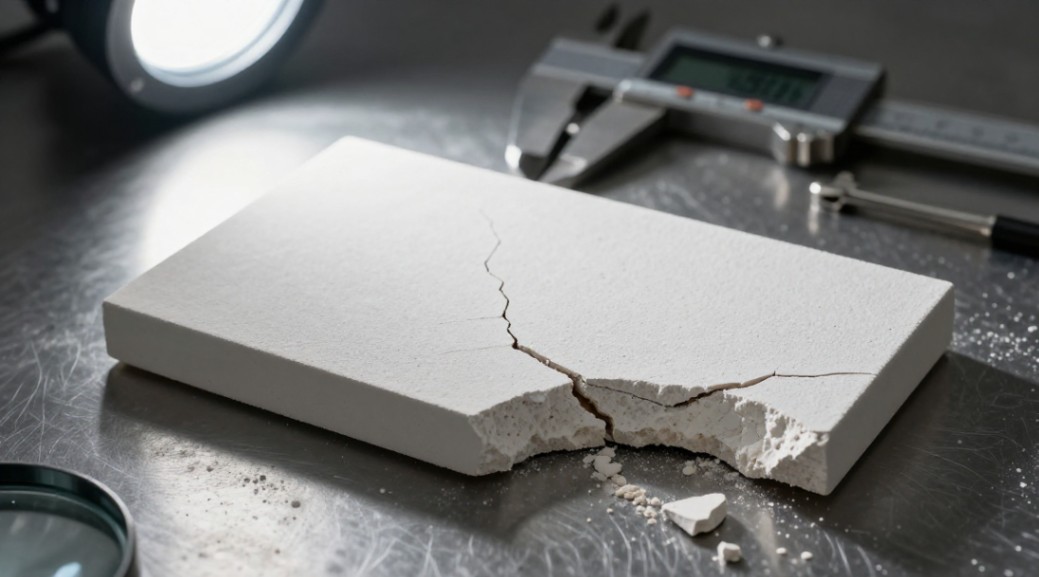
1. Ignoring Thermal Shock Sensitivity
Aluminum oxide ceramic has high thermal stability. That is a fact. Its thermal conductivity is lower than silicon carbide ceramic or aluminum nitride ceramic. This creates a dangerous trap. Designers assume it can handle rapid temperature changes. It cannot. Sudden heating or cooling creates internal stress. That stress causes catastrophic cracking.
- Never quench hot alumina components in water or air.
- Do not expose thick sections to direct flame without preheating.
- Ramp furnace temperatures slowly. Use controlled heating and cooling rates.
- For extreme thermal cycling, consider silicon nitride ceramic or reaction-sintered silicon carbide ceramics instead.
If your process requires rapid thermal changes, aluminum oxide ceramic is the wrong starting point. Switch materials before you redesign the part.
2. Assuming All Alumina Grades Are Interchangeable
95%, 96%, 99%, 99.5% — the numbers look similar. They are not. Each grade has a specific property profile. Choosing 96% alumina for a wear application in a corrosive environment is a mistake. The glassy phase that aids sintering in lower grades reduces chemical resistance. It also lowers electrical resistivity.
- Use 99.5% alumina for aggressive chemical exposure or critical electrical insulation.
- Use 96% alumina for moderate wear and lower cost applications.
- Do not mix grades in the same assembly. Thermal expansion differences cause joint failure.
- Verify the sintering aids used. They affect long-term performance.
Higher purity is not always better. It raises cost and reduces fracture toughness slightly. Match the grade to the exact environment, not to a datasheet headline.
3. Machining Alumina like a Soft Metal
Aluminum oxide ceramic is hard. Extremely hard. It ranks just below diamond. Cutting it with standard tooling is slow and destructive. The biggest mistake is using conventional grinding or drilling without coolant. This creates microcracks. Those microcracks grow under load. The part fails unpredictably.
- Use diamond-impregnated tools only. Carbide will not work.
- Maintain constant coolant flow. Heat buildup induces thermal stress.
- Do not machine as-fired parts to net shape. Machine pre-sintered blanks, then sinter to final dimensions.
- If post-sinter machining is unavoidable, use boron nitride ceramic or special coating for boron nitride ceramic crucibles as a barrier to reduce tool wear.
Machining is the single largest cost driver. Design for near-net shape from the start. It saves money and prevents hidden damage.
4. Overlooking Brittle Fracture in Tension
Alumina is strong in compression. Very weak in tension. Engineers design for compressive loads, but forget about bending moments or clamping stresses. A threaded connection is a classic mistake. Threads create stress concentration points. Alumina will crack at the root of the thread.
- Never assume threaded alumina parts can hold dynamic loads.
- Use metal inserts or adhesive bonding for assembly.
- Design components so that all applied loads are compressive.
- If tensile stress is unavoidable, consider zirconia-toughened alumina or silicon carbide-bonded silicon nitride ceramics for improved toughness.
The material does not yield. It does not deform. It fractures. Plan for zero tensile stress in service.
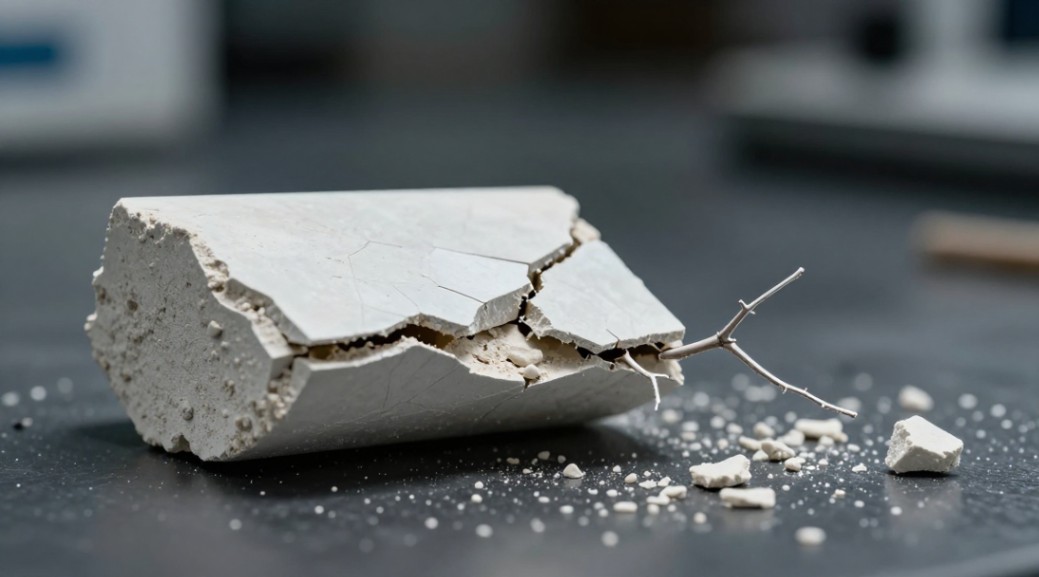
5. Forgetting about Surface Finish and Wear
An as-sintered surface looks smooth. Under a microscope, it is rough. Those micro-voids trap abrasives and fluids. In a mechanical seal or a bearing, this causes accelerated wear. In medical implants, it triggers biological response. Ground finish is not the same as polished finish.
- Specify polished surfaces for sealing faces and wear interfaces.
- Glazing can seal the surface for high-temperature chemical resistance.
- Metallization is required for reliable brazing or soldering to metals.
- Do not use abrasive blasting on critical surfaces. It embeds contaminants.
Surface finish directly controls friction, wear rate, and corrosion resistance. Include it in your specification. Do not leave it as default.
6. Using Alumina in Cyclic Fatigue Applications
Aluminum oxide ceramic resists static loads well. Cyclic loads are a different story. Crack propagation occurs under repeated stress far below the static strength. This is classic fatigue. The material has no plastic zone to blunt the crack tip. Once a crack starts, it runs.
- Do not use alumina for parts exposed to vibration or repeated loading.
- Consider silicon carbide ceramic or pressureless sintered silicon carbide ceramics for fatigue-prone environments.
- Perform rigorous proof testing if fatigue is unavoidable.
- Inspect components regularly for surface cracks.
Alumina is for steady-state conditions. Pumps, valves, and static seals. Not for reciprocating engines or high-cycling actuators.
7. Neglecting Design for Joining and Assembly
Bonding alumina to metal or other ceramics is tricky. Brazing requires metallized surfaces. Adhesives require careful surface preparation and thermal compatibility. The common mistake is to design the joint as an afterthought. The joint becomes the weakest link.
- Design the joint area with a gradual thickness transition. Avoid sharp corners.
- Use metallization layers that match the thermal expansion of the mating part.
- For high-temperature assemblies, active metal brazing is more reliable than adhesives.
- Test joint samples under simulated service conditions before production.
A well-designed alumina part fails at the joint if the joint is mismatched. Fix the interface first. The ceramic itself will hold.
The Bottom Line: Respect the Material
Aluminum oxide ceramic is a workhorse. It offers exceptional hardness, electrical insulation, and chemical inertness. It is also brittle, thermally sensitive, and difficult to machine. Success comes from acknowledging these limits early. Use the right grade. Design for compression. Control thermal gradients. Finish the surfaces properly. Do not assume one ceramic is like another. Test prototypes under real conditions. When you follow these rules, alumina ceramic delivers reliable performance across mechanical seals, ballistics armor, furnace components, and even catalyst supports. Ignore them, and you will be redesigning a broken part. The choice is yours.
Suppiler
Synthetic-chemical focus on the research and development, production and sales of ceramic products, serving the electronics, ceramics, chemical and other industries. Since its establishment in 2015, the company has been committed to providing customers with the best products and services, and has become a leader in the industry through continuous technological innovation and strict quality management.
Our products includes but not limited to Aluminum Nitride, Aluminum Oxide, Boron Carbide, Boron Nitride, Ceramic Crucible, ect. If you are interested in any type of these, please feel free to contact us.