Next-Generation Ceramics: Unlocking Superior Properties for Industry

What Exactly Is Aluminum Oxide Ceramic?
Aluminum oxide ceramic (Al2O3) is the most established industrial oxide ceramic. Its chemical composition is straightforward: alumina (Al2O3) plus minor sintering aids. Engineers choose it for three primary reasons: extreme hardness, outstanding wear resistance, and thermal stability up to 1700°C in oxidizing atmospheres. It is not a single material; it exists in purities from 80% to 99.99%.
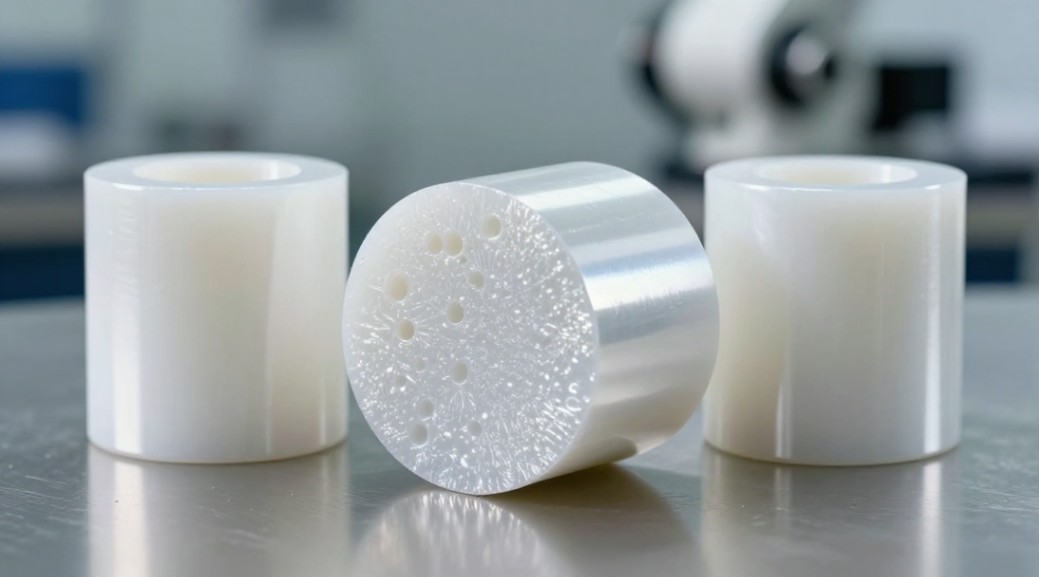
Compared to silicon carbide ceramic or silicon nitride ceramic, aluminum oxide offers lower cost and excellent electrical insulation. But it is heavier and less tough than zirconia. For applications requiring high dielectric strength and chemical inertness, Al2O3 is the default choice.
1. How Do I Select the Right Alumina Grade for My Part?
Start by defining three critical parameters: operating temperature, wear type (abrasion, erosion, or impact), and electrical demands.
- For electronics substrates, choose 96% or 99.6% alumina for high dielectric strength and low dielectric loss.
- For industrial wear liners, 90–95% alumina offers the best balance of hardness and cost.
- For medical implants, use high-purity, bioinert grades (99.5% or higher) with controlled grain size.
A common mistake is over-specifying purity. The extra cost rarely pays off unless your environment involves extreme chemical attack or thermal cycling.
2. What Is the Correct Manufacturing Route: Pressing vs. Casting vs. Extrusion?
Choose based on part geometry and production volume.
- Dry pressing is for simple shapes (discs, rings, blocks) in high volume. It produces consistent density but limited aspect ratio.
- Isostatic pressing gives more uniform green density for complex geometries like tubes or crucibles. Ideal for components later machined into intricate shapes.
- Extrusion works for long uniform cross-sections (rods, tubes). Low cost for high-volume simple profiles.
- Injection molding serves very complex, small-to-medium parts (threaded components, precision nozzles). Higher tooling cost but near-net shape reduces machining.
For most general-wear parts, dry pressing is the fastest, cheapest route. For parts requiring tight tolerances, go with isostatic pressing or injection molding.
3. How Does Sintering Affect Final Material Performance?
Sintering is the critical step. It transforms a porous alumina compact into a dense, hard ceramic. Two main routes exist:
- Pressureless sintering (most common): Alumina is heated to 1500–1700°C in air. Densification relies on solid-state diffusion. Achieves >99% density for purities up to 99.8%.
- Hot pressing: Simultaneous application of heat and uniaxial pressure. Used for high-purity, ultra-dense parts requiring higher strength. More expensive and limited to simple shapes.
Key metric: final density. A density below 98% often results in poor wear resistance and lower dielectric strength. For critical applications, specify density measurement via Archimedes method.
4. Which Machining Method Works Best for Complex Alumina Shapes?
Aluminum oxide ceramic is hard (9 Mohs) and brittle. Standard metalworking tooling will fail. Use these proven methods:
- Green machining: The easiest method. Shape the unsintered (green) compact using carbide tooling. Requires careful handling to avoid breakage. Best for complex internal features.
- Diamond grinding: After sintering, finish with resin-bonded diamond grinding wheels. Use flood coolant. Achieve tolerances of ±0.02 mm. This is the standard for seal faces and precision components.
- Laser machining: For drilling small holes (0.1–1.0 mm) or cutting thin sheets. Slow, but no tool contact. Especially useful for reaction-sintered silicon carbide ceramics or alumina composites when conventional machining is impractical.
Rule of thumb: Machine as much as possible in the green state. Sintered machining is expensive and wears out tools quickly.
5. Can I Improve Aluminum Oxide Ceramic Performance with Surface Finishing?
Yes. Surface finishing is often the difference between a component that lasts 2 months and one that lasts 2 years.
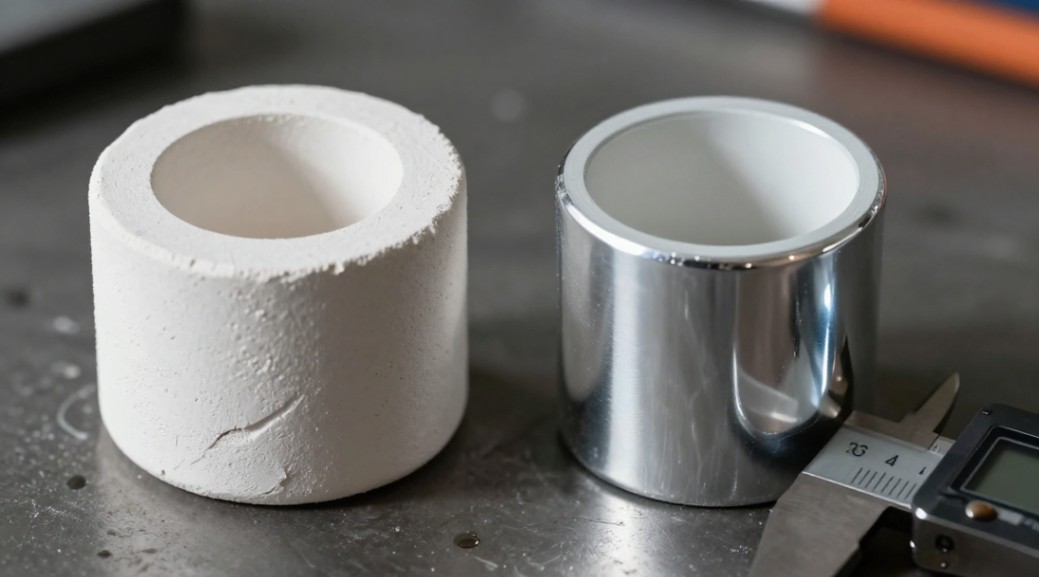
- Lapping: Produces a flat, smooth surface (<0.1 Ra) for mechanical seal faces. Removes surface flaws that initiate cracking.
- Polishing: Reduces friction coefficient. Essential for biomedical implants and bearing surfaces.
- Coating: For extreme environments, consider a special coating for boron nitride ceramic crucibles or a thin Al2O3-TiO2 coating applied via plasma spray. This enhances thermal barrier performance.
Do not skip a final diamond grind for load-bearing or wear surfaces. It closes surface porosity and significantly increases fatigue life.
6. How Does Aluminum Oxide Compare to Silicon Carbide Ceramic and Boron Carbide Ceramic?
Each engineering ceramic serves a specific niche. Here is the direct comparison:
- Aluminum oxide ceramic: Best cost-performance balance. Excellent electrical insulator. Good chemical inertness. Not suitable for thermal shock (low thermal conductivity compared to SiC).
- Silicon carbide ceramic: Higher hardness and thermal conductivity. Excellent thermal shock resistance. Better in abrasion with heavy impact. More expensive and requires diamond grinding exclusively. Typical for mechanical seals and wear rings.
- Boron carbide ceramic: Third-hardest material known (after diamond and cubic boron nitride). Extreme wear resistance, but low fracture toughness. Used only for nozzle liners, lightweight armor, and abrasive powder handling. Difficult to sinter without pressure.
- Silicon nitride ceramic: Highest fracture toughness among these ceramics. Excellent for bearings, extrusion dies, and cutting tools. More complex to manufacture (requires hot isostatic pressing for highest quality).
Decision framework: If the primary wear is fine-particle erosion, choose alumina. If the wear involves heavy impact or thermal cycling, move to silicon nitride or silicon carbide.
7. What Are the Limitations of Aluminum Oxide Ceramic?
Be honest about the material’s shortcomings to avoid field failures:
- Brittleness: Aluminum oxide has low fracture toughness (3–4 MPa·m^1/2). It will fail catastrophically under tensile stress or point impact. Design parts with compressive loading in mind.
- Difficult machining of complex shapes: Threads, undercuts, and sharp internal corners are nearly impossible to grind in sintered alumina. Use green machining or cast-to-shape if these features are needed.
- Thermal shock sensitivity: Without thermal conductivity (20–30 W/m·K), rapid temperature changes cause fracture. Do not quench hot alumina in water.
If your application requires high toughness or complex internal geometry, consider pressureless sintered silicon carbide ceramics or alumina composites with zirconia dispersion.
8. What Are the Latest Advanced Variants and Market Trends?
The market for aluminum oxide ceramic continues expanding, driven by three trends:
- High-purity translucent alumina: Used in sodium-vapor lamp envelopes and semiconductor components. Requires meticulous process control and very fine starting powder.
- Alumina-zirconia composites: Offer double the fracture toughness of pure alumina while maintaining hardness. Increasingly used in medical and wear parts.
- Reaction-sintered silicon carbide ceramics and silicon carbide-bonded silicon nitride ceramics are capturing share in thermal applications but remain more expensive than alumina.
For most buyers, mullite ceramic or quartz ceramic are lower-cost alternatives for high-temperature but low-wear applications. However, when wear is the primary driver, aluminum oxide remains the workhorse material.
Your Next Step: Test Before You Commit
Do not design a full system around aluminum oxide ceramic without a prototype test. Order a small batch of sintered test bars in your targeted Al2O3 purity. Conduct a simple pin-on-disk wear test against the abrasive material you handle. Measure density and hardness. Compare to boron nitride ceramic if your application involves high-temperature corrosion.
Get hands-on with the machining. Have a shop grind a simple test part before you commit to 500 units. The material is forgiving only if you respect its brittleness. Train your team on handling: no sharp impacts, no thermal shocks, no cantilevered mounting.
The cost of a prototype run is far less than the cost of a field failure. Always verify your assumptions with real data.
Suppiler
Synthetic-chemical focus on the research and development, production and sales of ceramic products, serving the electronics, ceramics, chemical and other industries. Since its establishment in 2015, the company has been committed to providing customers with the best products and services, and has become a leader in the industry through continuous technological innovation and strict quality management.
Our products includes but not limited to Aluminum Nitride, Aluminum Oxide, Boron Carbide, Boron Nitride, Ceramic Crucible, ect. If you are interested in any type of these, please feel free to contact us.