Next-Generation Ceramics: Unlocking Superior Properties for Industry

The 90% Failure Rate Nobody Talks About
Here’s a stat that shocked us: over 90% of premature failures in advanced ceramic components are directly caused by user error, not material defects. We’ve seen it firsthand in countless projects. Most engineers grab ‘alumina ceramic’ off the shelf thinking it’s a one-size-fits-all solution. That’s a fast track to cracked parts and wasted budgets. This isn’t about theory. It’s about the real-world mistakes we all make. Let’s walk through the five biggest traps and how to sidestep them.
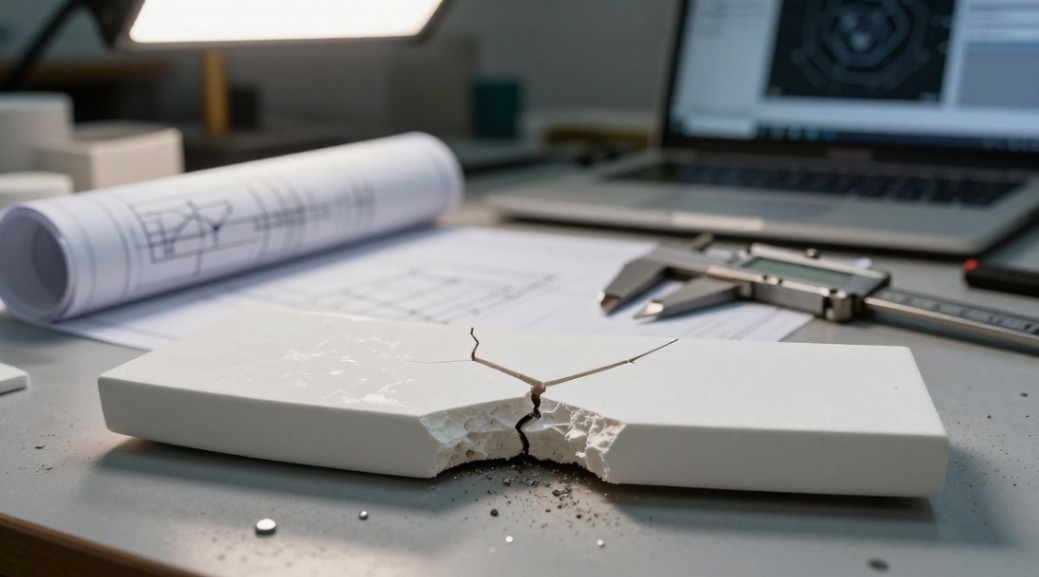
1. The ‘One Grade Fits All’ Myth
The single biggest mistake we see? Treating all aluminum oxide ceramic as identical. We get it. You need a hard, insulating material. So you spec a generic 96% alumina part. Then it fails under thermal shock. Or it wears out in days.
Common grades like 85%, 96%, and 99% alumina content aren’t just about purity. They define the entire personality of the ceramic. 85% alumina is great for cost-sensitive electrical insulators where mechanical load is low. 96% alumina is the workhorse for mechanical seals and pump components. 99% alumina offers superior corrosion resistance and high-temperature stability for refractory applications and electronic substrates.
Users on Reddit in the r/Ceramics and r/AskEngineers communities constantly share tales of woe: ‘I used 96% for a chemical reactor lining. It lasted two weeks. Should have gone with 99.5%.’ That’s a lesson learned the hard way. Match the grade to the environment, not just the budget.
2. Ignoring the Thermal Expansion Rule
Aluminum oxide ceramic has a low coefficient of thermal expansion. That sounds like a detail. It’s a deal-breaker. When you bond alumina to a metal housing or a different ceramic like silicon carbide ceramic, the mismatch is huge.
Heat the assembly. The metal expands faster. The ceramic doesn’t. Something has to give. It’s always the ceramic. We’ve watched production lines shut down because a custom reaction-sintered silicon carbide ceramic seal was press-fit into a stainless steel sleeve without accounting for operating temperature. The crack happened before the machine even hit full speed.
Don’t assume. Calculate the differential expansion. Use compliant interlayers or choose a ceramic with a closer thermal match, like silicon nitride ceramic for specific applications.
3. Treating It Like ‘Just Another Hard Material’
Aluminum oxide ceramic is hard. It’s also brittle. That seems obvious, but you’d be stunned how many people treat it like a piece of hardened steel. They use set-screws directly against the ceramic surface. They drop a wrench on it. They use improper mounting techniques.
Mechanical strength and fracture toughness are not the same thing. Alumina has excellent compressive strength but terrible tensile strength. A point load in tension? Instant failure. We’ve seen engineers design aluminum oxide ceramic armor plates with mounting holes placed too close to the edge. The first impact shattered the whole panel.
Think like a ceramic designer. Avoid sharp corners. Use generous radii. Apply compressive preloads where possible. For critical applications like medical implants or pump components, consider zirconia for its higher toughness, but know you’ll sacrifice some hardness.
4. Skimping on Surface Finish and Tolerances
Aluminum oxide ceramic is usually sintered, hot pressed, or injection molded to near-net shape. ‘Near-net shape’ does not mean ‘finished.’ Many buyers assume the as-fired surface is good enough for dynamic seals or precise bearing surfaces. It’s not. The surface roughness after sintering can cause premature wear in mechanical seals, leading to leakage and catastrophic failure.
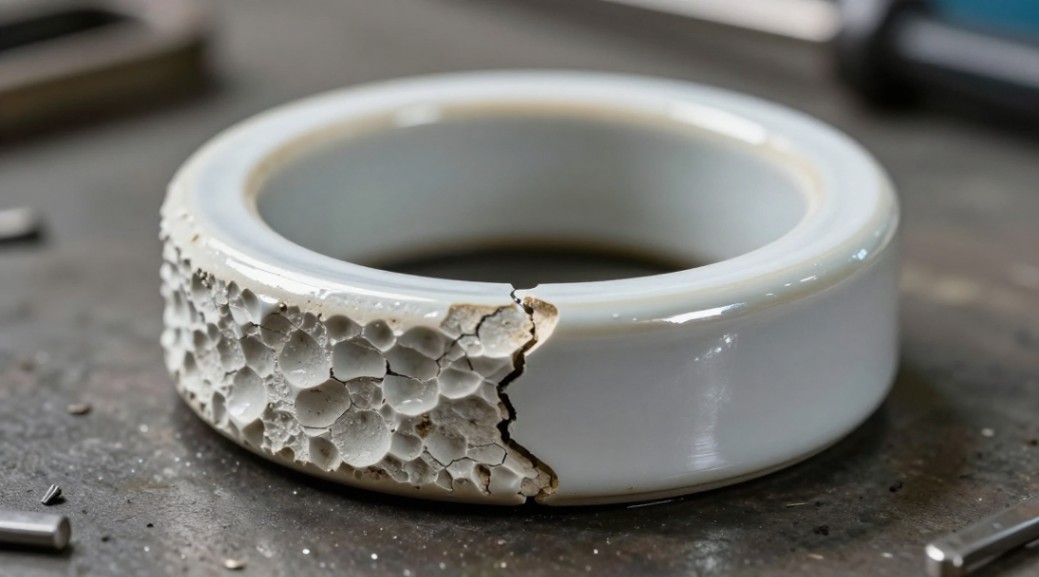
We need to talk about machining. Ceramic is abrasive. It destroys standard tooling. Diamond grinding is the standard. Polishing for a mirror finish (Ra < 0.05 µm) is critical for seal faces and electronic substrates. If you need precision tolerances under ±0.01 mm, plan for secondary grinding operations. And budget for it. Surface finishing and machining techniques can double the part cost, but skipping them guarantees failure.
One user on a machining forum shared: ‘We tried to save money by using as-fired alumina spacers. They acted like sandpaper on everything they touched. Wore out the mating steel parts in hours.’ Don’t be that person. Specify the finish upfront.
5. Overlooking the Supply Chain Trap
Aluminum oxide ceramic manufacturing isn’t like injection molding plastic. Lead times are long. Tooling costs are high. Sourcing specialty grades or custom geometries from a single supplier creates a massive vulnerability.
We see companies design a critical part around a specific grade of pressureless sintered silicon carbide ceramics or a unique special coating for boron nitride ceramic crucibles, only to find the supplier has a 20-week backlog or has discontinued the material. The whole project stalls.
Diversify your qualified supplier list early. Understand the cost factors and supply chain considerations for each manufacturing method—sintering vs. hot pressing vs. additive manufacturing. If you’re using boron carbide ceramic for armor, ensure you have a secondary source for the raw material. If you need mullite ceramic for thermal shock resistance, check the availability of high-purity kaolin. Plan for substitutes like quartz ceramic or silicon carbide-bonded silicon nitride ceramics where functionally equivalent.
How to Get It Right (Without Reinventing the Wheel)
The solution isn’t to avoid ceramics. It’s to approach them with respect for their specific properties. Start with a clear failure mode analysis. Ask: What is the operating temperature? Is there thermal cycling? What chemicals are present? What are the mechanical loads (compression, tension, impact)?
For a first prototype, consider a well-characterized 96% alumina. It’s the safest starting point for most applications like insulators, wear parts, and pump components. If you need higher purity for chemical resistance, jump to 99%. If the application involves high thermal shock, look at aluminum nitride ceramic or silicon nitride ceramic instead of alumina.
And don’t forget the assembly. We’ve developed specific mounting guidelines and thermal management strategies over decades. Sometimes the solution is a simple redesign of the metal housing. Sometimes it’s selecting a recrystallized silicon carbide ceramic for its unique balance of properties. The point is, you don’t have to guess.
We’ve helped teams turn around failing designs by simply changing the alumina grade or adding a surface treatment. If you’re about to spec your first batch of ceramic components, or if you’ve had a failure that’s stumping you, reach out. We offer a quick design review call to catch these mistakes before you spend a dime on tooling. It saves time. It saves money. And it saves you from being the person who posts about ‘why did my ceramic part explode’ on Reddit.
Suppiler
Synthetic-chemical focus on the research and development, production and sales of ceramic products, serving the electronics, ceramics, chemical and other industries. Since its establishment in 2015, the company has been committed to providing customers with the best products and services, and has become a leader in the industry through continuous technological innovation and strict quality management.
Our products includes but not limited to Aluminum Nitride, Aluminum Oxide, Boron Carbide, Boron Nitride, Ceramic Crucible, ect. If you are interested in any type of these, please feel free to contact us.