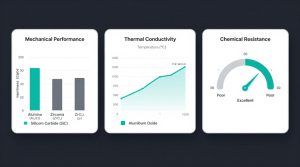
Next-Generation Ceramics: Unlocking Superior Properties for Industry

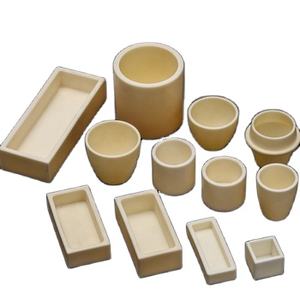
PRODUCT PARAMETERS
Description
Overview of Metalized Al2O3 Ceramic Substrate PCB for Antenna Components
Alumina Ceramic, or Aluminum Oxide (Al₂O₃), is the most widely used and versatile advanced ceramic material. Known for its excellent balance of mechanical, thermal, and electrical properties, it is a cost-effective solution for a vast array of demanding industrial applications. Alumina components are produced in purity levels ranging from 85% to 99.9%, with properties enhancing as purity increases.
Features of Metalized Al2O3 Ceramic Substrate PCB for Antenna Components
- High Hardness & Wear Resistance: Offers exceptional resistance to abrasion and mechanical wear.
- Excellent Electrical Insulation: Maintains high electrical resistivity even at elevated temperatures.
- Good Thermal Conductivity: (For a ceramic) effectively dissipates heat, especially in higher purity grades.
- High Compressive Strength: Capable of withstanding significant mechanical loads.
- Chemical Inertness: Highly resistant to corrosion from acids, alkalis, and molten metals.
- Cost-Effectiveness: Provides superior performance at a lower cost compared to many other technical ceramics.
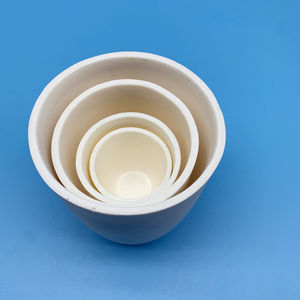
Specifications of Metalized Al2O3 Ceramic Substrate PCB for Antenna Components
Requirements of Metallized Al Two O Five Ceramic Substratum PCB for Antenna Parts
Material Structure
The substrate uses high-purity aluminum oxide (Al ₂ O SIX) ceramic. This product uses solid mechanical assistance and exceptional thermal security. The ceramic material is usually 96% or higher, which makes sure reputable efficiency sought after environments.
Metallization Layer
A thin metal layer bonds straight to the ceramic surface. Common metals include silver, copper, or gold, picked based on conductivity requirements and operating conditions. The metallization supplies a solid base for circuit traces and antenna elements. Attachment in between metal and ceramic remains solid even under repeated thermal biking.
Electrical Characteristics
Dissipation aspect: listed below 0.0001 at 1 MHz
Dielectric constant: around 9.8 ± 0.2
These values remain stable across a vast regularity range. That makes the substrate ideal for RF and microwave antenna applications where signal stability matters.
Thermal Performance
Thermal conductivity: 24– 28 W/m · K.
This allows efficient warm transfer far from energetic parts. The substratum deals with high power degrees without buckling or fracturing. Its coefficient of thermal growth closely matches common semiconductor products, minimizing tension throughout temperature level modifications.
Physical Measurements
Standard thickness alternatives consist of 0.25 mm, 0.5 mm, 0.635 mm, and 1.0 mm. Custom-made sizes are available upon demand. Surface monotony remains within ± 0.01 mm over 10 mm, making sure constant contact with mounted parts.
Surface Complete and Tolerances
Roughness: Ra ≤ 0.2 µm.
Dimensional tolerance: ± 0.05 mm.
Fine-line patterning supports trace widths to 50 µm. This accuracy assists create portable, high-performance antenna frameworks.
Environmental Resistance
The substratum resists dampness, chemicals, and oxidation. It operates dependably from -55 ° C to +250 ° C. No outgassing happens in vacuum cleaner problems, making it suitable for aerospace and defense systems.
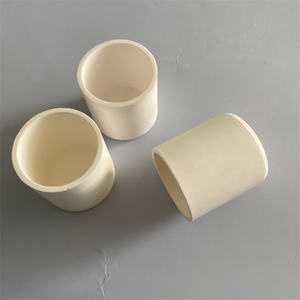
Applications of Metalized Al2O3 Ceramic Substrate PCB for Antenna Components
Applications of Metalized Al ₂ O Three Ceramic Substratum PCB for Antenna Parts
High Performance in Demanding Environments
Metalized aluminum oxide (Al two O TWO) ceramic substrate PCBs are commonly used in antenna systems that require stable performance under tough conditions. These substratums handle high regularities with reduced signal loss. They likewise maintain their form and electrical residential properties also when temperatures change a great deal. This makes them excellent for radar, satellite interaction, and 5G facilities.
Superb Thermal Administration
Heat develops quickly in compact antenna modules. Al ₂ O three ceramic substrates move warm away rapidly many thanks to their high thermal conductivity. Metalization– usually with silver, copper, or gold– includes solid electrical courses while assisting spread warm uniformly. This protects against hot spots and keeps parts functioning longer.
Strong Mechanical Stability
Unlike basic FR-4 boards, metalized Al ₂ O ₃ substratums do not warp or crack easily. Their inflexible structure supports precise placement of small antenna elements. This is critical in phased variety antennas where alignment affects beam accuracy and signal quality.
Dependable Electric Efficiency
The dielectric constant of Al ₂ O four stays stable throughout a large regularity variety. That suggests signals remain clean and constant. Low moisture absorption likewise ensures efficiency does not drop in damp or exterior settings. Designers count on this integrity for aerospace, protection, and automobile radar usages.
Compact and Lightweight Layout
These ceramic PCBs enable developers to pack even more functions right into smaller sized areas. Slim layers and great metal traces assist diminish antenna size without losing effectiveness. That’s why they fit well in drones, handheld radios, and mobile base terminals where area and weight matter a great deal.

Company Profile
Synthetic-chemical focus on the research and development, production and sales of ceramic products, serving the electronics, ceramics, chemical and other industries. Since its establishment in 2015, the company has been committed to providing customers with the best products and services, and has become a leader in the industry through continuous technological innovation and strict quality management.
Our products includes but not limited to Aluminum Nitride, Aluminum Oxide, Boron Carbide, Boron Nitride, Ceramic Crucible, ect. If you are interested in any type of these, please feel free to contact us.

Payment Methods
T/T, Western Union, Paypal, Credit Card etc.
Shipment Methods
By air, by sea, by express, as customers request.
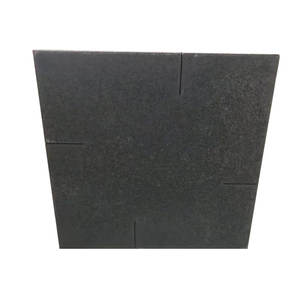
5 FAQs of Metalized Al2O3 Ceramic Substrate PCB for Antenna Components
Frequently Asked Questions: Metalized Al₂O₃ Ceramic Substrate PCB for Antenna Components
What is a metalized Al₂O₃ ceramic substrate?
It is a printed circuit board made from aluminum oxide (Al₂O₃) ceramic. The surface is coated with a thin layer of metal—usually copper or silver—to create electrical pathways. This material offers high thermal conductivity and strong mechanical stability.
Why use ceramic instead of standard FR-4 PCB material?
Ceramic substrates handle heat much better than FR-4. They also keep stable performance at high frequencies. Antenna components need this reliability, especially in harsh environments like automotive radar or 5G base stations.
Can this substrate support high-frequency signals?
Yes. Al₂O₃ has low dielectric loss and consistent permittivity. These traits help maintain signal integrity in RF and microwave applications. That makes it ideal for modern antenna designs that operate above 10 GHz.
How durable is the metal layer on the ceramic?
The metal layer is bonded using thick-film or thin-film processes. Both methods create a strong, long-lasting connection between metal and ceramic. The result resists thermal cycling, vibration, and oxidation over time.
Is this PCB suitable for miniaturized antenna modules?
Absolutely. The fine-line capabilities of metalized ceramic allow tight trace spacing and small features. You can pack more functionality into a smaller space without losing electrical performance or thermal management.
REQUEST A QUOTE
RELATED PRODUCTS
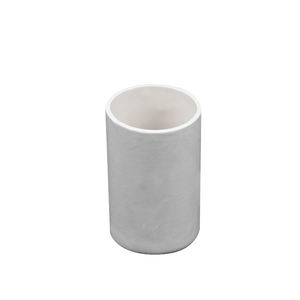
Chemically Stable Alumina Ceramic Refractory Tube / Round Shaft
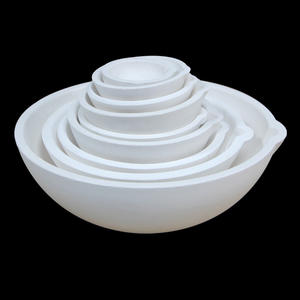
Custom Size Corrosion Resistant Alumina Ceramic Shaft for Boiler Pumps
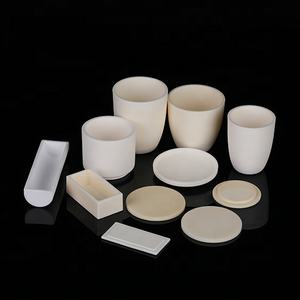
Activated Alumina (Gamma Aluminum Oxide) Desiccant / Adsorbent
Bare 96% Al2O3 Alumina Ceramic PCB Sheet / Substrate
Dry Cast, Polished Surface Alumina Ceramic Disc