Next-Generation Ceramics: Unlocking Superior Properties for Industry

PRODUCT PARAMETERS
Description
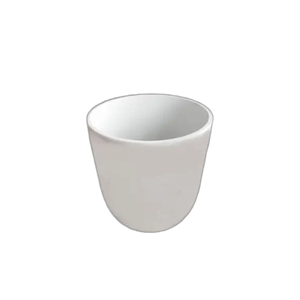
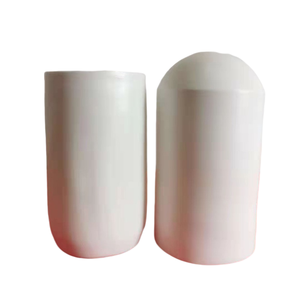
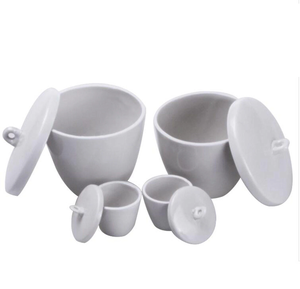
Overview of Fused Silica Quartz Ceramic Crucible
Quartz ceramics, also known as fused silica ceramics or re-bonded quartz products, are a high-performance advanced ceramic material. Unlike traditional clay-based ceramics, they are not made by sintering clay, but rather from high-purity fused silica (silicon dioxide, SiO₂) that is crushed, shaped, and then sintered at high temperatures.
Their core appeal lies in their unique combination of the excellent properties of fused silica glass (such as extremely low thermal expansion coefficient and excellent thermal shock stability) and the structural strength and versatility of ceramics (they can be made into crucibles, rollers, and irregularly shaped parts), overcoming the limitations of fused silica glass in terms of difficulty in manufacturing large sizes and complex shapes, and its high cost.
Quartz ceramics perform exceptionally well in harsh environments involving high temperatures, rapid temperature changes, and chemical corrosion, and are widely used in solar photovoltaics (crucibles for polycrystalline silicon ingot furnaces), semiconductors, aerospace, metallurgy and casting, the glass industry, and laboratories.
Main Characteristics of Fused Silica Quartz Ceramic Crucible
Excellent Thermal Shock Stability: They have an extremely low thermal expansion coefficient, generating almost no thermal stress during rapid temperature changes, and can withstand rapid cooling from extremely high temperatures to room temperature without cracking.
Extremely High Temperature Resistance and Thermal Stability: They can be used continuously at temperatures of 1100°C – 1350°C, and can even withstand higher temperatures for short periods. They do not soften or deform at high temperatures and maintain good dimensional stability.
Excellent Chemical Inertness and Corrosion Resistance: Except for hydrofluoric acid and hot concentrated phosphoric acid, they have strong resistance to most acids, salt solutions, and molten metals (such as aluminum, copper, gold, silver, and platinum), making them ideal melting and containment vessels.
Low Thermal Conductivity and Good Electrical Insulation: They have low thermal conductivity, making them excellent thermal insulation materials. They also maintain good electrical insulation properties at high temperatures.
High Purity and Low Contamination Risk: Made from high-purity quartz sand, they do not contaminate the high-purity molten metals or semiconductor materials they come into contact with, ensuring process cleanliness.
Moderate Mechanical Strength: Compared to most engineering ceramics, their mechanical strength at room temperature is relatively low; they are brittle materials. However, their strength is sufficient under their designed operating conditions (high-temperature insulation, thermal shock resistance). Its strength can be improved by optimizing the formula and manufacturing process.
Specifications of Fused Silica Quartz Ceramic Crucible
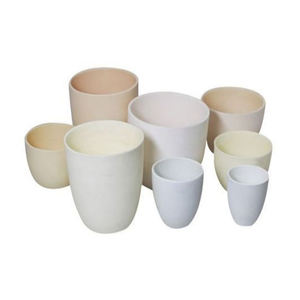
Specs of Molten Silica Quartz Porcelain Crucible
Material Make-up
Merged silica quartz ceramic crucibles are made from high-purity artificial fused silica. The product contains over 99.9% SiO ₂. This ensures excellent chemical security and resistance to most acids, except hydrofluoric acid. No binders or ingredients are utilized in the production procedure, which keeps the crucible without contamination.
Thermal Characteristics
These crucibles manage severe temperature levels effortlessly. They can run constantly at temperature levels as much as 1200 ° C(2192 ° F). Temporary exposure is possible up to 1400 ° C (2552 ° F). The reduced thermal expansion coefficient suggests they withstand splitting during fast heating or cooling. Thermal shock resistance is among the most effective in the sector.
Physical Attributes
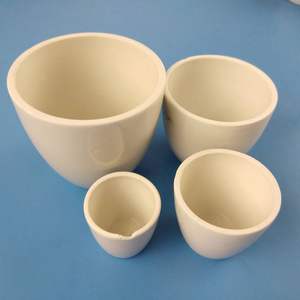
The crucibles have a smooth internal surface that avoids product sticking and makes cleaning much easier. Wall surface density is uniform to guarantee also heat distribution. Criterion dimensions vary from 10 mL to 5000 mL, with personalized measurements readily available on demand. The color is typically translucent white or milky white, depending on the production technique.
Chemical Resistance
Integrated silica quartz programs strong resistance to most molten metals, salts, and oxides. It does not respond with most research laboratory reagents. Nevertheless, it should not be used with alkaline compounds or phosphates at heats, as these can trigger deterioration.
Applications
These crucibles are widely made use of in logical chemistry, semiconductor handling, and high-temperature product synthesis. They are ideal for ashing, combination, and example preparation where pureness and temperature security are critical. Their inert nature makes them suitable for trace element analysis and ultra-clean procedures.
Applications of Fused Silica Quartz Ceramic Crucible
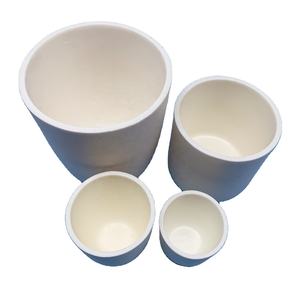
Applications of Molten Silica Quartz Porcelain Crucible
High-Temperature Handling
Fused silica quartz ceramic crucibles manage extreme heat without damaging down. They remain secure at temperature levels over 1,600 ° C. This makes them perfect for melting and holding steels like aluminum, copper, and precious alloys. Their thermal shock resistance stops splitting during rapid heating or cooling.
Semiconductor Production
In the production of silicon wafers, purity issues. These crucibles consist of almost no impurities. They do not react with molten silicon. This maintains the semiconductor material clean. Also under lengthy exposure to high heat, they launch minimal pollutants. That is why they are made use of in crystal development processes like Czochralski pulling.
Optical and Glass Industries
Glassmakers depend on merged silica crucibles to thaw specialized glasses. The material does not discolor or shadow the final product. It likewise resists chemical attack from hostile glass make-ups. Optical fiber preforms and accuracy lenses typically begin in these crucibles due to the fact that clarity and consistency are crucial.
Lab and Research Study Use
Researchers select these crucibles for experiments needing inert containers. They function well with acids, except hydrofluoric acid. Their low thermal growth means they keep their form under stress. Researchers utilize them for sample preparation, ash testing, and high-temperature reactions where contamination must be avoided.
Specialized Steel Casting
For casting responsive or rare-earth steels, typical containers stop working. Fused silica quartz ceramic crucibles use a risk-free alternative. They resist wetting by several molten metals. This reduces steel loss and improves return. Foundries utilize them when top quality and repeatability are non-negotiable.

Company Profile
Synthetic-chemical focus on the research and development, production and sales of ceramic products, serving the electronics, ceramics, chemical and other industries. Since its establishment in 2015, the company has been committed to providing customers with the best products and services, and has become a leader in the industry through continuous technological innovation and strict quality management.
Our products includes but not limited to Aluminum Nitride, Aluminum Oxide, Boron Carbide, Boron Nitride, Ceramic Crucible, ect. If you are interested in any type of these, please feel free to contact us.

Payment Methods
T/T, Western Union, Paypal, Credit Card etc.
Shipment Methods
By air, by sea, by express, as customers request.
5 FAQs of Fused Silica Quartz Ceramic Crucible
Fused Silica Quartz Ceramic Crucible – Frequently Asked Questions
What is a fused silica quartz ceramic crucible?
It is a high-purity container made from fused silica. This material can handle very high temperatures without breaking down. People use it in labs and industries where clean, stable melting or heating is needed.
Why choose fused silica over other materials?
Fused silica has excellent thermal shock resistance. It does not crack easily when heated or cooled quickly. It also stays chemically inert, which means it will not react with most metals or chemicals during use.
What temperatures can it withstand?
These crucibles work well up to 1,200°C (2,192°F) continuously. For short periods, they can handle even higher temperatures. Always check the exact limit for your specific model before use.
Can it be used with all types of metals?
Not all. Fused silica works well with many non-ferrous metals like aluminum, zinc, and copper. But it should not be used with strong alkalis or certain reactive metals such as titanium at high heat. These can damage the crucible.
How do I care for and extend its life?
Avoid sudden temperature changes. Heat and cool the crucible slowly. Do not scratch or hit it—it is strong but brittle. Clean it gently after each use. Store it in a dry place away from dust or moisture. Proper handling helps it last longer.
REQUEST A QUOTE
RELATED PRODUCTS
Outdoor Clear Quartz Tube Ceramic Halogen Infrared Heating Lamp Bulb
Sintered Diamond Grinding Wheel for Ceramic Quartz Glass Chips
Refractory Quartz Ceramic Crucibles for Melting Platinum Gold
Vacuum Brazed Profiling Wheels for Marble Ceramic Quartz Applications
High Purity Quartz for Ultra Durable Ceramics