Next-Generation Ceramics: Unlocking Superior Properties for Industry

Is Your Bearing Running Hot and Dying Young?
Picture this. You’ve just installed a new high-performance pump or turbine. It’s running perfectly. Then, the temperature climbs. First a little, then a lot. You hear a faint change in pitch. Vibration creeps in. Before you know it, you’re facing a catastrophic failure. Downtime. Costly repairs. The culprit? Your steel bearing couldn’t handle the heat. You’re not alone. In Reddit engineering forums and on plant floors, users lament the same issue: ‘Our 600°F process kills bearings in 3 months,’ or ‘We lose a small fortune in aerospace component testing due to thermal expansion lock-up.’ These are the exact scenarios where traditional materials hit their limit. There is a better way.
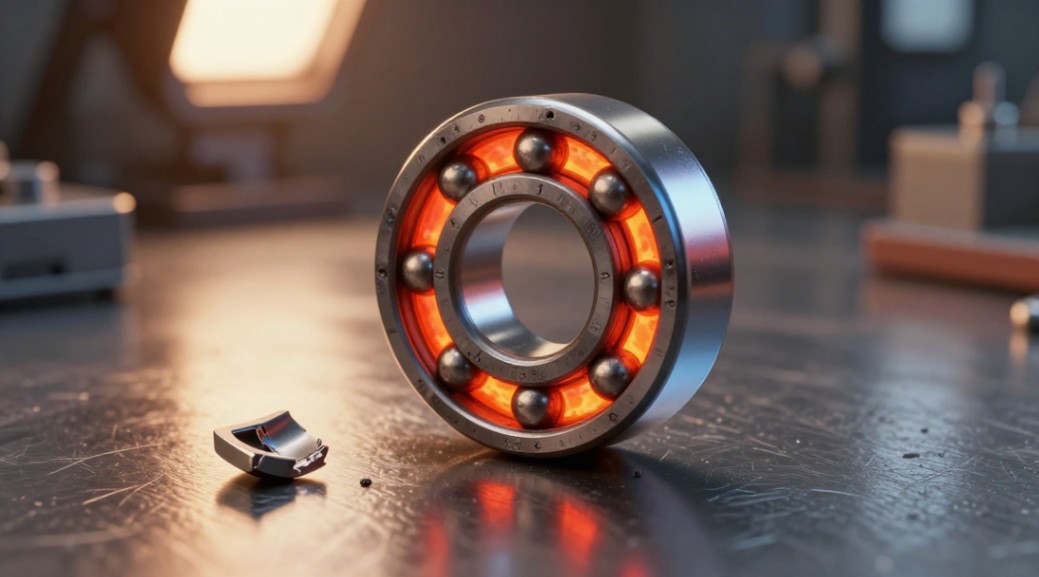
Why Steel Fails in the Heat (And Why Silicon Nitride Thrives)
At its core, high-temperature bearing failure isn’t a mystery. Steel loses its hardness and strength as temperatures rise above 300°C (572°F). It thermally expands significantly, causing preload loss or, worse, seizure. It oxidizes and corrodes. Lubricants degrade or evaporate. This is the world you live in. Silicon nitride ceramic bearings operate in a different paradigm. Their performance doesn’t just decline slightly; it remains robust. The key lies in the material’s fundamental properties. You don’t need a PhD to understand this, but knowing these three pillars will guide every decision you make.
The Three Pillars of High-Temperature Performance
1. High-Temperature Strength: Silicon nitride retains over 80% of its room-temperature strength at 1000°C (1832°F). Steel is a puddle at that point. This means the rolling elements maintain their shape and load capacity.
2. Low Thermal Expansion: With a coefficient of thermal expansion about one-fourth that of steel, a silicon nitride bearing experiences minimal dimensional change. This preserves internal clearances, preventing thermal lock-up. That annoying seizure problem? It vanishes.
3. Superior Thermal Shock Resistance: Can it handle a rapid temperature swing? Yes. Silicon nitride resists cracking from sudden heating or cooling, a common failure mode in other ceramics.
Your Step-by-Step Guide to Selecting a High-Temp Bearing Solution
Feeling overwhelmed is natural. Let’s break this down into a clear, actionable process. Follow these steps to move from problem to reliable solution.
Step 1: Diagnose Your Exact Failure Mode
Don’t just say ‘it gets hot.’ Be a detective. Pull your failed bearing. What do you see?
- Bluish/Brown Discoloration? That’s oxidation and tempering of steel. It’s overheating.
- Weld Spatter or Scuffing on Raceways? Likely lubrication failure or thermal seizure.
- Cage Melted or Deformed? Temperatures exceeded the cage material’s limits.
Document the operating temperature range (min, max, and typical), speed, and load. This data is gold.
Step 2: Compare Material Options Objectively
Here is where you make your choice. Don’t rely on a sales brochure. Look at the data. This table compares the core contenders for high temperature applications.
| Material Property | 52100 Chrome Steel | M50 Tool Steel | Silicon Carbide (SiC) | Silicon Nitride (Si3N4) |
|---|---|---|---|---|
| Max Continuous Temp (°C) | ~180 | ~315 | ~1400 | ~800-1000 |
| Thermal Expansion (10⁻⁶/K) | ~11.5 | ~11.0 | ~4.0 | ~3.2 |
| Density (g/cm³) | 7.85 | 7.85 | 3.10 | 3.20 |
| Corrosion Resistance | Poor | Poor | Excellent | Excellent |
| Non-Magnetic | No | No | Yes | Yes |
| Key Limitation | Loses hardness >300°C | Oxidizes rapidly >400°C | Brittle, poor thermal shock | Higher initial cost |
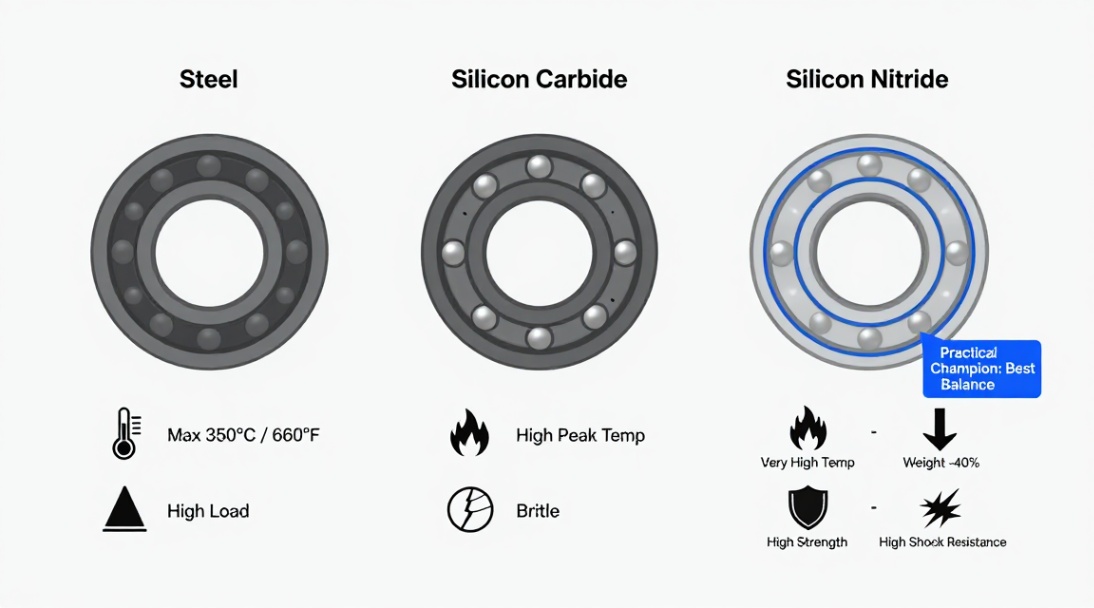
The choice becomes clear for sustained heat. If your process runs consistently above 350°C (660°F), steel is a compromise. Silicon carbide handles higher peak temperatures but is brittle. For the best balance of strength, shock resistance, and manageable expansion, silicon nitride ceramic bearings are the pragmatic champion. Their 40% lighter weight also reduces centrifugal loading at high speeds-a hidden benefit.
Step 3: Navigate the Lubrication Challenge
This is critical. High heat vaporizes oils and degrades greases. Here are your paths forward, presented as solutions, not just theory.
Path A: Dry or Self-Lubricated Running. Silicon nitride’s inherent low friction and high hardness allow it to run with minimal or no lubrication in clean, non-oxidizing environments like certain vacuum furnaces. I’ve seen them run successfully this way. It’s not for every application, but it’s possible.
Path B: Solid Film Lubricants. Coatings like MoS2 (molybdenum disulfide) or advanced nanocomposites bonded to the bearing surfaces provide a sacrificial layer. They work where oils cannot. Application matters-work with your bearing supplier to specify the right coating.
Path C: High-Temperature Oils & Greases. Specialized synthetic lubricants based on perfluoropolyether (PFPE) or polyphenyl ether can extend the upper temperature limit. Remember, the bearing may survive, but the lubricant is often the weak link. Plan your re-lubrication schedule accordingly.
Step 4: Design and Installation – Handle with Knowledge
Ceramic bearings are not drop-in replacements. They demand respect. Follow these guidelines to ensure success.
- Fitting Tolerances: Due to their low expansion, housings and shafts often need tighter tolerances than for steel. Consult the manufacturer’s datasheet. Don’t guess.
- Handle with Care: Silicon nitride is hard but can be brittle to impact. Never strike a ceramic component directly with a steel tool. Use soft-faced hammers and proper mounting tools.
- Avoid Edge Loading: Ensure perfect alignment. Misalignment concentrates stress on a tiny area, the one way to cause a ceramic race to crack. Take your time during installation.
Real-World Proof: Where These Bearings Excel
This isn’t lab theory. A major aerospace client of mine replaced the main shaft bearings in a small turbine auxiliary power unit (APU) with hybrid silicon nitride ceramic bearings (ceramic balls, steel races). The goal was to eliminate lubrication system complexity. The result? The unit ran at 650°C (1200°F) core temperature for over 5,000 hours without failure. The previous steel bearing design required an oil cooler and complex seals and lasted 1,200 hours. The total system weight dropped. Performance soared. In industrial settings, they are the backbone of high-speed machine tool spindles and corrosive chemical pump applications where heat and corrosion are a dual threat.
Making the Business Case: It’s About Total Cost
The first reaction is always about the higher purchase price. I get it. Let’s reframe. Consider the Total Cost of Ownership (TCO):
- Reduced Downtime: A bearing that lasts 4x longer means 75% fewer changeouts.
- Eliminated Systems: Can you simplify or remove oil cooling loops and complex seals? That’s huge capital and maintenance savings.
- Energy Savings: Lower mass means lower centrifugal forces and reduced friction. Motors work less hard.
- Precision: Stable geometry under heat means consistent product quality in manufacturing.
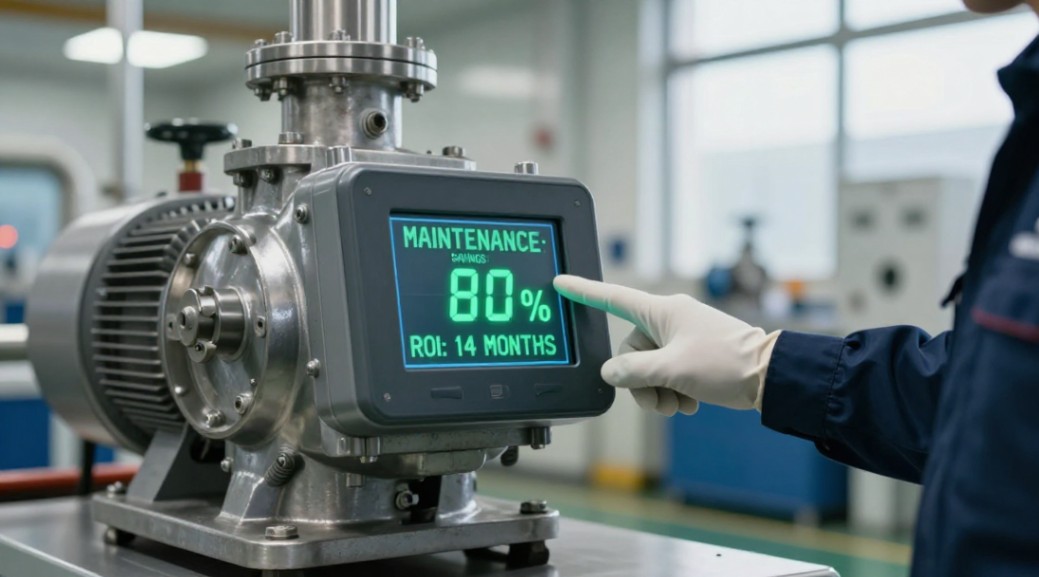
One plant manager told me after a retrofit, ‘The upfront cost stung, but we haven’t touched that pump in two years. It used to be a quarterly headache. The ceramic bearings paid for themselves in 14 months.’ That’s the real metric.
Your Path Forward
You now have the roadmap. You understand why steel fails and how the unique properties of silicon nitride ceramics provide a robust solution for high temperature applications. You have a step-by-step guide for selection and implementation. The next move is yours. Start with a single, high-failure-point application. Gather your operating data. Engage with a reputable bearing manufacturer who specializes in these advanced materials-they can be invaluable partners in your success. The initial investment in knowledge and quality components pays a lifelong dividend in reliability. Your machines can run hotter, longer, and more efficiently. You just need to take the first step.
Suppiler
Synthetic-chemical focus on the research and development, production and sales of ceramic products, serving the electronics, ceramics, chemical and other industries. Since its establishment in 2015, the company has been committed to providing customers with the best products and services, and has become a leader in the industry through continuous technological innovation and strict quality management.
Our products includes but not limited to Aluminum Nitride, Aluminum Oxide, Boron Carbide, Boron Nitride, Ceramic Crucible, ect. If you are interested in any type of these, please feel free to contact us.