Next-Generation Ceramics: Unlocking Superior Properties for Industry

A Surprising Reality
A 2023 industry survey found that over 70% of engineers specify aluminium oxide ceramic for electrical insulators without considering newer, more expensive options. This preference persists despite ceramics like aluminium nitride offering 10x higher thermal conductivity. The reason? Unmatched cost-performance reliability.
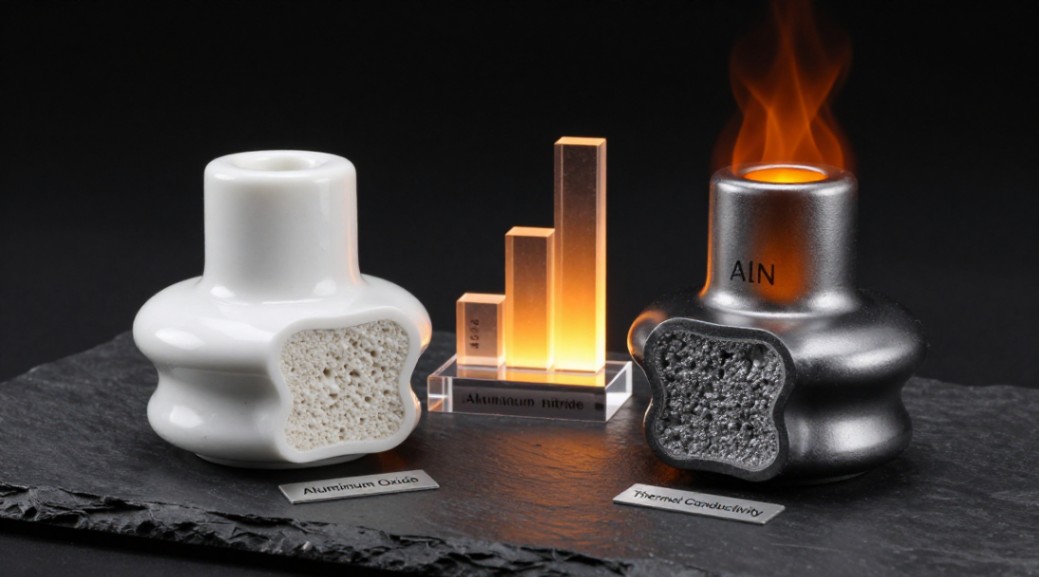
Understanding Aluminium Oxide Ceramic (Al2O3)
Aluminum oxide ceramic, or alumina, is an industrial workhorse. Its defining characteristics stem from a strong ionic bond between aluminum and oxygen atoms. This bond creates a material with exceptional stability. Key properties follow a clear hierarchy based on purity.
Core Properties and Grades
- Mechanical Hardness & Wear Resistance: High hardness (Hv ~1500-2000) provides excellent abrasion resistance. It outperforms most metals in sliding wear applications.
- Thermal & Electrical Stability: Maintains strength up to 1600°C. It is an outstanding electrical insulator, even at high temperatures.
- Chemical Inertness: Resists attack from most acids, alkalis, and molten metals.
- Grade Spectrum: Performance scales directly with purity. 85-90% grades offer good wear resistance. 96% alumina provides an optimal balance of strength and cost. 99.5%+ high-purity alumina delivers superior corrosion resistance and operating temperatures.
Alumina vs. The Competition: A Data-Driven Comparison
Material selection is not about finding the “best” ceramic, but the most suitable. Here is an objective analysis against key alternatives.
1. Aluminum Oxide Ceramic vs. Zirconia (ZrO2)
Zirconia excels where alumina fails: toughness.
- Alumina Wins On: Hardness, wear resistance (in non-impact scenarios), maximum use temperature (~1750°C vs. ~1400°C), material cost, and electrical insulation.
- Zirconia Wins On: Fracture toughness (5-10 MPa·m¹/² vs. 3-5 for alumina), bending strength (often >1000 MPa), and thermal shock resistance in certain grades.
- Decision Rule: Choose alumina for wear plates, high-temp furnace components, and insulator substrates. Switch to zirconia for mechanical seals, bearings, or cutting tools subject to impact loads.
2. Aluminum Oxide Ceramic vs. Silicon Carbide (SiC)
This is a battle between thermal conductivity and electrical insulation.
- Alumina Wins On: Electrical insulation, lower cost for complex shapes, and better surface finish capability. Common forms include precision aluminum oxide ceramic substrates and tubes.
- Silicon Carbide Wins On: Thermal conductivity (~120 W/mK vs. ~30 for 99% alumina), thermal shock resistance, and extreme hardness. This includes reaction-sintered silicon carbide ceramics and recrystallized silicon carbide ceramics.
- Decision Rule: Use alumina for electrical feedthroughs, sensor housings, and labware. Use silicon carbide for heat exchanger tubes, kiln furniture, and abrasive slurry nozzles.
3. Aluminum Oxide Ceramic vs. Aluminum Nitride (AlN)
Both contain aluminium. Their performance diverges dramatically.
- Alumina Wins On: Dielectric strength, cost (AlN can be 5-20x more expensive), and general mechanical durability.
- Aluminium Nitride Wins On: Thermal conductivity (~170-200 W/mK), closely matching beryllia without the toxicity.
- User Feedback: Many users on engineering forums like Reddit note: “We moved from 96% aluminum oxide ceramic to AlN for our high-power LED substrates. Junction temperatures dropped by 35%, justifying the cost.”
- Decision Rule: Standard electronics packaging uses alumina. High-power, high-frequency RF/microwave or power semiconductor modules require aluminum nitride.
Critical Design Considerations and Limitations
Ignoring these points leads to field failure.
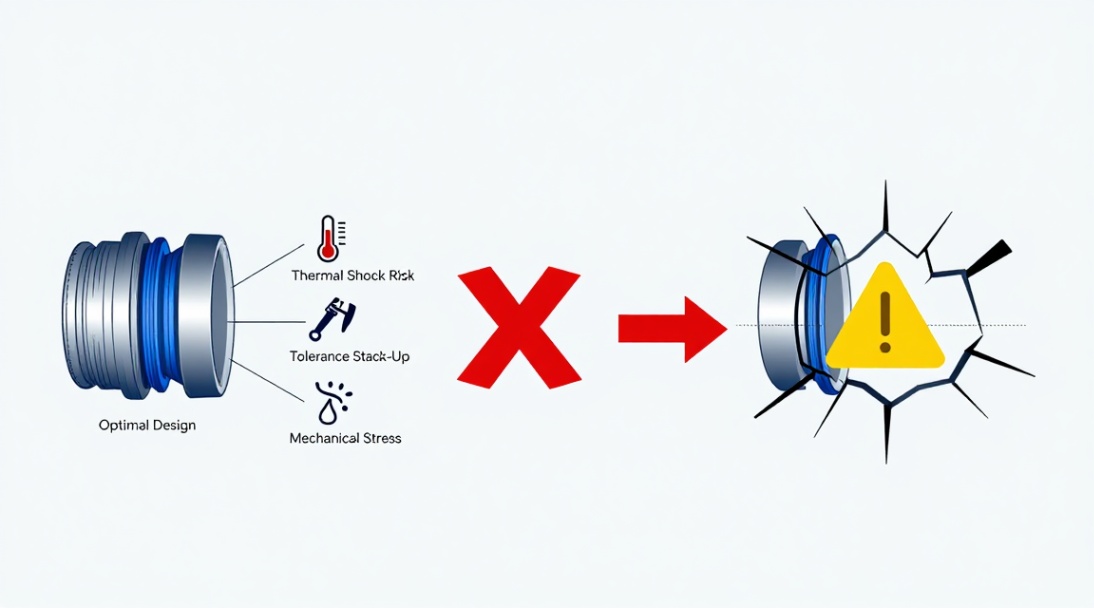
The Brittleness Factor
Aluminum oxide ceramic has low fracture toughness. It is a brittle material. Design must avoid tensile stress concentrations.
- Use compressive fits, not interference fits.
- Add radii to all sharp corners.
- Specify surface finish carefully. Grinding induces microcracks; diamond polishing mitigates this.
Manufacturing and Machining Reality
Near-net shape forming is cost-effective. Post-sinter machining is expensive and requires diamond tools.
- Primary Processes: Dry pressing, isostatic pressing, tape casting (for substrates), and injection molding.
- Machining: Only possible in the sintered state with diamond grinding. Tolerances are typically ±0.1% or ±0.1mm, whichever is greater.
The Verdict and Future Outlook
Aluminium oxide ceramic remains the default choice for a reason. It offers a reliable, well-understood property set at the lowest cost per unit performance among technical ceramics. Emerging research focuses on advanced alumina composites, like alumina-zirconia or alumina-silicon carbide nanohybrids, to combat brittleness. The pursuit of new oxide ceramic systems with melting points exceeding 3000 °C also pushes boundaries.
However, for next-generation applications demanding simultaneous high thermal conductivity and electrical insulation, materials like silicon nitride ceramic or specialized boron nitride ceramic with a special coating for boron nitride ceramic crucibles are gaining traction.
Your Next Step: Test It
Do not rely solely on data sheets. The performance of aluminium oxide ceramic is highly sensitive to manufacturing quality and microstructure.
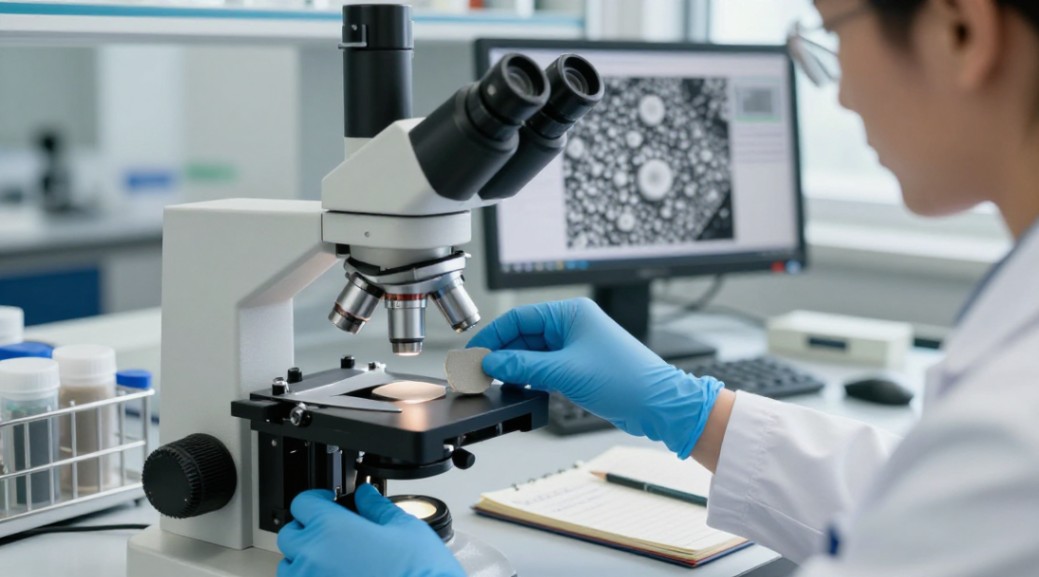
Contact a reputable advanced ceramic manufacturer today. Request material property validation reports for your specific grade (96% vs. 99.5%). Order prototype components for in-house testing under real-world thermal and mechanical loads. This empirical verification is the only way to guarantee that alumina, or a competitor like silicon carbide ceramic, is the correct economic and technical solution for your application.
Suppiler
Synthetic-chemical focus on the research and development, production and sales of ceramic products, serving the electronics, ceramics, chemical and other industries. Since its establishment in 2015, the company has been committed to providing customers with the best products and services, and has become a leader in the industry through continuous technological innovation and strict quality management.
Our products includes but not limited to Aluminum Nitride, Aluminum Oxide, Boron Carbide, Boron Nitride, Ceramic Crucible, ect. If you are interested in any type of these, please feel free to contact us.