Next-Generation Ceramics: Unlocking Superior Properties for Industry

Why Your “Super Material” Keeps Failing
You chose aluminum oxide ceramic because it’s supposed to be the ultimate solution: incredibly hard, chemically inert, and electrically insulating. Yet the wear plates are chipping, the insulator is failing prematurely, and machining costs are spiraling. You’re not alone. This frustration is the direct result of treating alumina as a generic commodity, not a precision-engineered system. The industry’s standard advice is outdated. Let’s fix that.
The Aluminium Oxide Ceramic Reality Check
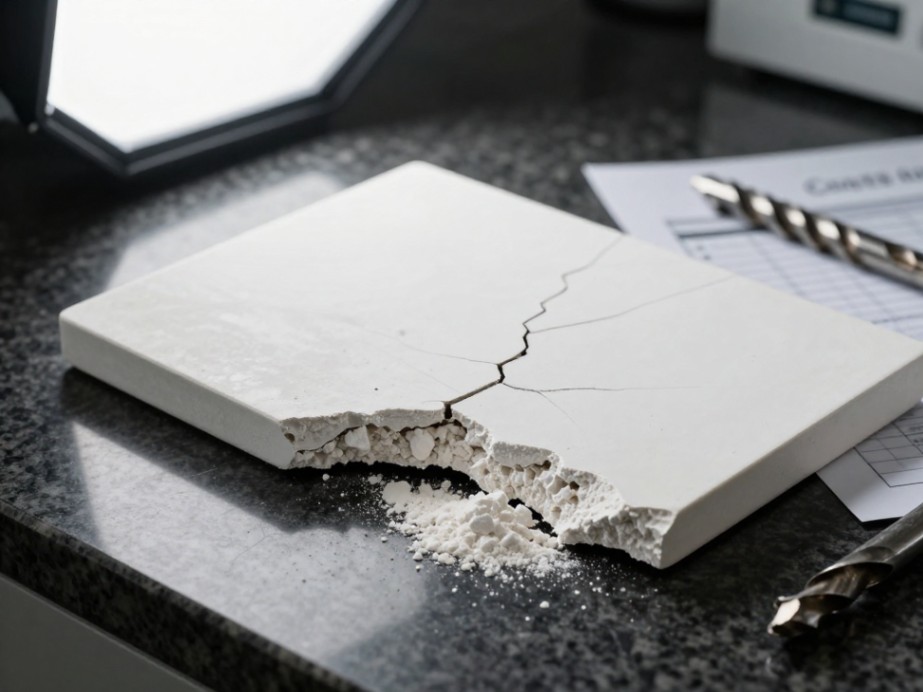
Forget the marketing fluff. Aluminium oxide ceramic, or alumina, is a synthetic material primarily composed of Al2O3. Its performance is not a given; it’s a direct function of its microstructure, which is controlled by purity and processing. Choose wrong, and you’ve built weakness into your design.
- 96% Alumina: The workhorse. It offers an excellent balance of mechanical strength, wear resistance, and cost. This is your go-to for most industrial wear parts, seals, and liners.
- 99.5%+ Alumina: The high-purity performer. With significantly improved electrical insulation (higher resistivity, lower dielectric loss) and corrosion resistance. Essential for semiconductor processing equipment, critical biomedical implants, and high-voltage substrates.
Its Brutal Advantages (And What They Cost You)
Alumina doesn’t just outperform other materials; it dominates them in specific, brutal ways. But every advantage has a trade-off.
- Extreme Hardness & Wear Resistance (HV 1500-1700). It laughs at abrasives that grind steel into dust. This makes it perfect for pump seals, cutting tool inserts, and shot blast nozzles. The Cost: This hardness makes it difficult and expensive to machine post-sintering. Diamond grinding is mandatory.
- Superior Electrical Insulation. Even at high temperatures, it maintains high resistivity and dielectric strength. It’s the foundation for spark plug insulators, circuit substrates, and RF windows. The Cost: Its thermal conductivity is moderate. For applications needing rapid heat dissipation, aluminum nitride ceramic or silicon carbide ceramic are superior choices.
- Chemical Inertness. It resists attack from most acids, alkalis, and molten metals. Ideal for labware, chemical sensor housings, and metal crucible liners (often with a special coating for boron nitride ceramic crucibles for specific metal melts). The Cost: It is vulnerable to hydrofluoric acid and strong phosphoric acids. Know your chemical environment precisely.
The Manufacturing Trap: How Your Part is Made Defines Its Fate
The “alumina” you get is only as good as the process that made it. This is where most generic suppliers cut corners.
- Dry Pressing: Fast and cost-effective for simple, high-volume shapes like tiles or simple insulators. Limited geometry complexity.
- Isostatic Pressing: Applies uniform pressure from all directions, resulting in a more homogeneous, stronger part with fewer defects. Used for complex, high-performance components.
- Injection Molding: Allows for highly complex, near-net-shape geometries. Essential for small, intricate parts like biomedical components or textile guides. Higher tooling cost.
Where It Shines (And Where It Shatters)
On forums like Eng-Tips or Reddit, veteran engineers share blunt truths. One user noted, “We switched to alumina sleeves in a high-abrasion conveyor system and tripled service life. But we had to redesign the housing to account for its lack of elasticity.” Another complained, “Used a cheap alumina substrate for a power module. Thermal cycling caused cracks. Upgraded to a higher-purity grade with better CTE matching, and the problem vanished.”
- Industrial Wear Parts: Blast nozzles, wear liners, guides. It outlasts tool steel 10:1.
- Electronics & Semiconductors: Substrates, insulators, wafer handling components. Purity is non-negotiable.
- Biomedical: Dental implants, joint prosthetics. Its biocompatibility is excellent, but surface finish (Ra < 0.2 µm often required) is critical.
- Armor: Used in composite body armor plates. Its hardness defeats projectiles, but it must be backed by materials like UHMWPE to manage multi-hit capability.
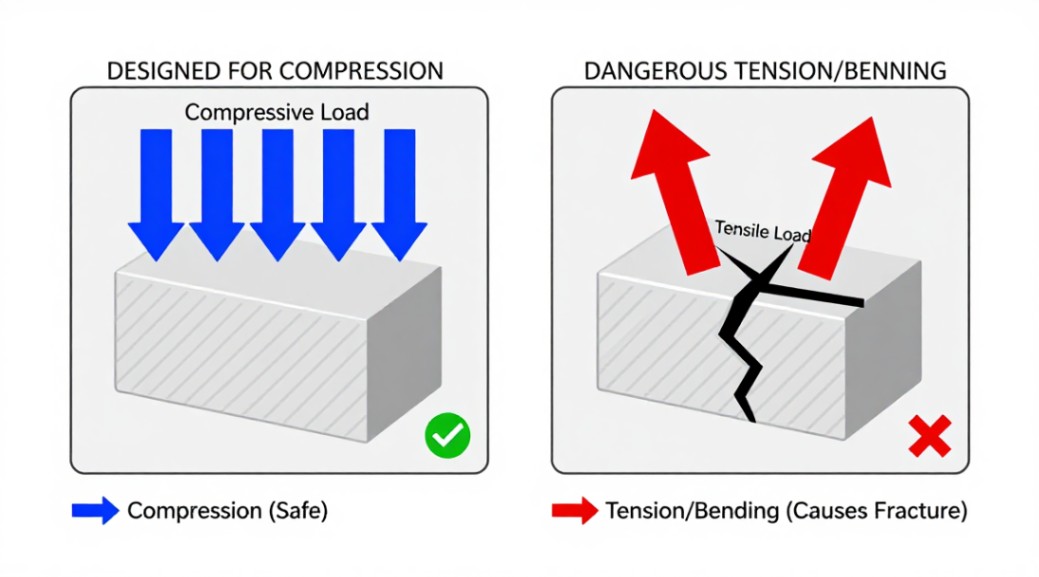
The Brittle Elephant in the Room: Alumina has low fracture toughness. It is not a structural material. Do not use it to bear bending or tensile loads. It is a functional material for wear, insulation, or chemical resistance. Design to put it in compression, not tension.
The Final Decision: Should You Use Aluminum Oxide Ceramic?
Stop asking if alumina is “good.” Start asking if it’s the right tool for your specific failure mode.
Choose Alumina If: Your primary enemies are abrasion, electrical current, or corrosion. You can design around its brittleness. You need a material that won’t degrade over time in harsh environments.
Look Elsewhere If: You need high thermal conductivity (consider aluminum nitride or silicon carbide). You need extreme fracture toughness (consider zirconia-toughened alumina composites). You are under severe cost pressure for non-critical applications.
Stop Compromising Your Design
Theoretical data sheets are not enough. You need a partner who understands the gap between a ceramic powder and a reliable component. You need precision manufacturing, rigorous quality control, and engineering support that speaks your language.
Your next step is critical. Don’t waste more time on failed prototypes or underspecified materials. For demanding applications in semiconductor, medical, or industrial technology, you require a supplier with proven expertise in advanced ceramics like aluminium nitride ceramic, silicon carbide ceramic, and high-purity alumina. We provide that expertise.
Contact our engineering team now for a confidential design review. Send us your worst-case scenario operating conditions and part geometry. We will analyze it and provide a material recommendation and feasibility assessment-no obligation, just engineering truth.
Suppiler
Synthetic-chemical focus on the research and development, production and sales of ceramic products, serving the electronics, ceramics, chemical and other industries. Since its establishment in 2015, the company has been committed to providing customers with the best products and services, and has become a leader in the industry through continuous technological innovation and strict quality management.
Our products includes but not limited to Aluminum Nitride, Aluminum Oxide, Boron Carbide, Boron Nitride, Ceramic Crucible, ect. If you are interested in any type of these, please feel free to contact us.