Next-Generation Ceramics: Unlocking Superior Properties for Industry

The Design Crunch That Haunts Every Engineer
You specified it for its legendary hardness and chemical resistance. The part looked perfect on the spec sheet. And then it shattered under a routine thermal cycle, or a valve seat wore out in six months instead of six years, or an electrical insulator arced over at a voltage it was supposedly rated to handle. The failures are silent, expensive, and utterly deflating. If you’ve ever stared at a cracked aluminium oxide ceramic component and wondered what you missed, you’re not alone. The forums are full of these stories. A Reddit thread on r/AskEngineers dissected a case where a high-purity aluminum oxide ceramic insulator failed catastrophically in a high-frequency application; the consensus wasn’t about material purity, but a fundamental mismatch between its intrinsic dielectric strength and the real-world thermal gradients present. Another user lamented using it for a wear plate, only to find silicon carbide ceramic would have lasted three times longer. This isn’t about a bad batch. This is about a cultural blind spot where we treat ‘alumina’ as a default, a safe, boring choice. That’s a dangerous assumption.
Where the Shine Wears Off: The Alumina Reality Check
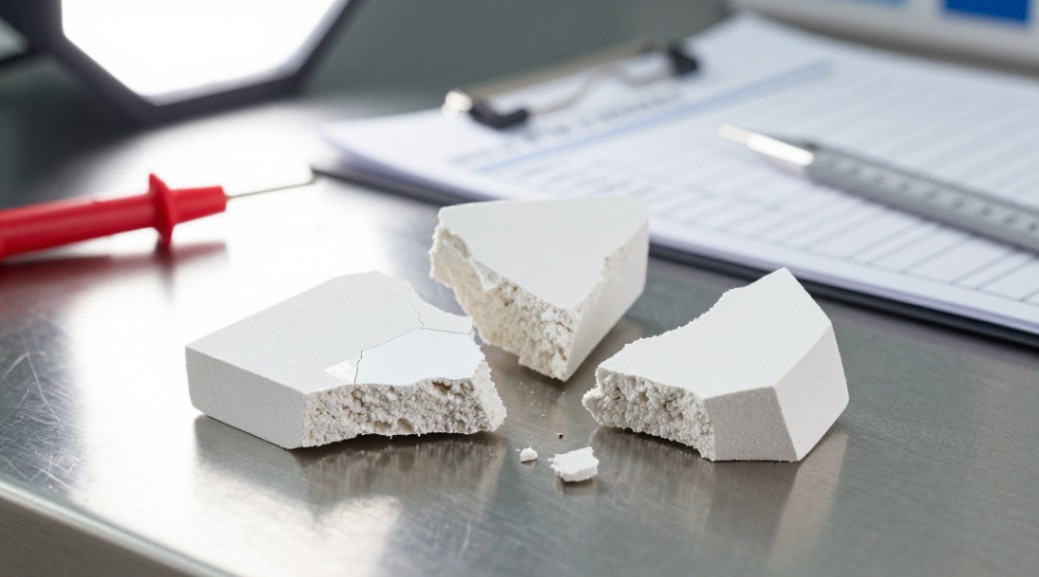
Let’s be blunt. Aluminum oxide ceramic (Al2O3) is not a superhero material. It’s a workhorse with very specific, and often misunderstood, limitations. Its composition is simple-alumina crystals held in a ceramic matrix-but its behavior is not. Yes, it boasts high hardness and excellent wear resistance against many abrasives. Its chemical inertness is superb for handling corrosive fluids. It provides reliable electrical insulation in countless substrates. And its high temperature stability is the reason it lines furnaces. But these are best-case-scenario properties, listed on a datasheet under ideal lab conditions. The real world is messy. The single greatest trap engineers fall into is treating its thermal conductivity as adequate. For a ceramic, it’s decent. But compared to aluminum nitride ceramic or even silicon carbide ceramic, it’s a thermal insulator. Specify it for a part experiencing rapid heat cycling, and those thermal stresses have nowhere to go. The material’s relatively modest fracture toughness does the rest. Crack. Failure. Cost.
The Manufacturing Mirage
Even before you get to the application, the primary manufacturing processes set the stage for success or failure. The common grades and purity levels-from 85% to 99.9%+ alumina-are not just about cost. A 99.5% grade offers superior corrosion resistance and surface finish for a biomedical application like a dental implant, but may be unnecessarily expensive and brittle for a simple wear sleeve. Conversely, a 92% alumina with a glassy phase might seal better but has lower high-temperature capability. The industry often pushes higher purity as ‘better.’ It’s not. It’s different. Choosing the wrong grade is the first silent mistake.
The Comparison That Hurts: When Alumina Isn’t the Answer
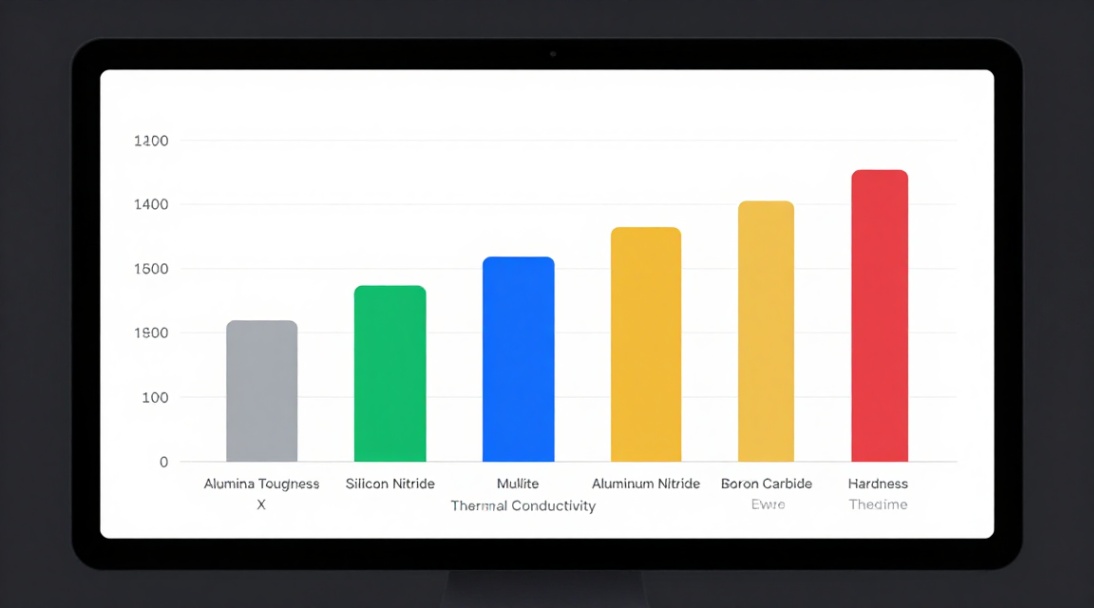
This is where you need to check your ego. Your project doesn’t need alumina. It needs a solution. Put Al2O3 on a chart against its peers, and its vulnerabilities become glaring. Need extreme fracture toughness and strength for a bearing or a cutting tool? Silicon nitride ceramic runs circles around it. Demand ultimate thermal shock resistance? Look at mullite ceramic. Require extreme thermal conductivity for a semiconductor substrate? Aluminum nitride ceramic is the only choice. Need armor-piercing hardness? Boron carbide ceramic is in another league. Even for high-temperature furnaces, silicon carbide-bonded silicon nitride ceramics or recrystallized silicon carbide ceramics often outperform alumina in combination load and thermal environments. The mistake is starting the selection criteria with ‘We’ll use alumina.’ Start with ‘What are the absolute primary failure modes?’ If it’s thermal shock, alumina is likely a poor fit from the beginning.
The Unspoken Rules for Surviving with Alumina
So, should you ever use it? Absolutely. But use it wisely, with its flaws in plain sight. First, never use it as a structural element under significant tensile or impact load. Its job is to resist wear, insulate, or contain-not to be a beam. Second, in any thermal application, model the gradients obsessively. If heat can’t dissipate evenly, you’re designing a fracture waiting to happen. Third, understand the surface finish and microstructure your application demands. A polished, high-purity surface is critical for biomedical applications to prevent bacterial adhesion, but a ground surface might be perfect for a wear-resistant part. Fourth, and this is critical, talk to your fabricator about design considerations from day one. Sharp corners are stress concentrators. Uniform wall thickness is not a suggestion. They know how the material sinters and shrinks. Ignore their guidance, and you’ll pay for it in scrap rates. Finally, for the love of all that is precise, stop assuming its electrical properties are universal. The dielectric constant and loss tangent change with frequency and temperature. What works at DC will fail at RF.
A Clear Path Forward
Forget the vendor catalogs for a moment. The next time you consider aluminum oxide ceramic, begin with a brutal, honest assessment. Write down the top three reasons it will fail in your specific use case. If those reasons are thermal shock, impact load, or needing extreme thermal conduction, you have your answer-walk away and look at the silicon carbide ceramics, the silicon nitrides, the aluminum nitrides. If your primary enemies are wear, chemical corrosion, or electrical insulation in a benign thermal environment, and you can design with its brittleness in mind, then alumina might be your efficient, cost-effective champion. The goal isn’t to avoid alumina. The goal is to avoid using it for the wrong reasons. That shift in thinking, from material-first to failure-mode-first, is what separates a problematic prototype from a reliable, lasting component. Your design deserves that clarity.
Suppiler
Synthetic-chemical focus on the research and development, production and sales of ceramic products, serving the electronics, ceramics, chemical and other industries. Since its establishment in 2015, the company has been committed to providing customers with the best products and services, and has become a leader in the industry through continuous technological innovation and strict quality management.
Our products includes but not limited to Aluminum Nitride, Aluminum Oxide, Boron Carbide, Boron Nitride, Ceramic Crucible, ect. If you are interested in any type of these, please feel free to contact us.