Next-Generation Ceramics: Unlocking Superior Properties for Industry

A Brutal Truth Most Engineers Ignore
Roughly 60% of all industrial ceramic failures I’ve witnessed trace back to a single, flawed assumption: that aluminium oxide ceramic is a default, catch-all solution. This blind faith in Al2O3 costs millions in downtime, catastrophic wear, and thermal runaway. The industry treats it like duct tape for high-performance engineering. It’s not.
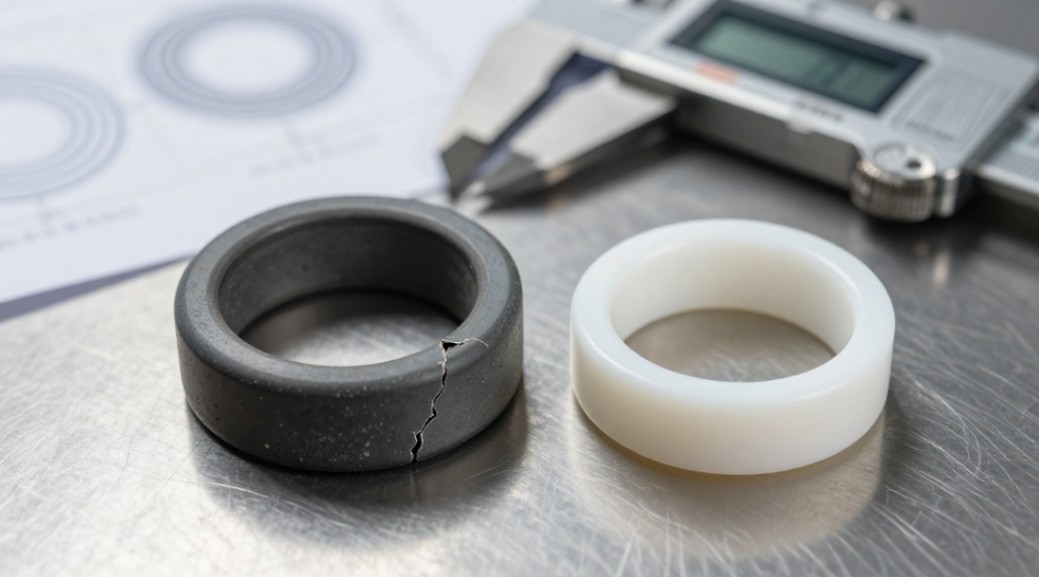
1. The Alumina Temptation and Where It Breaks
You know the sales pitch. Hard. Wear-resistant. Electrically insulating. Chemically inert. It’s the workhorse. That’s the problem. A workhorse isn’t a racehorse. When you push it into roles demanding high thermal conductivity, extreme fracture toughness, or superb thermal shock resistance, it cracks. Literally. You’re using a brilliant insulator where you need a heat sink, or a brittle champion where you need impact resistance.
1.1. The Fatal Flaw in Your Design Logic
Logic dictates a simple flow. Identify the primary threat to your component. Is it abrasive wear? High-temperature erosion? Corrosive media? Thermal stress? Now, map that to a material’s weakest property, not its average ones. Aluminum oxide ceramic has glaring weaknesses you must design around, not ignore.
2. The Ceramic Showdown: Your Material Selection is Wrong
Stop guessing. This table isn’t a nice-to-have comparison. It’s a decision matrix to prevent your next project from failing. We’re judging these materials on the brutal realities of application, not textbook ideals.
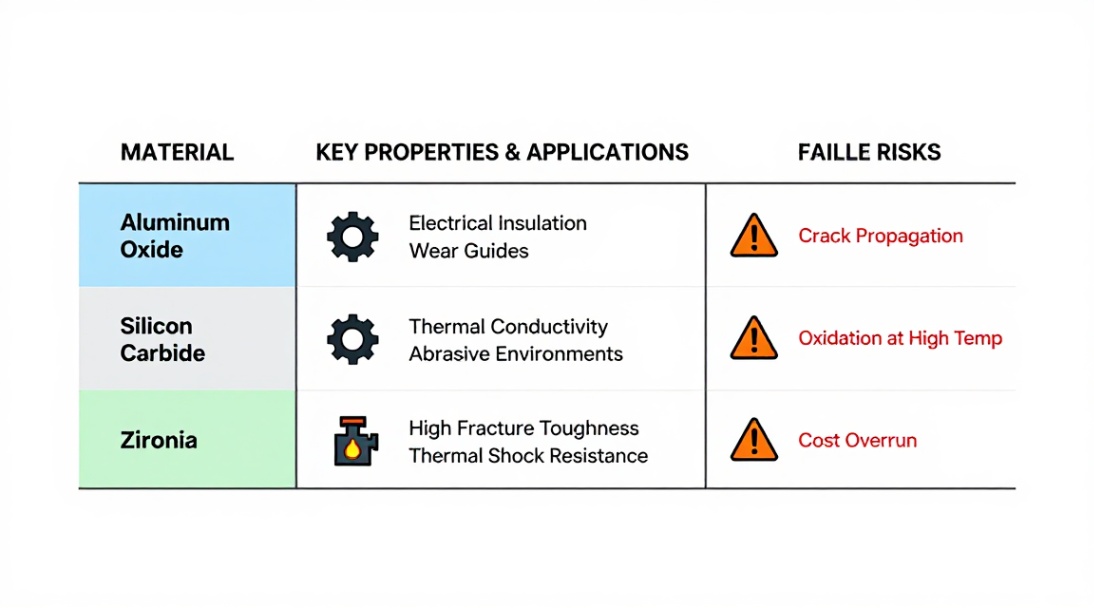
| Property / Threat | Aluminium Oxide (Al2O3) | Silicon Nitride (Si3N4) | Silicon Carbide (SiC) | Boron Carbide (B4C) |
|---|---|---|---|---|
| Primary Killer Application | Electrical insulators, wear plates, labware | Bearing balls, cutting tools, high-stress structural parts | Mechanical seals, kiln furniture, abrasion liners | Armor plates, abrasive blasting nozzles |
| Biggest Strength | Cost-effectiveness & electrical insulation | Fracture toughness & thermal shock resistance | Extreme hardness & thermal conductivity | Highest hardness (≈ diamond) |
| Fatal Flaw for Misapplication | Poor thermal shock resistance, moderate toughness | Higher cost, complex machining | Brittleness under impact, lower toughness than Si3N4 | Extreme brittleness, very high cost |
| Thermal Conductivity (W/mK) | 20-30 (Poor conductor) | 15-30 (Similar to Al2O3) | 70-120 (Excellent conductor) | 30-40 (Moderate) |
| Do NOT Use For | Rapid thermal cycling parts, high-conductivity heat sinks, impact-resistant armor | Cost-sensitive bulk wear parts, high-temperature oxidizing atmospheres above 1400°C | Applications with sharp impact loads, intricate shapes needing easy machining | Any structural component, anything where cost is a primary driver |
3. The Manufacturing Minefield You’re Walking Into
You’ve selected the right grade of aluminum oxide ceramic. Good. Now you will ruin it in machining and design. The failure modes are predictable.
- Never design sharp internal corners. They are stress concentrators. They will initiate cracks. Use radii. Always.
- Never assume you can machine it like metal. Diamond grinding is mandatory. Conventional machining shatters the component.
- Never ignore the sintering process. A 96% alumina part behaves differently from a 99.5% part. Density, grain size, and purity dictate performance.
- Never assume it seals like a metal gasket. Its lack of plasticity demands precise surface finishes and careful joint design.
4. The Future is Composite, Not Pure
The industry’s obsession with monolithic aluminum oxide ceramic is outdated. The real innovation addresses its brittleness. Think about fiber reinforcement. Imagine a carbon fiber weave within an alumina matrix. This isn’t science fiction. It’s how you raise fracture toughness from a pathetic 3-5 MPa·m¹/² to over 15 MPa·m¹/². The future involves layered structures, special coatings for boron nitride ceramic crucibles, and nano-composites that marry the hardness of alumina with the toughness of another phase. Waiting for a ‘better’ pure alumina is a dead end.
Your Next Logical Step
Forget browsing more supplier catalogs. Your next step is a brutal, function-first audit of your component. List every stress: thermal, mechanical, chemical, electrical. Rank them. Then, and only then, cross-reference with the harsh realities in the table above. Does aluminum oxide ceramic truly solve your primary threat without exposing a fatal secondary flaw? If the answer isn’t an immediate, logical ‘yes,’ you are already on the path to failure. The data doesn’t lie. Your material choice must be a deliberate defensive strategy, not a default habit.
Suppiler
Synthetic-chemical focus on the research and development, production and sales of ceramic products, serving the electronics, ceramics, chemical and other industries. Since its establishment in 2015, the company has been committed to providing customers with the best products and services, and has become a leader in the industry through continuous technological innovation and strict quality management.
Our products includes but not limited to Aluminum Nitride, Aluminum Oxide, Boron Carbide, Boron Nitride, Ceramic Crucible, ect. If you are interested in any type of these, please feel free to contact us.