Next-Generation Ceramics: Unlocking Superior Properties for Industry

A Story from the Furnace Floor
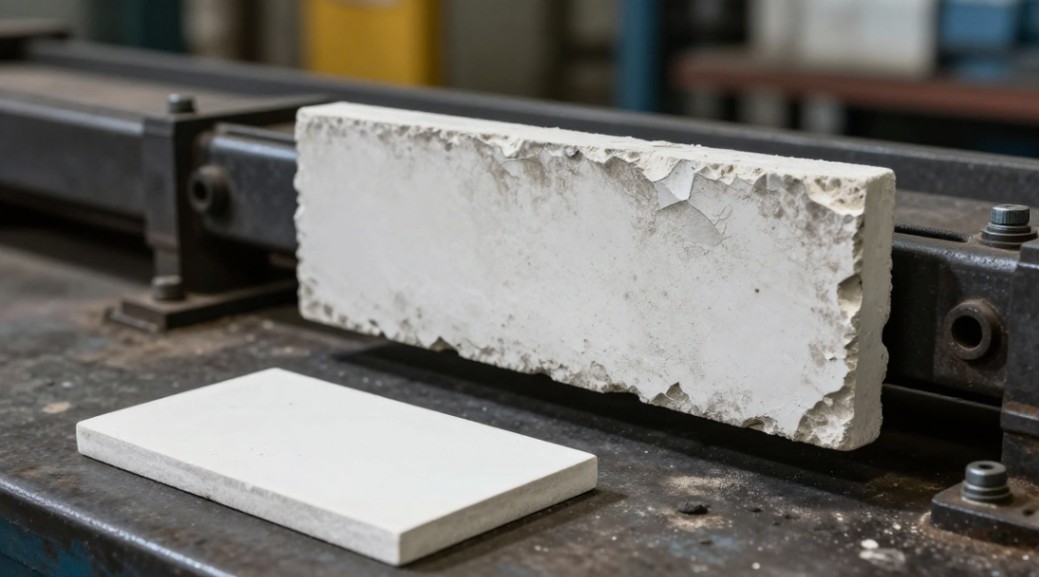
I remember the first time I saw aluminum oxide ceramic fail. It wasn’t a dramatic explosion. It was a slow, costly grind. A client had used a “generic” alumina component as a wear liner in a high-temperature conveyor. Within weeks, it wore down, causing production halts and contamination. The problem wasn’t the material. It was the selection. They used a standard 96% grade where a 99.5% was needed. That moment taught me a hard lesson: knowing how to choose and use this material is everything. Let’s make sure you get it right the first time.
What Exactly is Aluminum Oxide Ceramic?
At its core, aluminum oxide ceramic is a workhorse. We often call it alumina. Its primary composition is Al2O3. Think of it as a highly refined, crystallized version of the same compound found in sapphires. We manufacture it by compacting and firing fine alumina powder. The process transforms it into a material that laughs at conditions where metals surrender and plastics vanish.
The Unbeatable Properties: Why We Use It
We don’t specify alumina because it’s trendy. We use it because it solves specific, brutal problems.
Its hardness rivals many engineered steels. This gives it tremendous wear resistance. It maintains strength at temperatures that would melt most metals. It’s also an outstanding electrical insulator, even when hot. Chemical stability is another key trait. Acids, bases, and corrosive atmospheres have little effect. This combination is rare. It’s why alumina is a first-choice material for extreme environments.
Step 1: Choose Your Grade – The 96% vs. 99.5% Decision
This is your most critical choice. The percentage refers to the purity of the Al2O3 content. The rest is typically a silicate-based glass phase that aids sintering.
| Property | 96% Alumina | 99.5% Alumina |
|---|---|---|
| Typical Use Case | General wear parts, electrical insulators, lower-cost substrates. | High-purity applications, semiconductor handling, aggressive chemical environments, high-frequency electrical uses. |
| Key Advantage | Cost-effective, easier to manufacture complex shapes, good general performance. | Superior corrosion resistance, higher temperature capability, better electrical properties at high frequencies. |
| Trade-off | Slightly lower mechanical strength and thermal conductivity. | Higher cost, more challenging to sinter to full density. |
| Our Rule of Thumb | Start here for most industrial applications. It solves 80% of problems. | Upgrade when purity, extreme corrosion, or premium electrical performance is non-negotiable. |
Step 2: Understand How It’s Made – Process Dictates Performance
The manufacturing method shapes the component’s capabilities and limits. Here are the three main routes we see.
| Process | Best For | Key Limitation |
|---|---|---|
| Dry Pressing | High-volume, simple shapes like tiles, substrates, and simple nozzles. Fast and cost-effective. | Limited geometric complexity. Wall thickness and aspect ratios are restricted. |
| Isostatic Pressing | Components requiring high, uniform density. Complex shapes like balls, tubes, and crucibles. Superior mechanical properties. | Higher tooling cost. Geometric complexity is better than dry pressing but not as good as injection molding. |
| Injection Molding | Highly complex, near-net-shape parts. Intricate threading, multi-level features, and high-volume small components. | Highest initial tooling cost. Requires careful binder removal cycle, which adds time. |
Step 3: Compare It to the Alternatives
Alumina doesn’t exist in a vacuum. We often weigh it against other technical ceramics. Choosing the wrong one is a common, expensive mistake.
| Material | vs. Aluminum Oxide Ceramic: Key Difference | When to Choose the Alternative |
|---|---|---|
| Zirconia (ZrO2) | Much higher fracture toughness (less brittle). Higher strength at room temperature. | When impact resistance is critical. For components in assemblies subject to shock or bending stress. |
| Silicon Nitride (Si3N4) | Superior thermal shock resistance and fracture toughness. Excellent high-temperature strength. | For severe cyclic thermal applications (e.g., furnace components, turbine parts). Where repeated heating/cooling would crack alumina. |
| Silicon Carbide (SiC) | Far higher thermal conductivity. Exceptional wear resistance and higher temperature limits. | For heat sinks, high-temperature heat exchangers, or in applications where abrasive wear is the primary failure mode. |
| Boron Nitride (BN) | Machinable with standard tools. Excellent thermal conductivity while being an electrical insulator. | For prototyping, custom seals, or applications requiring easy post-sintering machining into complex shapes. |
Where It Shines: Real-World Applications
Industrial Wear & Cutting
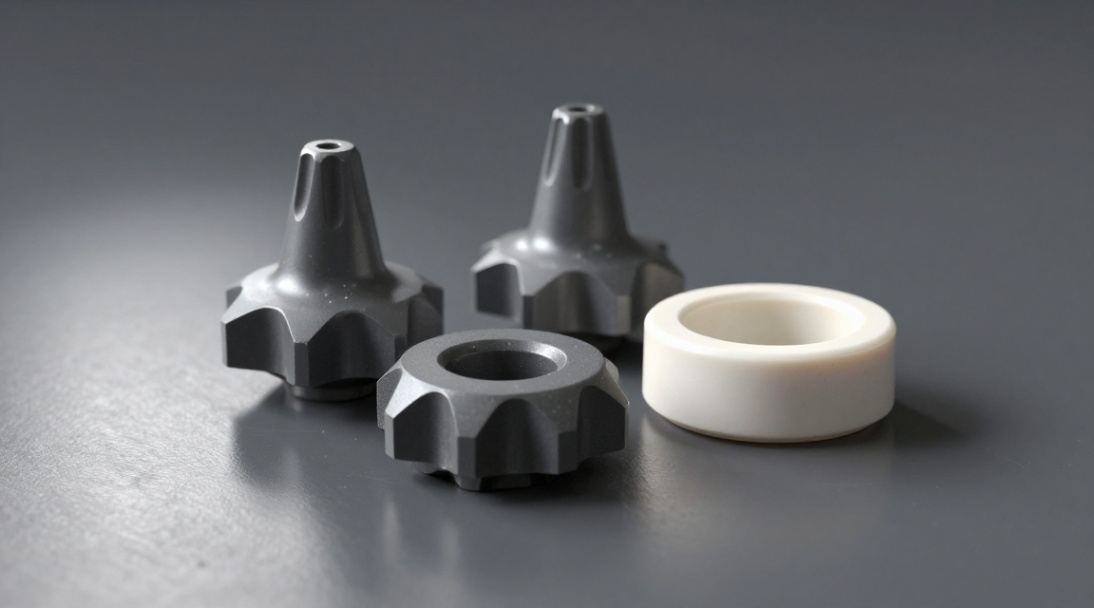
We use alumina for pump seals, wear liners, and cutting tool inserts. Its hardness directly translates to longer service life in abrasive environments. For cutting tools, we often use a composite with other materials like silicon carbide ceramic or boron carbide ceramic to enhance specific properties.
The Electrical Backbone
This is a massive application area. Alumina substrates are the foundation of most thick and thin film electronic circuits. Its electrical insulation, even at high temperatures, is perfect for spark plug insulators, high-voltage bushings, and semiconductor wafer handling equipment.
Medical Precision
Its biocompatibility and wear resistance make it ideal for orthopedic implants like hip socket liners and dental components. We also use it for precise surgical tool tips where sterility and edge retention are vital.
Step 4: Machining and Finishing – The Final Hurdle
Sintered alumina is extremely hard. You cannot machine it with standard tools. This step is critical for achieving final tolerances or creating features not possible in the green state.
- Diamond Grinding: This is the primary method. We use diamond-impregnated wheels or tools. It’s precise but slow and generates heat. Coolant management is essential.
- Laser Machining: For intricate patterns or small holes. Excellent for creating features in already-sintered components.
- Lapping & Polishing: To achieve ultra-fine surface finishes or tight dimensional tolerances for sealing surfaces.
Remember: Machining adds significant cost. Design for near-net-shape whenever possible. For materials like boron nitride ceramic, which is machinable, this step is far simpler.
Looking Ahead: The Future of Alumina
Innovation continues. We see trends toward nano-structured alumina for even higher strength. Composite materials, like alumina reinforced with silicon carbide-bonded silicon nitride ceramics, are pushing performance boundaries. Additive manufacturing (3D printing) of alumina is emerging, promising unprecedented design freedom for complex, lightweight structures.
Your Action Plan
Don’t get lost in the data. Follow this simple four-step process for your next project.
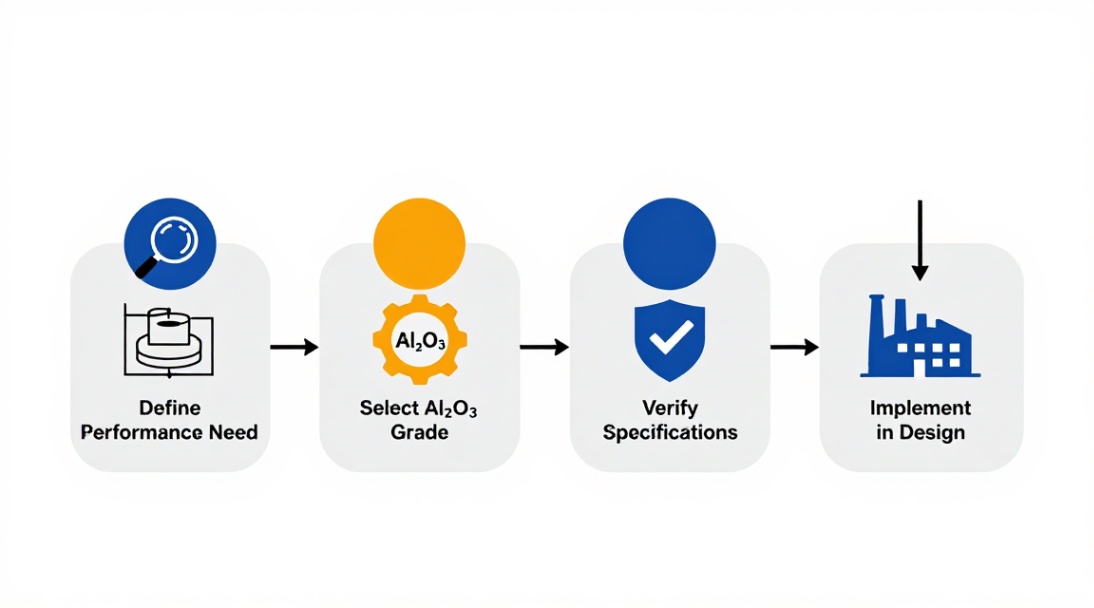
- Define the Failure Mode: Is it wear, heat, corrosion, or electrical breakdown? Be specific.
- Select the Grade: Use the 96% vs. 99.5% table. When in doubt, prototype with 96% first.
- Choose the Process: Match the manufacturing method to your shape complexity and volume needs from the process table.
- Validate with Comparison: Cheque the alternative materials table. Ask: “Could zirconia or silicon nitride do this better?”
This systematic approach saves time and money. It moves you from guessing to engineering. For critical applications, consulting with a specialist who understands the nuances of reaction-sintered silicon carbide ceramics versus pressureless sintered silicon carbide ceramics can be the difference between a reliable component and a field failure. Start with a clear definition of the problem. Let that guide your material choice, not the other way around.
Suppiler
Synthetic-chemical focus on the research and development, production and sales of ceramic products, serving the electronics, ceramics, chemical and other industries. Since its establishment in 2015, the company has been committed to providing customers with the best products and services, and has become a leader in the industry through continuous technological innovation and strict quality management.
Our products includes but not limited to Aluminum Nitride, Aluminum Oxide, Boron Carbide, Boron Nitride, Ceramic Crucible, ect. If you are interested in any type of these, please feel free to contact us.