Next-Generation Ceramics: Unlocking Superior Properties for Industry

The Brutal Truth About Ceramic Selection
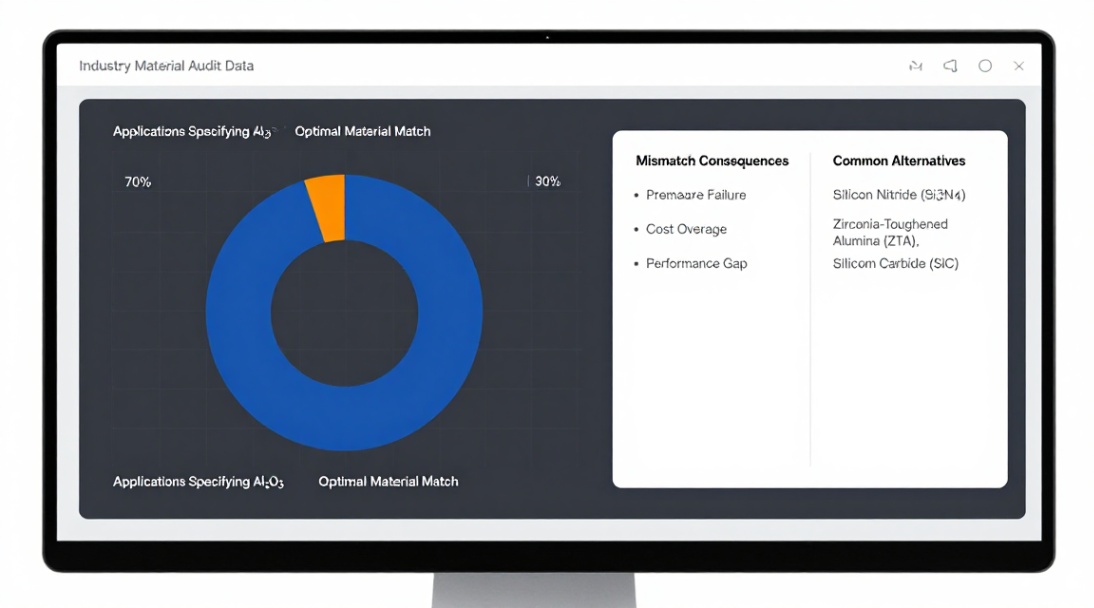
Did you know that in 70% of applications where engineers specify aluminum oxide ceramic, a more suitable (and often cheaper) alternative exists? Industry audit data from The Advanced Ceramics Group reveals this chronic material mismatch. This happens when designers default to alumina without considering the full competitive landscape.
Q&A: The Alumina Oxide Ceramic Showdown
1. What exactly is aluminum oxide ceramic, and why is it so common?
Aluminium oxide ceramic, or alumina, is a sintered technical material derived from aluminum oxide powder. It’s the industry’s default ceramic. Why? It offers an exceptional balance of properties at a relatively low cost.
- Extreme hardness and wear resistance: It outperforms most metals, making it ideal for wear plates, seals, and cutting tool inserts.
- High-temperature stability: Maintains strength and form up to 1700°C in oxidizing atmospheres.
- Superb electrical insulation & dielectric strength: This is why it dominates as substrates in electronics and spark plug insulators.
- Chemical inertness: It laughs at most acids, alkalis, and molten metals, perfect for corrosive pump seals.
- Proven biocompatibility: High-purity grades are the gold standard for orthopedic implants and surgical tools.
2. Alumina vs. Silicon Carbide Ceramic: When does the “workhorse” lose?
This is the most common misapplication. Engineers choose alumina for thermal management, then watch it fail.
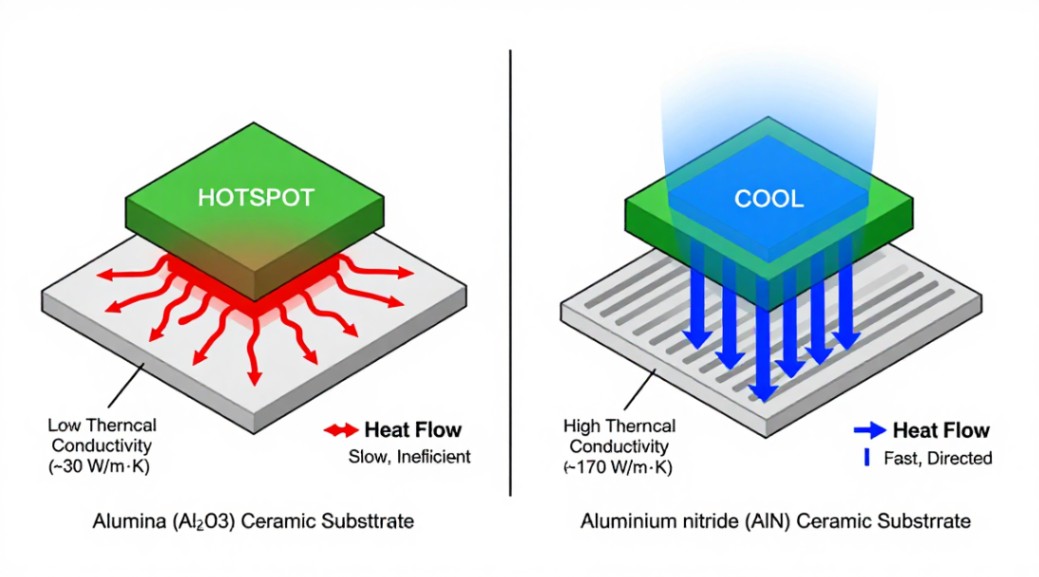
- Thermal Conductivity: This is the knockout blow. Alumina is an insulator (~30 W/mK). Silicon carbide ceramic, especially the silicon carbide-bonded or reaction-sintered types, conducts heat 5-10 times better. If you’re building a heat sink or a kiln furniture plate, alumina is the wrong answer.
- Thermal Shock Resistance: Silicon carbide ceramics handle rapid temperature swings far better. Alumina is brittle here.
- Ultimate Strength & Hardness: Silicon carbide is harder and stronger, particularly at high temperatures. For abrasive slurry pumps or armor plates, think SiC first.
- Alumina’s Win: Cost and electrical insulation. For a simple, electrically insulating wear part, alumina still rules.
3. Alumina vs. Silicon Nitride Ceramic: The high-performance rival.
Silicon nitride ceramic is alumina’s sophisticated cousin. It’s tougher (fracture toughness), has better thermal shock resistance, and offers high strength at temperatures that make steel flow.
- Fracture Toughness: Silicon nitride doesn’t chip as easily. This is critical for rolling element bearings and high-reliability cutting tools.
- Density: It’s lighter than alumina, an advantage in rotating components.
- Alumina’s Win: Raw material cost and manufacturing scalability. For complex, high-volume components like electronic substrates or thread guides, alumina’s processing methods (like pressureless sintering) are more economical.
4. When should I use aluminium nitride ceramic instead?
This is a specialty play. Forget mechanical wear. Aluminum nitride ceramic exists for one primary reason: it’s an electrical insulator that conducts heat like a metal (up to 170 W/mK).
If your project involves high-power semiconductor packages, LED substrates, or anywhere you need to pull heat away from a sensitive circuit, aluminium nitride is your only real ceramic choice. Alumina’s low thermal conductivity is a liability here.
5. What about purity? 96% vs. 99.5% Aluminium Oxide Ceramic?
This isn’t marketing. The 3.5% difference is a chasm in performance.
- 96% Alumina: The industrial workhorse. Contains silicate glass phases that slightly lower properties but dramatically lower sintering temperature and cost. Use it for most mechanical wear parts, insulator bodies, and chemically resistant tiles.
- 99.5%+ Alumina: High-purity, high-performance. The glass phase is gone. This means higher hardness, better dielectric strength, superior corrosion resistance, and the biocompatibility needed for medical implants. The trade-off is higher cost and more challenging sintering.
6. Where does zirconia fit in this battle?
Zirconia is the transformation toughening champion. It sacrifices some hardness for phenomenal fracture toughness-it’s less brittle. If you need a ceramic component that must survive impact and tensile stress (like a knife blade, scissor insert, or biomedical implant subject to flex), zirconia often beats alumina. Alumina wins on pure wear resistance and temperature capability.
The Final Verdict: Stop Guessing
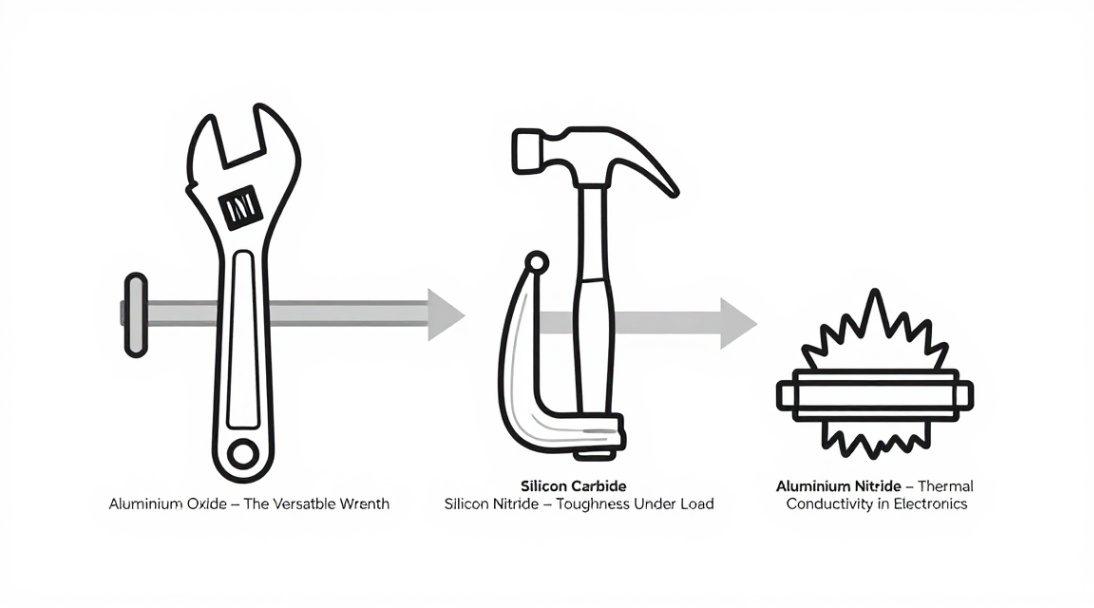
Stop defaulting to the familiar. The ceramics field is a toolkit. Aluminium oxide ceramic is your versatile, reliable wrench. But you don’t use a wrench to drive a nail. For extreme thermal management, you need silicon carbide. For toughness under load, consider silicon nitride. For thermal conductivity in electronics, look only at aluminium nitride.
The next step is to test. Material datasheets lie by omission. The only way to know is to prototype under real conditions. Many leading manufacturers of pressureless sintered silicon carbide ceramics or reaction-sintered variants offer sample testing programs. For your next wear plate or insulating component, prototype with both 96% alumina and its closest competitor. The data won’t lie, and neither will your bottom line.
Suppiler
Synthetic-chemical focus on the research and development, production and sales of ceramic products, serving the electronics, ceramics, chemical and other industries. Since its establishment in 2015, the company has been committed to providing customers with the best products and services, and has become a leader in the industry through continuous technological innovation and strict quality management.
Our products includes but not limited to Aluminum Nitride, Aluminum Oxide, Boron Carbide, Boron Nitride, Ceramic Crucible, ect. If you are interested in any type of these, please feel free to contact us.