Next-Generation Ceramics: Unlocking Superior Properties for Industry

The Problem Material Engineers Know All Too Well
Have you ever seen a component fail prematurely? Not with a dramatic crack, but with a slow, relentless grind. It wears down in an abrasive environment. It loses its shape under heat. It corrodes where chemicals are present. We’ve all been there, searching for a material that can simply survive. For over two decades, our go-to answer for this relentless challenge has often been one material: aluminum oxide ceramic, or Al2O3.
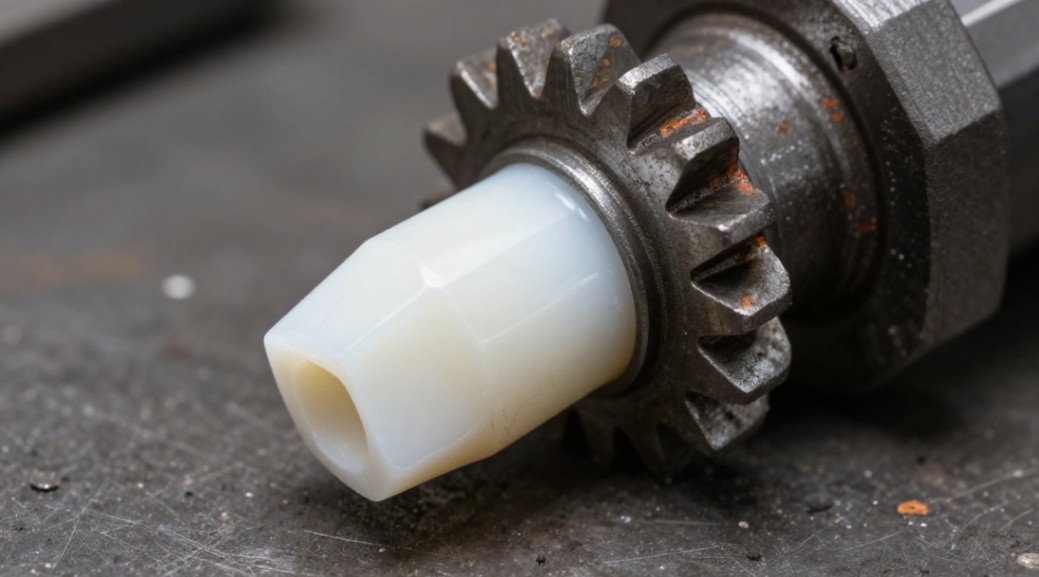
What is Aluminum Oxide Ceramic?
In simple terms, aluminum oxide ceramic is a high-performance industrial material made by firing purified alumina powder at extreme temperatures. This process, called sintering, fuses the powder into a dense, crystalline structure. It’s not the fragile “pottery” most people imagine. It’s an engineered ceramic prized for its exceptional hardness, chemical inertness, and ability to withstand severe conditions where metals and plastics fall short.
Why Do We Use It? The Core Properties
We specify alumina because it solves specific, tough problems. Its value comes from a unique combination of properties, not just one standout trait. The key characteristics that make it indispensable are:
- Extreme Hardness & Wear Resistance: It ranks just below diamond and silicon carbide on the hardness scale. This makes it perfect for wear plates, liners, and cutting tools that face constant abrasion.
- Excellent Thermal Stability: With a melting point over 2000°C, it handles high temperatures without deforming. It’s a mainstay in furnace components and high-temperature sensors.
- Superior Electrical Insulation: Even at high temperatures, alumina maintains excellent dielectric strength. This is why it forms the backbone of circuit substrates and spark plug insulators.
- Outstanding Chemical Inertness: It resists attack from most acids, alkalis, and molten metals. We use it for labware, pump seals, and chemical processing parts.
- Biocompatibility: Certain high-purity grades are bio-inert, making them safe for long-term use in medical implants like hip joint bearings and dental roots.
Alumina vs. Other Engineering Ceramics: A Quick Comparison
Choosing the right ceramic is critical. Alumina is often the best all-rounder, but sometimes another material is better. Here’s how it stacks up against common alternatives. Use this table to guide your initial material screening.
| Material | Key Strengths | Typical Limitations vs. Alumina | Best For Applications Needing… |
|---|---|---|---|
| Aluminum Oxide (Al2O3) | Best cost/performance balance, excellent wear/chemical resistance, good electrical insulation. | Lower fracture toughness than zirconia; lower thermal conductivity than Aluminum Nitride. | Wear parts, electrical insulators, chemical components, general high-temp use. |
| Zirconia (ZrO2) | Extremely high fracture toughness & strength, good wear resistance. | Higher cost, can degrade in moist environments at high temps (aging). | High-stress components, precision blades, biomedical implants requiring toughness. |
| Silicon Nitride (Si3N4) | Excellent thermal shock resistance, high strength at temperature, good wear. | Significantly higher cost, more complex to machine. | High-temperature bearings, turbine components, cutting tools for cast iron. |
| Aluminum Nitride (AlN) | Exceptional thermal conductivity (8-10x Al2O3), good electrical insulation. | Higher cost, sensitive to moisture during processing. | High-power electronic substrates where heat must be rapidly dissipated. |
| Silicon Carbide (SiC) | Superior thermal conductivity, extreme hardness, excellent wear/oxidation resistance. | Higher cost, more difficult to machine to tight tolerances. | High-temperature kiln furniture, abrasion-resistant nozzles, advanced seal faces. |
From Powder to Part: How It’s Made and Machined
Understanding the basic manufacturing process helps explain its properties and limitations. We typically start with fine, purified Al2O3 powder. This powder is formed into a “green” shape using methods like dry pressing, isostatic pressing, or slip casting. The real magic happens in the sintering furnace, where parts are fired at 1600-1800°C. The powder particles fuse, densifying the part and giving it its final strength and hardness.
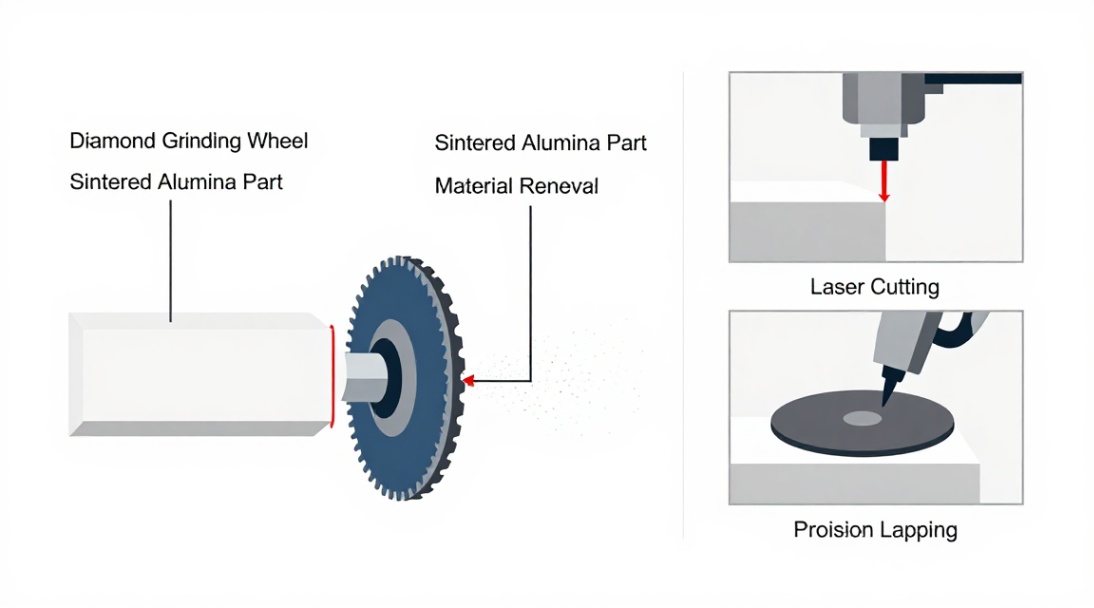
Post-sintering, the material is extremely hard. Machining requires diamond-grit tools and specialized processes like grinding, lapping, or laser cutting. This is a key cost and design factor. As the saying goes in our field: “Design for net-shape sintering first. Machining alumina is not a trivial afterthought.”
Selecting the Right Grade: Purity is Paramount
Not all alumina is the same. The performance hinges on purity. Common grades are:
- 85-95% Al2O3: The workhorse. Good mechanical strength and wear resistance for general industrial parts like nozzles, guides, and wear plates.
- 99%+ Al2O3 (High-Purity): Superior electrical insulation, higher temperature capability, and better chemical resistance. Used for electronic substrates, high-temperature furnace tubes, and advanced lab equipment.
- 99.5%+ Al2O3: Exceptional properties, including optical translucency and maximum biocompatibility. The choice for medical implants and specialized laser components.
Looking Ahead: The Future of Alumina Ceramic
Alumina isn’t standing still. Innovations focus on enhancing its weaknesses. We see trends like nano-structured alumina for improved strength and toughness, advanced coatings to further boost wear or provide non-stick surfaces, and composite materials that blend alumina with other ceramics like silicon carbide or boron nitride to create tailored property sets.
Your Next Step: From Understanding to Application
Now that you know what aluminum oxide ceramic is, the real question is if it’s right for your component. The selection process starts with clearly defining your operating environment: temperature, abrasion, chemical exposure, and required precision. From there, you can zero in on the appropriate purity grade and forming method.
If you’re tackling a wear, heat, or corrosion problem, alumina is a compelling first candidate to evaluate. The next practical step is to consult with an experienced ceramic component manufacturer. They can help you navigate the specifics of grade selection, design for manufacturability, and cost-effective production. Share your application requirements with a specialist-it’s the fastest way to turn this material’s potential into a reliable, high-performance solution on your production line or in your product.
Suppiler
Synthetic-chemical focus on the research and development, production and sales of ceramic products, serving the electronics, ceramics, chemical and other industries. Since its establishment in 2015, the company has been committed to providing customers with the best products and services, and has become a leader in the industry through continuous technological innovation and strict quality management.
Our products includes but not limited to Aluminum Nitride, Aluminum Oxide, Boron Carbide, Boron Nitride, Ceramic Crucible, ect. If you are interested in any type of these, please feel free to contact us.