Next-Generation Ceramics: Unlocking Superior Properties for Industry

Choosing the Wrong Grade is a Design Failure
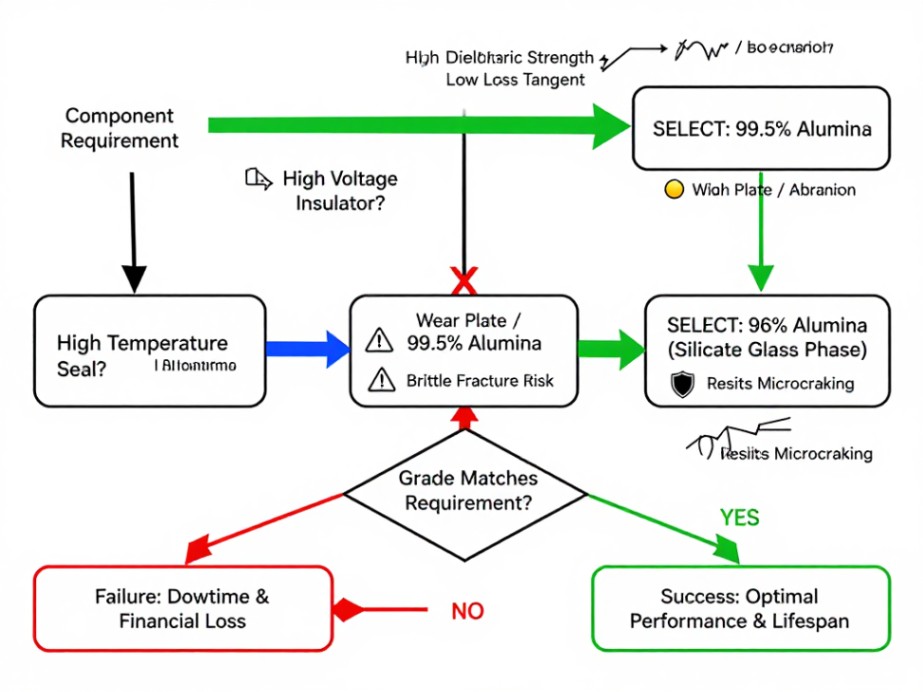
You will select the wrong aluminium oxide ceramic. I see it every single week. An engineer specifies 96% alumina for a high-voltage insulator, believing it’s “good enough.” A designer chooses 99.5% alumina for a wear plate, thinking purity equals toughness. Both decisions guarantee premature failure, unplanned downtime, and a significant financial loss. Aluminum oxide ceramic, or alumina, isn’t a generic material. It’s a family of engineered solutions where composition dictates destiny. The difference between 96% and 99.5% Al2O3 isn’t just a number. It’s the gap between success and catastrophic fracture. The 96% grade contains silicate glass phases that enhance densification but degrade electrical properties and chemical resistance at high temperatures. The 99.5% grade offers superior corrosion resistance and dielectric strength but demands more precise sintering control. Mistaking one for the other is the first, and most expensive, trap you can fall into.
Ignoring the Brittleness Reality
Everyone knows aluminium oxide ceramic is hard. You read the data sheet: Mohs 9, excellent wear resistance. So you design it like a super-hard metal. This is your second mistake. You are designing for a material that fails by brittle fracture, not plastic deformation. The incredible hardness comes with a critical caveat: low fracture toughness. A sharp corner, a tiny surface scratch from improper handling, or an unseen pore from poor processing becomes a stress concentrator. Under tensile or impact load, a crack initiates and propagates instantly. There is no yielding. No warning. Just sudden, total failure. You must design with this in mind. Generous radii. Avoid sharp edges. Never subject alumina to tensile stress if you can avoid it. Use it in compression, where its strength truly shines. Treat it with the respect a precision glass component deserves, not the abuse a steel part can tolerate.
Thermal Shock is the Silent Killer
Your component survives the mechanical load. You feel confident. Then you subject it to a rapid temperature change. It cracks. Why? You violated the thermal shock resistance limits. While aluminum oxide ceramic boasts high thermal stability (operating easily over 1500°C) and good thermal conductivity for a ceramic, its resistance to rapid temperature swings is moderate. The coefficient of thermal expansion creates internal stresses too fast for relief. Do not assume because it handles high heat, it handles rapid heating or cooling. Pouring molten metal into an alumina crucible? Preheat it gradually. Using an alumina insulator in a cycling furnace? Model the thermal gradients. For extreme thermal shock scenarios, materials like silicon nitride ceramic or reaction-sintered silicon carbide ceramics often perform better. Choosing alumina for the wrong thermal duty cycle is a common, devastating oversight.
The Corrosion Oversight
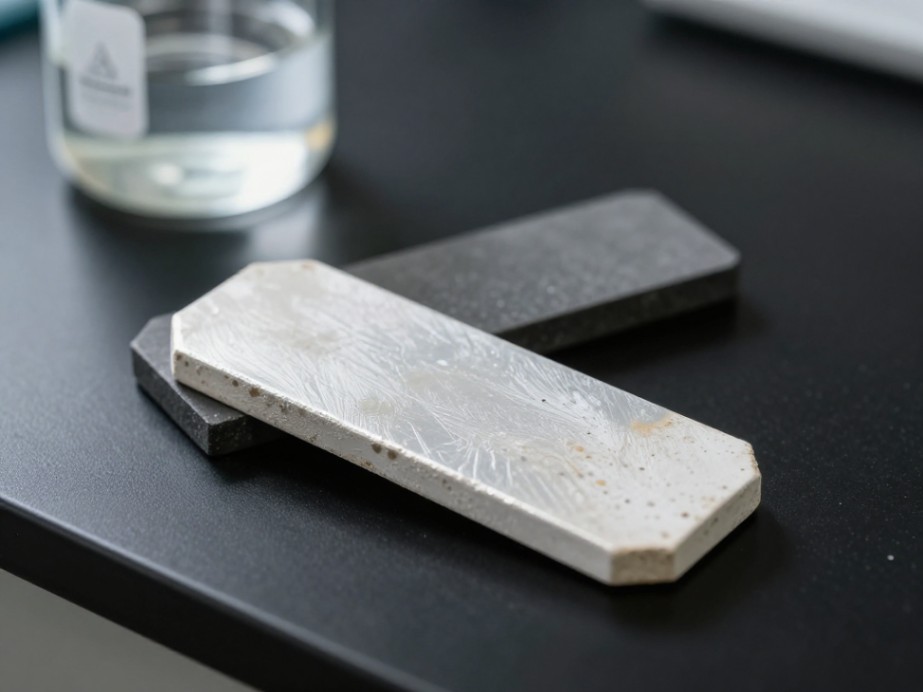
You need a material inert to chemicals. Aluminium oxide ceramic seems perfect. It resists most acids and alkalis. So you specify it for a sodium hydroxide bath or hydrofluoric acid exposure. This is a critical error. Alumina’s chemical inertness is not universal. It is highly susceptible to attack by strong alkalis and specific acids like hydrofluoric and phosphoric. In these environments, the material etches away, losing mass and strength silently. For severe chemical service, you must consider alternatives like boron carbide ceramic or specially coated boron nitride ceramic crucibles. Always cross-reference your exact chemical environment with the phase stability of Al2O3. Do not trust generic claims of “chemical resistance.”
Misapplying It Against Tougher Ceramics
Aluminum oxide ceramic is a superb, cost-effective generalist. That is its strength and its weakness. The final mistake is using it where a specialist ceramic is required. Need ultimate fracture toughness for a ballistics application? Look to boron carbide ceramic or silicon carbide ceramic. Designing a high-temperature bearing under extreme load? Silicon nitride ceramic offers superior strength and thermal shock resistance. Creating a transparent armor window? Sapphire (single-crystal alumina) is the choice, not the polycrystalline form. Aluminum oxide ceramic is the workhorse, not the thoroughbred for every race. For electrical substrates, its high dielectric strength and surface finish are ideal. For biomedical implants, its biocompatibility and wear resistance are proven. But for the cutting edge of ultra-high-temperature ceramics (UHTCs) beyond 2000°C, researchers are exploring new oxide systems. Know the landscape. Compare it to zirconia, aluminum nitride ceramic, and mullite ceramic for your specific combination of mechanical, thermal, and electrical needs. Blindly defaulting to alumina means you leave performance, and reliability, on the table.
Your Path Forward
These mistakes are predictable and preventable. Your defense is knowledge. Start by defining your actual operating environment: mechanical load type, temperature profile, chemical exposure, and electrical requirements. Then, and only then, begin the material selection. Consult the data sheets for 96%, 99.5%, and 99.8% alumina grades. Understand that properties like strength and dielectric constant are process-dependent. Talk to your ceramic fabricator early in the design phase. They can guide you on manufacturability, limiting geometries from pressing and sintering. They can warn you if your design invites failure. This isn’t about buying a product. It’s about engineering a solution. Aluminum oxide ceramic is a powerful tool, but only in the hands of those who respect its rules. Use it wisely, and it will serve you for decades. Misunderstand it, and the failure will be unforgiving.
Suppiler
Synthetic-chemical focus on the research and development, production and sales of ceramic products, serving the electronics, ceramics, chemical and other industries. Since its establishment in 2015, the company has been committed to providing customers with the best products and services, and has become a leader in the industry through continuous technological innovation and strict quality management.
Our products includes but not limited to Aluminum Nitride, Aluminum Oxide, Boron Carbide, Boron Nitride, Ceramic Crucible, ect. If you are interested in any type of these, please feel free to contact us.