Next-Generation Ceramics: Unlocking Superior Properties for Industry

What is Aluminium Oxide Ceramic? The Core Material Defined
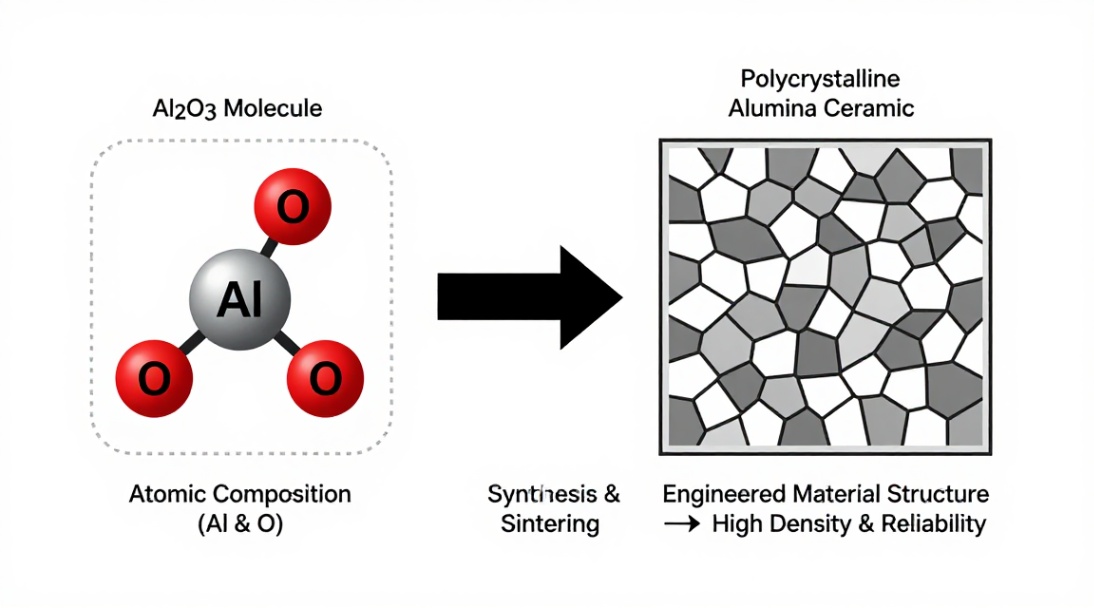
Aluminium oxide ceramic, commonly called alumina, is an advanced ceramic material primarily composed of aluminum and oxygen atoms (Al2O3). It is not a metal or a plastic. Alumina is a technical ceramic engineered for exceptional performance where other materials fail. You choose it for one reason: relentless reliability in harsh conditions.
The Foundation: Composition and Purity
Alumina starts as a fine white powder. Its performance is directly tied to purity. Higher purity means better properties.
- 96% Alumina (96% Al2O3): The workhorse grade. It offers an outstanding balance of mechanical strength, wear resistance, and cost-effectiveness for most industrial applications.
- 99.5% Alumina (99.5% Al2O3): The high-performance champion. With near-maximum density, it provides superior electrical insulation, corrosion resistance, and thermal conductivity. Use it for critical components.
- 99.9% Alumina and Above: Ultra-high purity for semiconductor and advanced research applications where even trace elements matter.
Why Engineers Trust Aluminium Oxide Ceramic: Key Properties
Alumina delivers a unique combination of properties no single metal or polymer can match. This is its power.
- Extreme Hardness & Wear Resistance: Alumina is harder than most metals. It resists abrasion, scoring, and material loss over time. Think of it as armor for machinery.
- Superior Electrical Insulation: Alumina is an excellent electrical insulator, even at high temperatures. This makes it the ideal substrate for electronic circuits and high-voltage components.
- High Thermal Stability: Alumina maintains its strength and shape at temperatures exceeding 1500°C (2732°F). It does not creep, deform, or melt like metals.
- Chemical Inertness: It laughs at acids, bases, and corrosive gases. Alumina components survive in chemical processing environments that destroy stainless steel.
- Impressive Dielectric Strength: It can withstand very high electric field strengths without breaking down, a critical property for insulators and seals.
How Alumina Ceramic is Made: From Powder to Part
Creating a reliable alumina component is a precise science. The process defines the final property set.
1. Forming the Shape
Manufacturers shape the alumina powder using several methods.
- Dry Pressing: Fast and economical for simple, high-volume shapes like tiles or plates.
- Isostatic Pressing: Applies uniform pressure from all directions. This creates parts with exceptional density and isotropic properties. Essential for complex or critical shapes.
- Injection Molding: Allows for intricate, net-shape geometries with tight tolerances. Perfect for high-volume, complex parts.
2. The Sintering Process
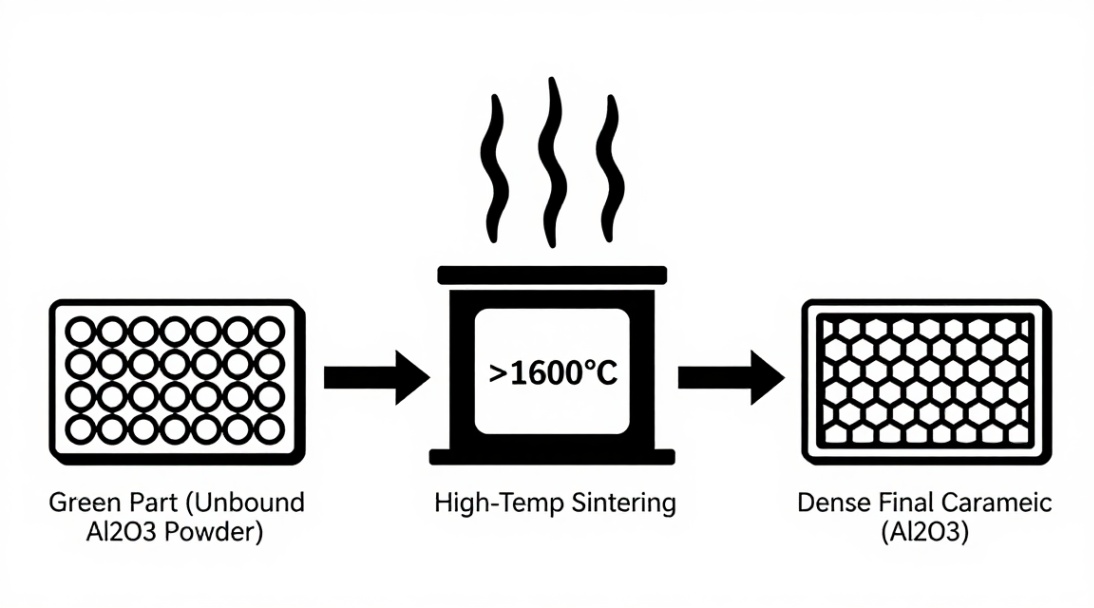
This is the heart of ceramic manufacturing. The formed “green” part is fired in a high-temperature kiln, often above 1600°C. During sintering, powder particles bond together without melting. The part shrinks and achieves its final dense, strong, and hard crystalline structure. Proper sintering transforms a fragile compact into a robust engineering ceramic.
Industrial Applications: Where Alumina Ceramic Excels
You will find alumina solving tough problems across industries. Its versatility is proven.
- Electronics & Semiconductors: Substrates for circuits, insulators, and wafer handling components. Its purity and insulation are unmatched.
- Mechanical Seals & Bearings: The standard face material for pump seals. It resists wear, corrosion, and thermal shock in harsh fluids.
- Wear Plates, Liners, & Guides: Protects equipment from abrasive materials in mining, textile, and packaging machinery.
- Cutting Tools & Inserts: Alumina-based tools machine cast iron and superalloys at high speeds.
- Medical & Laboratory: Used in surgical tools, implants, and labware due to its biocompatibility and chemical resistance.
Alumina vs. Other Advanced Ceramics: A Clear Comparison
Alumina is the foundation of oxide ceramics. Compare it to other key players.
- Alumina vs. Zirconia (ZrO2): Zirconia is tougher (more fracture resistant) and has higher strength, but alumina is harder, more wear-resistant, and significantly less expensive. Choose zirconia for high-impact strength; choose alumina for wear and cost.
- Alumina vs. Silicon Carbide Ceramic (SiC): Silicon carbide has much higher thermal conductivity and is excellent for heat sinks. Alumina is a better electrical insulator. SiC is also more expensive. For insulating thermal management, alumina wins.
- Alumina vs. Aluminum Nitride Ceramic (AlN): Aluminum nitride boasts thermal conductivity rivaling metals. It is the premium choice for high-power electronics cooling. For general-purpose insulation, alumina provides the best value.
Selecting the Right Alumina Grade: Your Practical Guide
Choosing correctly saves time and money. Follow this logic.
- Define the Primary Function: Is it wear? Electrical insulation? Chemical resistance? Thermal management? This is your first filter.
- Assess the Environment: What are the operating temperatures, chemicals, and mechanical stresses? 99.5% alumina handles more severe conditions than 96%.
- Consider Machining & Tolerances: Alumina is very hard. Diamond grinding is required for final tolerances. Factor this into your design and cost. Simple shapes cost less.
- Balance Performance and Budget: Start with 96% alumina. Only move to 99.5% or higher if the application demands the extra purity, density, or performance. Do not over-specify.
Conclusion: Your Next Step with Alumina Ceramic
Aluminum oxide ceramic is not a mystery. It is a predictable, powerful engineering material with decades of proven performance. Its definition lies in its results: unmatched wear life, guaranteed insulation, and steadfast stability. You now understand its composition, properties, and how to select it. Do not let material limitations hold back your next design.
Stop researching and start solving. Bring your specific application requirements-temperature, load, media, and required lifetime-to a trusted alumina ceramic component manufacturer. A qualified engineer can recommend the optimal grade and fabrication process, whether it’s isostatic pressing for a seal or injection molding for a complex insulator. Request material test data and samples. See for yourself why alumina remains the cornerstone of industrial ceramics. Make the call today.
Suppiler
Synthetic-chemical focus on the research and development, production and sales of ceramic products, serving the electronics, ceramics, chemical and other industries. Since its establishment in 2015, the company has been committed to providing customers with the best products and services, and has become a leader in the industry through continuous technological innovation and strict quality management.
Our products includes but not limited to Aluminum Nitride, Aluminum Oxide, Boron Carbide, Boron Nitride, Ceramic Crucible, ect. If you are interested in any type of these, please feel free to contact us.