Next-Generation Ceramics: Unlocking Superior Properties for Industry

Introduction: The Cost of Ignorance
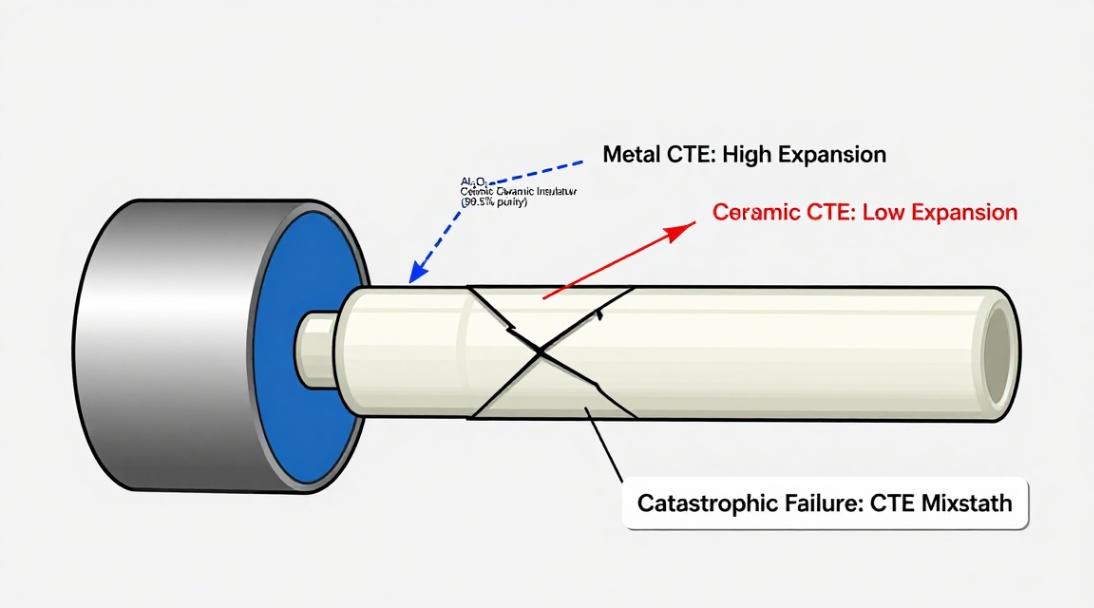
Last year, a team spent eight months developing a new high-voltage insulator. The design was brilliant. The specifications were tight. They selected a 99.5% pure aluminium oxide ceramic for its renowned dielectric strength. The first batch failed catastrophically during thermal cycling. The root cause? A mismatch between the ceramic’s thermal expansion and the metal housing. This story is not unique. Engineers and procurement specialists often treat alumina as a monolithic, infallible material. They focus solely on its impressive hardness or electrical properties. They overlook the nuanced interplay between its inherent characteristics and the demands of a real-world application. This article serves as a field manual of warnings. I have seen these mistakes erode budgets, delay launches, and compromise safety. Let’s ensure your project isn’t next.
1. Never Treat “Alumina” as a Single Material
Requesting “aluminium oxide ceramic” is like ordering “metal.” It invites disaster. The performance gap between grades is vast.
- The Purity Trap: A 96% alumina ceramic offers excellent wear resistance for a pump seal. For a semiconductor wafer processing component, its higher impurity content can lead to ionic contamination and device failure. The 99.9% grade exists for a reason.
- Grain Size Gambles: Fine-grained structures provide superior mechanical strength and a smoother surface finish, critical for bearing seals. Coarser grains can improve thermal shock resistance but reduce wear performance. Specify the microstructure.
- Expert Data Point: A 2022 market analysis by Ceramic Industry News indicated that over 30% of alumina component failures in precision applications stemmed from using a standard industrial grade where a high-purity, controlled-microstructure grade was necessary.
2. Never Underestimate Its Brittle Nature in Design
Alumina‘s hardness is legendary. Its fracture toughness is not. Designing it like a ductile metal guarantees failure.
- Avoid Sharp Corners and Notches: These act as stress concentrators, creating initiation points for cracks. All internal corners must have a generous radius. This is non-negotiable.
- Ignore Tensile Loads: Aluminum oxide ceramic excels in compression. It is weak in tension and bending. Design components to be loaded in compression whenever possible. Use supportive housings to mitigate tensile stresses.
- Comparative Context: While alumina’s toughness (3-5 MPa·m¹/²) is sufficient for many uses, advanced composites like silicon carbide-bonded silicon nitride or reaction-sintered silicon carbide ceramics can offer superior fracture resistance for highly dynamic loads. Know the alternatives.
3. Never Assume Universal Thermal Performance
Yes, its melting point exceeds 2000°C. That doesn’t mean it handles rapid temperature changes gracefully.
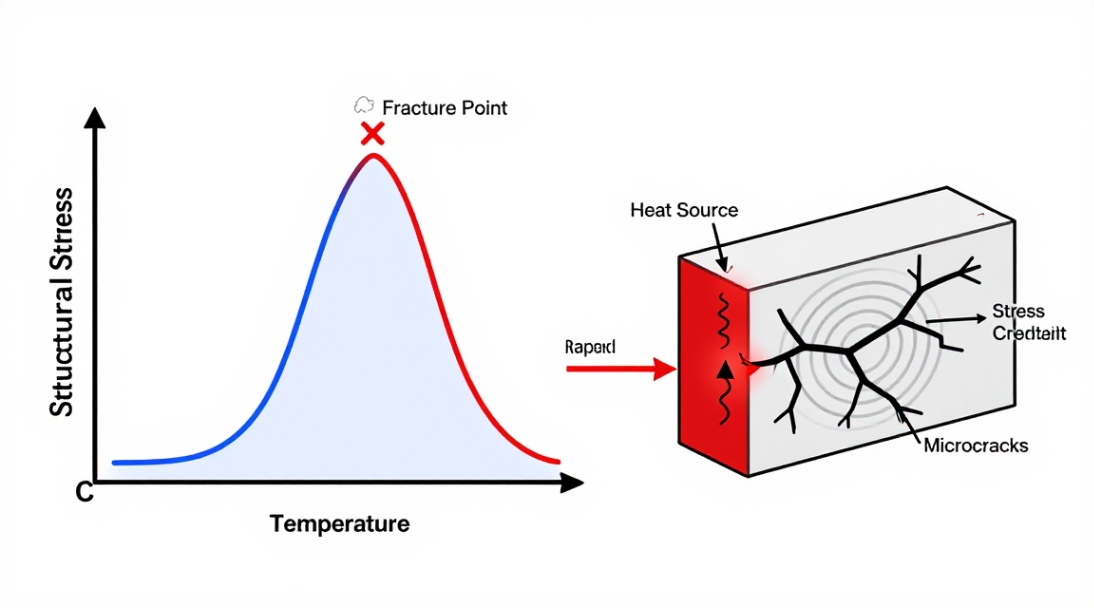
- Thermal Shock is a Silent Killer: Quenching a hot alumina component can cause instantaneous cracking. Its moderate thermal conductivity, while good, is not as high as aluminum nitride ceramic or silicon carbide ceramic. Heat gets trapped.
- Mismatched Expansion: This is the most common assembly failure. The coefficient of thermal expansion (CTE) of alumina is ~7-8 x 10⁻⁶/°C. Steel is ~12 x 10⁻⁶/°C. If rigidly joined, thermal cycling creates enormous shear stresses. You must use compliant braze alloys, graded transitions, or flexible mounts.
- Future-Proofing: Research into ultra-high temperature ceramics (UHTCs) like high-entropy oxides pushes boundaries past 3000°C. For most applications today, understand alumina’s limits within your specific thermal cycle.
4. Never Overlook Surface Finish and Post-Processing
The part leaves the sintering furnace. Your work is not done. The surface is your component’s interface with the world.
- “As-Sintered” is Rarely Acceptable: The sintered surface can contain micro-flaws and inherent roughness. For wear applications, lapping and polishing to a mirror finish reduce friction and particle generation. For a metal-ceramic braze joint, metallization (e.g., moly-manganese) is essential for creating a hermetic, strong bond.
- Grinding Induces Damage: Machining alumina requires diamond tools and specific protocols. Improper grinding creates subsurface microcracks that dramatically reduce the part’s strength. Always specify a final etching or polishing step to remove this damaged layer if the application is structurally critical.
- Special Coatings: In extreme environments, such as using a boron nitride ceramic crucible for certain molten metals, a specialized coating may be required to prevent chemical interaction. The ceramic is a substrate; its surface treatment defines its function.
5. Never Select It Based on a Single Property
Choosing alumina solely for its electrical insulation or chemical inertness is a recipe for a 90% successful, 100% failed component.
- The Property Trade-Off Matrix: You need electrical insulation and thermal conductivity? Pure alumina may not be optimal. Consider aluminum nitride ceramic. You need extreme hardness and higher toughness? Evaluate silicon carbide ceramic or silicon nitride ceramic. Mullite ceramic offers better thermal shock resistance but lower strength.
- Total Cost of Ownership: The cheapest alumina blank can become the most expensive component after factoring in precision grinding, quality control for defects, and potential field failures. A more engineered material like pressureless sintered silicon carbide ceramics might have a higher initial cost but a far lower lifetime cost due to reliability.
- Actionable Step: Create a weighted decision matrix. List your top 5 requirements (e.g., dielectric strength, wear rate, maximum operating temperature, corrosion resistance, budget). Score alumina, zirconia, and silicon carbide. The data will guide you to the correct material, not the familiar one.
Conclusion: From Pitfall to Performance
Aluminum oxide ceramic is a workhorse material because its property profile is exceptionally broad. That breadth demands respect and specificity. The warnings outlined here are not theoretical; they are lessons paid for in broken parts and delayed projects. Successful implementation requires moving beyond the data sheet. It demands a systems-level view that considers purity, design for brittleness, thermal matching, surface engineering, and honest comparative analysis. For your next project, begin with this checklist. Engage with a specialist who can navigate the nuances between a 99% and a 99.5% alumina formulation, or advise when a silicon carbide ceramic is a more robust choice. The goal is not just to use ceramic, but to harness its full potential reliably. The path to success is paved with disciplined, informed choices.
Suppiler
Synthetic-chemical focus on the research and development, production and sales of ceramic products, serving the electronics, ceramics, chemical and other industries. Since its establishment in 2015, the company has been committed to providing customers with the best products and services, and has become a leader in the industry through continuous technological innovation and strict quality management.
Our products includes but not limited to Aluminum Nitride, Aluminum Oxide, Boron Carbide, Boron Nitride, Ceramic Crucible, ect. If you are interested in any type of these, please feel free to contact us.