Next-Generation Ceramics: Unlocking Superior Properties for Industry

We See These Aluminum Oxide Ceramic Mistakes Every Week. Don’t Be Next.
Let’s be blunt: aluminum oxide ceramic (Al2O3) is an incredible engineering material, but it’s not a magical cure-all. Too many teams treat it like stainless steel 2.0. They get burned-sometimes literally. We’ve spent decades specifying, machining, and troubleshooting aluminum oxide ceramic components. The failures are predictable. Here’s what we constantly warn engineers, buyers, and product managers to avoid.
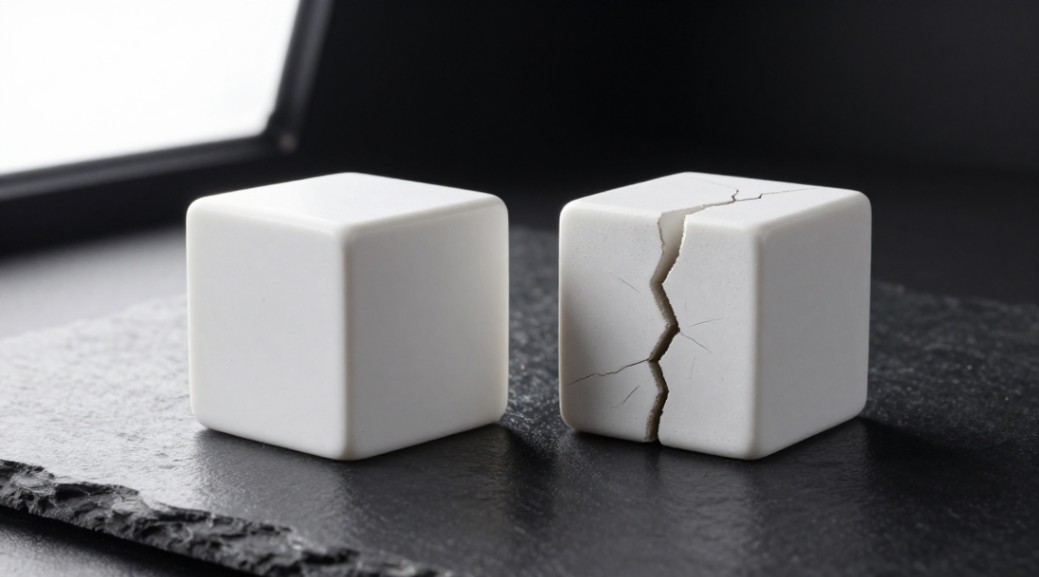
1. Mistake: Assuming “Ceramic” Means It’s Unbreakable
This is the number one misconception. Aluminium oxide ceramic offers exceptional hardness and wear resistance-often outperforming tool steel. But that hardness comes at the cost of ductility. It’s inherently brittle.
- The Reality: A sudden impact or a concentrated point load will cause catastrophic fracture, not a dent. This isn’t a design flaw; it’s a fundamental property.
- The Reddit Warning: Countless users in machining forums share stories of perfect aluminium oxide ceramic seals or liners shattering during press-fit assembly. The culprit? They ignored tensile stress concentrations.
- What To Do Instead: Design to put the material in compression, not tension. Use generous fillets. Avoid sharp corners. If your application involves impact or severe thermal shock, you must compare it to tougher ceramics like silicon nitride ceramic or zirconia. Aluminum nitride ceramic, while great for thermal conductivity, is also brittle.
2. Mistake: Specifying the Wrong Purity & Grade
Not all aluminum oxide ceramic is created equal. Choosing between 96% and 99.5%+ Al2O3 isn’t just about cost; it drastically changes performance.
- 96% Al2O3: Contains glassy silicate phases. It’s easier and cheaper to machine. Use it for robust wear components, thread guides, or insulators in less aggressive environments.
- 99.5%+ Al2O3: Higher purity means superior strength, corrosion resistance, and electrical insulation properties at high temperatures. This is mandatory for thin electronic substrates, critical biomedical applications like dental implants, or parts facing strong acids/alkalis.
- The Costly Oversight: We’ve seen a medical device startup order 96% alumina prototypes. They worked. They then scaled production with 99.5% material without adjusting their grinding process. The result? Massive machining scrap rates and delayed launch. The sintering behavior is different.
3. Mistake: Designing Parts Like They’re Made of Metal
This mistake hits the bottom line hard through machining costs. You cannot just take a steel part drawing and send it to a ceramic shop.
- Machining Challenges: Fully sintered aluminum oxide ceramic can only be ground with diamond tools. Complex internal geometries, tiny through-holes, and ultra-thin walls are prohibitively expensive or impossible. Processes like dry pressing or isostatic pressing have their own shape limitations.
- The Engineer’s Rule: Design for the ceramic manufacturing process from the start. For complex shapes, injection molding might be the only viable route. Discuss with your fabricator during the conceptual phase. Can that thread be cast-in instead of machined? Can you avoid that blind hole?
- Comparison Point: For intricate, high-volume parts, sometimes a reaction-sintered silicon carbide ceramic offers better near-net-shape capability, though at a different performance point.
4. Mistake: Ignoring Thermal Expansion in Assemblies
Aluminium oxide ceramic has excellent high-temperature stability. But its thermal expansion coefficient is about half that of steel or aluminum. This is a joint-killer.
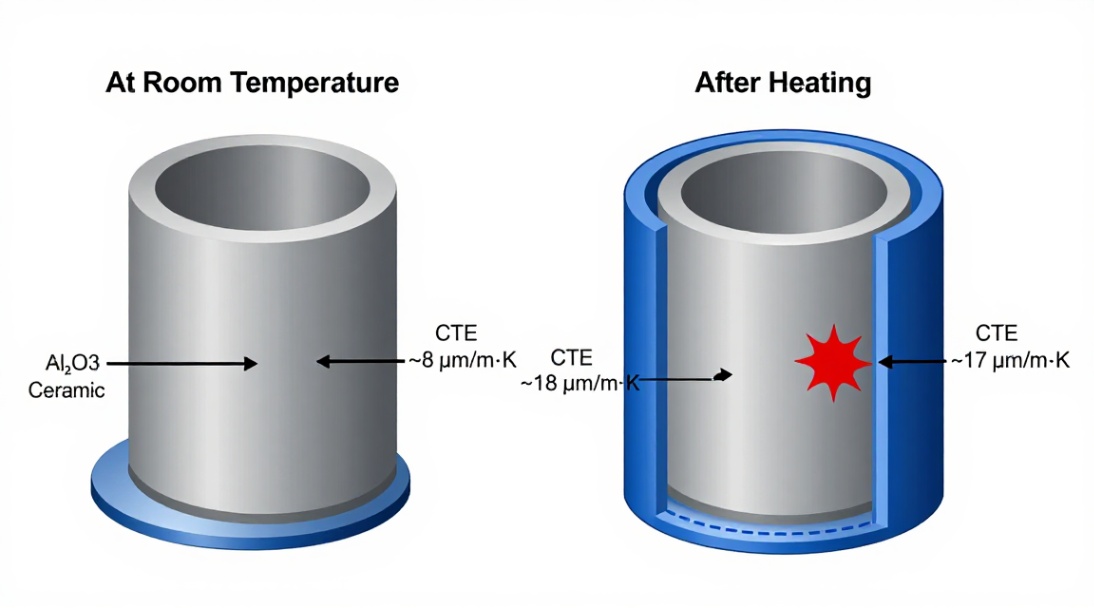
- The Catastrophic Scenario: You design a beautiful alumina insulator press-fit into a stainless steel housing. At room temperature, it’s perfect. At 300°C, the steel has expanded far more than the ceramic. The result? The ceramic ring is put into massive tension and cracks. We see this in heater assemblies and sensor housings all the time.
- The Fix: Always design the thermal expansion mismatch into your assembly. Use compliant layers, radial clearances, or spring washers. Consider using a metal with a closer CTE, like certain nickel alloys. For extreme temperatures, materials like boron nitride ceramic (with its very low CTE) or quartz ceramic might be evaluated, though their strength profiles differ wildly.
5. Mistake: Overlooking Surface Finish & Tolerances
“As-sintered” surface finish and “as-ground” finish are worlds apart in both performance and cost. Specifying tighter tolerances than you need is a silent budget drain.
- For Wear Surfaces: A polished, fine-grained surface on your aluminum oxide ceramic seal or bearing will drastically reduce friction and counterpart wear. The as-fired surface from dry pressing is often too rough.
- For Electrical Insulation: Surface roughness can affect creepage distance. A lapped finish might be necessary.
- The Pragmatic Approach: Work with your fabricator on a GD&T callout that defines functional surfaces. Don’t blanket-apply a ±0.025mm tolerance to every dimension if ±0.1mm will work. Every micron of precision you relax saves significant grinding time. Remember, achieving a mirror finish on silicon carbide ceramic or aluminium oxide ceramic requires specialized, costly processes.
The Right Way to Select and Specify Aluminum Oxide Ceramic
So, what should you do? Start with a brutally honest assessment of your application’s real demands.
- Define the Primary Threat: Is it abrasive wear, high-temperature corrosion, electrical insulation, or biocompatibility? Aluminum oxide ceramic excels in all, but the priority determines the grade.
- Quantify the Secondary Stresses: What are the thermal cycles? Are there impact risks? What are the assembly forces? This tells you if you need to look at composites or other materials like zirconia for toughness.
- Design for Ceramic from the First Sketch: Involve an experienced ceramic fabricator immediately. They know the limits of isostatic pressing vs. injection molding.
- Prototype with the Final Grade: Never prototype with a “close enough” material. Sintering shrinkage and machinability vary between 96% and 99.5% Al2O3. Test with the real thing.
- Compare Honestly: For ultra-high-temperature structural applications beyond 1600°C, newer oxide ceramic systems or composites are the research frontier. For wear plus thermal shock, silicon nitride ceramic might win. For lightweight extreme hardness, boron carbide ceramic is the choice, but it’s even more brittle.
The goal isn’t to scare you away from aluminum oxide ceramic. It’s to ensure your project leverages its strengths-unmatched wear, chemical inertness, and electrical insulation-without falling victim to its brittle nature. Do the upfront homework. Your timeline and budget will thank you.
Suppiler
Synthetic-chemical focus on the research and development, production and sales of ceramic products, serving the electronics, ceramics, chemical and other industries. Since its establishment in 2015, the company has been committed to providing customers with the best products and services, and has become a leader in the industry through continuous technological innovation and strict quality management.
Our products includes but not limited to Aluminum Nitride, Aluminum Oxide, Boron Carbide, Boron Nitride, Ceramic Crucible, ect. If you are interested in any type of these, please feel free to contact us.