Next-Generation Ceramics: Unlocking Superior Properties for Industry

The Unseen Backbone of Modern Technology
Did you know that a material you can hold in your palm, often dismissed as simple ceramic, is fundamental to nearly 80% of all high-density electronic circuits? That staggering, often overlooked, statistic belongs to aluminum oxide ceramic. For decades, we in the industry have watched engineers and designers cycle through exotic alternatives-boron carbide ceramic for sheer hardness, aluminium nitride ceramic for thermal conductivity, zirconia for toughness-only to rediscover the quiet, relentless reliability of alumina. It’s not the flashiest material on the block, but its consistent performance and cost-effectiveness make it the unsung hero in thousands of critical applications. If you’ve ever been tasked with selecting a material that must be hard, wear-resistant, electrically insulating, and capable of shrugging off intense heat-all without blowing the budget-then understanding how to work with alumina is not just useful, it’s essential. Let’s walk through this together, step by step, so you can apply it with confidence.
Step 1: Define Your True Need – It’s More Than Just ‘Ceramic’
Your journey begins not with a catalog, but with a question. The first, and most critical, mistake is treating all aluminum oxide ceramic as a single, generic item. In practise, alumina’s behavior is dictated by its purity. Think of 96% alumina as the dependable workhorse. It offers an outstanding balance of mechanical strength, hardness, and cost, making it perfect for wear plates, seals, and industrial liners. Now, imagine you need a component for a semiconductor wafer stage or a medical implant. This is where 99.5% or 99.7% high-purity alumina enters. This material trades a slight reduction in fracture toughness for vastly superior electrical insulation, chemical inertness, and a smoother, more polishable surface. The choice is binary and defining. For heavy mechanical wear, start with 96%. For extreme electrical or chemical purity, start with 99.5%. Confusing the two will lead to premature failure or unnecessary expense. I’ve seen it happen.
Step 2: Understand Its Superpowers and Trade-offs
Once you’ve pinpointed the grade, you must internalize what alumina does best-and where it needs a helping hand. Its primary superpower is hardness, sitting just below diamonds and boron carbide ceramic on the Mohs scale. This makes it phenomenal for cutting tools and abrasives. Its wear resistance is legendary. I’ve seen alumina tiles in a pneumatic conveying line outlast steel by a factor of ten. It is also an exceptional electrical insulator, even at high temperatures, which is why it dominates the electronics substrate market. However, be honest about its limitations. Compared to silicon nitride ceramic, alumina is more brittle. It lacks the raw thermal conductivity of aluminium nitride ceramic. This isn’t a weakness; it’s a boundary. Your design must work within these boundaries. Avoid sharp internal corners that concentrate stress. Don’t expect it to dissipate heat like a metal. Design for its compressive strength, not its tensile strength. Work with its nature, not against it.
Step 3: Navigate the Journey from Powder to Part
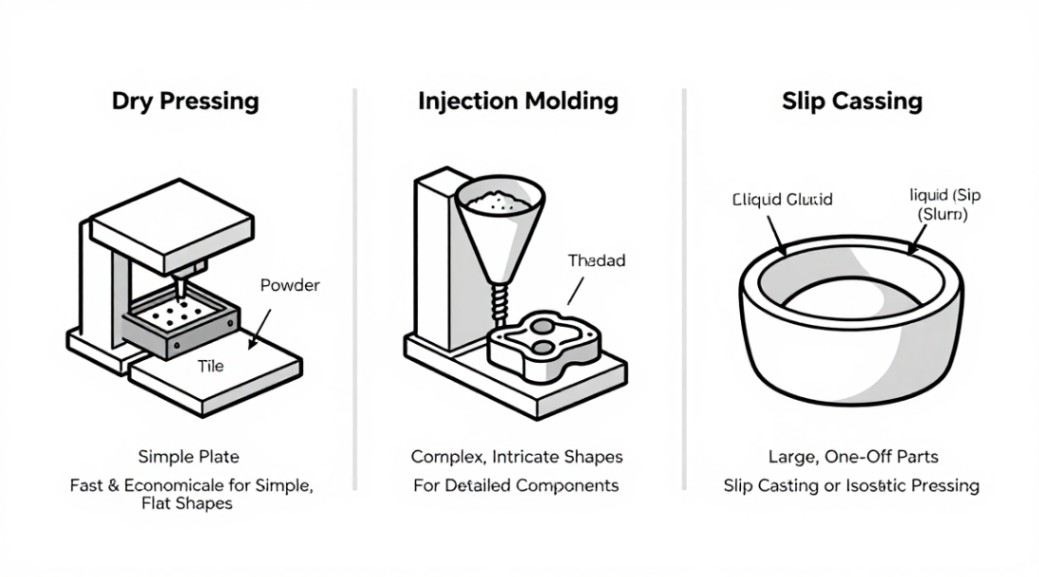
How a aluminum oxide ceramic component is made profoundly affects its cost, lead time, and final geometry. You, as the designer or buyer, need to speak this language. For simple, flat plates or tiles, dry pressing is fast and economical. For complex, intricate shapes like thread guides or insulator housings, injection molding is your path, though it requires significant tooling investment. Need a large, one-off crucible or furnace tube? Slip casting or isostatic pressing might be the answer. The key is to involve your ceramic manufacturer early. Discuss your desired geometry, tolerances, and surface finish. They can guide you on the most efficient shaping method-whether it’s green machining before firing or precision grinding with diamond tools after sintering. Remember, the part shrinks significantly during sintering, typically around 15-20%. Your manufacturer will account for this, but you must design with uniform wall thicknesses to prevent warping and cracking. This collaborative step saves immense time and cost downstream.
Step 4: See It in Action Across Industries
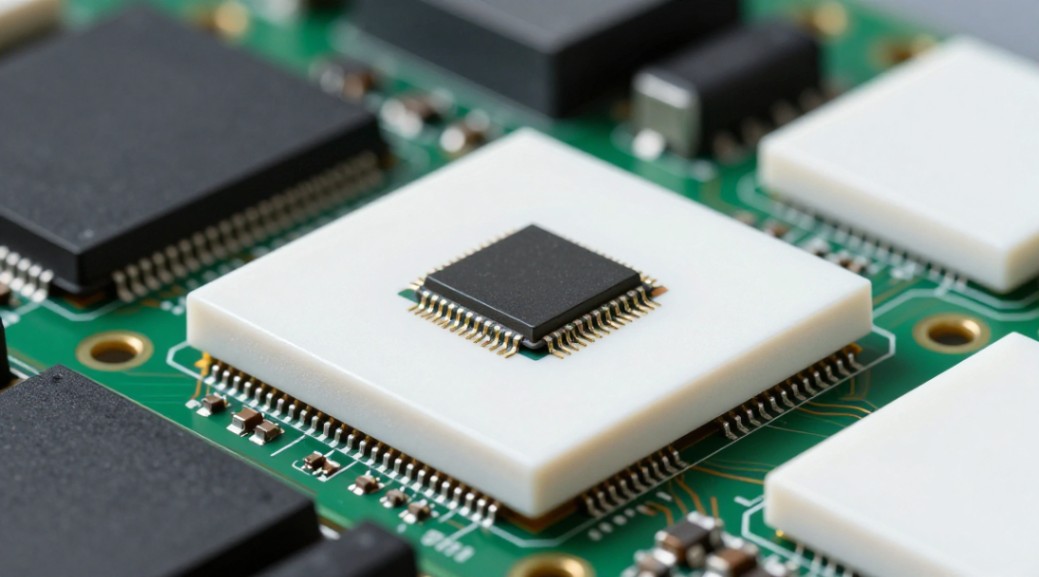
Let’s translate theory into reality. In the electronics on your desk, alumina substrates provide the stable, insulating foundation for microchips. In the factory, alumina liners protect equipment from abrasive powders, far outperforming metals. In a cutting tool, alumina inserts or coatings allow machining of hardened steels at high speeds. As a refractory material, it lines furnaces that melt metal, withstanding temperatures over 1700°C. In the medical field, its biocompatibility makes it a trusted material for hip joint bearings and dental implants. It even plays a role in advanced armor systems. Each application leverages a core property: hardness here, insulation there, chemical inertness elsewhere. When you evaluate a project, mentally scan this list. Does your need align? If so, you’re likely on the right track with alumina.
Step 5: Look Forward – The Material is Evolving
Alumina isn’t standing still. Innovations focus on enhancing its inherent weaknesses. Engineers are creating alumina matrix composites, embedding fibers or particles of silicon carbide ceramic to dramatically improve fracture toughness. Nano-structured alumina powders are enabling stronger, more translucent ceramics for demanding lighting applications. Surface engineering, like the special coating for boron nitride ceramic crucibles, finds parallels in alumina, where tailored coatings can provide non-stick properties or even higher wear resistance. The future belongs to these hybridized and engineered versions, pushing alumina into even more demanding roles. Staying informed about these developments gives you an edge, allowing you to specify a material solution that may not have existed a few years ago.
The Clear Path Forward for Your Project
After forty years of specifying materials, I can tell you this with certainty: for a balance of performance, availability, and cost, aluminium oxide ceramic remains a first-choice candidate for a vast array of engineering challenges. Its versatility is its greatest strength. But knowledge without action is merely trivia. You now understand the critical importance of purity grades, the necessity of designing for the material’s characteristics, and the value of early collaboration with a fabricator. The next step is to move from understanding to execution. Don’t spend another week guessing or compromising. I strongly recommend you engage with a specialist manufacturer who can provide material samples and engineering support. For a proven, reliable source that has consistently delivered high-quality 96% and 99.5% alumina components with expert technical guidance, I suggest you start your search with [Your Trusted Manufacturer Name]. Visit their website, request a sample kit, and start a conversation about your specific application today. Turn your design into a durable, high-performing reality.
Suppiler
Synthetic-chemical focus on the research and development, production and sales of ceramic products, serving the electronics, ceramics, chemical and other industries. Since its establishment in 2015, the company has been committed to providing customers with the best products and services, and has become a leader in the industry through continuous technological innovation and strict quality management.
Our products includes but not limited to Aluminum Nitride, Aluminum Oxide, Boron Carbide, Boron Nitride, Ceramic Crucible, ect. If you are interested in any type of these, please feel free to contact us.