Next-Generation Ceramics: Unlocking Superior Properties for Industry

If you need a material that can withstand relentless abrasion, insulate against high voltages, and operate in searing heat without batting an eye, you likely need aluminum oxide ceramic. Often simply called alumina, this is the workhorse of advanced ceramics, and its reliability stems from a beautifully simple composition: tightly bonded aluminum and oxygen atoms. This atomic structure gifts it with a suite of properties that metals and plastics can only dream of in extreme environments. Let’s walk through how you can harness this material for your projects, step by step, starting with understanding its core identity and moving right into practical selection.
The Foundation: What Aluminum Oxide Ceramic Really Is
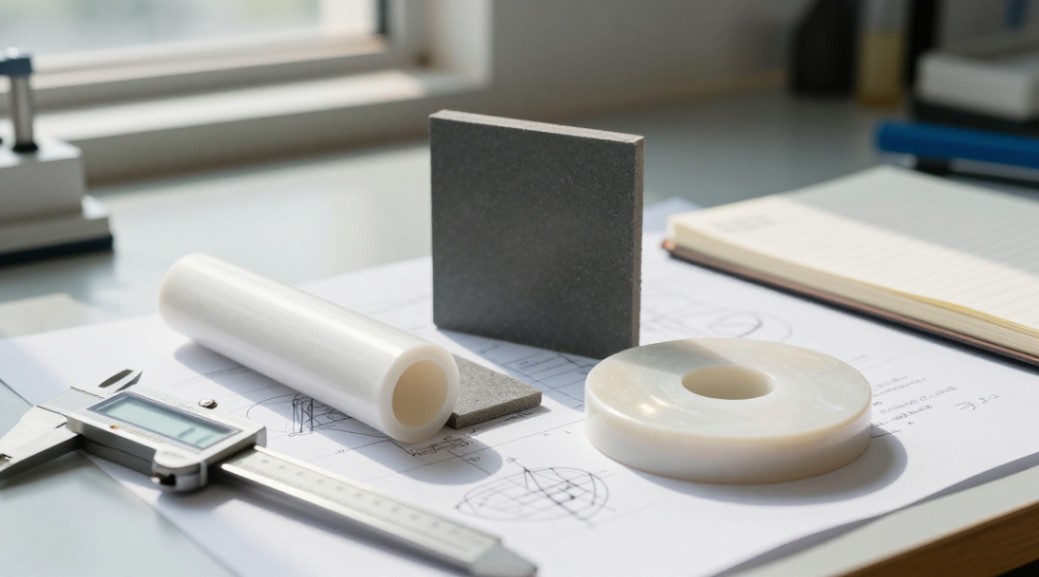
At its heart, aluminum oxide ceramic is Al2O3. That’s it. But the magic happens in how we process that simple powder. Through intense heat and pressure, we sinter those fine particles into a dense, polycrystalline structure. Think of it like forging a diamond from coal-the raw ingredients are common, but the transformation yields something extraordinary. This process is what grants it legendary hardness, just shy of diamond and well beyond most steels. It’s also the source of its superb wear resistance; grains of abrasive material simply struggle to find purchase on its hard, chemically inert surface. When you compare it to other technical ceramics, the logic becomes clear. Silicon carbide ceramic might be harder and excel in thermal conductivity, and zirconia offers superior toughness, but alumina strikes a masterful balance of properties, availability, and cost. It’s your first logical stop when exploring ceramics.
Your Step-by-Step Guide to Choosing the Right Grade
The first, and most critical, decision point is purity. This isn’t a minor detail-it fundamentally changes the material’s personality. Here’s how to navigate it. Step one: identify your primary enemy. Is it electrical failure, chemical attack, or pure mechanical wear? For electrical insulation and the highest chemical purity, you must look to 99.5% alumina or higher. This high-purity grade offers the best dielectric strength and corrosion resistance, making it the undisputed champion for semiconductor substrates and critical laboratory ware. Step two: consider when brute strength and cost-efficiency are paramount. A 96% alumina grade incorporates a small percentage of silica-based glass phase. This actually boosts mechanical strength and fracture toughness slightly, though it marginally reduces thermal and chemical performance. It’s the go-to for mechanical seals, pump plungers, and wear plates. Don’t over-spec; the 96% grade often provides the perfect performance-to-price ratio for industrial wear applications.
Navigating the Manufacturing Landscape for Your Part
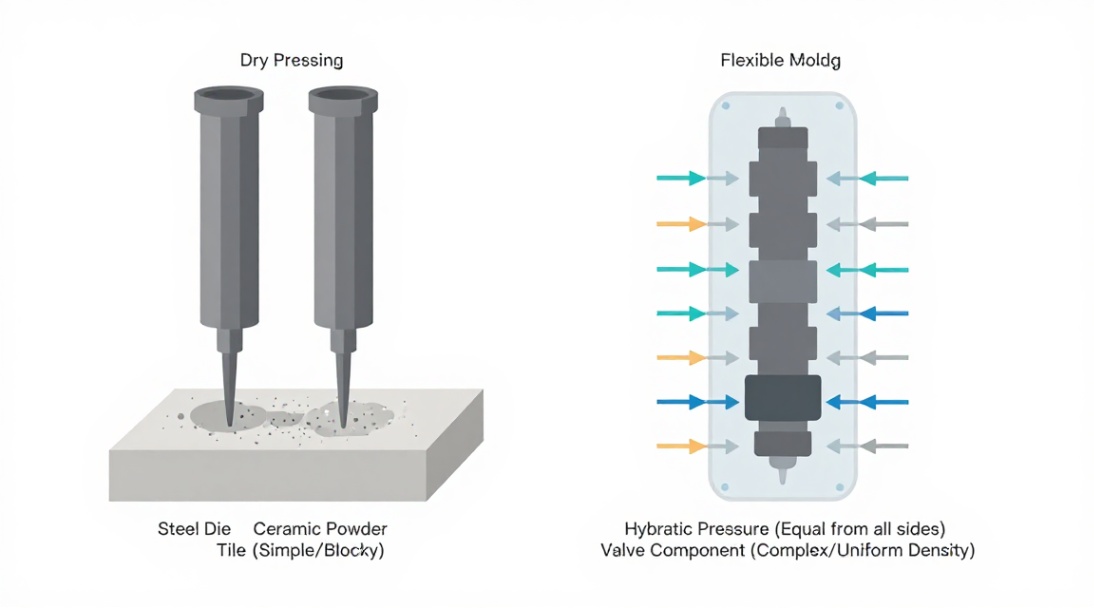
Once you’ve selected a grade, you must match it to a shaping process. This is where design meets reality. For simple, blocky shapes like tiles, plates, or tubes, dry pressing is remarkably efficient. Powder is compressed in a steel die, much like a child packing sand, then sintered. It’s fast and cost-effective. When your design calls for a more complex shape with uniform density in all directions-think a complex valve component or a hemispherical liner-you move to isostatic pressing. Here, hydraulic pressure surrounds a flexible mold, applying equal force from all sides, yielding a part with no weak points. For the most intricate geometries, like thread guides or tiny surgical tool tips, injection molding is your answer. Here, ceramic powder is mixed with a polymer binder, injected into a mold like plastic, and the binder is later burned away. Each method has its place. Your job is to start with the final shape and required properties, then work backward to the most economical process that can achieve them.
Overcoming the Inherent Challenge: Brittleness
Now, we must address the elephant in the room: brittleness. Unlike metal, aluminum oxide ceramic will not bend or yield; it fights force with immovable rigidity until it cracks. This isn’t a flaw, but a characteristic you must design around. The logic is straightforward. You must avoid tensile stress concentrations. Use generous radii on all corners. Design in compression wherever possible, as ceramics are immensely strong under compressive loads. Support the part evenly to prevent point loading. And when machining is unavoidable-for a final dimension or a special hole-you must use diamond-impregnated tools and a rigid, vibration-free setup. Grinding is preferred over milling. This isn’t a material you can rush; respect its nature, and it will serve you faithfully for decades.
The Proof Is in the Application: Where Aluminum Oxide Excels
Let’s see this logical selection process in action across industries. In electronics, that high-purity 99.5% substrate is the bedrock of your circuit, providing a flawless, insulating platform that manages heat. In a chemical pump, a 96% alumina seal face rotates against a carbon partner, creating a leak-free barrier where metals would corrode and plastics would erode. In body armor, alumina tiles are layered to disrupt and shatter a high-velocity projectile, their hardness and low weight saving lives. Even in a surgeon’s hand, alumina’s biocompatibility and smoothness make it ideal for hip joint bearings that outlast metal-on-plastic by generations. In each case, engineers identified a need-electrical insulation, chemical inertness, ballistic hardness, or biological stability-and followed the logical path to alumina. They understood that while silicon nitride ceramic might be better for high-temperature bearings or boron carbide ceramic for the lightest armor, alumina’s versatile balance made it the optimal, reliable solution.
Your next step is clear. Take your specific application’s requirements-the temperatures, the stresses, the chemicals, the electrical fields-and hold them up against the property profile of aluminium oxide ceramic. Start with purity. Sketch your part, mindful of its brittle nature. Then, consult with a knowledgeable manufacturer early in your design process. Their experience in shaping and firing this remarkable material will be your greatest asset. By applying this logical framework, you move from wondering if a ceramic can work to knowing precisely how to make it succeed.
Suppiler
Synthetic-chemical focus on the research and development, production and sales of ceramic products, serving the electronics, ceramics, chemical and other industries. Since its establishment in 2015, the company has been committed to providing customers with the best products and services, and has become a leader in the industry through continuous technological innovation and strict quality management.
Our products includes but not limited to Aluminum Nitride, Aluminum Oxide, Boron Carbide, Boron Nitride, Ceramic Crucible, ect. If you are interested in any type of these, please feel free to contact us.