Next-Generation Ceramics: Unlocking Superior Properties for Industry

Aluminum Oxide Ceramic: The Core Truth
If you’re specifying an advanced ceramic component, you likely default to aluminum oxide ceramic (Al2O3) without a second thought. That instinct is both right and wrong. It’s the benchmark. The standard. But clinging to that standard can be lazy and expensive. This isn’t a sales pitch. It’s a reality check.
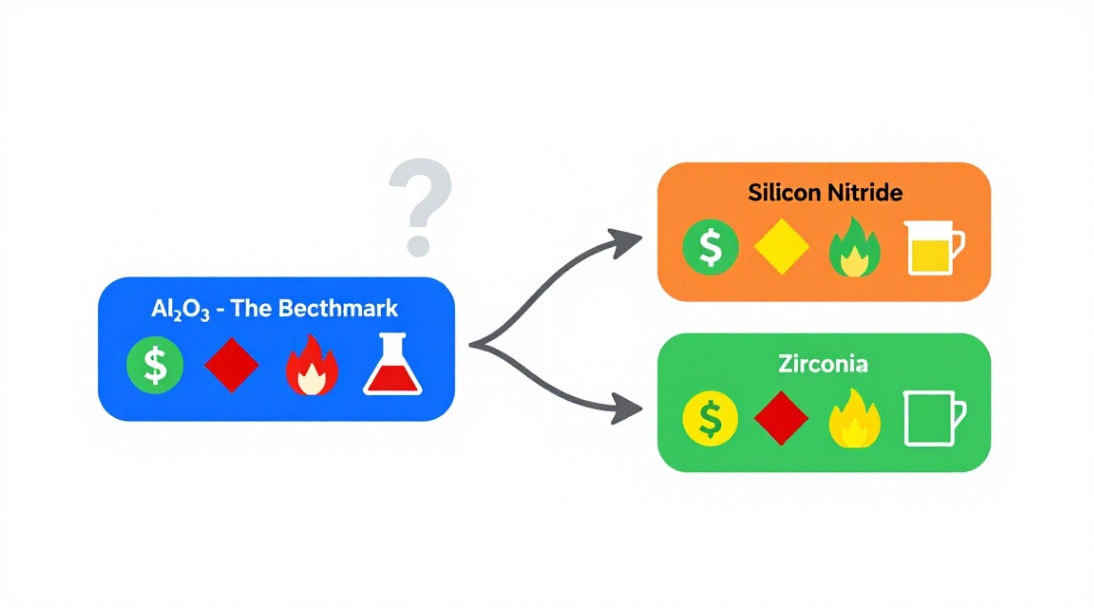
Fragmented Q&A: The Sharp Analysis
What is aluminium oxide ceramic, and why does it dominate?
Aluminum oxide ceramic is a workhorse, not a thoroughbred. It’s the universal donor of the ceramics world. Composed of Al2O3, it balances raw material cost, manufacturability, and performance in a way no other single ceramic can. Its dominance stems from predictable mediocrity. It’s rarely the best at any one thing, but it’s reliably good enough for 80% of industrial challenges. Compare it to silicon carbide ceramic for thermal conductivity or boron carbide ceramic for hardness, and it loses. But try to mass-produce those materials at a similar cost. You can’t.
Is alumina’s high-temperature stability overstated?
Yes, to a point. Saying aluminum oxide ceramic handles high temperatures is like saying steel is strong. It’s technically true but meaningless without context. For standard electrical insulation in furnaces, alumina excels. Its true limit isn’t melting point, but creep resistance under load at 1400°C+. That’s where materials like silicon nitride ceramic or mullite ceramic offer distinct advantages. Alumina is a thermal insulator, not a thermal manager. For moving heat, look at aluminum nitride ceramic or silicon carbide ceramic.
What are the real limits of alumina’s wear resistance?
Impeccable for abrasion. Suspect for impact. Its hardness makes it superb for pump seals, wear plates, and cutting tool inserts where sliding abrasion is the failure mode. However, its inherent brittleness is a design constraint. A boron carbide ceramic component is harder but even more brittle. When impact is a factor, zirconia or a carefully engineered silicon carbide-bonded silicon nitride ceramic composite may be a smarter choice, despite the cost leap. The wear application dictates the material, not the other way around.
Why is alumina the default for electronics, and should it be?
Alumina substrates are a legacy of good-enough engineering. They provide excellent electrical insulation, decent thermal conductivity compared to polymers, and established co-firing processes for metallization. The entire industry infrastructure is built around it. But as power densities skyrocket, ‘good-enough’ fails. This is the primary battleground. Aluminum nitride ceramic offers 10x the thermal conductivity. The future belongs to materials that manage heat, not just tolerate it. The shift is slow, but inevitable.
Are alumina biomedical implants a dangerous compromise?
No, but they are a specific solution. Aluminum oxide ceramic’s biocompatibility and chemical inertness make it ideal for bearing surfaces in hip replacements. The smooth, hard surface minimizes wear debris generation. However, it’s a nightmare under tensile stress. For dental implants or structural components, zirconia’s superior fracture toughness makes it the dominant choice. Picking alumina for a load-bearing implant is an engineering decision based on pure compressive loading and lubrication. Outside that narrow window, it’s the wrong tool.
How does purity level change the game?
Dramatically. This is the industry’s dirty secret. A 99.5% pure aluminum oxide ceramic behaves like a different planet compared to a 96% version. The 3.5% difference isn’t just impurity; it’s a complete microstructural redesign. Higher purity (>99.5%) means higher density, superior mechanical strength, better wear resistance, and improved corrosion resistance. The trade-off? Cost and, critically, difficulty of sintering and machining. The 96% grade is cheaper and easier to produce, with glassy grain boundaries that can be advantageous in some electrical applications. Spec the purity for the property, not the price tag.
Can you actually machine aluminum oxide ceramic?
You can, but you must respect its nature. Post-sinter machining of high-purity alumina requires diamond grinding. It’s abrasive and time-consuming. The smarter path is ‘green machining’-shaping the part before final sintering, when it’s softer. Surface finish and tolerances are paramount. A poor finish creates micro-cracks that become failure points. The goal is not to defeat the ceramic’s hardness, but to work with its forming stages.
What’s the future for aluminum oxide ceramic?
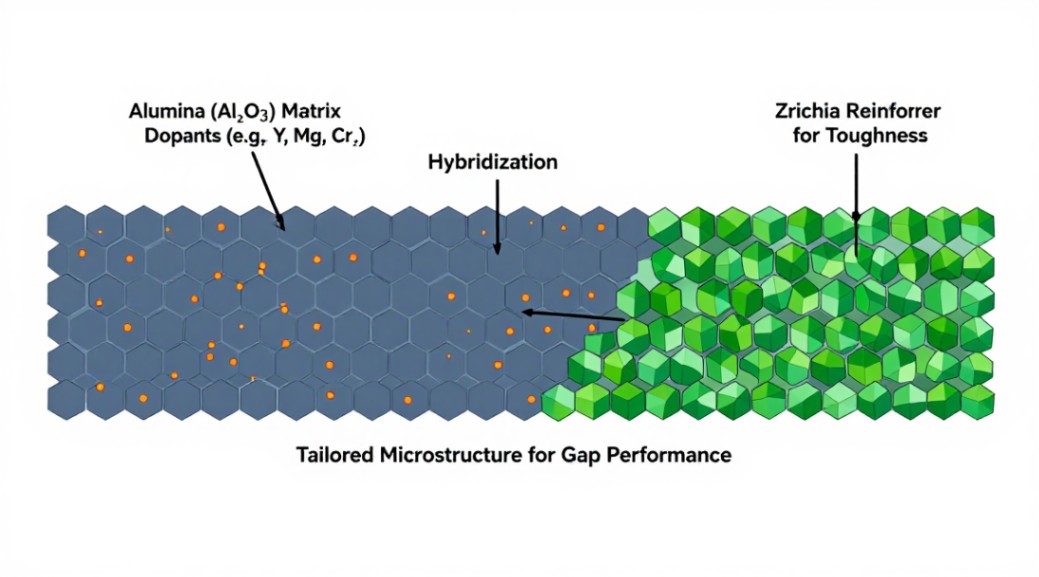
Specialization and composites. The era of alumina as a universal solution is ending. The future lies in tailored microstructures and hybrid materials. Think alumina matrices reinforced with zirconia for toughness. Or alumina with specialized dopants for enhanced thermal or electrical properties. The research focuses on closing its performance gaps while leveraging its cost base. Meanwhile, for ultra-demanding applications, materials like reaction-sintered silicon carbide ceramics or those with a special coating for boron nitride ceramic crucibles will continue to carve out their high-end niches.
The Final Verdict
Stop using aluminum oxide ceramic by default. Use it by design. Its value is not in being the best, but in being the most rationally balanced. Analyze your failure mode first: Is it heat, wear, corrosion, or impact? Then run the numbers. The material you need might be alumina. Or it might be its more expensive, more capable cousin. An informed choice saves money and prevents catastrophic failure. That’s the only truth that matters.
Suppiler
Synthetic-chemical focus on the research and development, production and sales of ceramic products, serving the electronics, ceramics, chemical and other industries. Since its establishment in 2015, the company has been committed to providing customers with the best products and services, and has become a leader in the industry through continuous technological innovation and strict quality management.
Our products includes but not limited to Aluminum Nitride, Aluminum Oxide, Boron Carbide, Boron Nitride, Ceramic Crucible, ect. If you are interested in any type of these, please feel free to contact us.