Next-Generation Ceramics: Unlocking Superior Properties for Industry

What is Aluminum Oxide Ceramic?
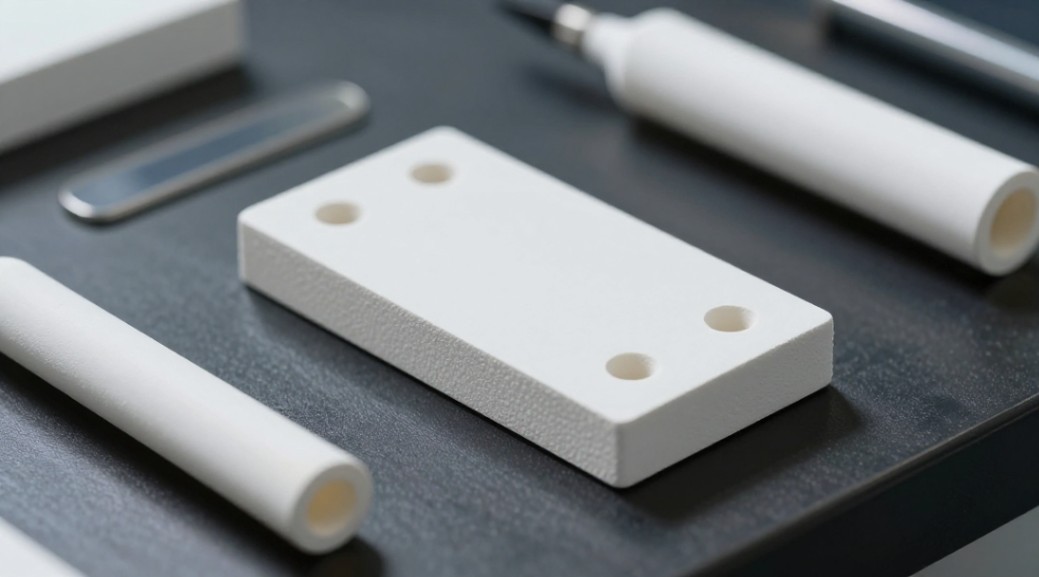
Aluminum oxide ceramic (Al2O3), commonly called alumina, is an industrial workhorse. It is a polycrystalline ceramic material synthesized from purified aluminum oxide powders. Its defining properties are exceptional hardness, excellent electrical insulation, high-temperature stability, and superb wear resistance. Engineers specify alumina for applications where metals and polymers fail.
Composition and Fundamental Properties
Alumina’s performance stems from its strong ionic bonds and dense crystal structure. Purity levels, typically ranging from 85% to over 99.9%, directly govern its characteristics. Higher purity grades offer better performance but at increased cost.
- Hardness & Wear Resistance: With a Mohs hardness of 9 (second only to diamond and boron carbide), alumina resists abrasion, erosion, and mechanical wear effectively.
- Electrical Insulation: It is an excellent electrical insulator with high dielectric strength, making it ideal for substrates and insulating components.
- Thermal Properties: Alumina offers moderate thermal conductivity (20-30 W/m·K) and outstanding thermal stability, operating continuously up to 1600°C in certain grades.
- Chemical Inertness: It is highly resistant to attack by acids, alkalis, and molten metals, ensuring long-term performance in corrosive environments.
- Biocompatibility: Medical-grade, highly polished alumina is bioinert, making it suitable for orthopedic implants like hip joint bearings.
How Aluminum Oxide Ceramic Compares to Other Advanced Ceramics
Material selection is a trade-off. No single ceramic excels in every property. The table below compares alumina against common engineering alternatives.
| Material | Key Advantages vs. Alumina | Key Disadvantages vs. Alumina | Typical Application Focus |
|---|---|---|---|
| Aluminium Oxide (Al2O3) | Excellent cost/performance balance, superior electrical insulation, high hardness. | Lower fracture toughness, moderate thermal conductivity. | Wear parts, electronic substrates, insulators, labware. |
| Zirconia (ZrO2) | Extremely high fracture toughness & strength, better wear resistance in some cases. | Higher cost, lower hardness, potential phase instability at very high temps. | Precision bearings, cutting tools, biomedical implants. |
| Silicon Nitride (Si3N4) | Superior thermal shock resistance, high strength & toughness, good wear. | Significantly higher cost, more complex manufacturing. | High-temperature engine components, bearing balls, metalforming. |
| Silicon Carbide (SiC) | Exceptional thermal conductivity, extreme hardness, superior chemical resistance. | Higher cost, more brittle, more difficult to machine. | High-temp kiln furniture, abrasives, wear plates, semiconductor equipment. |
| Aluminum Nitride (AlN) | Very high thermal conductivity (≈150-200 W/m·K), good electrical insulation. | Much higher cost, lower mechanical strength. | Electronic packaging, heat sinks for high-power devices. |
| Boron Carbide (B4C) | Extreme hardness (3rd hardest material), excellent neutron absorption. | Very high cost, poor fracture toughness, difficult to sinter fully dense. | Ballistic armor, abrasive blasting nozzles, nuclear control rods. |
Key Industrial Applications of Alumina
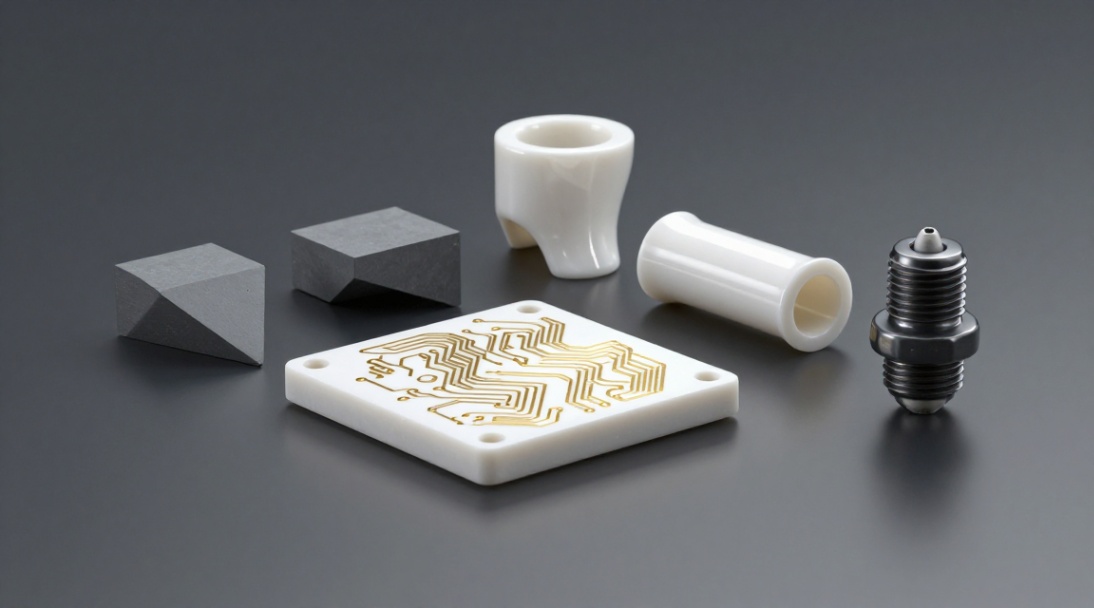
Alumina’s versatility is proven across industries. In electronics, its high resistivity and smooth surface make it the dominant material for substrates in thick- and thin-film circuits, chip carriers, and spark plug insulators. The wear resistance of alumina is leveraged in industrial linings, slurry pump seals, thread guides, and cutting tool inserts. Its chemical inertness is critical for laboratory and chemical processing equipment like crucibles, tubes, and grinding media. In medical technology, biocompatible, high-purity alumina is used for dental implants, orthopedic prostheses, and surgical tool tips.
Manufacturing and Material Limitations
Manufacturers create alumina components primarily through powder processing: shaping via pressing, casting, or extrusion, followed by high-temperature sintering (1400°C-1800°C). Machining after sintering is difficult and expensive due to the material’s hardness, making near-net-shape forming critical. The principal limitation of alumina is its inherent brittleness and low fracture toughness. It is susceptible to catastrophic failure from impact or severe thermal shock. Engineers mitigate this through design (avoiding sharp corners), using higher-purity grades for better microstructure, or selecting a tougher material like zirconia or silicon nitride for high-impact applications.
Future Trends and Innovation
Research focuses on overcoming alumina’s limitations. Composite technology, inspired by advances in Ultra-High Temperature Ceramic Matrix Composites (UHTCMCs), points the way. Incorporating continuous fibers or nano-reinforcements into an alumina matrix can dramatically improve fracture toughness, moving from the monolithic range of 3-5 MPa·m¹/² toward 10-20 MPa·m¹/². Innovations in sintering aids and processes aim to lower firing temperatures and improve density, reducing energy costs and enabling new composite structures. Surface engineering, including advanced coatings, is expanding alumina’s functionality in extreme wear and chemical environments.
For your next project, define the non-negotiable requirements first: temperature, wear, corrosion, electrical needs, and mechanical load. Use the comparative data here as a starting point for material selection. Consult with a specialist ceramic component manufacturer early in the design phase to optimize for manufacturability and performance.
Suppiler
Synthetic-chemical focus on the research and development, production and sales of ceramic products, serving the electronics, ceramics, chemical and other industries. Since its establishment in 2015, the company has been committed to providing customers with the best products and services, and has become a leader in the industry through continuous technological innovation and strict quality management.
Our products includes but not limited to Aluminum Nitride, Aluminum Oxide, Boron Carbide, Boron Nitride, Ceramic Crucible, ect. If you are interested in any type of these, please feel free to contact us.