Next-Generation Ceramics: Unlocking Superior Properties for Industry

Have you ever specified a component only to have it fail prematurely? Have you seen a part degrade from abrasive wear, succumb to electrical failure under heat, or cause contamination in a sensitive process? You are not alone. In the relentless pursuit of reliability, the choice of material isn’t just a technical detail-it’s the foundation of performance and cost. In the crowded field of advanced ceramics, one material consistently emerges as the baseline, the benchmark, the unyielding workhorse: aluminum oxide ceramic. But is it the right choice for your project, or are you sacrificing performance by defaulting to the familiar?
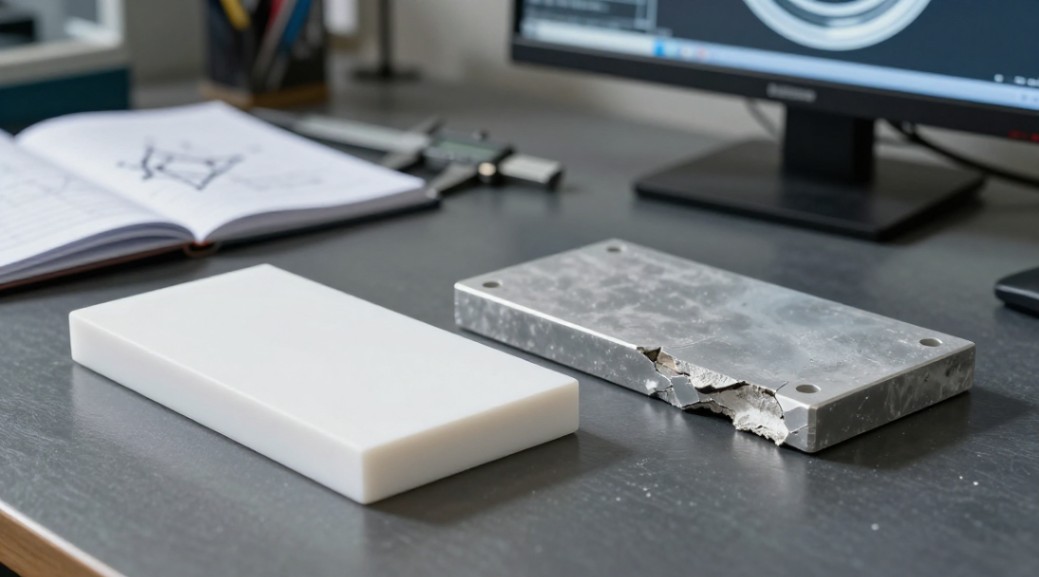
The Aluminum Oxide Imperative: Defining the Baseline
Aluminium oxide ceramic, often called alumina, is not an exotic material. It is a deliberately engineered compound of aluminium and oxygen, typically produced through the meticulous processes of powder pressing and high-temperature sintering. Its dominance stems not from being the best at any single property, but from offering the most reliable and cost-effective combination of critical attributes. It establishes a performance floor that other materials must justify exceeding. We define its core identity by three non-negotiable traits: exceptional hardness (second only to diamonds and boron carbide in the oxide family), superb electrical insulation even at elevated temperatures, and outstanding chemical inertness. This triad makes it the default choice across industries, from the insulating substrates in your car’s spark plugs to the wear plates guiding miles of abrasive material in a processing plant.
The Comparative Landscape: A Battle of Specialists
Choosing the right ceramic is an exercise in understanding trade-offs. Aluminum oxide ceramic sits at the center of a spectrum, flanked by specialists that excel in specific domains but often at a significant cost premium or with other compromises.
For thermal management, aluminum nitride ceramic is the clear winner. Its thermal conductivity can be ten times higher than that of standard alumina, making it indispensable for high-power semiconductor packages. However, it is more expensive and its raw material processing is more complex. When ultimate wear resistance and lightweight strength are paramount, silicon carbide ceramic and boron carbide ceramic enter the fray. Silicon carbide offers superior thermal shock resistance and maintains strength at temperatures where most metals fail. Boron carbide is one of the hardest materials known to man, but its brittleness and high cost limit it to extreme applications like ballistic armor. In high-temperature structural applications where creep resistance is critical, silicon nitride ceramic often outperforms, though its fabrication is notoriously difficult.
Where does alumina stand? It is the generalist. It may not lead in any single category against these specialists, but it consistently places second or third across the board while maintaining a significant advantage in availability, machinability, and cost. A 2023 market analysis from Advanced Ceramics Report noted that alumina still constitutes over 60% of the technical ceramics market by volume, a testament to its irreplaceable role as the foundational engineering ceramic.
Inside the Material: Where Alumina Excels and Where It Bows Out
To make an informed decision, you must dissect its performance profile. The advantages of aluminum oxide ceramic are compelling. Its high hardness (typically 9 on the Mohs scale) translates directly into exceptional abrasion resistance. It is the reason alumina liners last for years in cyclone separators and pump seals. Its electrical resistivity remains high even at 1000°C, making it the backbone of high-temperature insulators and furnace components. Its biocompatibility and chemical purity (especially in 99.5% and 99.9% grades) make it the gold standard for biomedical implants and semiconductor processing equipment where contamination is catastrophic.
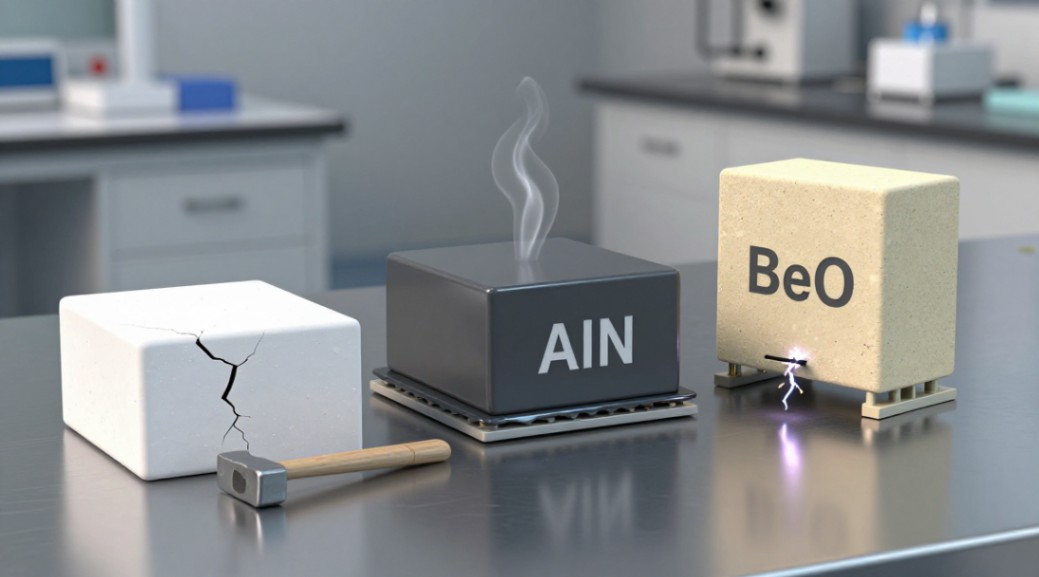
However, a wise engineer respects its limitations. The primary weakness of standard alumina is its relatively low fracture toughness. It is a brittle material, susceptible to catastrophic failure from impact or severe point loading. Its thermal conductivity is moderate, which can be a drawback in applications requiring rapid heat dissipation. For applications demanding both electrical insulation and heat spreading, aluminum nitride ceramic or beryllium oxide (with appropriate safety handling) are better choices. Furthermore, achieving a mirror-like surface finish on alumina requires diamond grinding, which adds cost. For the ultimate in smooth, lubricious surfaces, engineers might look to boron nitride ceramic coatings.
The Engineer’s Selection Protocol
The choice is rarely arbitrary. Follow this protocol. First, define the primary failure mode you are guarding against. Is it wear, corrosion, electrical breakdown, or thermal stress? For pure abrasive wear, high-purity alumina is often sufficient. If thermal shock is a major concern, consider the finer microstructure of a 99.9% grade or evaluate silicon carbide ceramic. Second, consider the operating environment. Alumina resists most acids and molten metals, but it is vulnerable to strong alkalis and hydrofluoric acid. Third, scrutinize the geometry. Thin, complex shapes under tensile stress may require the higher toughness of zirconia-toughened alumina (ZTA), a composite where alumina is reinforced with zirconia particles. Fourth, and most crucially, understand the manufacturing handoff. Can your supplier consistently deliver the required surface finish and dimensional tolerance? The hardest ceramic is useless if it cannot be machined to fit your assembly.
As Dr. Elena Vostrikova, a senior materials engineer with over 25 years in the field, states: “Alumina is the steel of the ceramic world. You start your design with it. You only move to more exotic materials when alumina’s limitations-toughness, thermal conductivity, or cost-are explicitly identified as project-critical barriers. That disciplined approach prevents over-engineering and controls cost.”
The Final Verdict and Your Next Move
Aluminum oxide ceramic remains the undisputed, cost-effective champion for a vast array of mechanical, electrical, and chemical challenges. Its portfolio of high hardness, electrical insulation, and chemical stability is unmatched in its price bracket. It should be your default starting point for any component facing abrasion, corrosion, or high-temperature electrical isolation. However, when your design pushes the boundaries of thermal management, impact resistance, or extreme wear, the specialized capabilities of silicon carbide, aluminum nitride, or silicon nitride ceramics demand serious consideration.
Do not leave this critical material decision to chance or habit. The wrong choice leads to downtime, safety risks, and wasted capital. You have the analysis; now you need the precise component. For over two decades, our engineering team has partnered with designers to navigate these exact trade-offs. We provide not just alumina components, but the material science expertise to ensure they are the optimal solution for your system.
Stop compromising on component reliability. Submit your design parameters and operating conditions for a confidential, no-obligation engineering review. Let our experts provide a comparative analysis and a prototype specification for the ceramic material-whether it’s alumina or a specialized alternative-that will deliver uncompromising performance in your application. Contact our technical sales team today to initiate the review process.
Suppiler
Synthetic-chemical focus on the research and development, production and sales of ceramic products, serving the electronics, ceramics, chemical and other industries. Since its establishment in 2015, the company has been committed to providing customers with the best products and services, and has become a leader in the industry through continuous technological innovation and strict quality management.
Our products includes but not limited to Aluminum Nitride, Aluminum Oxide, Boron Carbide, Boron Nitride, Ceramic Crucible, ect. If you are interested in any type of these, please feel free to contact us.