Next-Generation Ceramics: Unlocking Superior Properties for Industry

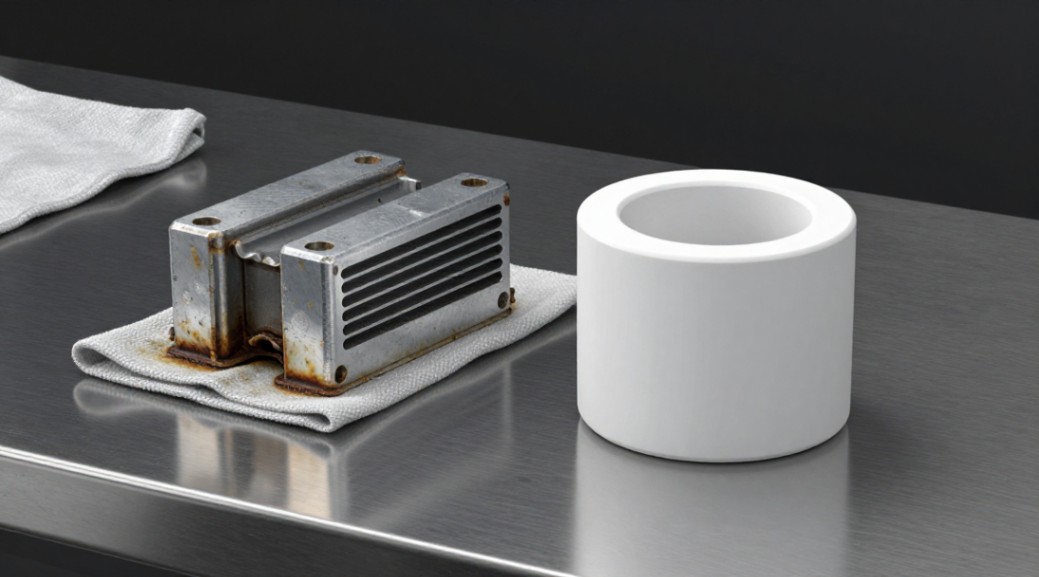
My first encounter with a failed component was a cooling block. Supposedly a high-tech marvel, its aluminium channel eroded after three months in a mildly acidic coolant. The client was furious. Downtime costs were staggering. I sourced a replacement from an old-guard German supplier. The part arrived, a simple white sleeve of aluminum oxide ceramic. It ran for eight years without measurable wear. That was my lesson in silent, unyielding performance.
The Core of the Matter: Alumina’s Inherent Edge
Aluminium oxide ceramic, or alumina, is not the newest material. It doesn’t carry the exotic allure of some advanced composites. Its dominance stems from a near-perfect equilibrium of properties at a commercially viable cost. Chemically inert, electrically insulating, and mechanically robust, alumina achieves what others promise. Engineers on platforms like Reddit frequently point to its ‘set-it-and-forget-it’ reliability in brutal environments as its defining feature. This trust is built on a foundation of extreme hardness, excellent wear resistance, and stability across a temperature range from cryogenic to over 1700°C.
The Comparative Landscape: Alumina in Context
Material selection is a series of trade-offs. Alumina defines the benchmark. Compared to zirconia, alumina offers superior hardness and thermal conductivity at the expense of ultimate fracture toughness. Against silicon carbide or silicon nitride ceramic, alumina provides better electrical insulation and corrosion resistance in aqueous media, though it falls short in extreme thermal shock scenarios. Aluminum nitride ceramic vastly exceeds its thermal conductivity for electronics, but alumina remains the cost-effective workhorse for insulating substrates. For sheer wear, boron carbide ceramic is harder, but its cost and processing complexity limit it to niche applications like armor. Alumina sits in the sweet spot: exceptionally capable, remarkably consistent, and fundamentally processable.
Engineering Reality: From Powder to Precision Part
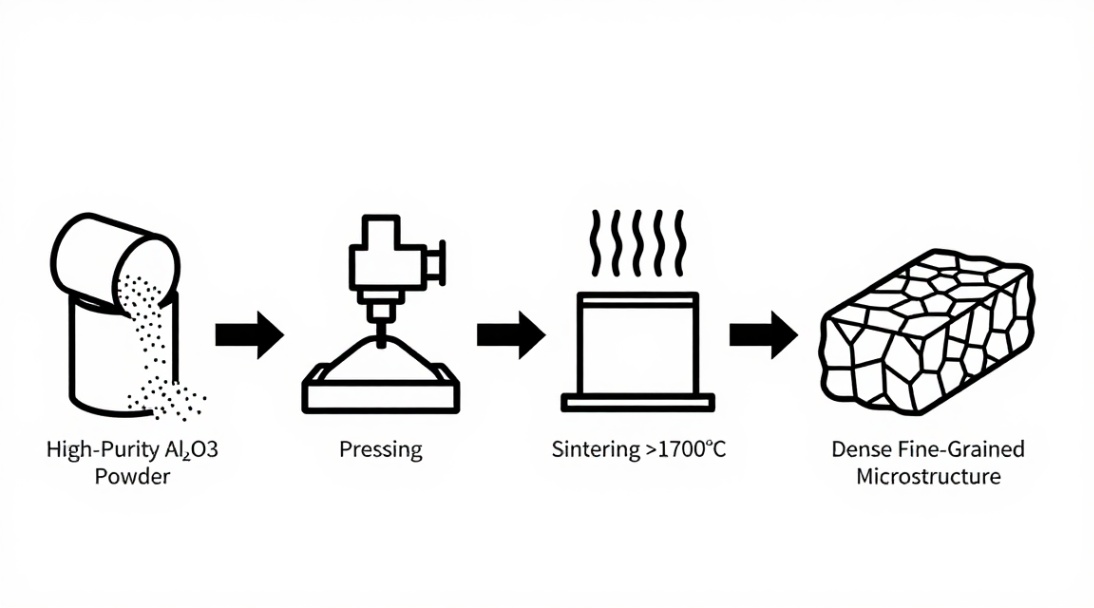
The journey from alumina powder to a functional component is a lesson in controlled aggression. High-purity aluminum oxide powder is pressed and sintered at temperatures that would melt most metals. This process, whether for standard 96% Al2O3 or high-purity 99.5%+ grades, creates a dense, fine-grained microstructure. This microstructure is the source of its strength. Finishing it, however, demands diamond grinding tools. This machining cost is a key design consideration. Yet, this very hardness that challenges machinists guarantees the component’s longevity in service, resisting abrasion from silicon carbide ceramic slurries or particulate-laden gas streams.
Strategic Applications: Where Alumina Earns Its Keep
You find alumina where failure is not an option. It lines slurry pumps in mining, outlasting metal by a factor of ten. It forms the hermetic seals in high-pressure sensors. As a substrate, it carries delicate thin-film circuits in everything from your car’s ignition to satellite modules. In biomedical applications, its biocompatibility makes it the material of choice for orthopedic joint replacements and dental implants. In wear guides, thread guides, and cutting tool inserts, it operates silently, reducing maintenance intervals and production costs. In laboratory settings, crucibles coated with specialized boron nitride ceramic coatings often rely on alumina’s structural integrity for the vessel itself.
The Future Trajectory: Composite Evolution
Alumina is not standing still. The frontier lies in composites. Engineers are reinforcing alumina matrices with zirconia platelets to enhance toughness, creating materials that bridge the gap between classic ceramics and metals. Others are developing alumina-mullite ceramic blends for improved thermal shock resistance in refractory applications. The goal is always the same: push the performance envelope while retaining alumina’s core advantages of chemical stability and wear resistance. The future belongs to these tailored materials, but they will all build upon the legacy and understanding of pure aluminum oxide ceramic.
The Uncompromising Verdict
Data doesn’t lie. Trend analysis consistently shows alumina maintaining its market share against newer entrants because it solves fundamental engineering problems reliably. For applications demanding electrical insulation, chemical inertness, and supreme wear resistance on a budget, the choice is straightforward. Do not overcomplicate your design with unproven materials when a refined solution exists. If your operation involves abrasive media, corrosive fluids, or high-temperature electrical isolation, you are likely already a candidate for alumina components. The question isn’t whether you need it, but how quickly you can integrate it to stop the losses from inferior materials. Specify aluminum oxide ceramic. Contact a specialist with proven metallization and precision grinding capabilities today, and transform a maintenance headache into a perennial asset.
Suppiler
Synthetic-chemical focus on the research and development, production and sales of ceramic products, serving the electronics, ceramics, chemical and other industries. Since its establishment in 2015, the company has been committed to providing customers with the best products and services, and has become a leader in the industry through continuous technological innovation and strict quality management.
Our products includes but not limited to Aluminum Nitride, Aluminum Oxide, Boron Carbide, Boron Nitride, Ceramic Crucible, ect. If you are interested in any type of these, please feel free to contact us.