Next-Generation Ceramics: Unlocking Superior Properties for Industry

A Shattering Reality
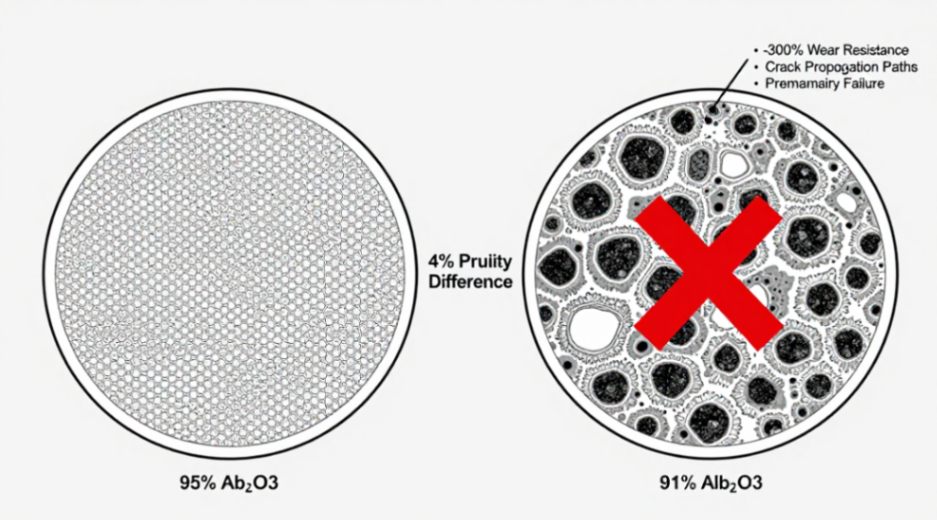
Did you know that a seemingly minor 4% difference in aluminum oxide ceramic purity can reduce its wear resistance by over 300%? Most engineers select material based on a single property like hardness, missing the complex interplay of grain structure, porosity, and binder phases. This oversight leads to premature failure, costly downtime, and safety risks. Let’s fix that.
The Purity Paradox: 99.5% Isn’t Always the Answer
You might assume the highest purity offers the best performance. This is your first mistake. The ceramic composition you choose dictates its entire behavior.
Understanding the Grades
Common grades like 85%, 96%, and 99.5% alumina refer to the weight percentage of Aluminum oxide ceramic (Al2O3). The remainder is a glassy silicate phase. This phase is not an impurity; it’s a critical design element.
- 85-90% Alumina: The glass phase facilitates sintering at lower temperatures. It offers excellent cost-effectiveness for electrical insulators and some wear plates. Do not use it for high-precision seals or corrosive environments. The glass phase can leach out.
- 96% Alumina: This is the industrial workhorse. It achieves an optimal balance of mechanical strength, wear resistance, and dielectric properties. It is the default choice for substrates, pump seals, and cutting tool inserts. For most applications, start your evaluation here.
- 99.5%+ Alumina: Maximum hardness and corrosion resistance. It resists strong acids and bases far better than lower grades. However, it is more brittle, difficult to machine to tight tolerances, and significantly more expensive. Use it only when chemical purity or extreme wear is the non-negotiable driver.
Never specify a material by purity alone. You must define the operating environment first.
Critical Application Warnings
Misapplication creates the most common and expensive failures.
1. Thermal Shock: The Silent Killer
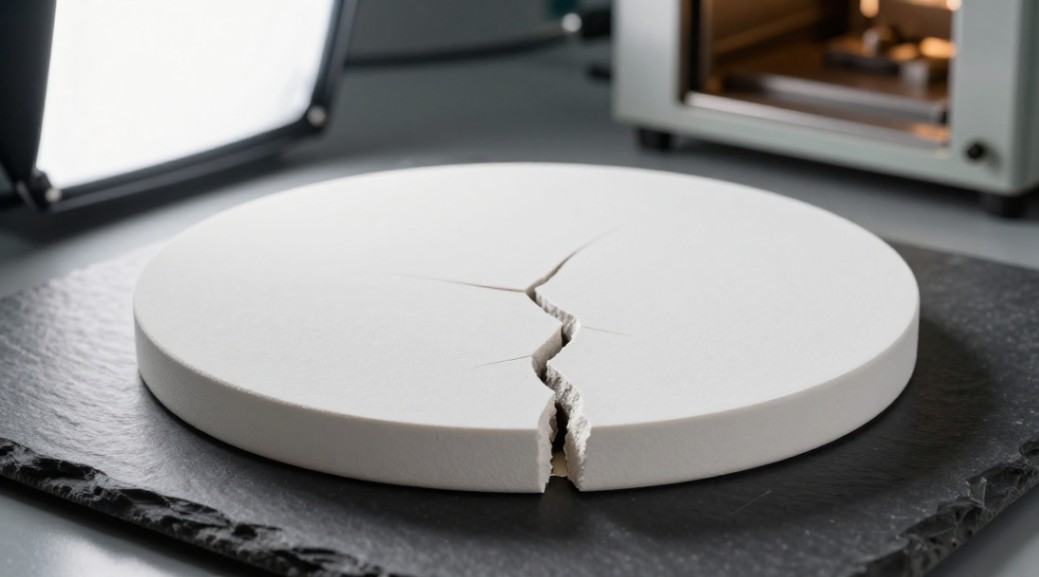
Alumina has moderate thermal shock resistance. It is far inferior to materials like silicon nitride ceramic or Mullite ceramic. Exposing a thick alumina component to rapid, uneven heating will cause it to crack. This is not a material defect. It is a design flaw. For thermal cycling applications, you must consider a different material or radically redesign the part geometry to minimize stress concentration.
2. The Machining Mirage
You cannot machine aluminium oxide ceramic like metal. Attempting to drill, mill, or tap it with standard carbide tools will destroy the tools and likely chip the ceramic. Alumina components must be formed to near-net shape during pressing (via dry pressing or isostatic pressing) and then finished with diamond grinding. Factor this into your design and budget. Post-processing like lapping and polishing is possible but adds cost.
3. Wear vs. Impact: Know Your Enemy
Alumina excels in abrasive wear situations-think slurry pumps, liners, and guides. Its hardness outlasts steel. However, it performs poorly under high-impact or point-load conditions. A dropped tool or a sudden shock can fracture it. For impact resistance, consider the toughness of silicon carbide ceramic or zirconia. Match the material property to the failure mode.
Selecting the Right Ceramic: A Practical Guide
Stop comparing materials in a vacuum. Use this logical framework.
- Define the Primary Function: Is it electrical insulation, wear resistance, or chemical inertness? For high-frequency substrates, 96% or 99.5% alumina is standard. For a sand blast nozzle, 85% alumina may suffice and save 40% on cost.
- Map the Environmental Assault: List every stress: temperature range, thermal cycles, chemical exposure, load type (abrasive, impact, constant), and required surface finish. Alumina is superb for electrical insulators in automotive sensors but a poor choice for a high-temp bearing compared to silicon nitride ceramic.
- Honestly Assess Manufacturing: Can you accept a fired-in-hole, or do you need a machined thread? The latter requires diamond grinding and special design for silicon carbide-bonded silicon nitride ceramics or similar hard materials. Design for manufacturability from day one.
- Compare the Real Candidates: Stack alumina against its peers. Need higher thermal conductivity? Look at aluminum nitride ceramic. Need extreme chemical resistance and high temperature? Boron carbide ceramic or a special coating for boron nitride ceramic crucibles might be necessary. Need higher toughness? Zirconia is the answer.
Your Path to Success
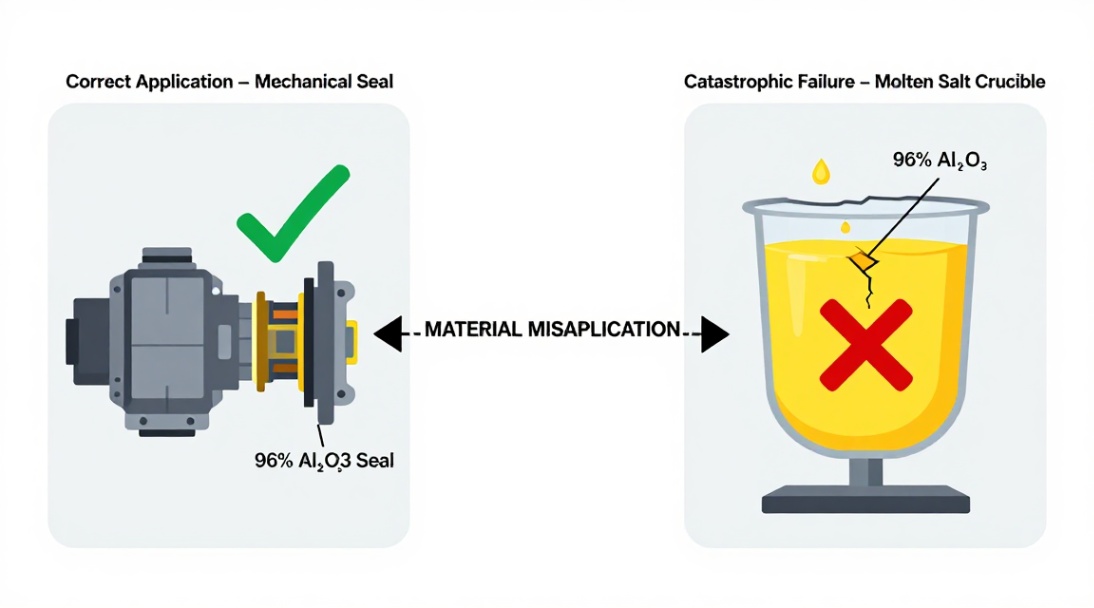
The biggest mistake is treating aluminum oxide ceramic as a generic, magical solution. It is a family of engineered materials, each with a specific purpose. The 96% grade you use for a seal will fail miserably if used for a lab crucible holding molten salts, where 99.5% alumina is mandatory. Avoid the trap of defaulting to the highest specification. It wastes money and can introduce new failure modes like brittleness.
Start your next project with the environment, not the material. List every demand placed on the component. Then, and only then, does the correct grade of alumina-or whether you need a different ceramic like reaction-sintered silicon carbide ceramics entirely-become glaringly obvious. This disciplined approach prevents catastrophic failure and unlocks the true, reliable performance these remarkable materials offer.
Suppiler
Synthetic-chemical focus on the research and development, production and sales of ceramic products, serving the electronics, ceramics, chemical and other industries. Since its establishment in 2015, the company has been committed to providing customers with the best products and services, and has become a leader in the industry through continuous technological innovation and strict quality management.
Our products includes but not limited to Aluminum Nitride, Aluminum Oxide, Boron Carbide, Boron Nitride, Ceramic Crucible, ect. If you are interested in any type of these, please feel free to contact us.