Next-Generation Ceramics: Unlocking Superior Properties for Industry

Your Ceramic Parts Keep Failing? Here’s What’s Really Happening.
You’ve selected aluminum oxide ceramic for its legendary hardness and insulation. Yet, despite the spec sheet looking perfect, the component in the field cracks under thermal shock. Or the surface finish isn’t right, causing seal failure. You’re dealing with downtime, redesign costs, and questions from management. Sound familiar? We’ve been there. The promise of alumina-Al2O3-is immense, but realizing it requires a deep, trend-informed understanding. This isn’t about basic properties. It’s about why parts succeed or fail in the real world.
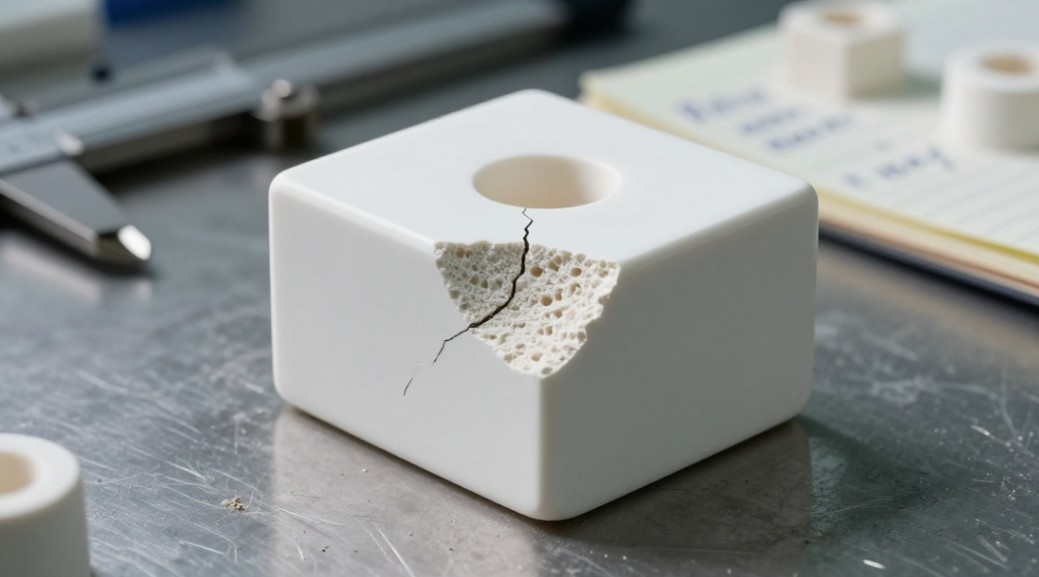
1. The Purity Paradox: Why 96% Alumina Isn’t “Good Enough” Anymore
The grade you choose dictates everything. The industry often defaults to 96% alumina for a good balance of cost and performance. But data from high-wear applications shows this is changing.
- 99.5%+ (High Purity): Grain boundaries get cleaner. This translates directly to higher hardness (approaching 2000 HV), better wear resistance, and superior corrosion resistance. It’s becoming the default for critical semiconductor components and advanced medical implants.
- 99.9%+ (Very High Purity): For substrates and electronic insulators, this ultra-high purity minimizes ionic contamination that can degrade electrical performance at high frequencies. It’s non-negotiable for 5G and power electronics.
- The Trend: The cost delta between 96% and high-purity grades is shrinking due to improved sintering tech. We’re seeing a clear shift up the purity ladder for performance-critical parts, even in industrial settings.
2. Manufacturing Evolution: Beyond Simple Pressing
How you make it defines what it can do. Dry pressing is fast and economical for simple shapes. But the industry is moving towards more sophisticated techniques to overcome design limits.
- Isostatic Pressing: Applies uniform pressure from all sides. It produces parts with higher, more consistent density and superior mechanical properties. Essential for complex, high-integrity shapes.
- Injection Molding & Extrusion: These processes enable intricate geometries and long, continuous forms (tubes, rods) that are impossible with traditional pressing. They reduce or eliminate expensive diamond grinding.
- Slip Casting: Remains the king for large, thin-walled, or highly intricate components like crucibles and custom labware. Control of the slurry rheology is where the art meets the science.
3. The Brittleness Battle: How Composites Are Redefining Alumina
Brittleness is alumina’s Achilles’ heel. This is the single biggest driver of R&D. The goal is to boost fracture toughness without sacrificing hardness.
- Traditional Reinforcement: Adding zirconia (ZrO2) particles creates a “transformation toughened” ceramic. Under stress, the zirconia undergoes a phase change, absorbing energy and arresting cracks. It’s a proven, commercial solution.
- The Cutting Edge – Fiber Reinforcement: Research, like the ‘double continuous structure’ slurry infiltration for Ultra-High Temperature Composites, points the way. Embedding continuous fibers (e.g., carbon or silicon carbide) into an alumina matrix can potentially double or triple fracture toughness. This moves alumina from 3-5 MPa·m1/2 into the 10-20 MPa·m1/2 range-a game-changing leap for structural applications.
- Competition: For extreme thermal shock, engineers often evaluate aluminum nitride ceramic or silicon nitride ceramic. For pure wear, silicon carbide ceramic or boron carbide ceramic are contenders. The choice hinges on the specific stress profile.
4. Surface is Everything: The Unspoken Machining Reality
You can’t ignore post-sintering processing. The as-fired surface is rarely the final surface. How you finish it impacts performance dramatically.
- Diamond Grinding: The standard. Achieves tight tolerances (±0.001″ is possible) and specific Ra finishes. Directional grinding marks can affect strength; specify the orientation relative to stress.
- Lapping & Polishing: For substrates, seals, and bearing surfaces, a mirror finish (Ra < 0.2 µm) is critical. It minimizes friction, improves seal integrity, and reduces crack initiation sites.
- Laser Machining & Drilling: Gaining traction for creating ultra-fine holes or features in thin, fired alumina without mechanical stress. It’s expensive but enables new designs.
5. The High-Temperature Niche: Where Alumina Truly Beats Metals
Above 1000°C, many materials give up. Alumina doesn’t. This is its undisputed domain.
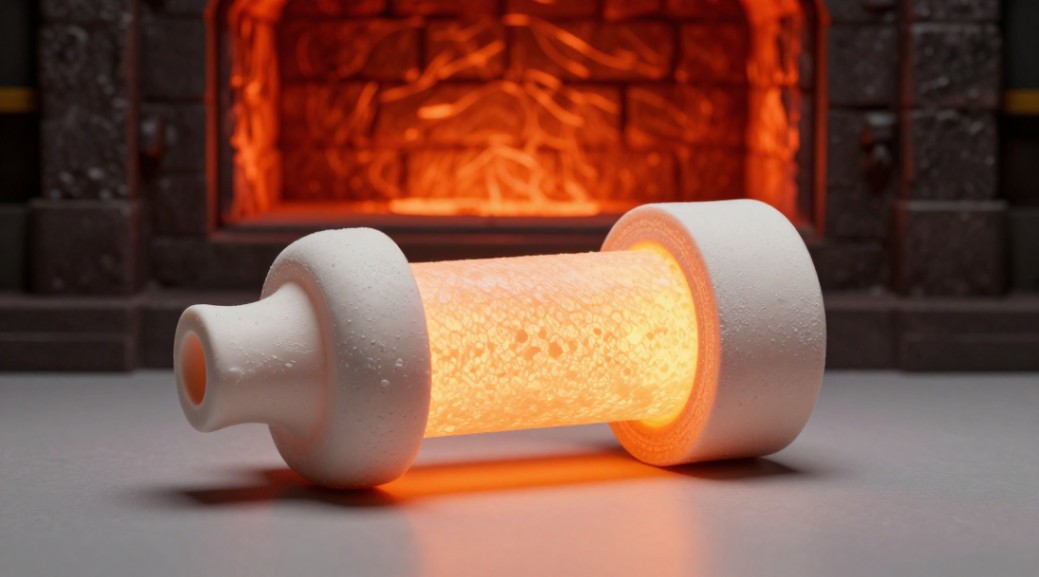
- Thermal Insulators: Withstands continuous use at 1600-1700°C. Used in furnace linings, thermocouple tubes, and insulation beads.
- Corrosion Resistance: Unlike metals, it doesn’t oxidize or react with most molten metals (except very reactive ones like titanium). This makes it ideal for crucibles for melting precious metals or certain alloys. For even more demanding chemistries, a special coating for boron nitride ceramic crucibles is sometimes applied, but alumina remains the workhorse.
- Electrical Insulation at Temperature: Maintains high resistivity when polymers fail and metals soften. Critical for heaters, sensors, and high-temp electronics.
6. The Electronics Backbone: Hidden in Plain Sight
Your phone and car wouldn’t work without it. Alumina substrates are the silent, sturdy platform for circuitry.
- Thick-Film & Thin-Film Circuits: Provides a pristine, flat, insulating surface for printing resistors, conductors, and semiconductors. Its thermal conductivity, while lower than aluminum nitride ceramic, is sufficient for many applications and is far more cost-effective.
- RF/Microwave Packages: High-purity alumina encloses and protects sensitive high-frequency chips, offering hermeticity and signal integrity.
- Power Electronics: Acts as an electrically isolating but thermally conducting layer in power modules, allowing heat to sink away from high-power semiconductors.
7. Future-Proofing: The Next Generation of Alumina Systems
The material isn’t standing still. Three convergent trends will shape its future.
- Advanced Composites: The integration of fibers and nanomaterials (like graphene platelets) will create a new class of aluminum oxide ceramic with tailored toughness and conductivity. Think wear parts that survive impact, or substrates that manage heat like silicon carbide ceramic.
- Additive Manufacturing (3D Printing): Binder jetting and stereolithography of alumina slurries are moving from prototyping to production. This allows for monolithic parts with internal channels, lattices for weight reduction, and shapes that defeat conventional molding. It eliminates tooling costs for complex, low-volume runs.
- Functional Gradients & Coatings: Why choose one property? Future components will have a wear-resistant alumina surface, gradually transitioning to a tougher, more shock-resistant composite core. Surface engineering will be designed-in, not an afterthought.
Stop Gambling on Your Material Choice
Specifying alumina based on an old datasheet is a risk. The technology has advanced. The trends are clear: higher purity, smarter composites, and additive freedom. Your competitor is likely already using these insights to build a more reliable, longer-lasting product.
You need a partner who understands these nuances from the inside out. Don’t just buy a ceramic part; invest in a solution engineered with deep material science and real-world application knowledge. Let’s analyze your specific thermal, mechanical, and electrical stress profile. We’ll help you select the right alumina grade, manufacturing process, and design features to eliminate failures and outperform expectations.
Contact our technical engineering team today for a confidential design review. Send us your drawings and requirements. We’ll provide a detailed material and process recommendation within 48 hours, showing you exactly how to leverage modern aluminium oxide ceramic technology for your advantage.
Suppiler
Synthetic-chemical focus on the research and development, production and sales of ceramic products, serving the electronics, ceramics, chemical and other industries. Since its establishment in 2015, the company has been committed to providing customers with the best products and services, and has become a leader in the industry through continuous technological innovation and strict quality management.
Our products includes but not limited to Aluminum Nitride, Aluminum Oxide, Boron Carbide, Boron Nitride, Ceramic Crucible, ect. If you are interested in any type of these, please feel free to contact us.