Next-Generation Ceramics: Unlocking Superior Properties for Industry

Aluminum Oxide Ceramic: The Essential Guide for Engineers
Aluminum oxide ceramic, often called alumina, is a high-performance engineered material. It solves problems where metals fail. Think extreme wear, electrical arcing, or corrosive environments. We’ve used it for decades in seals, cutting tools, and insulators. It’s reliable.
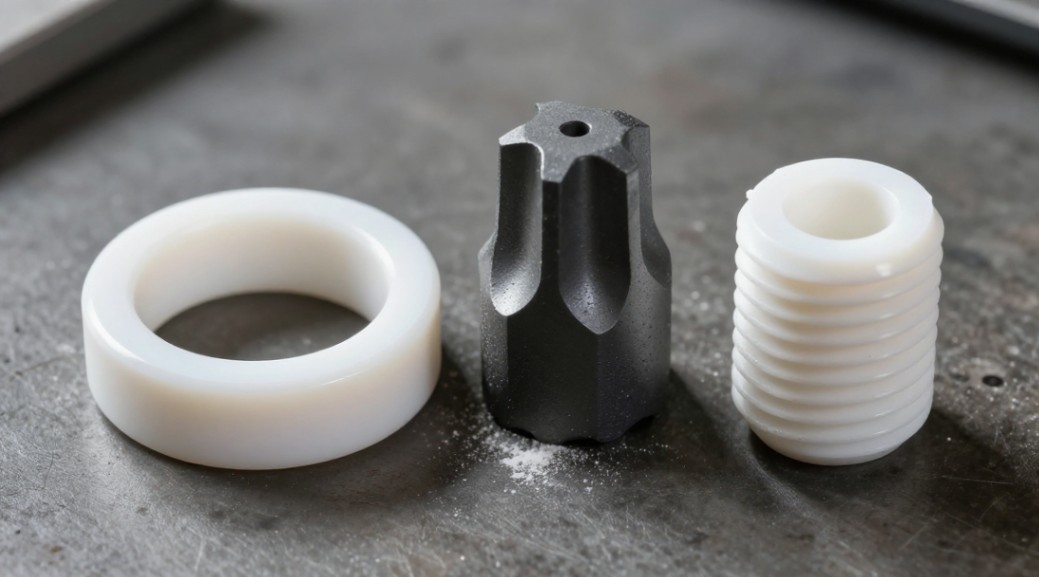
What is Aluminum Oxide Ceramic? The Basics
It’s a ceramic made primarily from aluminium oxide (Al2O3) powder. Purity ranges from 85% to over 99.9%. Higher purity means better properties but higher cost. Common grades are 96% and 99.5% alumina. The rest is a glassy silicate phase that aids sintering.
Engineers pick it for three main reasons: hardness, electrical insulation, and temperature resistance. It outperforms many metals and polymers in severe conditions.
How is Aluminum Oxide Ceramic Made? A Quick Look
Manufacturers use a few key processes. Dry pressing is fast and cost-effective for simple shapes like tiles or plates. Isostatic pressing applies uniform pressure from all sides. This creates complex, high-density parts with excellent uniformity. Injection molding is for high-volume, intricate components like thread guides.
The raw powder is mixed with binders, formed, and then fired (sintered) at temperatures above 1500°C. This process densifies the part into a hard, durable ceramic.
Alumina Properties: The Good, The Great, The Limitations
Key Advantages
- Extreme Hardness & Wear Resistance: It’s harder than most metals. We use it for pump seals, wear plates, and liners where abrasion is a problem.
- Excellent Electrical Insulator: High dielectric strength makes it ideal for spark plug insulators, circuit boards, and high-voltage feedthroughs.
- High Temperature Stability: It maintains strength and shape up to 1600°C. This beats most metals. Use it for furnace fixtures and thermocouple tubes.
- Chemical Inertness: It resists attack from many acids and alkalis. This is crucial for chemical processing equipment.
The Limitations You Must Know
It’s brittle. It has low fracture toughness compared to metals or zirconia ceramics. Avoid impact or point loading. Machining is difficult and expensive. You must diamond grind it. Always design with its brittleness in mind.
How to Choose the Right Aluminum Oxide Ceramic Grade: A Step-by-Step Guide
Step 1: Define Your Primary Need. Is it wear? Electrical isolation? High temperature? Chemical resistance? Most applications prioritize one.
Step 2: Match the Grade to the Need. For maximum wear and corrosion resistance, choose 99.5% alumina or higher. For cost-effective electrical insulation where extreme wear isn’t critical, 96% alumina often works.
Step 3: Consider the Fabrication Process. Complex shapes may need isostatic pressing or injection molding. Simple plates are dry pressed. The process affects cost and design limits.
Step 4: Factor in Thermal Shock. For rapid heating/cooling cycles, alumina’s performance is moderate. Silicon nitride ceramic or silicon carbide ceramic are often better choices for severe thermal shock.
Step 5: Get a Sample and Test. Always test a prototype under real conditions. Material data sheets are a starting point, not a guarantee.
Aluminum Oxide vs. Other Ceramics: When to Use What
This is a common question on engineering forums. Let’s compare.
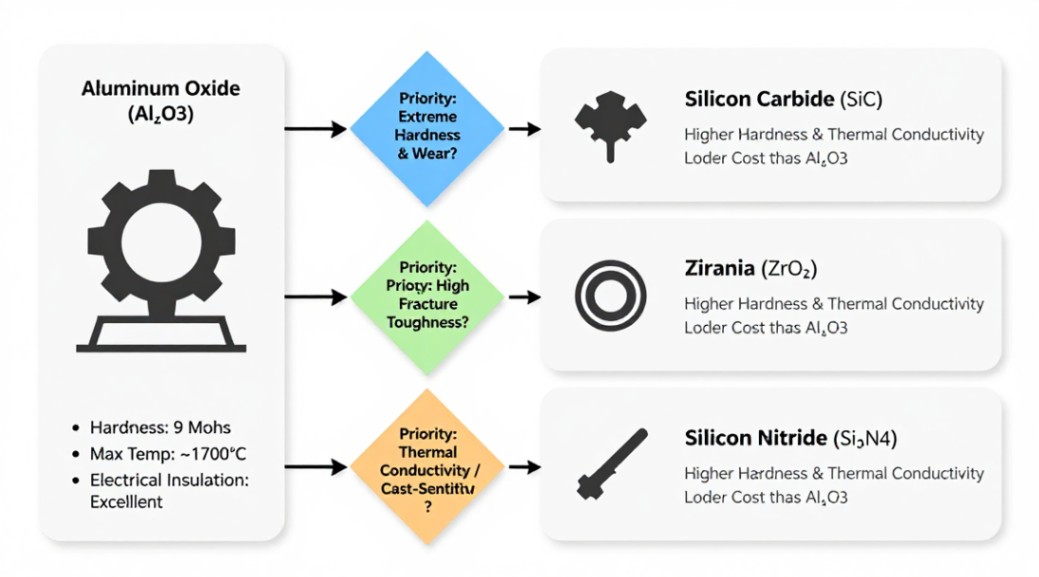
Alumina vs. Zirconia: Zirconia is much tougher (less brittle) and has higher strength. Use zirconia for parts subject to impact or flexural stress. Alumina is harder and a better electrical insulator.
Alumina vs. Silicon Carbide (SiC): Silicon carbide ceramic has superior thermal conductivity and thermal shock resistance. It’s the choice for high-heat-exchange applications like kiln furniture. Alumina is a better electrical insulator.
Alumina vs. Aluminum Nitride (AlN): Aluminum nitride ceramic is an exceptional thermal conductor while still being an electrical insulator. It’s used in electronics packaging. Alumina is the general-purpose, cost-effective insulator.
Frequently Asked Questions (FAQ)
Is aluminum oxide ceramic bulletproof?
Some armor systems use alumina tiles as a hard facing layer, often backed by other materials like boron carbide ceramic or composites. Alone, it’s not typically considered a standalone armor material.
Can you machine aluminum oxide ceramic?
Yes, but only with diamond tools. Grinding is the standard method. It’s not machinable like metal. Design for near-net-shape manufacturing to minimize costly machining.
Is aluminum oxide ceramic used in the human body?
Yes, in specific biomedical applications. Its biocompatibility makes it suitable for dental implants and some orthopedic load-bearing prostheses, like hip socket liners.
What’s the difference between alumina and sapphire?
Sapphire is single-crystal aluminum oxide. The polycrystalline alumina we discuss here is an aggregate of many tiny crystals. Sapphire has even better properties but is far more expensive to produce in large, complex shapes.
Real-World User Feedback and Case Studies
We see consistent patterns in user reports. A common Reddit-style comment in manufacturing groups: “We switched to 99.5% alumina wear plates in our pneumatic conveying line. Metal liners lasted 3 months. The alumina is going on 2 years with minimal wear.”
The feedback on limitations is just as valuable. Users often note: “The biggest lesson was accounting for thermal expansion. We designed an alumina part locked in a steel housing. The differential expansion cracked it on the first heat cycle. Now we design with expansion gaps.”
Conclusion and Final Recommendation
Aluminum oxide ceramic is a versatile, high-performance solution. For wear, insulation, and high-temperature stability, it’s often the first material we consider. Its limitations-brittleness and machining cost-are manageable with smart design.
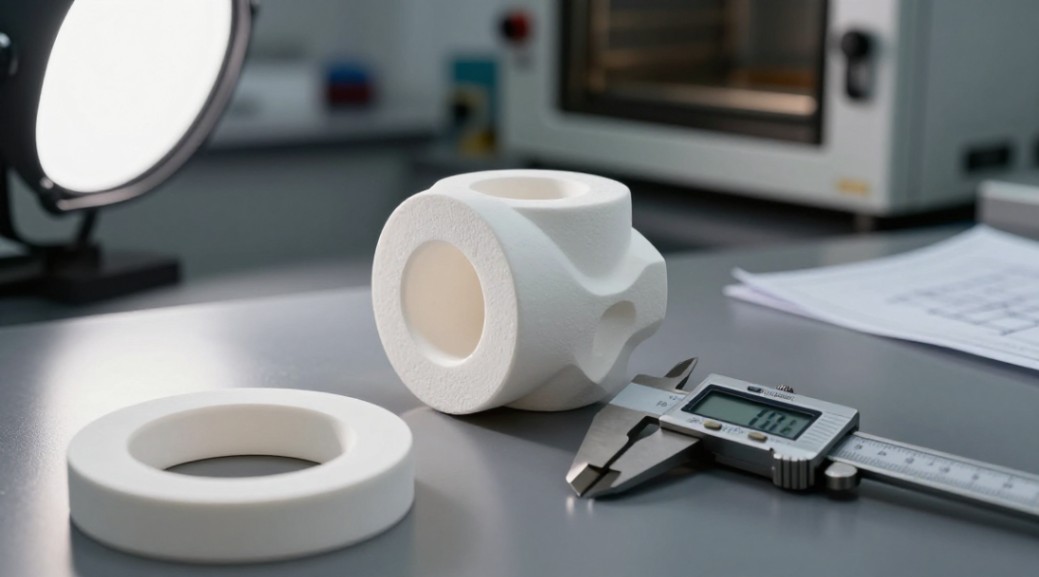
Our Direct Recommendation: Don’t guess. If your application involves sliding wear, electrical isolation, or temperatures above 500°C, alumina deserves a close look. Start with a 96% alumina grade for most general industrial uses. For maximum performance, step up to 99.5%. Contact a reputable technical ceramics supplier with your specific requirements. They can provide test samples and guide you through the final material selection and design for manufacture. The right ceramic component will outlast anything else you’ve tried.
Suppiler
Synthetic-chemical focus on the research and development, production and sales of ceramic products, serving the electronics, ceramics, chemical and other industries. Since its establishment in 2015, the company has been committed to providing customers with the best products and services, and has become a leader in the industry through continuous technological innovation and strict quality management.
Our products includes but not limited to Aluminum Nitride, Aluminum Oxide, Boron Carbide, Boron Nitride, Ceramic Crucible, ect. If you are interested in any type of these, please feel free to contact us.